Dental implants are one of the most popular options for replacing missing teeth. Losing a tooth can affect more than your smile. It may make chewing difficult, change the way you speak, and affect your confidence. Over time, missing teeth can also contribute to changes in the jawbone and the position of nearby teeth.
Dental implants offer a long-term way to replace missing teeth by using a small metal post placed inside the jawbone to support an artificial tooth. They are designed to look and function much like natural teeth.
However, getting dental implants is not a simple one-day procedure for everyone. It usually involves a dental examination, implant surgery, a healing period, and placement of the replacement tooth.
In this guide, we will explain what dental implants are, how they work, their benefits, types, procedure, costs, possible side effects, recovery, and who may be a suitable candidate.
What Are Dental Implants?
Dental implants are artificial tooth roots, usually made from titanium or certain other biocompatible materials, that are surgically placed into the jawbone to support replacement teeth.
Once the implant heals and integrates with the surrounding bone, it can hold a dental crown, bridge, or denture.
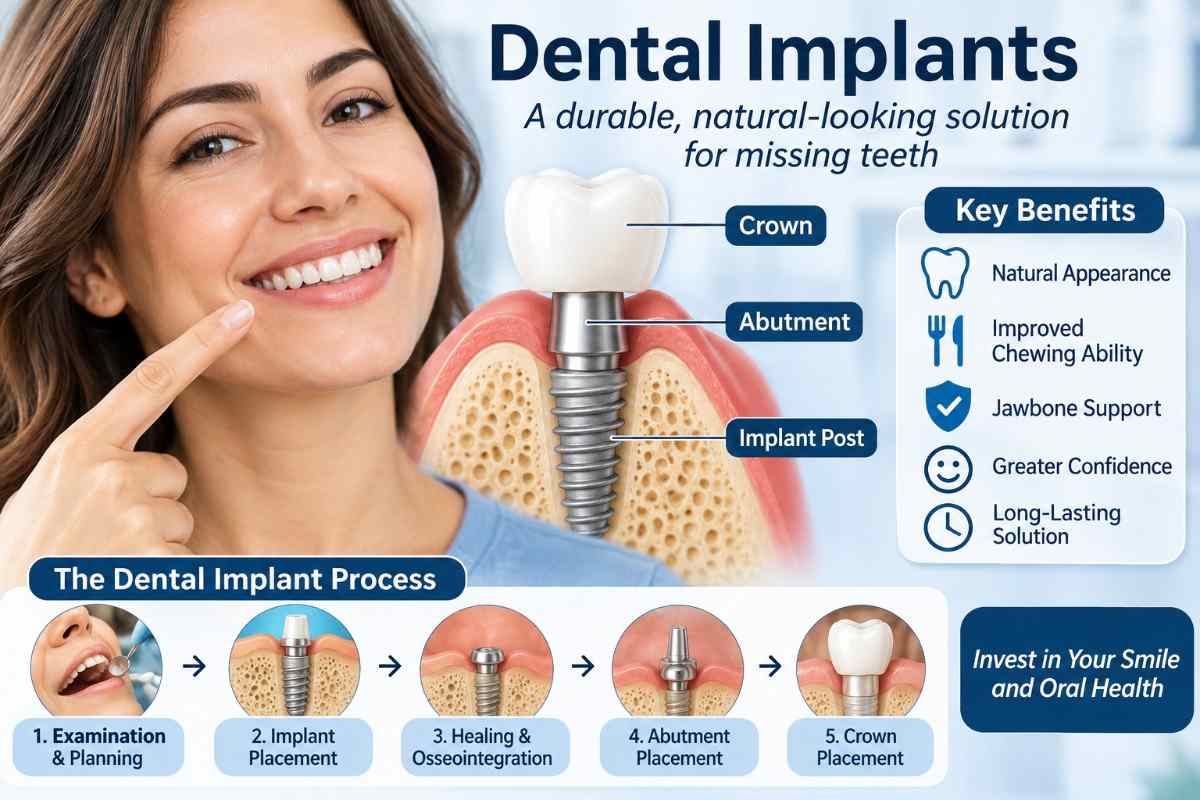
A typical dental implant has three main parts:
- Implant Post: A small screw-like component placed into the jawbone to act as an artificial tooth root.
- Abutment: A connector that attaches the implant post to the replacement tooth.
- Dental Crown: The visible artificial tooth designed to resemble a natural tooth.
Unlike traditional removable dentures, dental implants are fixed in the jawbone and do not need to be removed for everyday activities.
How Do Dental Implants Work?
Dental implants work through a natural healing process called osseointegration. During this process, the jawbone gradually grows around the implant surface, helping hold it securely in place.
The process generally involves the following steps:
- Initial Examination: The dentist examines your teeth, gums, and jawbone to determine whether implants are suitable.
- Implant Placement: The implant post is surgically inserted into the jawbone.
- Healing Period: The implant is allowed to integrate with the surrounding bone.
- Abutment Placement: A connector is attached to the implant when appropriate.
- Crown Placement: A custom-made artificial tooth is attached to complete the restoration.
The healing period varies from person to person. Some people may need additional procedures, such as bone grafting, before implant placement.
Types of Dental Implants
Dental implants come in different forms depending on the patient’s oral health, jawbone condition, and tooth replacement needs.
1. Endosteal Implants
Endosteal implants are the most commonly used type. They are usually made of titanium and placed directly into the jawbone. They typically have a screw-like shape and support individual crowns, bridges, or implant-supported dentures.
2. Subperiosteal Implants
Subperiosteal implants sit on or above the jawbone but underneath the gum tissue. They are less commonly used today and may be considered in selected cases when conventional implants are unsuitable.
3. Zygomatic Implants
Zygomatic implants are longer implants anchored in the cheekbone rather than the upper jawbone. They may be an option for some people with severe bone loss in the upper jaw. They require specialized surgical expertise.
20 Benefits of Dental Implants
Dental implants offer several functional and cosmetic advantages. Their suitability and results depend on individual oral health and treatment planning.
- Natural Appearance: Dental implants are designed to resemble natural teeth in shape, size, and color.
- Improved Chewing Ability: They provide stable support for biting and chewing many everyday foods.
- Better Speech: Replacing missing teeth may help improve speech difficulties caused by tooth loss.
- Jawbone Support: Implants stimulate the surrounding jawbone through functional loading and can help reduce bone loss after tooth extraction.
- Long-Term Tooth Replacement: With proper care, dental implants can last many years.
- Improved Confidence: Replacing missing teeth can help people feel more comfortable smiling and speaking.
- No Dependence on Adjacent Teeth: Individual implants generally do not require neighboring healthy teeth to be filed down.
- Stable Tooth Replacement: Implants are anchored in the jawbone rather than relying only on gum support.
- Reduced Denture Movement: Implant-supported dentures can offer better stability than conventional removable dentures.
- Comfortable Function: Once healing is complete, implants can feel more like natural teeth than removable replacements.
- Preservation of Nearby Teeth: An individual implant can replace a missing tooth without using adjacent teeth as bridge supports.
- Support for Facial Structure: Replacing missing teeth and maintaining jawbone volume may help limit some changes associated with tooth loss.
- Convenient Daily Care: Implant-supported crowns can generally be brushed and flossed like natural teeth, with additional cleaning around the implant.
- Custom-Made Results: Crowns are designed to suit the patient’s bite and appearance.
- Replacement for Multiple Teeth: Implants can support bridges when several neighboring teeth are missing.
- Full-Arch Restoration: Multiple implants can support a full set of replacement teeth.
- No Adhesive Requirement: Fixed implant restorations do not require denture adhesives.
- Improved Denture Retention: Implants can help prevent removable dentures from slipping during eating or speaking.
- Potentially Fewer Adjustments: Fixed implant restorations may require fewer routine adjustments than some removable dentures.
- Improved Quality of Life: Successful treatment can make eating, speaking, and social activities more comfortable.
Who Is a Good Candidate for Dental Implants?
Dental implants may be suitable for adults who have one or more missing teeth and want a fixed replacement option.
A good candidate generally has:
- Healthy gums without uncontrolled periodontal disease.
- Sufficient jawbone to support the implant or the ability to undergo bone grafting.
- Good general and oral health.
- A commitment to regular dental checkups.
- Good daily oral hygiene habits.
- A willingness to follow the dentist’s surgical and recovery instructions.
Age alone does not determine whether someone can receive dental implants. Your overall health, jawbone development, and oral condition are more important factors.
Who Should Avoid or Delay Dental Implants?
Dental implants are not suitable for everyone. Some conditions may increase the risk of complications or affect healing.
- Uncontrolled Diabetes: Poorly controlled blood sugar may interfere with healing and increase infection risk.
- Active Gum Disease: Untreated periodontal disease should be managed before implant treatment.
- Heavy Smoking: Smoking can increase the risk of implant failure and delayed healing.
- Insufficient Jawbone: Severe bone loss may require additional treatment before implant placement.
- Certain Medical Conditions: Some immune system disorders or other health conditions may affect surgical healing.
- Previous Radiation Therapy: Radiation involving the jaw may increase complications and requires specialist assessment.
- Certain Medications: Some medicines, including certain osteoporosis treatments, need careful review before surgery.
- Poor Oral Hygiene: Inadequate cleaning can increase the risk of infection and inflammation around implants.
- Uncontrolled Teeth Grinding: Severe grinding may place excessive pressure on implant restorations.
- Incomplete Jaw Development: Dental implants are generally delayed until jaw growth is complete.
Having one of these risk factors does not automatically mean implants are impossible. A dentist or specialist can assess your individual situation.
Dental Implant Procedure: Step-by-Step
Getting dental implants usually requires multiple appointments. The exact treatment plan depends on the number of missing teeth, jawbone condition, and type of implant restoration.
Step 1: Dental Examination
The dentist examines your mouth, gums, and remaining teeth. X-rays or 3D scans may be used to evaluate jawbone thickness, bone quality, and the position of nearby nerves and sinuses.
Step 2: Treatment Planning
The dentist creates a personalized treatment plan based on your oral health. If you have insufficient jawbone, a bone graft may be recommended before implant placement.
Step 3: Tooth Extraction (If Required)
If the damaged tooth is still present, it may need to be removed. In selected cases, an implant can be placed immediately after extraction, while other patients need to wait for the extraction site to heal.
Step 4: Dental Implant Placement
The dentist or oral surgeon places the implant post into the jawbone using a surgical procedure. Local anesthesia is commonly used, and sedation may be available depending on the treatment.
Step 5: Healing and Osseointegration
After placement, the implant needs time to bond with the surrounding bone. This process is called osseointegration and may take several months.
A temporary replacement tooth may be provided during this period, depending on the treatment plan.
Step 6: Abutment Placement
Once the implant has healed sufficiently, an abutment is attached to connect the implant post with the artificial tooth. Sometimes, this component is placed during the initial surgery.
Step 7: Artificial Tooth Placement
A custom-made dental crown, bridge, or denture is attached to the implant. The dentist checks the fit, appearance, and bite to ensure comfortable function.
How Much Do Dental Implants Cost?
The cost of dental implants depends on the number of missing teeth, implant material, dentist’s experience, location, and additional procedures required. In the United States, dental implants can cost several thousand dollars per tooth, making them a significant investment in long-term oral health.
The total price usually includes the implant post, abutment, dental crown, consultation, imaging, and surgical procedure. Additional treatments, such as tooth extraction or bone grafting, can increase the overall cost.
Read: How Much Do Dental Implants Cost in the USA?
A single dental implant treatment may include several separate expenses:
| Treatment Component | What It Covers |
|---|---|
| Initial consultation | Dental examination and treatment planning |
| Dental imaging | X-rays or 3D scans |
| Implant post | Artificial tooth root |
| Abutment | Connector between implant and crown |
| Dental crown | Artificial replacement tooth |
| Tooth extraction | Removal of a damaged tooth, if required |
| Bone grafting | Additional bone support, if needed |
| Anesthesia | Pain management during surgery |
10 Possible Side Effects and Risks of Dental Implants
Dental implant surgery is generally considered safe when performed by a qualified dental professional. However, like other surgical procedures, it can cause temporary side effects and occasional complications.
- Pain and Discomfort: Mild pain around the implant site is common after surgery and generally improves during recovery.
- Swelling: The gums, cheeks, or surrounding tissues may become swollen after implant placement.
- Bleeding: Minor bleeding may occur during the first day following surgery.
- Bruising: Some patients experience temporary bruising around the surgical area.
- Infection: Bacteria can cause infection around the implant or surgical site.
- Nerve Damage: In rare cases, nearby nerves may be affected, causing numbness, tingling, or altered sensation.
- Sinus Problems: Implants placed in the upper back jaw may affect the sinus if the procedure is not properly planned.
- Implant Failure: Sometimes, the implant does not integrate properly with the jawbone and becomes loose.
- Peri-Implantitis: This condition involves inflammation and progressive bone loss around an implant, potentially threatening its stability.
- Damage to Nearby Structures: Surgical placement may occasionally affect neighboring teeth, bone, or surrounding tissues.
Contact your dentist if you experience increasing pain, persistent bleeding, fever, pus, worsening swelling, or an implant that feels loose. Seek prompt assessment rather than waiting for symptoms to disappear.
How Long Does It Take to Recover From Dental Implant Surgery?
Recovery time depends on the complexity of the procedure, the number of implants, and your overall health.
Most people experience some swelling, tenderness, and minor bleeding during the first few days. These symptoms generally improve as the surgical area heals.
However, complete implant healing takes longer because the implant must integrate with the jawbone.
| Recovery Stage | What to Expect |
|---|---|
| First 24 hours | Mild bleeding, tenderness, and swelling may occur |
| 2–3 days | Swelling and discomfort may become more noticeable before improving |
| 4–7 days | Many patients experience gradual improvement |
| 1–2 weeks | Gum tissues generally show substantial initial healing |
| Several months | The implant continues bonding with the jawbone |
| After healing | Final restoration can be placed when the dentist confirms readiness |
These are general estimates, not guaranteed recovery times. Bone grafting and other additional procedures can extend the healing period.
What to Eat After Dental Implant Surgery?
Eating the right foods can make recovery more comfortable and reduce pressure on the surgical area.
Foods to eat:
- Yogurt: Soft and easy to eat without much chewing.
- Mashed Potatoes: Provide energy while being gentle on the mouth.
- Scrambled Eggs: Offer protein to support normal tissue repair.
- Oatmeal: A soft breakfast option when prepared with a smooth consistency.
- Smoothies: Provide nutrients when blended without hard seeds or pieces.
- Mashed Bananas: Easy to swallow and require minimal chewing.
- Soft Fish: Provides protein when properly cooked and flaked.
- Soups: Nutritious when served lukewarm rather than hot.
- Cottage Cheese: A soft food that provides protein.
- Well-Cooked Vegetables: Soft vegetables are easier to chew during recovery.
Foods to avoid temporarily:
- Hard nuts and seeds.
- Popcorn.
- Chips and crackers.
- Sticky candies.
- Hard or crusty bread.
- Very hot foods and drinks immediately after surgery.
- Spicy foods if they irritate the surgical area.
- Chewy meats.
- Foods with small particles that can become trapped around the surgical site.
Follow your dentist’s instructions about when to return to your normal diet.
How to Take Care of Dental Implants
Proper care is essential for keeping dental implants healthy and reducing the risk of complications.
- Brush Twice Daily: Use a soft-bristled toothbrush and fluoride toothpaste.
- Clean Between Teeth: Use dental floss or interdental brushes recommended by your dentist.
- Use a Water Flosser: A water flosser may help clean difficult-to-reach areas around implant restorations.
- Attend Regular Checkups: Visit your dentist for professional cleaning and implant monitoring.
- Avoid Smoking: Smoking can interfere with healing and increase the risk of implant complications.
- Manage Gum Disease: Treat gum inflammation and maintain healthy gums.
- Avoid Excessive Pressure: Do not use your implant teeth to open packages or bite extremely hard objects.
- Follow Post-Surgery Instructions: Maintain the recommended cleaning routine during recovery.
- Wear a Night Guard if Needed: Your dentist may recommend one if you grind or clench your teeth.
- Report Unusual Symptoms: Contact your dentist if you notice bleeding gums, swelling, pain, or implant movement.
Remember that dental implants cannot develop cavities like natural teeth, but the surrounding gum and bone can still become infected.
How Long Do Dental Implants Last?
Dental implants can last for many years and sometimes for decades with proper care. However, their lifespan varies from person to person.
The implant post and the attached crown do not necessarily have the same lifespan. The implant may remain stable while the crown or other restoration needs repair or replacement because of normal wear.
Factors that influence implant longevity include:
- Daily oral hygiene.
- Regular dental examinations.
- Smoking habits.
- Overall health.
- History of gum disease.
- Jawbone health.
- Teeth grinding and excessive biting pressure.
- Quality of implant placement and restoration.
- Consistent professional maintenance.
Dental implants should not be considered a lifetime guarantee. Regular monitoring is important even when they feel completely comfortable.
Dental Implants vs. Dental Bridges vs. Dentures
Dental implants are not the only option for replacing missing teeth. Dental bridges and dentures are also commonly used.
| Feature | Dental Implants | Dental Bridges | Dentures |
|---|---|---|---|
| Tooth replacement | Fixed in the jawbone | Supported by neighboring teeth or implants | Removable or implant-supported |
| Surgery | Usually required | Usually not required | Usually not required |
| Jawbone support | Helps maintain bone at the implant site | Does not directly replace the tooth root | Conventional dentures do not replace the tooth root |
| Nearby teeth | Usually do not require alteration | Adjacent teeth may need preparation | Usually no preparation of neighboring teeth |
| Maintenance | Daily cleaning and dental visits | Daily cleaning, including underneath the bridge | Daily removal and cleaning for conventional dentures |
| Stability | Generally very stable | Generally stable | May move, depending on fit and type |
| Cost | Often higher initially | Varies | Often lower initially |
The best option depends on your oral health, budget, number of missing teeth, and personal preferences.
Are Dental Implants Worth It?
Dental implants can be a worthwhile investment for people who want a fixed, natural-looking replacement for missing teeth.
They offer several advantages, including improved chewing function, stability, and support for the jawbone. They also avoid the need to prepare neighboring healthy teeth for an individual implant-supported crown.
However, dental implants involve surgery, a longer treatment timeline, and ongoing maintenance. They may also cost more initially than bridges or conventional dentures.
Before deciding, discuss the benefits, risks, expected costs, and alternative treatments with a qualified dentist or implant specialist.
FAQ’s
Are dental implants painful?
Dental implant surgery is usually performed under local anesthesia, so patients generally do not feel pain during the procedure. Some discomfort, swelling, and tenderness may occur afterward.
Are dental implants safe?
Dental implants are generally safe when planned and placed by qualified dental professionals. However, complications such as infection, nerve injury, and implant failure are possible.
What is the best age for dental implants?
There is no single ideal age for dental implants. They are generally considered after jaw growth is complete, provided the person has suitable oral and general health.
Can dental implants fail?
Yes, dental implants can fail if they do not integrate properly with the jawbone or develop complications such as infection and bone loss.
Can you get dental implants if you have bone loss?
Yes, some people with jawbone loss can still receive dental implants after procedures such as bone grafting. The treatment depends on the amount and location of bone loss.
Are dental implants better than dentures?
Dental implants generally provide greater stability and do not need to be removed daily. However, dentures may be more affordable and suitable for people who cannot undergo implant surgery.
Can you eat normally with dental implants?
Yes, most people can eat a wide variety of foods after complete healing. During recovery, soft foods are recommended to protect the surgical area.
Do dental implants look like natural teeth?
Yes, dental implant crowns are custom-made to match the appearance, shape, and color of surrounding natural teeth.
What happens if a dental implant is rejected?
If an implant fails to integrate with the jawbone, it may become loose and need to be removed. After the area heals, another implant may sometimes be placed.
Can smokers get dental implants?
Smokers may be eligible for dental implants, but smoking increases the risk of healing problems and implant complications. Quitting smoking is strongly recommended.
Do dental implants require special cleaning?
Dental implants require daily brushing, cleaning between teeth, and regular professional dental checkups. Your dentist may recommend special interdental brushes or other cleaning tools.
How long does dental implant surgery take?
Placing a single dental implant generally takes around 30–90 minutes, although the time varies depending on the complexity of the procedure.
Who is not suitable for dental implants?
People with uncontrolled diabetes, active gum disease, severe untreated bone loss, or certain medical conditions may need additional treatment or evaluation before receiving implants.
Can dental implants fail after 10 years?
Yes, dental implants can fail even after 10 years because of infection, bone loss, excessive pressure, or poor oral hygiene. Regular dental checkups help reduce complications.
Are dental implants safe for older adults?
Yes, older adults can receive dental implants if they have suitable oral and general health. Age alone does not determine eligibility.
What is the success rate of dental implants?
Dental implants generally have high success rates, often reported above 90–95% in suitable patients. Results depend on individual health, implant placement, and long-term care.
How many teeth can one dental implant support?
One implant usually supports one crown, although specially designed treatment plans may use implants to support bridges or multiple replacement teeth.
What happens if a dental implant gets infected?
An infection around a dental implant can cause redness, swelling, bleeding, discomfort, and bone loss. Early dental treatment is important to prevent further complications.
Is it better to get dental implants or a bridge?
Dental implants replace missing tooth roots and generally do not require altering neighboring healthy teeth. Bridges may be quicker and less expensive initially, depending on the case.
Sources / References:
- U.S. Food and Drug Administration (FDA)
- Canadian Dental Association
- Scottish Dental Clinical Effectiveness Programme
- American Academy of Periodontology
- PubMed
Disclaimer:
This article is for informational purposes only and does not replace professional dental advice, diagnosis, or treatment. Consult a qualified dentist to determine whether dental implants are suitable for you.
Also Read: