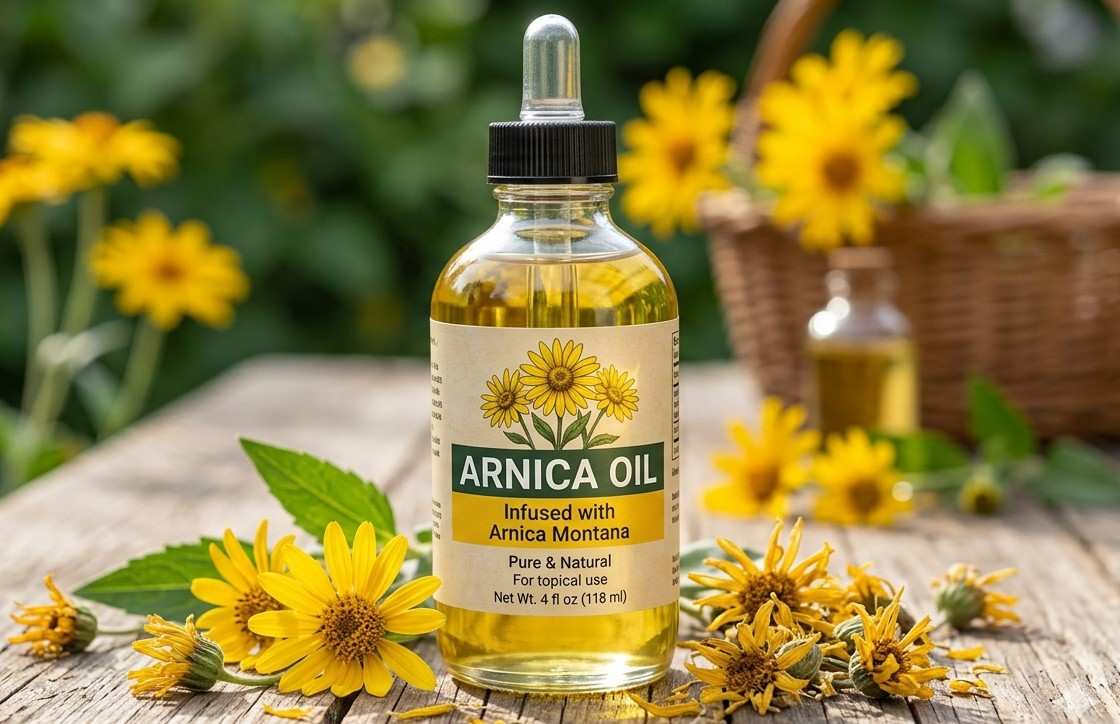
Arnica Oil is one of the most trusted natural remedies for muscle pain, bruising, swelling, and joint discomfort. For centuries, herbal practitioners have used arnica-based preparations to soothe injuries, reduce inflammation, and speed up recovery. Today, Arnica Oil is widely used in massage therapy, sports recovery, skincare, and alternative medicine.
In this guide, you will learn everything about Arnica Oil — what it is, its powerful benefits, possible side effects, dosage, usage methods, precautions, and much more.
What is Arnica Oil?
Arnica Oil is an herbal oil made by infusing the flowers of the Arnica plant (Arnica montana) into a carrier oil such as olive oil, sunflower oil, or almond oil. Arnica montana is a bright yellow flowering plant native to Europe and parts of North America.
The oil is primarily used for topical application. It is known for its anti-inflammatory, analgesic (pain-relieving), antimicrobial, and circulation-boosting properties. Arnica is especially popular in natural medicine for treating bruises, sprains, muscle soreness, and minor injuries.
Components of Arnica Oil
Arnica Oil is not consumed as food, so it does not contain typical macronutrients. Instead, it contains active phytochemicals responsible for its therapeutic properties.
| Nutrient / Compound | Approximate Presence (Per 100 ml – Approximate Values) | Function |
|---|---|---|
| Helenalin | Present | Anti-inflammatory compound |
| Dihydrohelenalin | Present | Pain-relieving properties |
| Flavonoids | Moderate | Antioxidant support |
| Sesquiterpene Lactones | High | Anti-inflammatory activity |
| Thymol Derivatives | Present | Antimicrobial support |
| Essential Fatty Acids (from carrier oil) | Varies | Skin nourishment |
| Polyphenols | Moderate | Cellular protection |
| Tannins | Present | Astringent properties |
Note: The exact composition varies depending on the extraction process and carrier oil used.
20 Science-Backed Benefits of Arnica Oil
- Relieves Muscle Pain – Oil helps reduce muscle soreness and tension by decreasing inflammation in overworked muscles.
- Reduces Bruising – It speeds up the healing of bruises by improving blood circulation and reducing pooled blood under the skin.
- Eases Joint Pain – Arnica Oil provides relief from arthritis and joint stiffness by calming inflammatory responses.
- Decreases Swelling – The anti-inflammatory compounds help minimize swelling caused by sprains and injuries.
- Supports Sports Recovery – Athletes use Arnica Oil to recover faster from workouts and minor injuries.
- Soothes Back Pain – Massaging the oil into the lower back can ease muscle spasms and stiffness.
- Improves Blood Circulation – Arnica stimulates blood flow, which promotes faster tissue repair.
- Relieves Sprains and Strains – It supports faster healing of ligaments and soft tissue injuries.
- Calms Insect Bites – Arnica reduces itching, redness, and irritation from insect bites.
- Reduces Inflammation – Helenalin helps suppress inflammatory pathways in the body.
- Speeds Up Wound Healing – It promotes tissue regeneration in minor cuts and surface injuries.
- Helps with Varicose Veins – Arnica may improve circulation and reduce discomfort in affected areas.
- Relieves Neck Tension – Applying it during massage helps reduce tight neck muscles.
- Supports Post-Surgery Recovery – Under medical guidance, it may help reduce bruising and swelling after minor procedures.
- Reduces Acne Inflammation – Diluted Arnica Oil can calm inflamed acne lesions.
- Alleviates Headache Tension – Massaging diluted oil on temples may relieve tension headaches.
- Eases Rheumatic Pain – Its anti-inflammatory properties help manage rheumatic discomfort.
- Improves Skin Tone – Increased circulation can give skin a healthier appearance.
- Soothes Foot Pain – Helpful for plantar fasciitis and tired feet after long standing.
- Reduces Post-Workout Stiffness – Regular use helps maintain flexibility and mobility.
10 Side Effects of Arnica Oil
- Skin Irritation – Applying undiluted oil may cause redness and irritation.
- Allergic Reactions – People allergic to plants in the daisy family may experience rashes.
- Contact Dermatitis – Prolonged use can lead to itchy, inflamed skin.
- Blistering – High concentrations may cause skin blistering.
- Toxic if Ingested – Oral consumption of non-homeopathic Arnica can be poisonous.
- Increased Heart Rate – Ingestion may lead to cardiovascular symptoms.
- Dizziness – Toxic exposure can cause lightheadedness.
- Vomiting – Internal use without guidance may cause nausea and vomiting.
- Skin Dryness – Excessive application may dry out the skin.
- Interaction with Blood Thinners – Arnica may increase bleeding risk.
How to Use Arnica Oil?
Oil is mainly used externally. Here are common methods:
- Massage directly on sore muscles (always diluted if concentrated).
- Apply gently to bruised areas.
- Mix with lotion or cream for daily use.
- Add a few drops to bath water.
- Use in warm compress therapy.
Always perform a patch test before first use.
Other Uses of Arnica Oil
- Used in sports massage oils
- Included in herbal balms
- Used in post-workout recovery blends
- Added to natural pain relief creams
- Used in scalp massage blends (highly diluted)
Tips for Consuming Arnica Oil
Oil is not recommended for internal consumption unless it is in a homeopathic dilution prepared specifically for oral use.
- Never ingest pure oil.
- Only use homeopathic Arnica under professional guidance.
- Follow labeled dosage strictly.
How to Take Arnica Oil?
Topical use:
- Apply 2–3 drops to affected area.
- Massage gently for 5–10 minutes.
- Use 1–3 times daily as needed.
Internal use:
- Only in homeopathic form such as Arnica 30C or 200C under expert supervision.
Important note: Arnica Oil is meant for external use only unless specifically prepared in highly diluted homeopathic form.
How to Make Arnica Oil at Home?
Ingredients:
- Dried Arnica flowers
- Carrier oil (olive or sunflower oil)
- Glass jar
Steps:
- Fill a clean jar halfway with dried Arnica flowers.
- Pour carrier oil to completely cover the flowers.
- Seal tightly and place in a warm, sunny spot for 3–4 weeks.
- Shake gently every few days.
- Strain through cheesecloth and store in a dark glass bottle.
How Much Arnica Oil Can You Use Per Day?
For topical use:
- Apply small amounts (2–5 ml total) to affected areas.
- Use up to 3 times daily.
- Avoid applying to large body areas simultaneously.
There is no standard internal dosage for non-homeopathic Arnica Oil.
Arnica Oil Dosage
Topical dosage:
- Mild pain: Apply twice daily.
- Moderate pain: Apply up to three times daily.
- Sports recovery: Use after activity.
Homeopathic dosage should follow practitioner guidance.
Best Time to Use Arnica Oil
- After workouts
- Before bedtime for muscle relaxation
- Immediately after minor injury
- During massage sessions
Who Should Use Arnica Oil?
- Athletes
- People with muscle soreness
- Individuals with joint stiffness
- Those recovering from minor injuries
- People experiencing tension headaches
Who Should Not Use Arnica Oil?
- Pregnant or breastfeeding women without medical advice
- People allergic to ragweed or daisy family plants
- Individuals with open wounds
- Children without professional supervision
- People taking blood-thinning medications
How to Store Arnica Oil?
- Store in a dark glass bottle
- Keep away from direct sunlight
- Store at room temperature
- Keep lid tightly closed
- Use within 6–12 months
Precautions and Interactions
- Do not apply on broken skin.
- Avoid contact with eyes and mouth.
- Perform patch test before use.
- Do not ingest pure oil.
- Consult a doctor if using blood thinners.
- Discontinue use if irritation occurs.
Final Thoughts
Arnica Oil is a powerful natural remedy known for its ability to reduce pain, inflammation, bruising, and muscle soreness. When used correctly, it can be an excellent addition to your natural health and skincare routine. However, it must be used carefully due to its potency and potential toxicity when ingested improperly. Always prioritize safety, follow recommended dosage guidelines, and consult a healthcare professional when in doubt.
FAQ’s
What does Arnica Oil smell like?
Oil has a mild, earthy, and slightly herbal scent with subtle floral undertones, depending on the carrier oil used.
What is Arnica Oil good for?
Oil is mainly used for relieving muscle pain, reducing bruises, easing joint stiffness, calming inflammation, and supporting recovery after minor injuries.
Is Arnica hair oil good for hair growth?
Oil may support scalp health and improve blood circulation, which can indirectly promote healthier hair growth, but it is not a proven hair growth treatment.
Does Arnica Oil help scars?
Oil may help reduce the appearance of minor scars by improving circulation and supporting skin healing, but it does not completely remove deep or old scars.
What is Arnica Oil mainly used for?
Oil is primarily used for relieving muscle pain, reducing bruising, easing joint stiffness, and minimizing swelling from minor injuries.
Can Arnica Oil be applied directly to the skin?
Yes, but it should be diluted if it is highly concentrated, and it should never be applied to broken or open skin.
Is Arnica Oil safe for daily use?
Oil can be used daily for short-term pain relief, but prolonged continuous use should be avoided unless advised by a healthcare professional.
Can Arnica Oil help with arthritis?
Yes, its anti-inflammatory properties may help reduce arthritis-related pain and stiffness when applied topically.
How long does Arnica Oil take to work?
Many people notice relief within a few hours of application, especially for muscle soreness and minor bruises.
Can I leave Arnica Oil on overnight?
Yes, Oil can be left on overnight if there is no skin irritation, but it should be applied in a thin layer.
Is Arnica Oil safe during pregnancy?
Pregnant or breastfeeding women should consult a doctor before using oil, as safety data is limited.
Can Arnica Oil be used for back pain?
Yes, it is commonly used in massage therapy to relieve back pain and muscle tension.
Does Arnica Oil reduce swelling after surgery?
Arnica preparations may help reduce swelling and bruising after minor procedures, but medical supervision is recommended.
Can Arnica Oil treat varicose veins?
It may help reduce discomfort and improve circulation, but it does not cure varicose veins.
Is Arnica Oil edible?
Oil should not be ingested because it can be toxic; only specially prepared homeopathic forms are safe for internal use.
Can children use Arnica Oil?
It may be used in small amounts for minor bruises, but only under adult supervision and after a patch test.
What happens if you ingest Arnica Oil?
Ingesting non-homeopathic oil may cause nausea, vomiting, dizziness, rapid heartbeat, and serious toxicity.
Can Arnica Oil cause allergies?
Yes, people allergic to ragweed or other plants in the daisy family may develop skin irritation or allergic reactions.
Can Arnica Oil help with headaches?
Oil massaged gently onto the temples may help relieve tension headaches.
Should Arnica Oil be washed off after use?
It does not need to be washed off unless irritation occurs or excessive oil remains on the skin.
Can Arnica Oil be mixed with other essential oils?
Yes, it can be blended with oils like lavender or peppermint for enhanced pain-relief benefits.
Also Read: