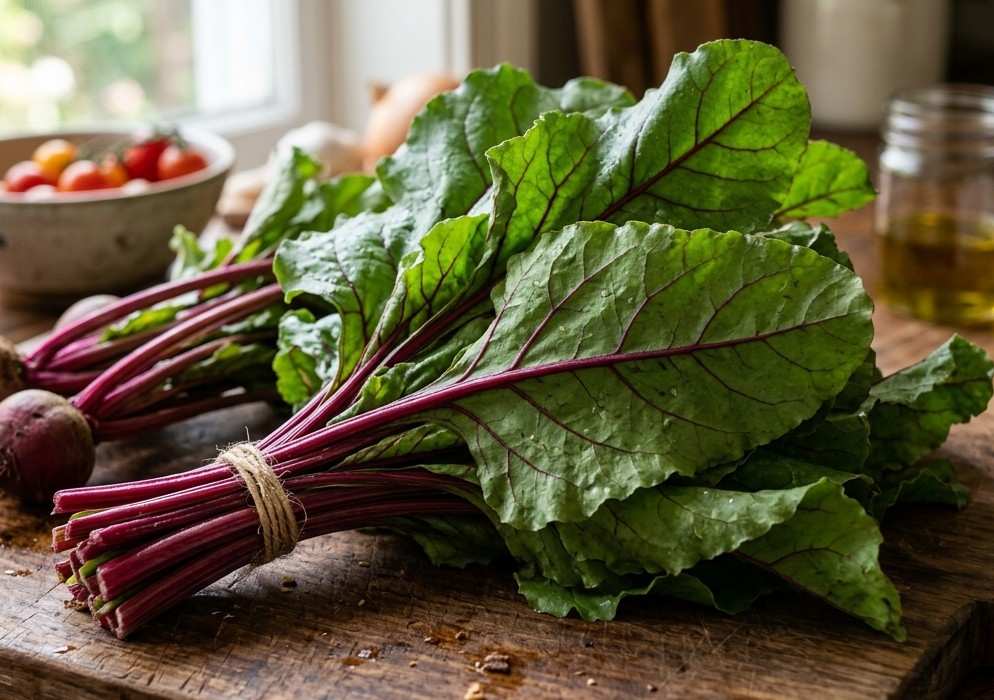
Beet greens are one of the most nutritious leafy vegetables, yet they are often discarded while the beetroot itself is used. These vibrant green leaves are packed with vitamins, minerals, antioxidants, and fiber that support overall health. From improving heart health and strengthening bones to supporting eye health and digestion, beet greens offer an impressive range of health benefits.
In this guide, you’ll learn everything about beet greens, including their nutrition facts, proven health benefits, possible side effects, cooking methods, storage tips, and much more.
What Are Beet Greens?
Beet greens are the edible leafy tops of the beet plant (Beta vulgaris). While the root is commonly eaten, the green leaves and colorful stems are equally edible and often even more nutritious.
The leaves have a slightly earthy, mildly bitter flavor similar to Swiss chard or spinach. Young beet greens are tender enough to eat raw, while mature leaves are best cooked to soften their texture and reduce bitterness.
Beet greens have been consumed for centuries in Mediterranean, European, and Asian cuisines because of their impressive nutritional profile and versatility.
Nutrition Facts of Beet Greens (Per 100 g)
| Nutrient | Amount |
|---|---|
| Calories | 22 kcal |
| Water | 91 g |
| Protein | 2.2 g |
| Carbohydrates | 4.3 g |
| Dietary Fiber | 3.7 g |
| Fat | 0.1 g |
| Vitamin A | 316 mcg |
| Vitamin C | 30 mg |
| Vitamin K | 400+ mcg |
| Folate | 15 mcg |
| Calcium | 117 mg |
| Iron | 2.6 mg |
| Magnesium | 70 mg |
| Potassium | 762 mg |
| Manganese | 0.7 mg |
Values are approximate and may vary depending on growing conditions.
20 Proven Health Benefits of Beet Greens
- Rich in Essential Nutrients: Beet greens provide vitamins A, C, K, calcium, magnesium, potassium, and iron that support overall health.
- Supports Heart Health: Their potassium and nitrate content may help maintain healthy blood pressure and improve circulation.
- Strengthens Bones: High levels of vitamin K and calcium contribute to stronger bones and may reduce osteoporosis risk.
- Boosts Immunity: Vitamin C and antioxidants help strengthen the immune system against infections.
- Improves Eye Health: Vitamin A and carotenoids help maintain healthy vision and may lower the risk of age-related eye diseases.
- Promotes Healthy Digestion: Dietary fiber supports regular bowel movements and improves gut health.
- Helps Manage Weight: Low calories and high fiber increase fullness, making beet greens a smart choice for weight management.
- Supports Healthy Blood Sugar Levels: Fiber slows carbohydrate absorption, helping stabilize blood sugar.
- Reduces Oxidative Stress: Antioxidants help neutralize harmful free radicals that damage cells.
- Supports Brain Function: Nitrates may improve blood flow to the brain, supporting memory and cognitive function.
- Promotes Healthy Skin: Vitamins A and C contribute to collagen production and healthy skin renewal.
- Supports Healthy Hair: Nutrients like iron, vitamin A, and vitamin C contribute to healthy hair growth.
- Helps Prevent Anemia: Iron and vitamin C work together to support healthy red blood cell production.
- Supports Liver Health: Natural plant compounds may assist the body’s detoxification processes.
- May Reduce Inflammation: Antioxidants and phytonutrients may help lower chronic inflammation.
- Supports Muscle Function: Potassium and magnesium help maintain normal muscle contraction and recovery.
- Encourages Healthy Blood Clotting: Vitamin K plays an essential role in normal blood clotting.
- Supports Healthy Pregnancy: Folate contributes to healthy fetal development when consumed as part of a balanced diet.
- May Lower Cholesterol: Dietary fiber may help reduce LDL cholesterol levels.
- Promotes Overall Wellness: The combination of vitamins, minerals, antioxidants, and fiber supports long-term health.
10 Side Effects of Beet Greens
- High Oxalate Content: Beet greens contain oxalates that may increase kidney stone risk in susceptible individuals.
- May Interfere with Blood Thinners: High vitamin K intake can affect medications like warfarin.
- Digestive Discomfort: Eating excessive amounts may cause bloating or gas in some people.
- Possible Allergic Reactions: Rare individuals may experience itching or allergic symptoms.
- May Cause Mineral Absorption Issues: Oxalates can reduce calcium absorption when consumed excessively.
- May Lower Blood Pressure Too Much: Their nitrate content may enhance the effects of blood pressure medications.
- Digestive Changes When Eaten Raw: Large servings of raw beet greens may be harder to digest.
- Possible Beeturia: Some people may notice pink or reddish urine after consuming beet products, although the greens are less likely to cause this than the root.
- Pesticide Exposure: Non-organic greens should be washed thoroughly to remove residues.
- Not Suitable for Everyone in Large Amounts: People with certain kidney conditions should consult their healthcare provider before consuming large quantities.
How to Eat Beet Greens?
There are many delicious ways to include beet greens in your diet:
- Add young leaves to fresh salads.
- Blend them into green smoothies.
- Stir them into soups.
- Mix them with pasta dishes.
- Add them to vegetable stir-fries.
- Cook them with garlic and olive oil.
- Include them in omelets.
- Add to curries.
- Use in grain bowls.
- Mix into casseroles.
Tips for Consuming Beet Greens
- Wash thoroughly before eating.
- Remove damaged leaves.
- Choose bright green leaves without yellowing.
- Pair with healthy fats to improve vitamin absorption.
- Steam or sauté to reduce bitterness.
- Avoid overcooking to preserve nutrients.
- Introduce gradually if you’re increasing fiber intake.
- Pair with vitamin C-rich foods for better iron absorption.
- Rotate leafy greens for dietary variety.
- Eat fresh whenever possible.
How to Cook Beet Greens?
1. Sautéed Beet Greens
Cook chopped greens with olive oil, garlic, and onions for 5–7 minutes.
2. Steamed Beet Greens
Steam for about 3–5 minutes to preserve nutrients.
3. Beet Greens Soup
Add chopped greens during the last few minutes of cooking vegetable soup.
4. Stir-Fried Beet Greens
Cook with mushrooms, peppers, or tofu.
5. Beet Greens Pasta
Mix cooked greens into whole-grain pasta with garlic and parmesan.
6. Smoothies
Blend young leaves with banana, apple, berries, and yogurt.
7. Omelets
Add chopped greens to scrambled eggs or omelets.
8. Curries
Cook alongside lentils or vegetables in mild curry sauces.
Other Uses of Beet Greens
- Natural Compost Ingredient: Beet greens can be composted to enrich garden soil.
- Animal Feed: Fresh beet greens may be used as livestock feed where appropriate.
- Green Juice Ingredient: They can be blended into nutrient-rich vegetable juices.
- Soup Garnish: Finely chopped beet greens add color and nutrition to soups.
- Pesto Alternative: Beet greens can replace basil in homemade pesto.
- Wrap Filling: Cooked greens make a healthy filling for wraps and sandwiches.
- Rice and Grain Bowls: They pair well with quinoa, brown rice, and couscous.
- Pizza Topping: Sautéed beet greens make a nutritious pizza topping.
- Stuffed Vegetable Filling: They can be mixed with cheese or grains for stuffed vegetables.
- Savory Baking Ingredient: Chopped greens can be added to muffins, breads, and savory pies.
How Much Beet Greens Can You Eat in a Day?
Most healthy adults can safely enjoy 1–2 cups of cooked beet greens or 2–3 cups of raw beet greens as part of a balanced diet.
People prone to kidney stones or taking blood-thinning medication should discuss appropriate serving sizes with their healthcare provider.
Best Time to Eat Beet Greens
There is no single best time to eat beet greens. They can be enjoyed:
- At lunch with salads.
- During dinner as a cooked side dish.
- In breakfast omelets.
- In afternoon smoothies.
- Before exercise as part of a balanced meal.
- After workouts alongside protein-rich foods.
Regular consumption is more important than the specific time of day.
Who Should Eat Beet Greens?
- Health-Conscious Adults: Beet greens are ideal for people seeking nutrient-dense foods.
- Athletes: Their minerals and nitrates may support exercise performance.
- Older Adults: Calcium and vitamin K support bone health during aging.
- People with Digestive Concerns: Their fiber promotes healthy digestion.
- Individuals Managing Weight: Low calories and high fiber support satiety.
- Vegetarians: Beet greens provide iron and other important nutrients.
- People Seeking Better Heart Health: Potassium and antioxidants support cardiovascular wellness.
- Busy Professionals: They offer an easy way to boost vegetable intake.
- Families: They provide vitamins and minerals for all age groups.
- Pregnant Women (With Medical Advice): Folate and nutrients can support pregnancy as part of a balanced diet.
Who Should Not Eat Beet Greens?
- People with Kidney Stones: High oxalates may increase stone formation risk.
- Individuals Taking Warfarin: Consistent vitamin K intake is important; consult a healthcare provider.
- People with Severe Kidney Disease: Mineral content may require dietary monitoring.
- Those with Beet Allergies: Avoid consumption if allergic reactions occur.
- Individuals Sensitive to High-Fiber Foods: Introduce gradually to avoid digestive discomfort.
- People on Blood Pressure Medication: Large amounts may enhance blood pressure-lowering effects.
- Those with Certain Digestive Disorders: Raw greens may aggravate symptoms in some cases.
- People Following Low-Oxalate Diets: Consumption may need to be limited.
- Infants: Introduce leafy greens only according to pediatric dietary guidance.
- Anyone Advised by Their Doctor to Limit Leafy Greens: Follow individualized medical recommendations.
How to Store Beet Greens?
- Refrigerate Immediately: Store beet greens as soon as possible after purchase.
- Separate from Beet Roots: Remove the greens from the roots to extend freshness.
- Wrap in Paper Towels: Paper towels absorb excess moisture.
- Use a Plastic Storage Bag: Store loosely in the refrigerator’s vegetable drawer.
- Avoid Washing Before Storage: Wash only before use to reduce spoilage.
- Keep Away from Ethylene-Producing Fruits: Store separately from apples and bananas.
- Use Within 3–5 Days: Fresh greens are most nutritious when eaten quickly.
- Freeze for Long-Term Storage: Blanch before freezing for best quality.
Precautions and Interactions
- Monitor Vitamin K Intake: Maintain consistent intake if taking anticoagulant medications.
- Watch Oxalate Consumption: Limit intake if advised to follow a low-oxalate diet.
- Wash Thoroughly: Remove dirt, bacteria, and pesticide residues before eating.
- Cook When Needed: Cooking may improve digestibility and reduce bitterness.
- Increase Fiber Gradually: Avoid sudden large servings if not accustomed to high-fiber foods.
- Consult a Healthcare Provider During Pregnancy: Discuss dietary changes if you have special medical conditions.
- Be Mindful with Kidney Disease: Seek medical guidance before consuming large quantities.
- Check for Allergic Reactions: Discontinue use if unusual symptoms occur.
- Pair with Balanced Meals: Combine with protein and healthy fats for a well-rounded diet.
- Moderation Is Key: Enjoy beet greens as part of a varied and balanced eating pattern.
Conclusion:
Beet greens are an often-overlooked superfood that deserves a place in your kitchen. Rich in vitamins, minerals, antioxidants, and fiber, they support heart health, digestion, immunity, bone strength, and overall wellness. Whether eaten raw in salads or cooked into soups, stir-fries, and pasta dishes, Beetroot leaves are both nutritious and versatile.
While they are safe for most people, those with kidney stones, kidney disease, or taking blood-thinning medications should consume them with appropriate medical guidance. Adding Beetroot leaves to a balanced diet is an easy way to reduce food waste while enjoying one of nature’s most nutrient-rich leafy vegetables.
FAQ’s
Are beet greens healthier than beetroot?
Beetroot leaves generally contain more vitamin K, vitamin A, vitamin C, calcium, and iron than the beetroot, while the root provides more natural sugars and carbohydrates. Both are nutritious and complement each other.
Can you eat beet greens raw?
Yes. Young, tender beetroot leaves can be eaten raw in salads, sandwiches, or smoothies. Mature leaves are usually better when cooked because they have a slightly bitter taste.
What do beet greens taste like?
Beetroot leaves have a mildly earthy, slightly sweet, and slightly bitter flavor, similar to Swiss chard or spinach.
Are beet greens good for weight loss?
Yes. Beetroot leaves are low in calories and high in fiber, which can help you feel full longer and support healthy weight management.
Are beet greens good for the kidneys?
Beetroot leaves are nutritious, but they are high in oxalates. People with a history of calcium oxalate kidney stones should limit their intake and consult their healthcare provider.
Can diabetics eat beet greens?
Yes. Beetroot leaves are low in calories and rich in fiber, making them a healthy vegetable choice for most people with diabetes as part of a balanced diet.
Are beet greens high in iron?
Yes. Beetroot leaves contain iron, along with vitamin C, which helps improve iron absorption when eaten as part of a varied diet.
Can you eat beet greens every day?
Yes. Most healthy adults can safely enjoy Beetroot leaves daily in moderate portions as part of a balanced diet, unless advised otherwise by a healthcare professional.
Do beet greens lower blood pressure?
Beetroot leaves contain potassium and natural nitrates that may support healthy blood pressure when included in an overall heart-healthy diet.
Are beet greens good for your liver?
Beetroot leaves contain antioxidants and plant compounds that support overall health and may contribute to normal liver function as part of a nutritious diet.
How long do beet greens last in the refrigerator?
Fresh Beetroot leaves usually stay fresh for 3 to 5 days when stored in the refrigerator in a breathable plastic bag or wrapped in paper towels.
Can you freeze beet greens?
Yes. Blanch Beetroot leaves for 2–3 minutes, cool them in ice water, drain well, and freeze them in airtight freezer bags for several months.
Is Beet Greens safe for pregnant women?
Yes. Beetroot leaves are generally safe during pregnancy when eaten in moderation as part of a balanced diet. They provide folate, iron, calcium, and vitamin C, but pregnant women with kidney stone concerns or specific dietary restrictions should consult their healthcare provider.
Is Beet Greens safe for children?
Yes. Beet leaves are safe for most children when cooked and served in age-appropriate portions. They provide important vitamins and minerals that support healthy growth and development.
What is Beet Greens good for?
Beet leaves are good for supporting heart health, bone strength, digestion, immunity, eye health, healthy skin, and overall wellness due to their rich supply of vitamins, minerals, fiber, and antioxidants.
Are beet greens good for kidneys?
Beet leaves are nutritious, but they are high in oxalates. People with healthy kidneys can enjoy them in moderation, while those with kidney stones or chronic kidney disease should consult a healthcare provider before eating them regularly.
Are beet greens as healthy as spinach?
Yes. Beet leaves are just as nutritious as spinach and, in some nutrients such as vitamin K, vitamin A, and potassium, they may contain even higher amounts. Both are excellent additions to a healthy diet.
Can I boil beet greens?
Yes. Beet leaves can be boiled for 2–5 minutes until tender. Avoid overcooking to help preserve their nutrients, color, and flavor.
Are beet greens better cooked or raw?
Both are healthy. Raw Beet leaves retain more vitamin C, while cooking makes them easier to digest, reduces bitterness, and slightly lowers their oxalate content.
How do you get the bitterness out of beet greens?
Blanch or sauté Beet leaves with garlic, onions, olive oil, or a splash of lemon juice or vinegar. Using younger leaves and removing thick stems also helps reduce bitterness.
How long do you blanch beet greens?
Blanch beet leaves in boiling water for 2 to 3 minutes, then immediately transfer them to ice water to stop the cooking process and preserve their bright green color.
Sources / References:
- U.S. Department of Agriculture (USDA) FoodData Central
- Harvard T.H. Chan School of Public Health – The Nutrition Source
- National Institutes of Health (NIH)
- Academy of Nutrition and Dietetics
Disclaimer:
This article is for educational and informational purposes only and should not be considered medical advice. Always consult a qualified healthcare professional before making significant dietary or health-related changes, especially if you have an existing medical condition, are pregnant, breastfeeding, or taking medications.
Also Read: