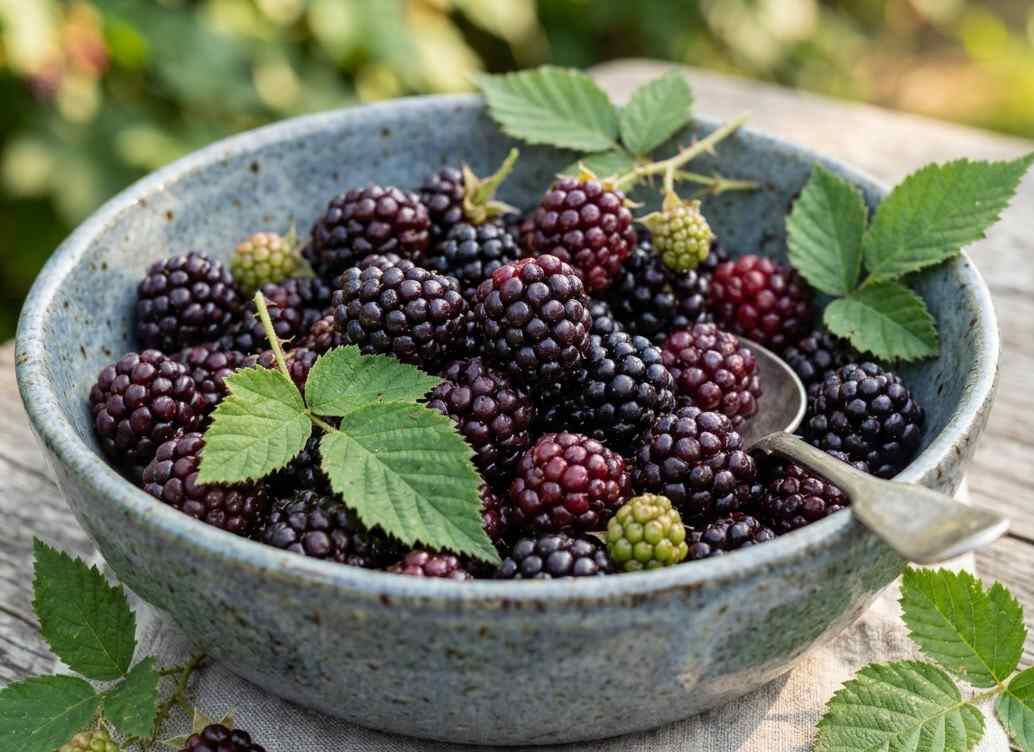
Boysenberries are a juicy, dark-colored berry known for their sweet-tart flavor and soft texture. They are especially interesting from a nutrition perspective because they provide dietary fiber, vitamin C, potassium, vitamin K, and naturally occurring polyphenols such as anthocyanins.
Like other berries, boysenberries can be included in a balanced diet as a fresh snack, breakfast topping, smoothie ingredient, or dessert. Research on berries overall suggests potential benefits for cardiovascular and metabolic health, although the strength of evidence varies by berry, amount consumed, and study design.
What Are Boysenberries?
Boysenberries are a hybrid berry belonging to the Rubus genus. They are closely related to blackberries and raspberries and have a deep reddish-purple to almost black appearance when ripe.
The berries are soft, juicy, and usually larger than many common raspberries. Their flavor combines sweetness with noticeable tartness, making them suitable for both fresh eating and cooking.
Boysenberries are particularly valued for their fiber and vitamin C content. Their dark color also reflects the presence of plant compounds, including anthocyanins and other polyphenols. A recent review specifically examining edible berries includes boysenberry among berries with potentially important bioactive compounds such as flavonoids, phenolics, and anthocyanins.
Nutrition Facts of Boysenberries
Approximate nutrition values for 100 grams of raw boysenberries are shown below. Values can vary slightly according to variety, growing conditions, and ripeness.
| Nutrient | Amount per 100 g |
|---|---|
| Calories | 43 kcal |
| Water | 88.15 g |
| Protein | 1.39 g |
| Total Fat | 0.49 g |
| Carbohydrates | 9.61 g |
| Dietary Fiber | 5.3 g |
| Total Sugars | 4.88 g |
| Calcium | 29 mg |
| Iron | 0.62 mg |
| Magnesium | 20 mg |
| Phosphorus | 22 mg |
| Potassium | 162 mg |
| Sodium | 1 mg |
| Vitamin C | 21 mg |
| Vitamin E | 1.17 mg |
| Vitamin K | 19.8 mcg |
| Folate | 25 mcg |
| Vitamin A | 11 mcg RAE |
| Lutein + Zeaxanthin | 118 mcg |
20 Proven Health Benefits of Boysenberries
- Supports Digestive Health: The dietary fiber in boysenberries can help support regular bowel movements and normal digestive function.
- Provides Antioxidant Compounds: Boysenberries contain polyphenols and anthocyanins that contribute to their antioxidant activity.
- Supports Heart Health: Berry-rich diets have been associated with improvements in several cardiovascular risk markers, although results vary among studies and berry types.
- May Support Healthy Blood Vessels: Polyphenols found in berries have been studied for their potential effects on endothelial and vascular function.
- Helps Increase Vitamin C Intake: Boysenberries provide about 21 mg of vitamin C per 100 grams, contributing to daily vitamin C intake.
- Supports Immune Function: Vitamin C contributes to normal immune-system function, making vitamin-C-containing fruits useful additions to a varied diet.
- Supports Healthy Skin: Vitamin C is required for normal collagen formation, while plant polyphenols provide antioxidant compounds that may help protect cells from oxidative stress.
- Supports Healthy Digestion: The combination of water and dietary fiber makes boysenberries a useful fruit choice for maintaining a fiber-rich eating pattern.
- May Support Healthy Cholesterol Levels: Research involving anthocyanin-rich berries has reported modest improvements in some blood lipid measures, although these findings should not be attributed specifically to boysenberries.
- May Help With Oxidative Stress: Berry consumption has been studied for its effects on antioxidant capacity and oxidative-stress biomarkers, although clinical results are not completely consistent.
- Supports Healthy Blood Pressure: Some randomized trials of berries have reported favorable effects on blood pressure, but evidence differs according to berry type and intervention.
- Provides Potassium: Boysenberries provide approximately 162 mg of potassium per 100 grams, contributing to overall potassium intake.
- May Support Metabolic Health: Berry interventions have shown potentially favorable effects on selected glucose and metabolic markers in some clinical studies.
- Supports Healthy Weight Management: Their relatively low calorie content combined with dietary fiber can make boysenberries a satisfying addition to a balanced eating pattern.
- Supports Bone Nutrition: Boysenberry provide small amounts of calcium, magnesium, vitamin K, and other nutrients involved in normal bone maintenance.
- Provides Vitamin K: Vitamin K in boysenberry contributes to normal blood clotting and bone metabolism.
- Provides Folate: Boysenberries contain folate, a B vitamin needed for DNA synthesis and normal cell division.
- Supports Eye Nutrition: Boysenberries provide carotenoids including lutein and zeaxanthin, compounds involved in eye-related nutrition.
- May Help Support a Heart-Healthy Diet: Replacing highly processed desserts or snacks with whole berries can increase intake of fiber and plant compounds while keeping calorie intake relatively modest.
10 Side Effects of Boysenberries
Boysenberries are generally well tolerated as a food, but consuming large amounts or eating them when you have a particular sensitivity can cause problems.
- Digestive Discomfort: Eating a large amount at once may cause gas, bloating, or abdominal discomfort because of their fiber content.
- Loose Stools: A sudden increase in dietary fiber from boysenberry may cause loose stools in some people.
- Allergic Reactions: People with a berry allergy may experience itching, hives, swelling, or other allergic symptoms after eating boysenberries.
- Oral Irritation: The natural acids and seeds may irritate the mouth in people who are particularly sensitive.
- Acid Reflux Symptoms: Tart berries may aggravate reflux symptoms in some individuals, although this response varies from person to person.
- Stomach Upset: Eating a large quantity on an empty stomach may cause temporary stomach discomfort in sensitive individuals.
- Fiber-Related Bloating: Rapidly increasing fiber intake without adequate fluids may contribute to bloating or constipation.
- Blood Sugar Considerations: Whole boysenberries contain relatively little sugar compared with many sweetened berry products, but people monitoring carbohydrate intake should still account for the portion consumed.
- Medication Considerations: People taking medications affected by vitamin K intake should discuss major dietary changes with their healthcare professional.
- Spoilage-Related Illness: Fresh berries can become contaminated or spoiled, so damaged, moldy, or visibly deteriorated berries should be discarded rather than eaten.
How to Eat Boysenberries?
Boysenberries can be eaten in several simple ways:
- Wash fresh berries gently under cool running water before eating.
- Eat them plain as a snack.
- Add them to oatmeal or porridge.
- Mix them into plain yogurt or Greek yogurt.
- Add them to smoothies.
- Use them as a topping for whole-grain pancakes or waffles.
- Mix them into fruit salads.
- Blend them into homemade sauces or purees.
- Add them to chia pudding.
- Use frozen unsweetened boysenberry in smoothies and desserts.
Fresh boysenberries are delicate, so handle them gently to avoid crushing them.
Tips for Consuming Boysenberries
- Choose berries that are plump, deeply colored, and free from visible mold.
- Wash them shortly before eating rather than washing large quantities far in advance.
- Start with a small serving if you are not accustomed to high-fiber foods.
- Choose fresh or frozen unsweetened berries instead of products containing large amounts of added sugar.
- Combine boysenberries with protein- or fat-containing foods such as yogurt, nuts, or seeds for a more balanced snack.
- If using frozen berries, check the package for added sugar.
- Avoid eating berries that have an unpleasant odor, excessive softness, or visible mold.
Other Uses of Boysenberries
- Smoothies: Boysenberry add natural color, tartness, and fiber to homemade smoothies.
- Jams and Preserves: Their sweet-tart flavor makes them suitable for homemade jams, jellies, and preserves.
- Desserts: Boysenberries can be used in pies, crisps, cobblers, muffins, and other baked desserts.
- Yogurt Toppings: Fresh or thawed berries can be combined with yogurt, oats, and seeds.
- Fruit Sauces: Cooked boysenberry can be turned into sauces for pancakes, oatmeal, and desserts.
- Salads: Their tart flavor can add contrast to green salads and grain-based salads.
- Frozen Treats: Pureed boysenberry can be incorporated into homemade frozen desserts and fruit pops.
- Beverages: Boysenberry puree can be added to smoothies, infused water, and homemade non-alcoholic drinks.
- Breakfast Foods: They can be added to oatmeal, chia pudding, cereal, and whole-grain pancakes.
- Baking: Boysenberry can provide moisture, flavor, and natural color to homemade baked goods.
How Much Boysenberries Can You Eat in a Day?
For most healthy adults, about ½ to 1 cup of fresh boysenberries per day is a practical serving within a balanced diet. One US cup of raw boysenberries weighs approximately 144 grams, so this serving provides roughly 62 calories based on USDA-derived data.
There is no scientifically established therapeutic daily dose of whole boysenberry. Your ideal portion depends on your overall diet, fiber intake, calorie needs, and individual tolerance.
Best Time to Eat Boysenberries
There is no specific time of day when boysenberries must be eaten.
They can be enjoyed:
- With breakfast
- As a mid-morning snack
- With lunch
- As an afternoon snack
- With yogurt after exercise
- As part of an evening meal or dessert
For people with sensitive digestion or reflux, eating a smaller portion with other foods may be more comfortable than consuming a large amount on an empty stomach.
Who Should Eat Boysenberries?
- Healthy Adults: Most healthy adults can enjoy boysenberry as part of a varied diet rich in fruits and vegetables.
- People Seeking More Fiber: Their approximately 5.3 grams of fiber per 100 grams makes them a useful addition to a fiber-rich diet.
- People Seeking Vitamin C Foods: Boysenberries provide vitamin C and can contribute to daily fruit intake.
- People Following Heart-Healthy Eating Patterns: Whole berries can fit well into eating patterns emphasizing fruits, vegetables, fiber, and minimally processed foods.
- People Looking for Lower-Calorie Snacks: Fresh boysenberry provide relatively few calories for their volume.
- People Who Enjoy Plant-Based Foods: Boysenberry provide naturally occurring plant polyphenols, vitamins, minerals, and fiber.
- People Wanting More Fruit Variety: They offer a way to diversify fruit intake beyond commonly eaten berries.
Who Should Not Eat Boysenberries?
- People With a Known Berry Allergy: Anyone with a confirmed allergy to boysenberry or a closely related berry should avoid them unless advised otherwise by an allergy specialist.
- People With Significant Digestive Sensitivity: Those who consistently develop bloating or diarrhea after eating berries may need to reduce their portion or avoid them.
- People With Active Food-Related Symptoms: Anyone who develops swelling, breathing difficulty, widespread hives, or other serious allergic symptoms after eating them should seek urgent medical attention.
- People Following a Medically Prescribed Diet: Individuals on specialized diets should check whether boysenberries fit their specific nutritional restrictions.
- People Taking Certain Medications: Anyone whose medication requires consistent vitamin K intake should discuss substantial changes in berry and fruit consumption with their healthcare professional.
How to Store Boysenberries?
- Refrigerate Quickly: Store fresh boysenberry in the refrigerator as soon as practical after purchase.
- Keep Them Dry: Excess moisture can encourage mold growth, so keep the berries dry until you are ready to wash them.
- Use a Breathable Container: A shallow container that allows some airflow can help prevent moisture accumulation.
- Remove Damaged Berries: Take out crushed or moldy berries promptly to reduce the chance of spoilage spreading.
- Wash Before Eating: Wash the berries gently under cool running water shortly before consumption.
- Freeze for Longer Storage: Boysenberries can be frozen when you cannot consume them quickly.
- Use Frozen Berries in Smoothies: Frozen berries can be added directly to smoothies or thawed for cooking.
Precautions and Interactions
- Watch Portion Size: Large amounts may cause bloating, gas, or loose stools because of their fiber content.
- Consider Vitamin K Intake: People taking vitamin-K-sensitive anticoagulant medication should maintain a consistent dietary pattern and discuss significant changes with their healthcare professional.
- Check for Allergies: Stop eating boysenberry and seek medical advice if you develop symptoms suggesting an allergic reaction.
- Avoid Moldy Berries: Do not eat berries showing visible mold or significant spoilage.
- Wash Properly: Rinse fresh berries under clean running water before eating.
- Choose Unsweetened Products: Jams, canned berries, syrups, and desserts can contain considerably more added sugar than fresh fruit.
- Introduce Fiber Gradually: If your usual diet is low in fiber, increase berry intake gradually and drink adequate fluids.
- Do Not Treat Disease With Berries: Boysenberries can complement a healthy diet but should not replace prescribed treatment for medical conditions.
- Check Supplements Separately: Boysenberry extracts or anthocyanin supplements may have different concentrations and effects than whole fruit.
- Ask About Individual Interactions: If you take prescription medicines or have a medical condition requiring dietary restrictions, ask your healthcare professional whether regular boysenberry consumption is appropriate.
What Does the Research Say About Boysenberries?
Research on boysenberries is promising but should be interpreted carefully. Boysenberry contain anthocyanins and other polyphenols, and reviews of edible berries describe potential antioxidant, anti-inflammatory, cardiovascular, metabolic, and other biological activities.
Research specifically involving boysenberry anthocyanins is still much smaller than the overall berry literature. For example, a recent randomized crossover trial involving 22 healthy adults investigated a boysenberry beverage containing 61 mg of boysenberry anthocyanins daily for four weeks. The study did not find a significant change in diet-induced thermogenesis or brown-adipose-tissue skin temperature.
This is an important distinction: laboratory findings and studies of concentrated extracts cannot automatically be translated into proven disease-treatment effects from eating ordinary portions of fresh boysenberry.
FAQ’s
Are boysenberries healthy?
Yes, boysenberry provide fiber, vitamin C, vitamin K, potassium, and antioxidant plant compounds.
Are boysenberries good for weight loss?
Boysenberry can support a calorie-conscious diet because they are relatively low in calories and provide dietary fiber, but they do not directly cause weight loss.
Can you eat boysenberries every day?
Yes, most people can safely enjoy a moderate serving of boysenberry every day as part of a balanced diet.
Are boysenberries high in sugar?
No, raw boysenberry contain relatively little natural sugar compared with many other sweet fruits.
Are boysenberries good for digestion?
Yes, their dietary fiber can support regular bowel movements and overall digestive health.
Can boysenberries help with constipation?
Their fiber and water content may help support regular bowel movements, especially when consumed with adequate fluids.
Are boysenberries good for the heart?
Boysenberry can contribute to a heart-healthy diet by providing fiber, potassium, vitamin C, and polyphenolic compounds.
Can diabetics eat boysenberries?
People with diabetes can generally include whole boysenberry in appropriate portions, while considering their total carbohydrate intake and individual blood-glucose goals.
Are boysenberries good for the skin?
They provide vitamin C and antioxidant plant compounds that can support normal skin health.
Can children eat boysenberries?
Yes, children can generally eat boysenberry when served in an age-appropriate form that reduces choking risk.
Are boysenberries safe during pregnancy?
Boysenberry can generally be part of a healthy pregnancy diet when properly washed and consumed as part of a balanced diet.
Can you eat boysenberries on an empty stomach?
Yes, although people with sensitive digestion may prefer eating them with other foods.
Are fresh or frozen boysenberries better?
Both can be nutritious, but choose frozen boysenberry without added sugar when fresh berries are unavailable.
Can you be allergic to boysenberries?
Yes, although uncommon, berry allergies can cause symptoms such as itching, hives, swelling, or other allergic reactions.
Are boysenberries the same as blackberries?
No. Boysenberry are a hybrid berry related to blackberries and raspberries, with a distinctive larger size and sweet-tart flavor.
What are boysenberries good for?
Boysenberry are good for adding fiber, vitamin C, vitamin K, potassium, and antioxidant plant compounds to your diet.
What do boysenberries taste like?
Boysenberry have a sweet-tart, juicy flavor that combines characteristics of raspberries and blackberries.
Can you get boysenberries in the UK?
Yes, but fresh boysenberry can be difficult to find in the UK, so they are more commonly available seasonally, frozen, or through specialty fruit suppliers.
Can you eat boysenberries raw?
Yes, ripe boysenberry can be eaten raw after being gently washed under clean running water.
Why is it so hard to find boysenberries?
Boysenberry are delicate, highly perishable, and less widely cultivated than common berries, which makes them harder to transport and stock in supermarkets.
Where can I buy boysenberries?
Boysenberry may be available from specialty fruit growers, farmers’ markets, selected supermarkets, online produce suppliers, or as frozen berries.
Are mulberries and boysenberries the same?
No, mulberries and boysenberry are different fruits; mulberries grow on trees in the Morus genus, while boysenberries are hybrid brambles in the Rubus genus.
Are boysenberries healthier than blackberries?
Both can be nutritious, and neither can be universally considered healthier because their nutritional profiles are broadly similar but vary by serving size and variety.
How do I grow boysenberries?
Boysenberry grow best in well-drained, fertile soil with good sunlight, regular watering, support such as a trellis, and pruning to manage their long, trailing canes.
Are huckleberries and boysenberries the same thing?
No, huckleberries and boysenberry are different fruits from different plant groups, although both can have a sweet-tart flavor and dark coloration.
Sources / References:
Disclaimer:
This guide is for informational purposes only and does not replace professional medical advice, diagnosis, or treatment. Consult a qualified healthcare professional for personalized guidance.
Also Read:
1 thought on “Boysenberries: Nutrition, 20 Benefits, Side Effects & How Much to Eat”