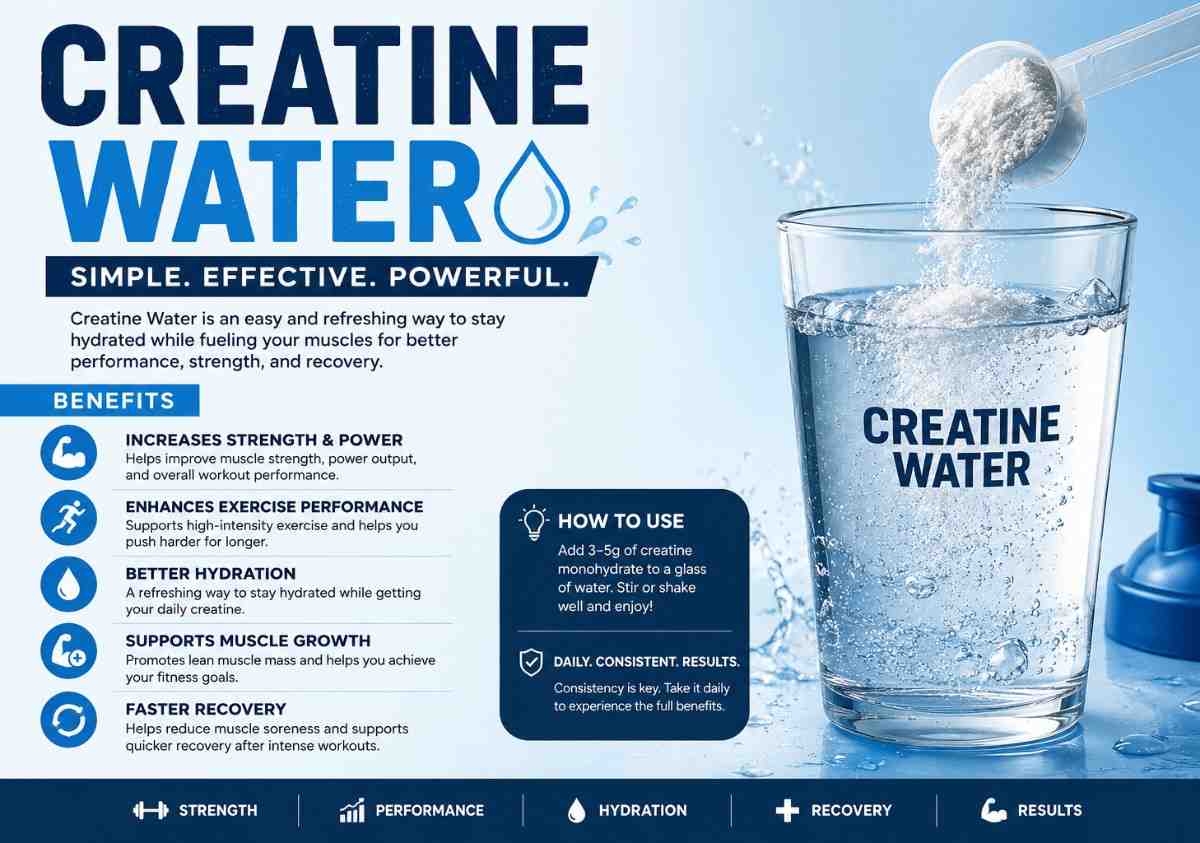
Creatine water has become a simple and popular way to take creatine, especially among people who exercise, lift weights, play sports, or want to support muscle performance. The idea is straightforward: mix creatine powder, usually creatine monohydrate, into water and drink it.
Creatine itself is one of the most researched sports supplements. Evidence shows that creatine supplementation can improve strength, power, and performance during repeated short bursts of high-intensity activity. It can also support increases in lean body mass when combined with resistance training.
Importantly, “creatine water” is not a special type of water. It simply refers to water containing dissolved creatine. The benefits mainly come from the creatine rather than the water itself.
What Is Creatine Water?
Creatine water is ordinary drinking water mixed with a creatine supplement, most commonly creatine monohydrate.
Creatine is a naturally occurring compound stored primarily in skeletal muscle, where it contributes to the phosphocreatine system used to rapidly regenerate ATP, the body’s immediate energy source during intense activity.
A typical serving contains about 3–5 grams of creatine monohydrate mixed into approximately 250–500 mL of water. A daily dose of 3–5 grams is commonly used and a loading phase is not necessary for achieving benefits over time.
Creatine water can be consumed before or after exercise, or at another convenient time. Consistency is generally more important than trying to find a perfect minute of the day.
Nutrition Facts of Creatine Water
The exact nutrition profile depends on what you add to the water. Plain creatine monohydrate contains essentially no carbohydrate, fat, or protein in the way a conventional food serving does.
| Nutrient | Typical Creatine Water* |
|---|---|
| Water | 250–500 mL |
| Creatine monohydrate | 3–5 g |
| Calories | Approximately 0–20 kcal |
| Protein | 0 g |
| Carbohydrates | 0 g |
| Fat | 0 g |
| Sugar | 0 g |
| Fiber | 0 g |
| Sodium | Usually 0 mg |
| Caffeine | 0 mg |
*Values vary by product. Flavored creatine powders may contain sweeteners, carbohydrates, electrolytes, or other ingredients, so check the product label.
20 Science-Backed Benefits of Creatine Water
1. Supports High-Intensity Exercise Performance: Creatine helps replenish phosphocreatine stores, supporting repeated short bursts of intense exercise such as weightlifting and sprinting.
2. May Increase Muscle Strength: Creatine combined with resistance training can produce greater upper- and lower-body strength gains than resistance training alone.
3. Supports Muscle Power: By helping regenerate ATP rapidly, creatine can support powerful movements that require short-duration, high-intensity effort.
4. May Improve Repeated-Sprint Performance: Research suggests creatine can improve mean power during repeated sprint efforts, although not every sprint-performance measure improves consistently.
5. Supports Lean Body Mass: Creatine supplementation alongside resistance training has been associated with greater increases in lean body mass than resistance training alone.
6. Helps Support Training Capacity: Better availability of phosphocreatine may allow people to maintain performance across repeated sets or high-intensity efforts.
7. Supports Muscle Energy Stores: Regular supplementation increases the amount of creatine available within skeletal muscle, strengthening the body’s phosphocreatine energy system.
8. May Support Resistance-Training Adaptations: Creatine appears particularly useful when paired with a consistent resistance-training program rather than used as a replacement for exercise.
9. Can Support Healthy Muscle Function With Aging: Research is investigating creatine as a tool for maintaining physical function and muscle performance in older adults, particularly when combined with exercise.
10. May Support Physical Function: Evidence suggests creatine supplementation may have potential for improving physical function in some populations at risk of functional decline, although results vary by population.
11. May Support Muscle Recovery: Creatine is being studied for its potential role in recovery and training adaptation, although recovery benefits are less firmly established than its effects on strength and high-intensity performance.
12. May Help Increase Training Quality: When creatine allows an individual to perform more high-quality work over time, it may indirectly contribute to better training adaptations.
13. May Increase Body Weight Through Muscle Water Storage: Creatine commonly increases body weight because more water is stored within muscle cells, particularly during the early stages of supplementation.
14. May Support Muscle Mass During Resistance Training: Research indicates that creatine can add to lean-mass gains achieved through resistance training.
15. May Support Certain Aspects of Memory: A 2024 systematic review and meta-analysis found potential improvements in memory with creatine supplementation, although evidence for broader cognitive benefits remains mixed.
16. May Support Attention and Processing Speed: Some clinical trials have reported improvements in attention time and processing speed, but researchers note that the certainty of evidence is limited for several cognitive outcomes.
17. May Be Useful for People With Lower Dietary Creatine Intake: People who consume little or no animal-derived food may have different baseline creatine stores, making creatine supplementation an area of particular research interest.
18. Supports Short-Duration Athletic Activities: Creatine is particularly useful for activities involving repeated, intense efforts rather than long-duration endurance exercise.
19. May Complement Sports Training: Athletes participating in strength, power, sprinting, and intermittent sports may benefit more than endurance athletes because of the energy demands of their activities.
20. Has a Strong Research Base: Creatine monohydrate is among the most extensively studied sports supplements, with evidence supporting its effectiveness and generally good tolerability at commonly used doses.
10 Side Effects of Creatine Water
Creatine is generally well tolerated by healthy adults when used appropriately, but some people can experience unwanted effects.
1. Water Weight Gain: Creatine can increase water stored in muscle cells, which may cause a noticeable increase in body weight, especially during the first days or weeks.
2. Bloating: Some people experience a feeling of bloating after taking creatine, particularly when consuming larger amounts at once.
3. Stomach Discomfort: Mild stomach upset can occur in some individuals, particularly with large single doses.
4. Diarrhea: Higher single servings can increase the likelihood of gastrointestinal symptoms such as diarrhea.
5. Nausea: Some users may experience nausea or an unsettled stomach after taking creatine, although this is not experienced by everyone.
6. Muscle Stiffness or Cramps: Muscle stiffness or cramping has occasionally been reported, but controlled evidence does not support the common claim that creatine routinely causes cramps.
7. Changes in Blood Creatinine: Creatine supplementation can increase measured serum creatinine because creatinine is a breakdown product of creatine, which can complicate interpretation of kidney blood tests.
8. Excessive Intake Problems: Taking substantially more than necessary can increase the likelihood of gastrointestinal discomfort without providing a proportional benefit.
9. Product-Related Reactions: Flavored creatine products may contain sweeteners, additives, or other ingredients that cause symptoms in sensitive individuals.
10. Potential Concerns in Kidney Disease: Although evidence in healthy adults is reassuring, people with existing kidney problems should discuss creatine supplementation with a healthcare professional before using it.
How to Make Creatine Water?
Making creatine water is very simple.
Ingredients:
- 250–500 mL drinking water
- 3–5 g creatine monohydrate
Method:
- Pour the desired amount of water into a clean glass or shaker.
- Add 3–5 g of creatine monohydrate.
- Shake or stir thoroughly.
- Drink it after the powder has dispersed.
- If some powder settles at the bottom, add a little more water, swirl the container, and drink the remainder.
Creatine monohydrate is generally the best-studied form of creatine, so there is usually little reason for healthy adults to choose a more expensive form simply because it is marketed as superior.
Tips for Consuming Creatine Water
- Choose Creatine Monohydrate: Look for plain creatine monohydrate from a reputable manufacturer.
- Use a Consistent Daily Dose: A common maintenance approach is 3–5 g daily.
- Do Not Feel You Need a Loading Phase: A loading protocol can increase muscle creatine stores faster, but it is not essential.
- Mix With Enough Water: Using a reasonable amount of water can make the drink easier to consume and may reduce the chance of stomach discomfort.
- Take It Consistently: Taking creatine every day is generally more important than choosing an exact pre-workout or post-workout time.
- Avoid Unnecessary Mega-Doses: More creatine is not automatically better, and large single servings may increase gastrointestinal discomfort.
- Stay Normally Hydrated: Drink fluids according to thirst, activity, climate, and individual needs rather than forcing excessive amounts of water.
- Read the Label: Some creatine products contain caffeine, sugar, electrolytes, or other ingredients in addition to creatine.
Other Uses of Creatine Water
Creatine does not have to be mixed exclusively with plain water. It can also be incorporated into other beverages and foods.
- Post-Workout Drinks: Creatine can be mixed into a protein shake or other post-workout beverage.
- Smoothies: A serving can be added to a fruit or protein smoothie.
- Milk-Based Drinks: Creatine can be mixed into milk or a milk alternative if the product mixes well.
- Juices: Some people mix creatine with juice for convenience.
- Sports Nutrition Routine: Creatine can become part of a regular hydration or post-exercise routine.
However, the primary purpose remains delivering the appropriate daily amount of creatine rather than turning water into a special health drink.
How Much Creatine Water Can You Drink in a Day?
There is no specific medical requirement to drink a certain amount of “creatine water.” The important measurement is the amount of creatine you consume.
For most healthy adults using creatine for exercise, 3–5 g of creatine monohydrate per day is a commonly supported maintenance range.
The amount of water used to dissolve it can vary. For example:
| Creatine | Water |
|---|---|
| 3 g | 250–400 mL |
| 5 g | 250–500 mL |
| Loading dose, if used | Usually divided into multiple servings rather than one large drink |
A traditional loading approach may use approximately 20 g per day divided into several servings for around 5–7 days, followed by a lower maintenance dose. Loading is optional and is not required for long-term effectiveness.
Your overall daily fluid intake should include water from all beverages and foods, and should be adjusted for exercise, heat, sweating, and individual needs.
Best Time to Drink Creatine Water
There is no universally established “best” time to drink creatine water.
- Before Exercise: Taking it before training is convenient if it helps you remember your daily dose.
- After Exercise: Many people prefer taking creatine after workouts alongside a meal or protein shake.
- With a Meal: Taking creatine with food can be convenient and may improve adherence to a daily routine.
- On Rest Days: Creatine can still be taken on rest days because the goal is to maintain elevated muscle creatine stores rather than provide an immediate stimulant effect.
In practical terms, the most important factor is taking it consistently every day, rather than worrying about whether it is consumed exactly before or after exercise.
Who Should Drink Creatine Water?
- Healthy Adults Who Strength Train: Adults who regularly perform resistance training may use creatine to support strength, power, and lean-mass gains.
- People Participating in High-Intensity Sports: Athletes involved in sprinting, weightlifting, and intermittent high-intensity sports may benefit because creatine supports short-duration, intense efforts.
- People Seeking Greater Training Performance: Individuals who want to improve their ability to perform repeated high-intensity efforts may consider creatine as part of a broader training program.
- Adults Interested in Maintaining Muscle: Older adults may discuss creatine with a qualified professional, particularly when combining supplementation with resistance exercise.
- People Looking for a Convenient Supplement Routine: Creatine water provides a simple way to consume a measured daily dose without complicated preparation.
Who Should Avoid Creatine Water?
- People With Kidney Disease: Anyone with diagnosed kidney disease should speak with a healthcare professional before taking creatine because evidence in people with existing kidney conditions is more limited.
- People With Significant Liver or Other Medical Conditions: Individuals with chronic medical conditions should discuss supplement use with their healthcare provider rather than assuming a standard dose is appropriate.
- Pregnant or Breastfeeding Individuals: There is insufficient evidence to recommend routine creatine supplementation during pregnancy or breastfeeding without professional guidance.
- People Taking Medications That Affect Kidney Function: Anyone using medications that may affect kidney function should ask a healthcare professional before starting creatine.
- People With Persistent Gastrointestinal Symptoms: If creatine repeatedly causes diarrhea, severe stomach discomfort, or other persistent symptoms, stop using it and discuss the symptoms with a healthcare professional.
- Children and Adolescents: Creatine use in younger people should be guided by a qualified healthcare or sports-nutrition professional rather than self-directed supplementation.
How to Store Creatine Water?
- Prepare It Fresh When Practical: Mixing creatine shortly before drinking is a simple way to avoid unnecessary storage.
- Use a Clean Container: Always mix creatine water in a clean glass, bottle, or shaker.
- Refrigerate If You Need to Store It Briefly: If prepared in advance, keep the drink refrigerated and use it promptly rather than leaving it at room temperature for long periods.
- Avoid Heat and Direct Sunlight: Keep prepared drinks away from excessive heat and sunlight.
- Follow Product Instructions: Some products may provide specific mixing or storage instructions, so follow the manufacturer’s guidance.
- Do Not Keep Old Mixed Drinks: If the drink develops an unusual smell, appearance, or taste, discard it.
Precautions and Interactions
Creatine is generally considered well tolerated in healthy adults at commonly used doses, but individual circumstances matter. A 2025 analysis of clinical trials found no overall increase in the frequency of reported side effects compared with placebo, while gastrointestinal symptoms were among the more commonly reported issues.
One important point is that creatine can increase serum creatinine measurements without necessarily indicating kidney damage. A 2026 systematic review and meta-analysis found that creatine supplementation was associated with an increase in serum creatinine but did not find significant changes in estimated kidney filtration; researchers still noted that longer-term research is needed.
Before starting creatine, consider the following precautions:
- Tell your healthcare professional that you use creatine if you have blood tests involving kidney function.
- Do not assume that a higher dose will produce faster or better results.
- Check combination supplements carefully because you may unknowingly consume creatine from multiple products.
- Use a reputable product with clear ingredient labeling.
- If you have kidney disease, are pregnant or breastfeeding, take medications regularly, or have another significant medical condition, seek professional advice before supplementation.
- Stop supplementation and seek medical advice if you develop severe or persistent symptoms.
Creatine Water: Final Takeaway
Creatine water is simply water mixed with creatine, most commonly creatine monohydrate. It is an easy and practical way to take one of the most extensively studied sports supplements.
For healthy adults, 3–5 g of creatine monohydrate daily is a commonly used maintenance amount. The strongest evidence supports improvements in strength, power, high-intensity exercise performance, and lean body mass when creatine is combined with appropriate training.
Creatine is not a magic muscle-building drink, and it cannot replace adequate protein, balanced nutrition, sleep, hydration, and progressive exercise. It works best as one small part of an overall healthy lifestyle.
FAQ’s
Is creatine water good for you?
For most healthy adults, creatine can be beneficial for supporting muscle strength, power, high-intensity exercise performance, and lean body mass when combined with appropriate training.
How much creatine should I put in water?
A commonly used daily amount is 3–5 grams of creatine monohydrate mixed with about 250–500 mL of water.
Can I drink creatine water every day?
Yes, healthy adults commonly take creatine daily because consistent use helps maintain increased creatine stores in the muscles.
Does creatine water help build muscle?
Creatine can support muscle growth indirectly by improving training performance and, when combined with resistance training, increasing gains in lean body mass.
Does creatine water make you gain weight?
It can increase body weight, particularly initially, because creatine increases water stored inside muscle cells; this is not the same as gaining body fat.
Can I drink creatine water before a workout?
Yes, creatine water can be consumed before exercise, although creatine does not work like a stimulant and does not need to be taken immediately before training.
Can I drink creatine water after a workout?
Yes, taking creatine after exercise is a convenient option, especially when combined with a meal or protein shake.
Can I drink creatine water on rest days?
Yes, taking creatine on rest days helps maintain muscle creatine stores and supports consistent daily supplementation.
Does creatine water hydrate you?
The water contributes to your overall fluid intake, but creatine itself should not be considered a substitute for normal hydration.
Can creatine water cause bloating?
Some people experience bloating or stomach discomfort, particularly when taking large doses at once; splitting the dose or using a standard 3–5 g daily serving may improve tolerance.
Does creatine water cause kidney damage?
Research in healthy adults has generally found creatine to be well tolerated at recommended doses, but people with existing kidney disease should consult a healthcare professional before using it.
Can creatine water cause diarrhea?
Yes, particularly when large amounts of creatine are consumed in a single serving.
Can women drink creatine water?
Healthy adult women can generally use creatine, particularly when interested in supporting strength, exercise performance, or muscle mass.
Can beginners take creatine water?
Yes, beginners can use creatine, although it works best as part of a well-planned exercise, nutrition, and recovery routine.
Can I take creatine water without working out?
Creatine can still increase muscle creatine stores without exercise, but many of its best-established performance and body-composition benefits are seen when it is combined with resistance or high-intensity training.
Is creatine water better than creatine powder?
Creatine water is simply a convenient way of consuming creatine powder. The benefits depend primarily on the creatine itself, not whether it is consumed as a premixed drink.
Can I mix creatine with cold water?
Yes, creatine can be mixed with cold water, although it may dissolve more slowly than in warmer liquid.
Can I mix creatine with hot water?
It is generally preferable to follow the product’s instructions and avoid unnecessarily exposing creatine to prolonged high temperatures.
Can I mix creatine with juice?
Yes, creatine can be mixed with juice if you prefer the taste, although plain water is a simple option with no added sugar or calories.
Can I mix creatine with a protein shake?
Yes, creatine can conveniently be added to a protein shake or smoothie.
Does creatine water expire?
Prepared creatine water should ideally be consumed promptly rather than stored for long periods; follow the manufacturer’s instructions if the product provides specific guidance.
How long does creatine take to work?
With regular daily use, muscle creatine stores gradually increase. A loading phase can increase stores more quickly, while taking 3–5 g daily without loading generally takes longer to reach full saturation.
Is creatine water safe for teenagers?
Teenagers should not self-prescribe creatine supplements and should discuss their use with a qualified healthcare professional or sports nutrition professional.
Can pregnant women drink creatine water?
Creatine supplementation during pregnancy should only be considered with guidance from a qualified healthcare professional because evidence for routine supplementation during pregnancy remains limited.
Does creatine water help with weight loss?
Creatine is not a weight-loss supplement. It may increase body weight because of additional water stored in muscle and may support muscle retention or growth during an appropriate exercise program.
Does creatine water contain calories?
Plain creatine monohydrate generally contributes little to no meaningful calories, but flavored or combined creatine products may contain carbohydrates or other calorie-containing ingredients.
What happens if I stop drinking creatine water?
Muscle creatine stores gradually return toward their usual baseline after supplementation stops. You may also lose some of the additional water weight associated with creatine.
Which type of creatine is best for creatine water?
Creatine monohydrate is generally the preferred choice because it has been extensively studied for effectiveness, safety, and long-term use.
What does Creatine Water taste like?
Creatine Water usually has a mild, slightly chalky or gritty taste, especially when plain creatine monohydrate is mixed with water. Unflavored creatine is generally not strongly sweet or bitter, while flavored products can taste fruity or sweet.
What does Creatine Water smell like?
Creatine Water usually has little to no noticeable smell when made with plain, unflavored creatine monohydrate. Flavored creatine powders may have a mild fruity or artificial aroma depending on their added ingredients.
Sources / References:
- International Society of Sports Nutrition – Creatine Supplementation Position Stand
- Mayo Clinic – Creatine
- Harvard Health – Creatine Supplements
- MedlinePlus – Dietary Supplements
- PubMed – Creatine Monohydrate and Exercise Performance
About the Author:
Written by: Kirti Solanki (Health Content Researcher)
Kirti Solanki writes health and nutrition content based on scientific literature and reputable health-information sources, with an emphasis on clear, reader-friendly explanations.
Disclaimer:
This article is for general educational purposes only and does not replace professional medical advice. Consult a qualified healthcare professional before starting creatine or any dietary supplement, particularly if you have a medical condition, take medications, or are pregnant or breastfeeding.
Also Read: