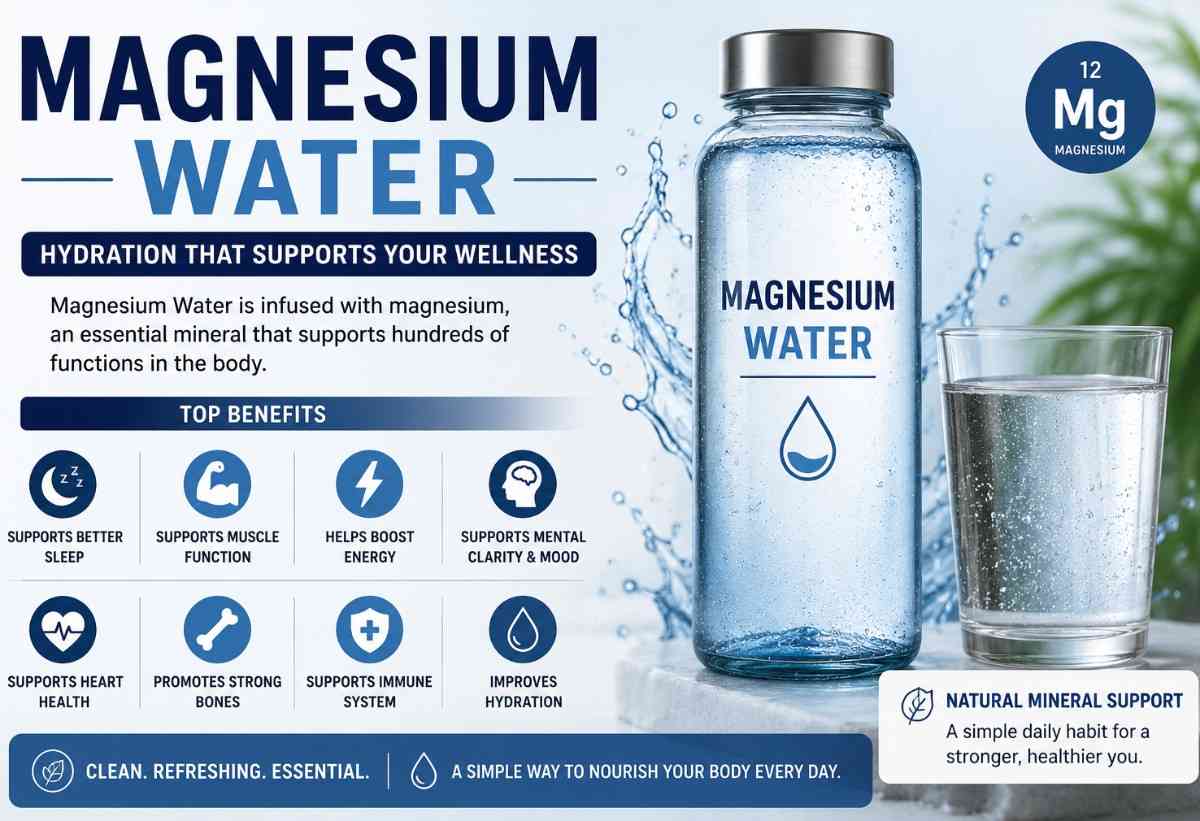
Magnesium is an essential mineral involved in hundreds of processes throughout the body, including normal muscle and nerve function, blood sugar regulation, blood pressure control, protein production, bone health, and DNA synthesis. While magnesium is commonly obtained from foods such as nuts, seeds, legumes, whole grains, and leafy green vegetables, it can also be present in drinking water.
This has led to growing interest in magnesium water, a type of drinking water that contains a measurable amount of magnesium. Some products naturally contain magnesium because of their mineral content, while others have magnesium added to the water.
Magnesium water should not be viewed as a miracle drink or a replacement for a balanced diet. Its potential benefits largely come from the magnesium it provides, and the amount can vary considerably from one product or water source to another.
In this guide, we will look at what magnesium water is, its nutritional profile, potential benefits, possible side effects, how to make it, how much to drink, and important precautions.
What Is Magnesium Water?
Magnesium water is drinking water that contains magnesium, either naturally or because magnesium has been added to it.
Natural mineral waters can contain magnesium along with minerals such as calcium, bicarbonate, and other electrolytes. Some commercially prepared magnesium waters may use magnesium salts such as magnesium chloride or other forms of magnesium.
The exact magnesium concentration is important because not every bottle of “magnesium water” provides the same amount.
Magnesium itself is an essential mineral. According to the National Institutes of Health (NIH), adult men generally need about 400–420 mg of magnesium per day, while adult women generally need about 310–320 mg per day. Requirements can be higher during pregnancy. (Office of Dietary Supplements)
One important distinction is that magnesium in ordinary foods and beverages is not treated the same way as magnesium from supplements or medications when calculating the U.S. adult upper limit. The NIH sets an upper limit of 350 mg per day for magnesium specifically from dietary supplements and medications for adults. This limit does not include magnesium naturally present in food and beverages.
Components of Magnesium Water
There is no single standardized nutrition profile for magnesium water because its mineral concentration depends on the water source and formulation.
| Nutrient/Mineral | Typical Amount in Magnesium Water | Notes |
|---|---|---|
| Calories | 0 kcal | Plain magnesium water generally contains no meaningful calories |
| Protein | 0 g | Not normally present |
| Fat | 0 g | Not normally present |
| Carbohydrates | 0 g | Depends on added ingredients |
| Magnesium | Varies | Check the product label or mineral analysis |
| Calcium | Varies | Often naturally present in mineral water |
| Sodium | Varies | Depends on the source and formulation |
| Potassium | Varies | May be naturally present |
| Sugar | Usually 0 g | Flavored products may contain added sugar |
Important: Always check the nutrition or mineral label rather than assuming that all magnesium waters contain the same amount of magnesium.
20 Science-Backed Benefits of Magnesium Water
1. Supports Normal Muscle Function: Magnesium helps regulate normal muscle contraction and relaxation, making adequate intake important for healthy muscle function.
2. Supports Healthy Nerve Function: Magnesium participates in normal nerve signaling and helps regulate neuromuscular activity throughout the body.
3. Helps Maintain Normal Blood Pressure: Adequate magnesium intake may contribute to healthy blood pressure, although magnesium should not be considered a substitute for prescribed blood-pressure treatment.
4. Supports Heart Health: Magnesium is involved in normal cardiovascular function, and observational research has found associations between higher magnesium levels in drinking water and lower cardiovascular mortality, although these studies do not prove that magnesium water itself prevents heart disease.
5. Supports Bone Health: Magnesium contributes to normal bone structure and works alongside other nutrients involved in maintaining healthy bones.
6. Helps With Energy Production: Magnesium is involved in biochemical reactions that help the body produce and use energy, making adequate intake important for normal metabolism.
7. Supports Normal Blood Sugar Metabolism: Magnesium plays a role in glucose metabolism and insulin-related processes, while research has also linked higher dietary magnesium intake with a lower risk of type 2 diabetes.
8. Supports Protein Production: The body requires magnesium for numerous biochemical reactions involved in making proteins.
9. Supports DNA Production: Magnesium is involved in processes required for the production and maintenance of DNA and other genetic material.
10. May Help Maintain Normal Muscle Relaxation: Adequate magnesium supports the normal balance between muscle contraction and relaxation, which is one reason magnesium is often discussed in relation to muscle cramps.
11. Supports Electrolyte Balance: Magnesium works alongside minerals such as potassium, calcium, and sodium to support normal cellular and physiological functions.
12. May Support Migraine Management: Some research suggests magnesium supplementation may modestly reduce migraine frequency in certain people, but magnesium for migraine prevention should be discussed with a healthcare professional.
13. Supports Normal Blood Vessel Function: Magnesium participates in processes involved in normal vascular and muscle function, which may contribute to cardiovascular health.
14. Helps Support Normal Metabolism: Magnesium acts as a cofactor in many enzyme reactions involved in carbohydrate, protein, and fat metabolism.
15. Supports Healthy Cellular Function: Magnesium is required for hundreds of biochemical reactions that take place inside cells.
16. Can Help Increase Daily Magnesium Intake: For people whose diets are low in magnesium-rich foods, magnesium-containing water can provide an additional dietary source of the mineral.
17. Provides Magnesium Without Added Calories: Plain magnesium water can provide magnesium while contributing essentially no calories, protein, fat, or carbohydrates.
18. May Complement a Heart-Healthy Diet: Magnesium-containing drinking water can contribute to overall mineral intake as part of a balanced dietary pattern, although research has not established magnesium water as a standalone cardiovascular treatment.
19. Supports Normal Blood Pressure Regulation: Magnesium is involved in processes that regulate vascular and neuromuscular function, which may help maintain normal blood pressure when overall magnesium intake is adequate.
20. Helps Prevent Inadequate Magnesium Intake: Regular consumption of magnesium-containing foods and beverages can contribute to meeting daily magnesium requirements and may be particularly useful when dietary intake is otherwise low.
10 Side Effects of Magnesium Water
Magnesium water is generally well tolerated when the amount of magnesium is appropriate, but drinking water containing high amounts of magnesium can cause digestive problems, particularly if total supplemental magnesium intake becomes excessive.
1. Diarrhea: High amounts of magnesium from supplements or magnesium-containing products can cause loose stools or diarrhea.
2. Nausea: Excessive magnesium intake may cause nausea, particularly when a large amount is consumed at once.
3. Abdominal Cramping: Too much magnesium can draw water into the intestines and contribute to abdominal discomfort or cramping.
4. Bloating: Some people may experience digestive bloating after consuming a high-magnesium drink.
5. Loose Stools: Magnesium-containing products can have a laxative effect, especially when magnesium intake is high.
6. Vomiting: Very high magnesium intake can cause more significant gastrointestinal symptoms, including vomiting.
7. Low Blood Pressure: Extremely high magnesium levels can cause hypotension and become medically dangerous.
8. Muscle Weakness: Severe magnesium toxicity can interfere with normal neuromuscular function and cause weakness.
9. Abnormal Heart Rhythm: Extremely high magnesium levels can interfere with cardiovascular function and may cause an irregular heartbeat.
10. Serious Magnesium Toxicity: Severe excess magnesium, particularly in people whose kidneys cannot eliminate magnesium efficiently, can cause breathing problems, profound low blood pressure, abnormal heart rhythm, and cardiac arrest.
For most healthy people, ordinary magnesium from foods and beverages is not a concern because the kidneys remove excess magnesium through urine. The greater concern is excessive magnesium from supplements, medications, or heavily fortified products.
How to Make Magnesium Water?
There are several ways people refer to “making” magnesium water, but they are not equally reliable.
Method 1: Use Commercial Magnesium Water
The simplest option is to purchase drinking water that already contains magnesium. Check the label for the amount of magnesium per serving.
This is preferable to guessing how much magnesium a homemade mixture contains.
Method 2: Add a Measured Magnesium Product
Some people add a magnesium powder or liquid concentrate to water. If doing this, use a product specifically intended for oral consumption and follow its label instructions.
Do not randomly add magnesium salts to drinking water because different magnesium compounds contain different amounts of elemental magnesium.
Method 3: Use Naturally Mineral-Rich Water
Some mineral waters naturally contain magnesium. The mineral composition should be listed on the label or provided by the manufacturer.
Important Safety Point
Do not add magnesium chloride, Epsom salt, or other chemical products to drinking water unless the product is specifically labeled for oral consumption and you know the appropriate dose.
“Epsom salt water” is not automatically the same thing as commercially formulated magnesium water.
Tips for Consuming Magnesium Water
- Check the Magnesium Amount: Look at the label and determine how much elemental magnesium each serving provides.
- Start With a Moderate Amount: If you are new to magnesium-containing water, begin with the serving size recommended on the product.
- Drink It Alongside a Balanced Diet: Magnesium water should complement, not replace, magnesium-rich foods such as nuts, seeds, legumes, whole grains, and leafy greens.
- Avoid Excessive Intake: More magnesium is not necessarily better, and high supplemental intake can cause diarrhea and abdominal cramping.
- Pay Attention to Your Body: If you develop persistent diarrhea, nausea, or abdominal discomfort after starting a magnesium product, reduce use and speak with a healthcare professional if symptoms continue.
- Read the Entire Label: Some flavored magnesium waters may contain sugar, sweeteners, sodium, caffeine, or other added ingredients.
- Consider Your Total Magnesium Intake: Add up magnesium from supplements, medications, fortified products, and other sources rather than looking at the water alone.
Other Uses of Magnesium Water
Magnesium water is primarily intended as a beverage, but it may be incorporated into daily hydration routines in several ways.
1. Daily Hydration
It can be used as a regular drinking water if the product is safe, appropriately formulated, and tolerated by the individual.
2. After Physical Activity
Some magnesium-containing mineral waters may provide magnesium along with other minerals. However, magnesium water should not automatically be considered a complete sports electrolyte replacement because electrolyte composition differs substantially among products.
3. With Meals
Magnesium-containing water can be consumed with meals as part of normal hydration.
4. As an Alternative Mineral Source
For people who enjoy mineral water, a magnesium-containing variety can provide another dietary source of magnesium.
It is important to remember that magnesium water is not a treatment for magnesium deficiency unless the amount provided is appropriate and a healthcare professional has recommended it.
How Much Magnesium Water Can You Drink in a Day?
There is no universal daily volume for magnesium water because magnesium concentrations vary dramatically between products.
Instead of focusing only on the number of glasses, look at the amount of elemental magnesium per serving.
For adults, the NIH recommends approximately 310–320 mg per day for women and 400–420 mg per day for men, with different recommendations during pregnancy and breastfeeding. These amounts represent total magnesium intake from food, beverages, supplements, and other sources.
The NIH’s upper limit of 350 mg per day for adults applies specifically to magnesium from dietary supplements and medications, not magnesium naturally present in food and beverages.
For example, if a magnesium water contains 50 mg of magnesium per bottle, it cannot be treated the same way as a product containing 300 mg per bottle.
A practical approach: follow the serving recommendation on the product, monitor your total supplemental magnesium intake, and avoid high-dose magnesium products unless advised by a healthcare professional.
People with kidney problems may need particularly careful guidance because the kidneys are responsible for removing excess magnesium.
Best Time to Drink Magnesium Water
There is no medically established “perfect” time to drink magnesium water.
You can generally consume it at a convenient time that fits your hydration routine.
In the Morning
Some people prefer magnesium water in the morning as part of their daily hydration routine.
With Meals
Drinking it with a meal may be comfortable for people who experience stomach sensitivity from magnesium products.
After Exercise
Magnesium-containing water can be included in hydration after exercise, although it should not be considered a complete replacement for all electrolytes.
In the Evening
Some people prefer mineral water in the evening, but strong evidence does not establish that drinking magnesium water at night provides special sleep benefits.
The most important factor is consistency and the total amount consumed rather than a specific clock time.
Who Should Drink Magnesium Water?
1. Adults With Low Dietary Magnesium Intake: People who regularly consume few magnesium-rich foods may use magnesium-containing water as one additional dietary source of magnesium.
2. People Who Prefer Mineral Water: Individuals who already enjoy mineral water may choose a variety that naturally contains magnesium.
3. Physically Active Adults: Active people may include mineral water as part of normal hydration, although their overall electrolyte needs depend on exercise intensity, duration, climate, and sweat losses.
4. People Looking for a Calorie-Free Mineral Source: Plain magnesium water can provide magnesium without adding meaningful calories.
5. People With a Generally Balanced Diet: Healthy adults can generally include magnesium-containing beverages as part of an overall nutritious eating pattern.
6. People Wanting to Increase Dietary Magnesium: Magnesium-containing water can complement foods such as pumpkin seeds, almonds, beans, spinach, and whole grains.
Who Should Avoid Magnesium Water?
1. People With Significant Kidney Disease: Individuals with impaired kidney function may be unable to eliminate excess magnesium efficiently and should consult a healthcare professional before using high-magnesium products.
2. People Taking Magnesium-Containing Medications: Those already using magnesium-containing laxatives, antacids, or supplements should consider their total intake to avoid unnecessary excess.
3. People With Magnesium-Sensitive Digestive Symptoms: Anyone who develops diarrhea, nausea, or abdominal cramping after consuming magnesium should reduce or stop the product and seek professional advice if symptoms persist.
4. People Taking Certain Antibiotics: Magnesium can interfere with the absorption of some antibiotics, so timing may need to be separated according to professional advice.
5. People Taking Bisphosphonates: Magnesium can interfere with absorption of certain osteoporosis medications when taken too close together.
6. People With Medical Conditions Affecting Mineral Balance: Anyone with a condition that affects kidney function or electrolyte regulation should ask a healthcare professional before regularly consuming high-magnesium products.
How to Store Magnesium Water?
1. Follow the Product Instructions: Always follow the storage instructions printed on the bottle or packaging.
2. Keep Unopened Bottles in a Suitable Place: Store unopened magnesium water in a cool, dry location away from excessive heat and direct sunlight unless the manufacturer specifies refrigeration.
3. Refrigerate After Opening When Recommended: If the label recommends refrigeration after opening, follow that instruction.
4. Keep the Bottle Clean: Avoid drinking directly from a bottle that you plan to keep for several days because repeated contact can introduce microorganisms.
5. Do Not Use Damaged Containers: Discard water if the container is leaking, swollen, damaged, or otherwise appears abnormal.
6. Check the Expiration or Best-Before Date: Use the product within the period recommended by the manufacturer.
Precautions and Interactions
Magnesium is an essential nutrient, but supplements and concentrated magnesium products can interact with medications.
1. Antibiotics
Magnesium can reduce the absorption of some antibiotics when taken too close together. If you take antibiotics, ask your doctor or pharmacist about appropriate timing.
2. Bisphosphonates
Magnesium can interfere with the absorption of certain bisphosphonates used for osteoporosis. These medications and magnesium products may need to be separated by several hours.
3. Diuretics
Some diuretics can alter magnesium levels in the body, either increasing or decreasing magnesium loss through urine depending on the medication.
4. Acid-Reducing Medicines
Long-term use of some proton pump inhibitors can contribute to low magnesium levels. If you use these medications regularly, discuss your magnesium status with your healthcare professional rather than self-treating with large doses.
5. Kidney Problems
The kidneys play an important role in eliminating excess magnesium. People with impaired kidney function may therefore be more vulnerable to magnesium accumulation and toxicity.
6. Magnesium Supplements
If you already take a magnesium supplement, check how much elemental magnesium it contains before adding magnesium water to your routine.
7. Pregnancy and Breastfeeding
Magnesium is an important nutrient during pregnancy and breastfeeding, but pregnant or breastfeeding individuals should discuss concentrated magnesium products or supplements with their healthcare professional rather than assuming more magnesium is better.
An Important Note About the Evidence
It is important not to overstate the research. Many studies investigate total magnesium intake, magnesium supplements, or magnesium levels in drinking water, rather than specially formulated magnesium water.
For example, a meta-analysis found an inverse association between magnesium levels in drinking water and coronary heart disease mortality, but the researchers were analyzing observational evidence. Such findings cannot establish that drinking magnesium water directly prevents heart disease. (PubMed)
Magnesium Water vs. Regular Water
Regular water is still essential for hydration, and you do not need magnesium water to stay hydrated.
The primary difference is mineral content.
| Feature | Regular Water | Magnesium Water |
|---|---|---|
| Hydration | Yes | Yes |
| Magnesium | Usually variable/low | Usually intentionally higher or naturally mineral-rich |
| Calories | Usually 0 | Usually 0 if plain |
| Other minerals | Varies | May contain calcium, sodium, potassium, etc. |
| Main purpose | Hydration | Hydration plus dietary mineral contribution |
| Best for everyone? | Generally yes | Depends on formulation and individual needs |
Magnesium water can be useful as an additional source of magnesium, but a balanced diet remains the foundation of adequate nutrient intake.
FAQ’s
Is magnesium water good for you?
Yes, magnesium water can contribute to your daily magnesium intake and support normal muscle, nerve, bone, and cardiovascular function when consumed appropriately.
Can I drink magnesium water every day?
Most healthy adults can drink magnesium-containing water daily if the product is used according to its instructions and does not provide excessive magnesium.
What does magnesium water taste like?
Magnesium-rich water may have a slightly mineral-like, bitter, or mildly salty taste, depending on the type and concentration of magnesium.
Does magnesium water help with constipation?
Certain forms of magnesium can have a laxative effect and may help with occasional constipation, but magnesium water should not be relied on to treat persistent constipation.
Does magnesium water help you sleep?
Magnesium supports normal nervous-system function, but there is currently limited evidence that magnesium water specifically improves sleep.
Can magnesium water help with muscle cramps?
Magnesium is important for normal muscle function, but cramps can have many causes. Magnesium water may help increase magnesium intake when dietary intake is low.
Can magnesium water cause diarrhea?
Yes. Consuming too much magnesium, particularly from concentrated products or supplements, can cause diarrhea, loose stools, nausea, and abdominal cramping.
Is magnesium water better than regular water?
Not necessarily. Regular water is excellent for hydration, while magnesium water provides the additional benefit of dietary magnesium depending on its mineral content.
Can I drink magnesium water before bed?
Yes, you can drink it before bed if it suits your routine and does not cause digestive discomfort. However, nighttime consumption has not been proven to provide special benefits.
Is magnesium water safe during pregnancy?
Magnesium is an important nutrient during pregnancy, but concentrated magnesium products should be discussed with a healthcare professional before regular use.
Can children drink magnesium water?
Children have different nutritional requirements from adults. Concentrated magnesium products should only be given to children with appropriate guidance from a pediatric healthcare professional.
Does magnesium water contain electrolytes?
It can. Depending on the water source, magnesium water may also contain minerals such as calcium, potassium, and sodium.
Can magnesium water lower blood pressure?
Magnesium plays a role in normal blood pressure regulation, and adequate magnesium intake may support healthy blood pressure, but magnesium water should not replace prescribed blood-pressure treatment.
Is magnesium water good for the kidneys?
Healthy kidneys regulate magnesium levels by removing excess magnesium. However, people with impaired kidney function may be at risk of magnesium accumulation and should seek medical advice before consuming concentrated magnesium products.
Can magnesium water replace magnesium supplements?
For some people, magnesium-containing water can contribute to daily magnesium intake, but it may not provide enough magnesium to replace a supplement when supplementation has been medically recommended.
How long does it take for Magnesium Water to work?
Magnesium Water does not have a specific time frame for everyone. If it is being used to increase magnesium intake, benefits may take days to weeks and depend on your existing magnesium status, the amount consumed, and your overall diet. If a magnesium product has a laxative effect, bowel changes may occur much sooner, sometimes within several hours.
What does Magnesium Water smell like?
Magnesium Water usually has little to no noticeable smell when it is plain and properly prepared. Mineral-rich water may have a mild mineral or earthy odor depending on its source and other minerals present. A strong, unusual, rotten-egg-like, or chemical smell is not typical and may indicate a problem with the water or container.
Final Thoughts
Magnesium water is a simple way to add some magnesium to your daily diet while staying hydrated. Magnesium itself is an essential mineral that supports muscle and nerve function, blood sugar metabolism, blood pressure regulation, bone health, protein production, and many other biological processes.
However, the phrase “magnesium water” covers many different products. Some waters contain only a small amount of magnesium, while others may contain substantially more. This is why checking the label is more useful than judging a product by its name.
For most people, the best approach is to obtain magnesium primarily through a varied diet and use magnesium-containing water as an optional addition. If you take medications, have kidney problems, are pregnant or breastfeeding, or are considering a concentrated magnesium product, speak with a healthcare professional before making it a regular part of your routine.
Sources / References:
- Harvard T.H. Chan School of Public Health — Magnesium
- National Institutes of Health — Magnesium Fact Sheet
- National Academies — Dietary Reference Intakes for Magnesium
- U.S. Geological Survey — Water Hardness and Minerals
- World Health Organization — Nutrients in Drinking Water
- PubMed — Magnesium in Drinking Water: A Case for Prevention?
About the Author:
Written by: Kirti Solanki (Health Content Researcher)
Kirti Solanki writes health and nutrition content with a focus on making scientific information easier for everyday readers to understand. Content is researched using reputable medical and scientific references and written for general educational purposes.
Disclaimer:
This article is for general educational purposes only and is not a substitute for professional medical advice, diagnosis, or treatment. Consult a qualified healthcare professional before using concentrated magnesium products, especially if you take medication or have an underlying health condition.
Also Read: