If you’ve ever strolled through a grocery aisle or browsed recipes online, you’ve likely come across both gherkins and cucumbers. At first glance, they seem almost identical—green, crunchy, refreshing—but are they really the same? And more importantly, when it comes to your health, is one better than the other?
This guide breaks down everything you need to know about gherkin vs cucumber in a clear, practical, and human way. From nutrition and health benefits to differences in taste, usage, and potential downsides, you’ll get a complete picture to help you decide which one deserves more space on your plate.
What Is a Cucumber?
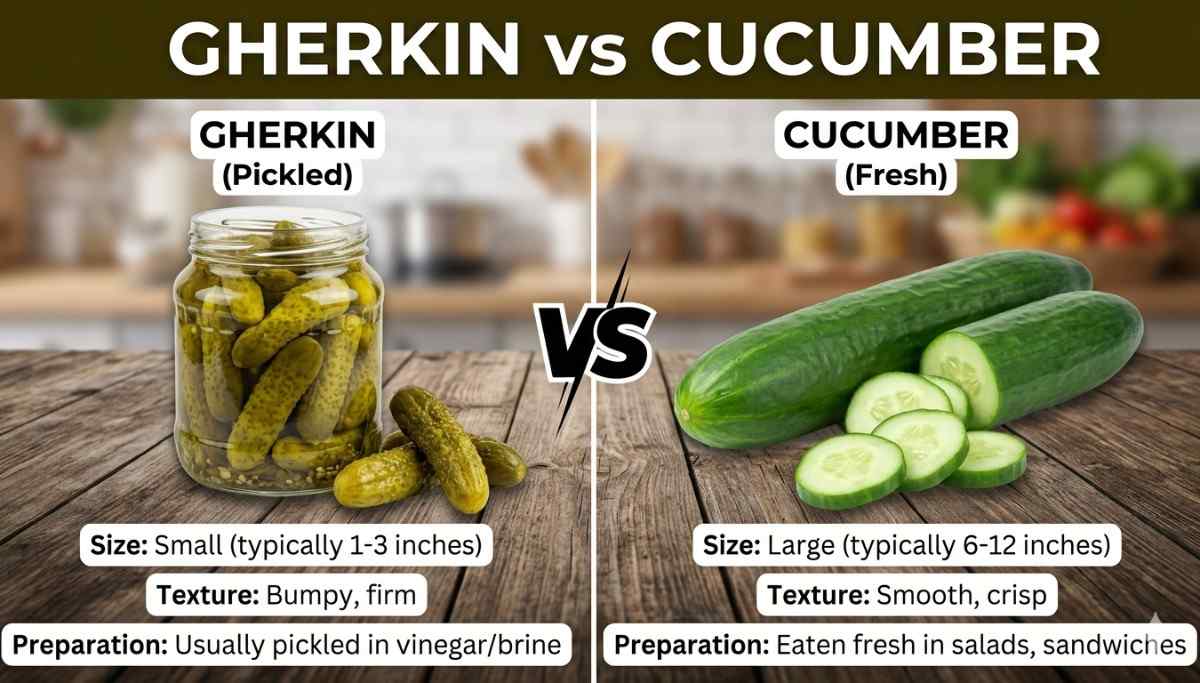
Cucumber is a widely consumed vegetable (technically a fruit) belonging to the gourd family. It is typically long, cylindrical, and has a smooth green skin with a juicy, mild-tasting interior.
Cucumbers are commonly eaten raw in salads, sandwiches, smoothies, or infused in water. Their high water content makes them one of the most hydrating foods available.
What Is a Gherkin?
Gherkins are essentially small cucumbers that are specifically grown for pickling. They are harvested earlier than regular cucumbers and are usually preserved in vinegar or brine, often with added spices.
While all gherkins come from cucumber varieties, not all cucumbers become gherkins. The term “gherkin” is more about how the vegetable is used and prepared rather than a completely separate species.
Key Differences Between Gherkin and Cucumber
| Feature | Cucumber (Fresh) | Gherkin (Pickled) |
|---|---|---|
| Size | Large, long | Small, short |
| Skin Texture | Smooth | Bumpy |
| Taste | Mild, watery, slightly sweet | Tangy, sour, salty |
| Preparation | Eaten raw | Pickled in vinegar or brine |
| Shelf Life | Short | Long (preserved) |
| Processing Level | Natural | Processed |
Nutritional Comparison (Per 100g)
| Nutrient | Cucumber (Fresh) | Gherkin (Pickled) |
|---|---|---|
| Calories | 15 kcal | 11–15 kcal |
| Water Content | ~95% | ~90% |
| Carbohydrates | 3.6 g | 2–3 g |
| Fiber | 0.5 g | 1–1.5 g |
| Sodium | 2 mg | 800–1200 mg |
| Vitamin K | Moderate | Moderate |
| Vitamin C | Low | Reduced |
| Sugar | 1.7 g | 1–2 g (varies) |
Gherkin vs Cucumber: Health Benefits
| Health Benefit | Cucumber | Gherkin |
|---|---|---|
| Hydration | Excellent | Good |
| Weight Loss Support | Excellent | Moderate |
| Digestive Health | Good | Good (if fermented) |
| Heart Health | Excellent | Limited (high sodium) |
| Skin Health | Excellent | Limited |
| Electrolyte Support | Low | High |
| Probiotics | No | Yes (only fermented types) |
Health Benefits of Cucumbers
Cucumbers are often underrated, but they provide a wide range of health benefits when consumed regularly.
1. Keeps You Hydrated
With about 95% water content, cucumbers help maintain hydration, especially in hot climates.
2. Supports Weight Loss
Low in calories and high in volume, cucumbers help you feel full without overeating.
3. Improves Digestion
They contain fiber and water that support bowel regularity.
4. Boosts Skin Health
Cucumbers help reduce puffiness and hydrate the skin from within.
5. Rich in Antioxidants
They contain plant compounds that help reduce oxidative stress.
6. Supports Heart Health
Low sodium and high hydration help regulate blood pressure.
Health Benefits of Gherkins
Gherkins can also offer benefits, depending on how they are prepared.
1. Supports Gut Health
Fermented gherkins contain probiotics that promote healthy gut bacteria.
2. Low-Calorie Snack
They are light and flavorful without adding many calories.
3. Provides Electrolytes
High sodium levels can help replenish electrolytes lost through sweat.
4. May Help Muscle Recovery
Pickle juice is sometimes used to reduce muscle cramps.
Gherkin vs Cucumber: Sodium Comparison
| Food Type | Sodium Content (per 100g) | Health Impact |
|---|---|---|
| Fresh Cucumber | ~2 mg | Very heart-friendly |
| Pickled Gherkin | 800–1200 mg | May raise blood pressure |
This is the most important difference. While cucumbers are naturally low in sodium, gherkins can contain very high levels due to the pickling process.
Digestive Impact Comparison
| Factor | Cucumber | Gherkin |
|---|---|---|
| Ease of Digestion | Very easy | Moderate |
| Fiber Content | Low | Moderate |
| Gut Bacteria | Neutral | Positive (fermented) |
| Risk of Bloating | Low | Moderate (if overconsumed) |
Weight Loss Comparison
| Factor | Cucumber | Gherkin |
|---|---|---|
| Calories | Very low | Very low |
| Water Content | Very high | High |
| Sodium Impact | None | High (may cause water retention) |
| Best for Daily Diet | Yes | Occasionally |
Cucumbers are clearly better for consistent weight loss due to their low sodium and high water content.
Skin Health Comparison
| Factor | Cucumber | Gherkin |
|---|---|---|
| Hydration | Excellent | Limited |
| Anti-inflammatory | Good | Low |
| External Use | Common | Rare |
| Overall Benefit | High | Low |
Cucumbers are widely used in skincare, while gherkins have minimal skin benefits.
Are Gherkins Always Unhealthy?
Not necessarily. It depends on how they are prepared.
Healthier Gherkin Options:
- Fermented in natural brine (with probiotics)
- Low-sodium versions
- Homemade pickles with controlled salt
Less Healthy Options:
- Highly processed, store-bought varieties with excess salt and preservatives
- Sweet pickles with added sugar
Immunity Support
Both contain small amounts of vitamins, but cucumbers offer more natural nutrients without processing loss.
Gherkins may lose some nutrients during pickling but can still provide benefits if fermented.
When to Choose Gherkin vs Cucumber
Choose Cucumbers When:
- You want daily hydration
- You’re trying to lose weight
- You need a heart-friendly food
- You want better skin health
Choose Gherkins When:
- You want a flavorful snack
- You need electrolytes after sweating
- You’re eating fermented foods for gut health
Potential Side Effects: Gherkins vs Cucumbers
| Side Effect | Cucumber | Gherkin |
|---|---|---|
| Bloating | Rare | Possible |
| High Blood Pressure | No | Possible (due to sodium) |
| Water Retention | No | Yes |
| Stomach Irritation | Rare | Possible (vinegar content) |
Gherkin vs Cucumber: Which Is Better for Health?
If you’re looking for an overall healthier, everyday option, cucumbers are the better choice.
They are:
- Natural and unprocessed
- Low in sodium
- Hydrating and refreshing
- Beneficial for heart, skin, and digestion
Gherkins, while not unhealthy, should be eaten in moderation—especially if they are high in salt or sugar.
Final Verdict
When comparing gherkin vs cucumber for health, cucumbers come out as the clear winner for regular, everyday consumption. They are hydrating, low in sodium, versatile, and beneficial for nearly every aspect of health.
Gherkins, while not unhealthy, should be consumed in moderation—especially due to their high salt content. If you choose gherkins, opt for fermented or low-sodium varieties for better health benefits.
| Category | Winner |
|---|---|
| Hydration | Cucumber |
| Weight Loss | Cucumber |
| Heart Health | Cucumber |
| Gut Health | Gherkin (fermented) |
| Flavor | Gherkin |
| Daily Consumption | Cucumber |
FAQ’s
Are gherkins and cucumbers the same thing?
Gherkins are a type of small cucumber, but they are usually pickled. All gherkins come from cucumber varieties, but not all cucumbers are used as gherkins.
Are gherkins good for weight loss?
They are low in calories, but their high sodium content may cause water retention. Cucumbers are a better option for consistent weight loss.
Do gherkins contain probiotics?
Only naturally fermented gherkins contain probiotics. Vinegar-based pickles usually do not have live beneficial bacteria.
Is cucumber better for hydration?
Yes, cucumbers contain about 95% water, making them one of the best foods for hydration.
Are gherkins bad for blood pressure?
They can be if eaten in large amounts due to their high salt content. People with hypertension should limit intake.
Can diabetics eat gherkins and cucumbers?
Yes, both can be consumed, but gherkins should be checked for added sugar and salt. Cucumbers are generally safer and more beneficial.
Which is better for digestion: gherkin or cucumber?
Cucumbers support digestion due to water and fiber. Fermented gherkins can help gut health because of probiotics.
Are gherkins healthier than cucumbers?
Not generally. Cucumbers are healthier for daily consumption due to low sodium.
Do cucumbers help improve skin?
Yes, cucumbers hydrate the body and help reduce puffiness, making them beneficial for skin health.
Are gherkins good after a workout?
They can help replenish electrolytes due to their sodium content, but should be consumed in moderation.
Can I replace cucumbers with gherkins in my diet?
Not completely. Cucumbers are better for everyday use, while gherkins should be an occasional addition.
Do gherkins lose nutrients during pickling?
Yes, some nutrients like vitamin C may reduce during the pickling process, but they can still offer other benefits.
Are homemade gherkins healthier than store-bought ones?
Yes, homemade gherkins allow you to control salt, sugar, and preservatives, making them a healthier option.
Which is better for heart health?
Cucumbers are better because they are low in sodium and help maintain healthy blood pressure.
Conclusion
Gherkins and cucumbers may come from the same plant family, but they serve very different roles in your diet. Cucumbers are your everyday health companion—light, hydrating, and nourishing. Gherkins, on the other hand, are more of a flavorful addition best enjoyed occasionally.
If your goal is long-term health, weight management, and hydration, cucumbers should be your go-to choice. Gherkins can still be part of your diet—but like all pickled foods, moderation is key.
Also Read: