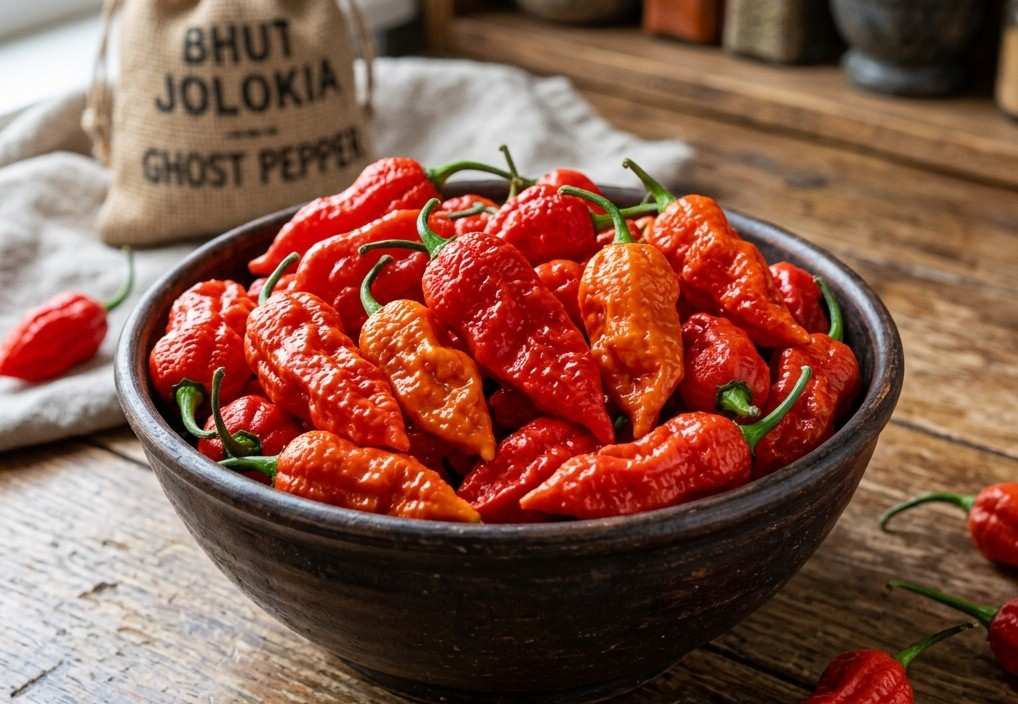
Ghost Pepper is one of the hottest peppers in the world and is famous for its intense heat and unique flavor. Originally cultivated in Northeast India, this fiery pepper has gained worldwide popularity among spice lovers, food enthusiasts, and health-conscious individuals. Beyond its heat, Ghost Pepper contains beneficial nutrients and bioactive compounds that may support overall health when consumed in moderation.
This guide explores everything you need to know about Ghost Pepper (also known as Bhut Jolokia, Naga Ghost Pepper, Ghost Chili, and King Chili), including its nutritional profile, science-backed health benefits, side effects, daily intake recommendations, and practical ways to use it safely.
What is Ghost Pepper?
Ghost Pepper, scientifically known as Capsicum chinense, is a chili pepper native to India. It is commonly called Bhut Jolokia and was once recognized as the world’s hottest chili pepper by the Guinness World Records.
Ghost Pepper gets its extreme heat from a compound called capsaicin. On the Scoville Heat Unit (SHU) scale, Ghost Pepper typically measures between 800,000 and 1,000,000 SHU, making it significantly hotter than jalapeños and many other common chili peppers.
Despite its intense spiciness, Ghost Pepper has a fruity, slightly sweet flavor that makes it a popular ingredient in hot sauces, spicy dishes, and culinary challenges.
Nutrition Facts of Ghost Pepper
The following nutritional values are approximate per 100 grams of fresh Ghost Pepper.
| Nutrient | Amount |
|---|---|
| Calories | 40 kcal |
| Carbohydrates | 8.8 g |
| Protein | 2 g |
| Fat | 0.4 g |
| Dietary Fiber | 1.5 g |
| Vitamin C | 240 mg |
| Vitamin A | 1,050 IU |
| Vitamin B6 | 0.5 mg |
| Potassium | 322 mg |
| Calcium | 18 mg |
| Iron | 1.2 mg |
| Magnesium | 25 mg |
| Water | 88 g |
| Capsaicin | High |
20 Proven Health Benefits of Ghost Pepper
- Rich in Vitamin C: Ghost Pepper contains large amounts of vitamin C that help support immune health and collagen production.
- Powerful Antioxidant Source: The antioxidants in Ghost Chili help protect cells from oxidative stress and free radical damage.
- Supports Immune Function: Regular consumption may strengthen the body’s natural defense mechanisms.
- May Boost Metabolism: Capsaicin can increase calorie burning and support metabolic activity.
- Supports Weight Management: The pepper may help reduce appetite and promote feelings of fullness.
- Promotes Healthy Digestion: Moderate consumption can stimulate digestive secretions and improve digestion.
- May Improve Blood Circulation: Capsaicin may encourage healthy blood flow throughout the body.
- Supports Heart Health: Certain compounds in Ghost Chili may help maintain healthy cardiovascular function.
- May Help Lower Cholesterol: Some studies suggest capsaicin may contribute to healthier cholesterol levels.
- Supports Healthy Blood Sugar Levels: Capsaicin may help improve insulin sensitivity when combined with a healthy diet.
- Natural Pain Relief: Capsaicin is commonly used in topical products to reduce pain sensations.
- May Reduce Inflammation: Bioactive compounds in Ghost Pepper may help lower inflammatory responses.
- Supports Respiratory Health: Spicy peppers may help clear nasal passages and improve breathing comfort.
- May Improve Mood: Capsaicin can stimulate the release of endorphins, often called feel-good hormones.
- Supports Skin Health: Antioxidants and vitamins may contribute to healthier-looking skin.
- May Aid Detoxification: Sweating induced by capsaicin may help the body eliminate certain waste products.
- Supports Eye Health: Vitamin A content contributes to normal vision and eye function.
- May Promote Longevity: Diets rich in antioxidant-containing foods are associated with healthier aging.
- Supports Healthy Gut Function: Moderate consumption may encourage digestive efficiency.
- May Enhance Athletic Performance: Improved circulation and metabolic stimulation may benefit physical activity.
10 Side Effects of Ghost Pepper
- Severe Burning Sensation: Consuming Ghost Pepper can cause intense mouth and throat burning.
- Stomach Irritation: Excessive intake may lead to stomach discomfort and irritation.
- Heartburn Risk: The pepper may worsen acid reflux symptoms in sensitive individuals.
- Abdominal Pain: Large amounts can cause stomach cramps and digestive distress.
- Diarrhea: High capsaicin intake may increase bowel activity and loose stools.
- Nausea: Some people may experience nausea after consuming very spicy foods.
- Vomiting Risk: Extremely large amounts may trigger vomiting.
- Excessive Sweating: Capsaicin can cause heavy sweating and temporary discomfort.
- Eye Irritation: Contact with eyes may cause severe burning and redness.
- Allergic Reactions: Although uncommon, some individuals may experience allergic responses.
How to Eat Ghost Pepper?
Because of its extreme heat, Ghost Pepper should be consumed carefully and in very small amounts.
Popular ways to eat Ghost Chili include:
- Adding tiny amounts to curries and stews.
- Mixing into homemade hot sauces.
- Blending into marinades.
- Incorporating into spicy salsas.
- Using dried Ghost Pepper powder as a seasoning.
- Adding small pieces to soups.
- Infusing oils with Ghost Chili flavor.
- Including it in spicy barbecue sauces.
Always start with a very small amount if you are new to Ghost Chili.
Tips for Consuming Ghost Pepper
- Wear gloves when handling fresh peppers.
- Start with a tiny piece to assess tolerance.
- Consume with food rather than on an empty stomach.
- Keep milk or yogurt nearby to reduce burning sensations.
- Avoid touching your eyes after handling peppers.
- Drink dairy products instead of water if the heat becomes overwhelming.
- Remove seeds and membranes to slightly reduce heat intensity.
- Increase intake gradually over time.
Other Uses of Ghost Pepper
- Natural Pest Deterrent: Ghost Chili extracts are used in homemade pest-repellent sprays.
- Hot Sauce Production: It is a popular ingredient in extremely spicy sauces.
- Food Preservation: Capsaicin possesses antimicrobial properties that may help preserve foods.
- Self-Defense Sprays: Capsaicin is used in some pepper-based deterrent products.
- Spicy Seasonings: The pepper is commonly dried and ground into seasoning powders.
- Cooking Competitions: Ghost Chili is frequently featured in spicy food challenges.
- Flavor Enhancement: Small quantities can add depth and complexity to recipes.
- Garden Protection: Pepper sprays may help discourage certain animals from plants.
- Condiment Manufacturing: It is used in specialty condiments and spicy pastes.
- Research Applications: Capsaicin from Ghost Chili is studied for various health-related purposes.
How Much Ghost Pepper Can You Eat in a Day?
There is no official daily recommended intake for Ghost Chili.
For most healthy adults:
- Beginners should start with less than 1 gram.
- Experienced consumers may tolerate 1–3 grams.
- Very high amounts are not recommended due to the risk of digestive discomfort.
The ideal amount depends on individual tolerance, health status, and experience with spicy foods.
Fresh Ghost Pepper
- ¼ to ½ pepper for beginners.
- Up to 1 pepper for experienced users.
Ghost Pepper Powder
- ⅛ to ¼ teaspoon initially.
- Up to ½ teaspoon for experienced consumers.
Ghost Pepper Sauce
- A few drops to 1 teaspoon depending on spice tolerance.
Always adjust dosage according to your comfort level.
Best Time to Eat Ghost Pepper
The best time to consume Ghost Chili varies according to individual tolerance.
- During lunch or dinner with a full meal.
- Before exercise if tolerated, due to its metabolism-supporting effects.
- As part of savory dishes rather than on an empty stomach.
Avoid consuming large amounts late at night if you are prone to heartburn or digestive discomfort.
Who Should Eat Ghost Pepper?
- Spice Enthusiasts: Individuals who enjoy extremely spicy foods may appreciate Ghost Pepper’s flavor and heat.
- Healthy Adults: Most healthy adults can consume small amounts safely.
- Athletes: Active individuals may benefit from the metabolism-supporting effects of capsaicin.
- Weight Management Seekers: Those looking to support appetite control may find it useful.
- Hot Sauce Lovers: People who enjoy spicy condiments often incorporate Ghost Chili into their diets.
- Adventurous Eaters: Culinary explorers may enjoy experimenting with unique spicy ingredients.
- People Seeking Antioxidants: Ghost Chili provides antioxidant compounds and vitamins.
- Fans of Spicy Cuisine: It can add excitement and depth to meals.
Who Should Not Eat Ghost Pepper?
- People with Acid Reflux: The pepper may worsen heartburn symptoms.
- Individuals with Ulcers: It may aggravate stomach irritation.
- People with IBS: Ghost Chili can trigger digestive symptoms in some individuals.
- Young Children: Its intense heat is generally unsuitable for children.
- Pregnant Women Sensitive to Spice: Strong spices may increase discomfort or heartburn.
- People with Capsaicin Sensitivity: Sensitive individuals may experience severe reactions.
- Individuals Recovering from Digestive Disorders: The pepper may irritate healing tissues.
- People with Severe Gastrointestinal Conditions: Medical guidance should be sought before consumption.
How to Store Ghost Pepper?
- Refrigerate Fresh Peppers: Store fresh peppers in the refrigerator to maintain freshness.
- Keep Dry: Moisture can encourage spoilage and mold growth.
- Use Airtight Containers: Airtight storage helps preserve flavor and potency.
- Freeze for Long-Term Storage: Freezing can extend shelf life for several months.
- Store Powder in a Cool Place: Keep dried powder away from heat and sunlight.
- Protect from Humidity: Humidity may reduce quality and cause clumping.
- Label Storage Dates: Tracking dates helps ensure freshness.
- Avoid Direct Sunlight: Sunlight can degrade flavor and nutritional value.
Precautions and Interactions
- Start Slowly: Begin with very small amounts to assess tolerance.
- Avoid Empty-Stomach Consumption: Eating Ghost Chili alone may increase stomach irritation.
- Use Gloves During Preparation: Gloves help prevent accidental skin irritation.
- Keep Away from Eyes: Capsaicin can cause severe eye discomfort.
- Monitor Digestive Symptoms: Reduce intake if discomfort occurs.
- Be Cautious with Acid Reflux: Individuals with reflux should consume sparingly.
- Consider Medication Interactions: Capsaicin may interact with certain medications affecting blood clotting.
- Stay Hydrated: Drinking adequate fluids may help reduce discomfort.
- Seek Medical Advice if Needed: Consult a healthcare professional if you have chronic digestive conditions.
- Avoid Excessive Consumption: More is not always better, especially with extremely hot peppers.
Conclusion
Ghost Pepper is one of the most famous and hottest chili peppers in the world. While its fiery heat attracts adventurous eaters, it also offers valuable nutrients, antioxidants, and capsaicin-related health benefits. When consumed responsibly and in moderation, Ghost Chili can be a flavorful addition to many dishes.
However, due to its extreme spiciness, it should be handled carefully and consumed according to individual tolerance levels. By following proper storage, dosage, and safety guidelines, you can enjoy the unique flavor and potential health benefits of Ghost Chili while minimizing unwanted side effects.
FAQ’s
How hot is a Ghost Pepper?
Ghost Chili ranges from about 800,000 to 1,000,000 Scoville Heat Units (SHU), making it much hotter than a jalapeño.
What does Ghost Pepper taste like?
Besides its intense heat, Ghost Chili has a slightly fruity, sweet, and smoky flavor.
Is Ghost Pepper good for health?
In moderation, Ghost Chili may support metabolism, circulation, immune function, and antioxidant protection.
Can Ghost Pepper help with weight loss?
Capsaicin in Ghost Chili may help boost metabolism and reduce appetite as part of a healthy lifestyle.
Can you eat Ghost Pepper raw?
Yes, but it should be eaten in very small amounts due to its extreme spiciness.
Is Ghost Pepper hotter than a jalapeño?
Yes, Ghost Chili is dozens of times hotter than a jalapeño pepper.
Can Ghost Pepper cause stomach pain?
Yes, consuming too much Ghost Chili may cause stomach discomfort, cramps, or digestive irritation.
What should I drink after eating Ghost Pepper?
Milk, yogurt, or other dairy products can help reduce the burning sensation better than water.
Is Ghost Pepper safe during pregnancy?
Pregnant women can generally consume small amounts if tolerated, but excessive spicy foods may worsen heartburn.
How much Ghost Pepper should a beginner eat?
Beginners should start with a tiny piece or a small pinch of Ghost Chili powder to assess their tolerance.
Can Ghost Pepper be used in cooking?
Yes, it is commonly used in hot sauces, curries, marinades, soups, and spicy seasonings.
Does cooking reduce the heat of Ghost Pepper?
Cooking may slightly reduce its heat, but Ghost Chili remains extremely spicy.
Can Ghost Pepper improve metabolism?
Capsaicin may temporarily increase calorie burning and metabolic activity.
Is Ghost Pepper the hottest pepper in the world?
No, Ghost Chili was once the hottest pepper, but peppers such as the Carolina Reaper and Pepper X are now considered hotter.
What is Ghost Pepper called in India?
In India, Ghost Pepper is commonly known as Bhut Jolokia, especially in the northeastern states.
Can I eat Ghost Pepper every day?
Healthy adults may consume small amounts daily if they tolerate spicy foods well, but excessive intake is not recommended.
Is Ghost Pepper safe for children?
Due to its extreme heat, Ghost Chili is generally not recommended for young children.
What is Ghost Pepper good for?
Ghost Chili may help support metabolism, circulation, immune health, antioxidant protection, and flavor enhancement in foods.
Also Read: