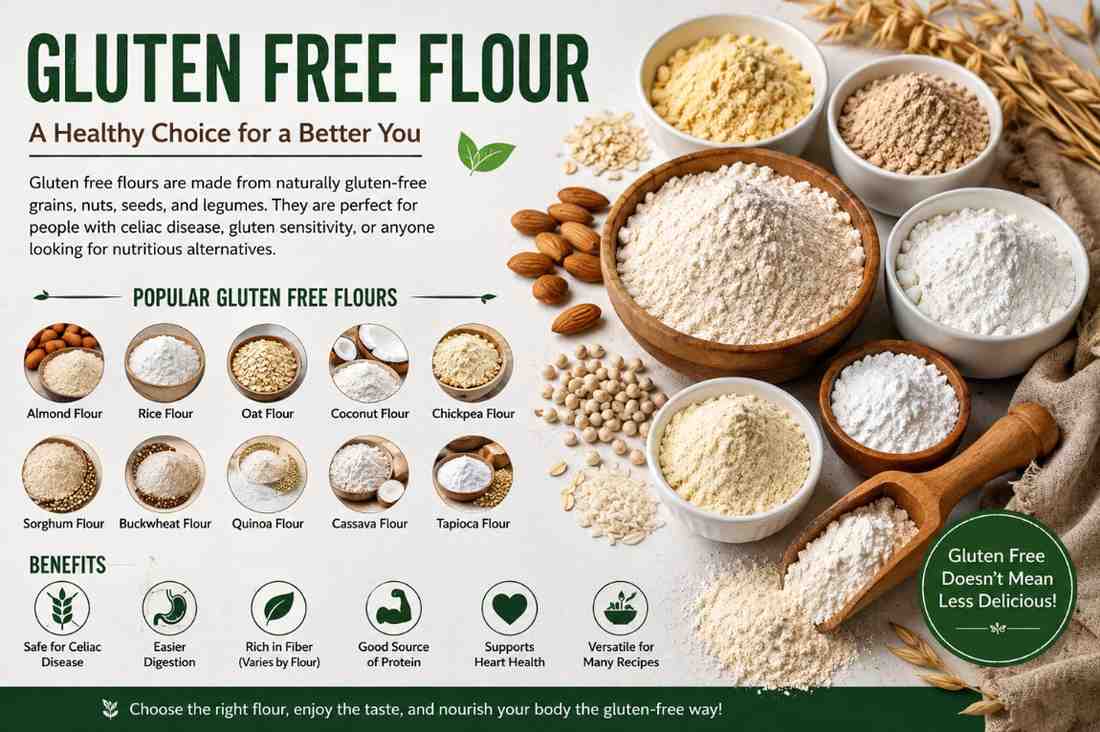
Gluten free flour has become increasingly popular among people with celiac disease, gluten sensitivity, wheat allergy, and even those looking to diversify their diet. Today, grocery stores offer dozens of gluten-free flour options, from almond flour and oat flour to rice flour and sorghum flour, making it easier than ever to prepare delicious baked goods and everyday meals without wheat.
However, not all gluten free flours are the same. Each type has a unique nutritional profile, texture, flavor, and best use. Understanding these differences can help you make healthier choices and achieve better cooking and baking results.
In this guide, you’ll learn what gluten free flour is, its nutritional value, science-backed health benefits, different types, potential drawbacks, cooking tips, and how to choose the right flour for your needs.
What Is Gluten Free Flour?
Gluten free flour is any flour made from grains, legumes, nuts, seeds, or root vegetables that naturally do not contain gluten.
Gluten is a protein found in wheat, barley, and rye. It gives traditional dough its elasticity and chewy texture. Since gluten-free flours lack this protein, recipes often require binders such as xanthan gum, psyllium husk, or guar gum to improve structure.
Common gluten-free flours include:
- Rice flour
- Almond flour
- Oat flour (certified gluten-free)
- Coconut flour
- Sorghum flour
- Buckwheat flour
- Millet flour
- Chickpea flour
- Quinoa flour
- Cassava flour
- Tapioca flour
- Potato flour
- Teff flour
- Corn flour (naturally gluten-free)
Many commercial gluten-free baking blends combine several of these flours to improve taste and texture.
Nutrition Facts of Gluten Free Flour
Nutritional values vary depending on the flour used. Below is an approximate nutrition profile for 100 grams of brown rice flour, one of the most common gluten-free flours.
| Nutrient | Approximate Amount |
|---|---|
| Calories | 366 kcal |
| Carbohydrates | 80 g |
| Protein | 6 g |
| Fat | 2.8 g |
| Fiber | 4.5 g |
| Iron | 1.5 mg |
| Magnesium | 112 mg |
| Phosphorus | 337 mg |
| Potassium | 289 mg |
| Zinc | 2 mg |
| Folate | Small amount |
Different flours provide different nutrients. For example:
- Almond flour is rich in vitamin E and healthy fats.
- Chickpea flour is high in protein.
- Coconut flour contains large amounts of fiber.
- Quinoa flour offers complete plant protein.
12 Proven Benefits of Gluten Free Flour
1. Safe for People with Celiac Disease
People with celiac disease must completely avoid gluten. Gluten-free flour provides a safe alternative when produced in certified gluten-free facilities.
2. Suitable for Gluten Sensitivity
Individuals with non-celiac gluten sensitivity often experience digestive discomfort after eating gluten-containing foods. Switching to gluten-free flour may help reduce symptoms.
3. Helpful for Wheat Allergy
People with wheat allergies can often use gluten-free flours made from rice, corn, millet, or cassava instead of wheat flour.
4. Offers Greater Dietary Variety
Using different gluten-free flours increases dietary diversity and provides a broader range of vitamins, minerals, and antioxidants.
5. Rich in Fiber (Depending on the Flour)
Flours made from coconut, oat, sorghum, or chickpeas contain significant fiber, supporting healthy digestion and regular bowel movements.
6. May Improve Blood Sugar Control
Some gluten-free flours, including almond, chickpea, and coconut flour, have a lower glycemic impact than refined wheat flour.
7. Can Increase Protein Intake
Legume-based flours like chickpea and quinoa flour contain considerably more protein than refined white flour.
8. Supports Heart Health
Nut-based flours such as almond flour provide heart-healthy monounsaturated fats that may support healthy cholesterol levels.
9. Naturally Rich in Essential Minerals
Many gluten-free flours provide magnesium, iron, phosphorus, potassium, and zinc, which support numerous body functions.
10. Suitable for Multiple Diets
Many gluten-free flours fit naturally into vegetarian, vegan, dairy-free, and paleo diets, depending on the specific flour.
11. Encourages Home Cooking
Preparing homemade gluten-free meals allows better control over ingredients, sodium, sugar, and preservatives.
12. Provides Baking Flexibility
Different gluten-free flours can be combined to create breads, cakes, pancakes, pizza crusts, cookies, muffins, and more.
Types of Gluten Free Flour
1. Almond Flour
Rich in healthy fats, vitamin E, and protein. Best for cakes, cookies, and low-carb recipes.
2. Rice Flour
Neutral flavor and widely available. Ideal for noodles, coatings, and baking blends.
3. Oat Flour
Soft texture with a mild taste. Works well in muffins, pancakes, and quick breads.
4. Coconut Flour
Very high in fiber and absorbs large amounts of liquid. Often used in small quantities.
5. Chickpea Flour
High in protein and fiber. Excellent for savory pancakes, flatbreads, and fritters.
6. Sorghum Flour
Mild flavor and nutrient-rich. Common in gluten-free bread recipes.
7. Buckwheat Flour
Despite its name, buckwheat contains no wheat. It has an earthy flavor suitable for pancakes and noodles.
8. Quinoa Flour
Provides complete protein and a slightly nutty flavor.
9. Cassava Flour
Closely resembles wheat flour in texture and is popular in gluten-free baking.
10. Tapioca Flour
Adds softness, chewiness, and elasticity to baked goods.
Possible Drawbacks of of Gluten Free Flour
Although gluten-free flour has many benefits, there are some considerations.
1. Higher Cost
Many gluten-free flours cost more than conventional wheat flour.
2. Different Baking Results
Without gluten, baked goods may crumble more easily unless appropriate binders are added.
3. Nutritional Differences
Some refined gluten-free flours contain fewer vitamins and fiber than whole-grain wheat flour.
4. Cross-Contamination
People with celiac disease should choose products labeled “Certified Gluten-Free” to reduce the risk of contamination.
5. Calorie Content
Nut-based flours such as almond flour are nutritious but relatively high in calories.
Homemade Gluten-Free Flour Blend
Making your own gluten-free flour blend is an affordable way to customize recipes and achieve better baking results. This simple all-purpose mix works well for breads, cakes, cookies, muffins, pancakes, and more.
Ingredients:
| Ingredient | Amount |
|---|---|
| Brown rice flour | 2 cups |
| Sorghum flour | 2 cups |
| Potato starch | 1½ cups |
| Tapioca starch | 1 cup |
Instructions:
- Measure all ingredients accurately.
- Add them to a large mixing bowl.
- Whisk thoroughly until evenly combined.
- Transfer the flour blend to an airtight container.
- Label the container with the date and store it in a cool, dry place.
How to Use:
- Substitute this blend 1:1 for all-purpose wheat flour in many recipes.
- For yeast breads and pizza dough, add 1 teaspoon xanthan gum per cup of flour (unless the recipe already includes it).
- For cakes, muffins, and cookies, ½ teaspoon xanthan gum per cup of flour is usually enough.
Storage Tips:
- Store in an airtight container away from heat and moisture.
- It will stay fresh for about 3 months in the pantry.
- For longer storage, refrigerate for up to 6 months or freeze for up to 1 year.
Pro Tip:
No single gluten-free flour perfectly replaces wheat flour. A blend of whole-grain flours and starches provides a better balance of texture, flavor, and structure in most baked goods.
10 Best Gluten Free Flours for Healthy Cooking and Baking
Choosing the best gluten-free flour depends on what you’re making. Here are some of the top options:
| Gluten-Free Flour | Best For | Key Benefits |
|---|---|---|
| Almond Flour | Cakes, cookies, muffins | High in protein, healthy fats, and vitamin E |
| Brown Rice Flour | Bread, pancakes, noodles | Mild flavor and versatile |
| Certified Oat Flour | Muffins, pancakes, quick breads | Rich in fiber and nutrients |
| Cassava Flour | Bread, tortillas, pizza crust | Texture similar to wheat flour |
| Chickpea Flour | Flatbreads, savory recipes | High in protein and fiber |
| Sorghum Flour | Bread, cakes, cookies | Good source of antioxidants and minerals |
| Buckwheat Flour | Pancakes, crepes, noodles | High in fiber and naturally gluten-free |
| Coconut Flour | Low-carb baking | Very high in fiber and absorbs moisture well |
| Quinoa Flour | Bread, muffins, pancakes | Complete plant-based protein |
| Gluten-Free All-Purpose Flour Blend | Everyday baking | Convenient 1:1 substitute for wheat flour |
Which Gluten-Free Flour Is Best?
- Best Overall: Gluten-Free All-Purpose Flour Blend
- Best for Bread: Cassava Flour or Sorghum Flour Blend
- Best for Cakes: Almond Flour
- Best for Cookies: Almond Flour or Oat Flour
- Best for Pancakes: Oat Flour
- Best High-Protein Option: Chickpea Flour
- Best High-Fiber Option: Coconut Flour
- Best Budget-Friendly Choice: Brown Rice Flour
- Best for Gluten-Free Beginners: Gluten-Free All-Purpose Flour Blend
- Best Nutrient-Dense Choice: Quinoa Flour
Tip: For the best baking results, combine two or more gluten-free flours or use a high-quality gluten-free all-purpose flour blend, as no single gluten-free flour perfectly replicates the texture and elasticity of wheat flour.
Best Uses for Gluten Free Flour
Gluten-free flour works well in many recipes, including:
- Bread
- Cakes
- Muffins
- Cookies
- Brownies
- Pancakes
- Waffles
- Pizza crust
- Tortillas
- Crackers
- Pasta
- Dumplings
- Biscuits
- Thickening soups
- Coating vegetables and meats
Many recipes work best with a blend of multiple gluten-free flours instead of relying on a single flour.
Tips for Baking with Gluten Free Flour
- Measure flour accurately using a kitchen scale whenever possible.
- Let batter rest before baking to improve hydration.
- Use xanthan gum or psyllium husk if the recipe requires structure.
- Combine two or three gluten-free flours for better texture.
- Increase moisture when using coconut flour.
- Avoid overmixing delicate batters.
- Store flour in airtight containers to preserve freshness.
How to Choose the Best Gluten Free Flour?
When shopping, consider the following:
- Look for certified gluten-free labeling.
- Choose whole-grain varieties whenever possible.
- Read ingredient labels carefully.
- Avoid unnecessary additives if desired.
- Match the flour to your recipe.
- Consider your nutritional goals, such as higher protein or more fiber.
How to Store Gluten Free Flour?
Proper storage helps maintain freshness.
- Store in airtight containers.
- Keep away from moisture.
- Refrigerate nut-based flours to prevent spoilage.
- Freeze flour for long-term storage.
- Always check the expiration date before use.
Who Should Use Gluten Free Flour?
Gluten-free flour may be suitable for:
- People with celiac disease
- Individuals with wheat allergy
- Those diagnosed with gluten sensitivity
- People looking for alternative baking ingredients
- Home bakers seeking more nutritional variety
People without gluten-related medical conditions do not necessarily gain additional health benefits simply by eliminating gluten.
FAQ’s
What flour is naturally gluten-free?
Many flours are naturally gluten-free, including almond flour, rice flour, oat flour (certified gluten-free), coconut flour, chickpea flour, sorghum flour, millet flour, buckwheat flour, cassava flour, quinoa flour, and tapioca flour.
What plain flour is gluten-free?
There is no gluten-free version of traditional plain wheat flour. Instead, use a gluten-free all-purpose flour blend made from ingredients like rice flour, potato starch, and tapioca starch.
What is the healthiest gluten-free flour?
There isn’t a single healthiest option. Almond flour is rich in healthy fats and vitamin E, chickpea flour is high in protein, coconut flour is packed with fiber, and oat flour provides fiber and important minerals.
How to convert regular flour to gluten-free flour?
In many recipes, you can replace wheat flour with a gluten-free all-purpose flour blend using a 1:1 ratio. Some recipes may also require xanthan gum or psyllium husk to improve texture and structure.
Is it possible to remove gluten from wheat flour?
No. Gluten is a natural protein found in wheat, and it cannot be removed from regular wheat flour at home. People who need to avoid gluten should choose naturally gluten-free flours or certified gluten-free flour blends instead.
Is gluten free flour healthier than regular flour?
Not necessarily. The nutritional value depends on the type of flour. Whole-food options like almond, oat, and chickpea flour are generally more nutritious than refined varieties.
Which gluten free flour is best for baking?
A gluten-free all-purpose flour blend works best for most baking recipes. Almond, rice, cassava, and oat flour are also popular choices.
Can I replace wheat flour with gluten free flour?
Yes, but it may require recipe adjustments. Many gluten-free recipes use flour blends and binding agents like xanthan gum for better texture.
Is gluten free flour safe for people with celiac disease?
Yes, as long as it is labeled certified gluten-free and has not been contaminated with gluten during processing.
Does gluten free flour contain carbohydrates?
Yes. Most gluten-free flours contain carbohydrates, although the amount varies depending on the type of flour.
Which gluten free flour has the most protein?
Chickpea flour, quinoa flour, and almond flour are among the highest-protein gluten-free flours.
Is oat flour gluten free?
Oats are naturally gluten-free, but regular oat flour may be contaminated with gluten. Choose certified gluten-free oat flour if you have celiac disease.
Can gluten free flour help with weight loss?
Gluten-free flour alone does not promote weight loss. A balanced diet and healthy lifestyle are more important than avoiding gluten.
Which gluten free flour is highest in fiber?
Coconut flour is one of the highest-fiber gluten-free flours, followed by chickpea and oat flour.
Can people without gluten intolerance eat gluten free flour?
Yes. Gluten-free flour is safe for most people, although there is no proven health benefit to avoiding gluten unless medically necessary.
Does gluten free flour taste different from wheat flour?
Yes. Each gluten-free flour has its own flavor and texture. Blending different flours often produces the best results in baking.
Can children eat foods made with gluten free flour?
Yes. Gluten-free flour is safe for children, especially those with celiac disease, gluten sensitivity, or a wheat allergy.
What foods can I make with gluten free flour?
You can use gluten-free flour to make bread, cakes, muffins, pancakes, waffles, cookies, pizza crust, pasta, tortillas, crackers, and many other baked goods.
Final Thoughts
Gluten free flour offers a practical and nutritious alternative to traditional wheat flour for people who cannot tolerate gluten and for anyone interested in exploring diverse ingredients. From protein-rich chickpea flour to fiber-packed coconut flour and versatile rice flour, each option brings unique nutritional benefits and culinary uses.
The key to successful gluten-free cooking is choosing the right flour for each recipe, understanding its properties, and combining different flours when needed. Whether you’re baking bread, making pancakes, or preparing homemade pizza, gluten-free flour can help you create delicious meals without compromising on taste or nutrition.
Sources / References:
- Harvard T.H. Chan School of Public Health
- Academy of Nutrition and Dietetics
- Celiac Disease Foundation
- National Institute of Diabetes and Digestive and Kidney Diseases
- U.S. Department of Agriculture FoodData Central
- Mayo Clinic
About the Author:
Written by: Kirti Solanki (Health Content Researcher)
Kirti Solanki is a health content researcher who creates evidence-based wellness articles by reviewing trusted medical resources and nutrition research. The goal is to provide readers with clear, practical, and reliable health information.
Disclaimer:
This guide is for educational and informational purposes only and should not replace professional medical advice, diagnosis, or treatment. Always consult a qualified healthcare provider or registered dietitian before making significant dietary changes, especially if you have celiac disease, food allergies, or other medical conditions.
Also Read: