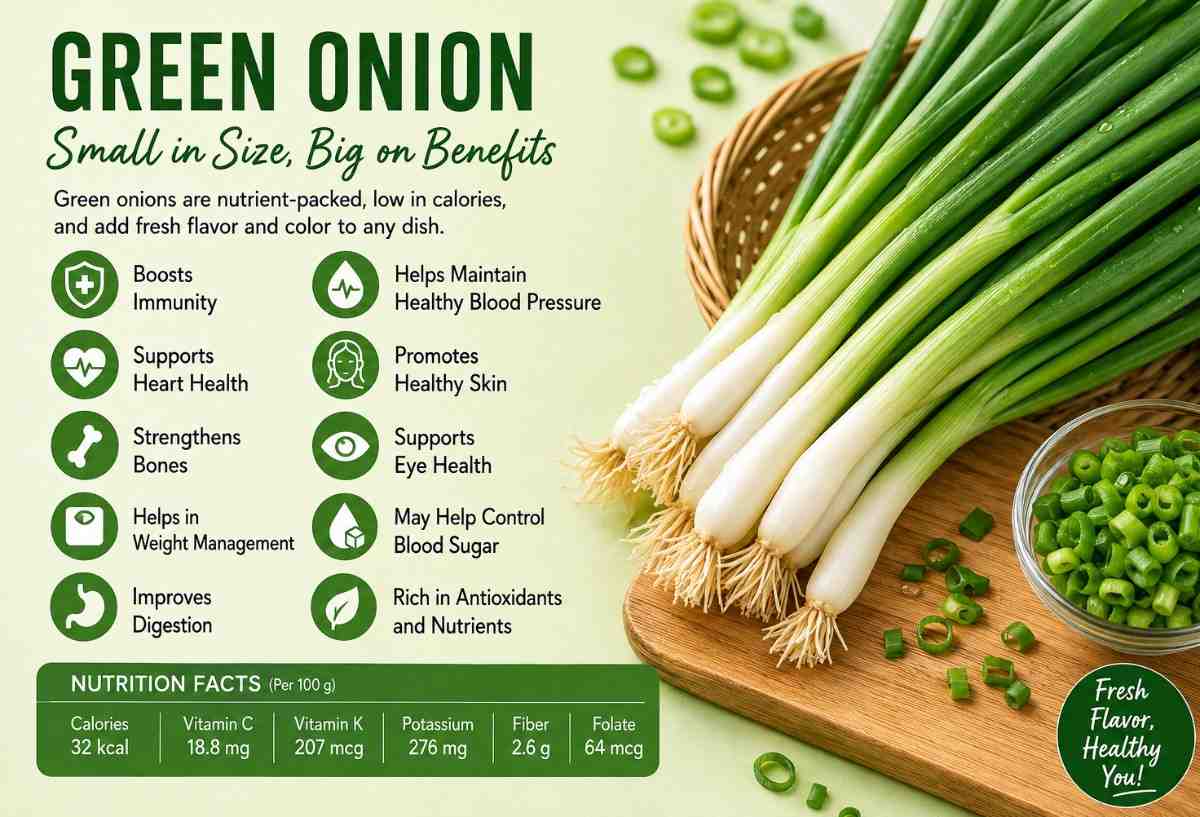
Green onion is one of the easiest vegetables to add to your daily meals. Whether sprinkled over soups, mixed into salads, or cooked with stir-fries, these vibrant green stalks add a fresh flavor and valuable nutrients without many calories. Also known as scallions or spring onions in many regions, green onions are packed with vitamins, antioxidants, and plant compounds that support overall health.
Unlike mature bulb onions, green onions are harvested before the bulb fully develops. Both the white base and green leaves are edible, making them a versatile ingredient in cuisines around the world.
In this guide, you’ll learn everything you need to know about green onions (commonly called Scallion, Spring Onions, Bunching Onion, Young Onion or Salad Onions), including their nutrition facts, health benefits, possible side effects, cooking methods, storage tips, and more.
What is Green Onion?
Green onion (Allium fistulosum or immature Allium cepa) is a young onion harvested before the bulb enlarges. It belongs to the Allium family, which also includes garlic, leeks, shallots, and chives.
Green onions have a mild onion flavor that is less pungent than regular onions. Their white stems have a crisp texture, while the green leaves are tender and slightly grassy in taste.
They are widely used in Asian, Mediterranean, Mexican, and American cuisines as both a garnish and a cooking ingredient.
Nutrition Facts of Green Onion (Per 100 g)
| Nutrient | Amount |
|---|---|
| Calories | 32 kcal |
| Water | 89.8 g |
| Carbohydrates | 7.3 g |
| Protein | 1.8 g |
| Fat | 0.2 g |
| Dietary Fiber | 2.6 g |
| Sugar | 2.3 g |
| Vitamin C | 18.8 mg |
| Vitamin K | 207 mcg |
| Vitamin A | 50 mcg RAE |
| Folate | 64 mcg |
| Potassium | 276 mg |
| Calcium | 72 mg |
| Magnesium | 20 mg |
| Iron | 1.5 mg |
| Phosphorus | 37 mg |
Values are approximate and may vary depending on growing conditions and freshness.
20 Proven Health Benefits of Green Onion
- Rich in Vitamin K: Green onions provide a high amount of vitamin K, which supports healthy blood clotting and strong bones.
- Supports Bone Health: Regular consumption may help maintain bone density due to vitamin K and calcium content.
- Boosts Immunity: Vitamin C and antioxidants help strengthen the immune system and support the body’s defense against infections.
- Promotes Heart Health: Antioxidants and sulfur compounds may help support healthy blood vessels and circulation.
- Supports Healthy Blood Pressure: Potassium helps balance sodium levels and contributes to normal blood pressure.
- Improves Digestion: Dietary fiber supports healthy digestion and promotes regular bowel movements.
- May Help Control Blood Sugar: Some sulfur-containing compounds may support healthy glucose metabolism when combined with a balanced diet.
- Rich in Antioxidants: Green onions contain flavonoids and polyphenols that help protect cells from oxidative stress.
- Supports Eye Health: Vitamin A contributes to normal vision and eye function.
- May Reduce Inflammation: Natural antioxidants may help reduce inflammation associated with chronic diseases.
- Supports Healthy Skin: Vitamins A and C contribute to collagen production and healthy-looking skin.
- Promotes Healthy Hair: Nutrients such as vitamin C and iron support normal hair growth and scalp health.
- Supports Weight Management: Low in calories and high in fiber, green onions can help increase meal satisfaction.
- May Help Lower Cholesterol: Plant compounds may contribute to maintaining healthy cholesterol levels alongside a healthy lifestyle.
- Supports Brain Health: Antioxidants may help protect brain cells from oxidative damage.
- May Have Antibacterial Properties: Natural sulfur compounds may help inhibit the growth of certain harmful microorganisms.
- Supports Healthy Blood Formation: Folate and iron contribute to normal red blood cell production.
- Helps Maintain Healthy Metabolism: B vitamins help convert food into usable energy.
- May Reduce the Risk of Certain Chronic Diseases: A diet rich in vegetables like green onions is associated with better long-term health.
- Easy Way to Increase Vegetable Intake: Their mild flavor makes it simple to add extra nutrients to everyday meals.
10 Side Effects of Green Onion
- Digestive Discomfort: Eating excessive amounts may cause bloating or gas in sensitive individuals.
- Heartburn: Some people may experience acid reflux after consuming onions.
- Allergic Reactions: Rare onion allergies may cause itching, swelling, or skin irritation.
- Bad Breath: Sulfur compounds can contribute to temporary bad breath.
- Body Odor: High intake may increase body odor in some individuals.
- May Interact with Blood Thinners: High vitamin K intake may affect certain anticoagulant medications.
- Stomach Irritation: Raw green onions may irritate sensitive stomachs.
- IBS Symptoms: Individuals following a low-FODMAP diet may experience digestive symptoms.
- Eye Irritation During Cutting: Cutting onions releases compounds that may cause tearing and eye discomfort.
- Overconsumption May Reduce Meal Balance: Eating excessive amounts may replace other nutrient-rich vegetables needed for a varied diet.
How to Eat Green Onion?
Green onions are extremely versatile and can be eaten raw or cooked.
Popular ways include:
- Add to salads.
- Sprinkle over soups.
- Mix into scrambled eggs.
- Use as a garnish for noodles.
- Add to fried rice.
- Blend into dips.
- Mix into sandwiches.
- Add to wraps.
- Stir into mashed potatoes.
- Include in tacos.
- Mix with cottage cheese.
- Add to omelets.
- Blend into pesto.
- Use in spring rolls.
- Toss into pasta dishes.
Tips for Consuming Green Onion
- Wash thoroughly before eating.
- Use both the white and green parts.
- Add at the end of cooking to preserve nutrients.
- Pair with healthy fats for better absorption of fat-soluble vitamins.
- Choose fresh, firm stalks.
- Avoid wilted or slimy onions.
- Consume within a week of purchase for the best flavor.
- Store properly to maintain freshness.
- Use raw for maximum vitamin C.
- Include them as part of a balanced diet.
How to Cook Green Onion?
Green onions cook quickly and require minimal preparation.
Popular cooking methods include:
- Stir-frying
- Grilling
- Roasting
- Sautéing
- Steaming
- Air frying
- Baking into savory dishes
- Adding to soups
- Mixing into fried rice
- Cooking with noodles
- Incorporating into omelets
- Using in dumpling fillings
- Blending into sauces
- Adding to casseroles
- Cooking with seafood or chicken
Other Uses of Green Onion
- Natural Garnish: Scallions add color and freshness to finished dishes.
- Flavor Enhancer: They provide a mild onion flavor without overpowering recipes.
- Homemade Herb Butter: Chopped green onions can be mixed into butter for spreads.
- Savory Pancakes: They are commonly used in scallion pancakes and savory batters.
- Stuffing Ingredient: Scallions enhance fillings for dumplings and pastries.
- Sandwich Filling: They add crunch and freshness to sandwiches and wraps.
- Dip Ingredient: They blend well into yogurt- and cream cheese-based dips.
- Salad Booster: They increase flavor and nutritional value in salads.
- Pickling Ingredient: Scallions can be lightly pickled for a tangy condiment.
- Kitchen Gardening: Their roots can be regrown in water for continuous harvesting.
How Much Green Onion Can You Eat in a Day?
There is no official daily recommended intake for green onions.
For most healthy adults:
- Around ½ to 1 cup (30–100 grams) of fresh green onions can be comfortably included as part of a balanced diet.
- Individuals with digestive sensitivities may prefer smaller portions.
- Variety is important, so combine Scallions with other vegetables for optimal nutrition.
Best Time to Eat Green Onion
Green onions can be eaten at any time of the day.
- Breakfast: Add to omelets or scrambled eggs.
- Lunch: Include in salads, sandwiches, or soups.
- Dinner: Use in stir-fries, curries, and roasted vegetables.
- Snacks: Mix into yogurt dips or savory spreads.
Who Should Eat Green Onion?
- People Seeking Better Nutrition: Green onions provide vitamins, minerals, and antioxidants with very few calories.
- Individuals Supporting Bone Health: Their vitamin K content makes them a beneficial addition to bone-friendly diets.
- People Managing Weight: Low calories and fiber help increase fullness.
- Adults Looking to Improve Heart Health: They fit well into heart-healthy eating patterns.
- Athletes: Vitamins and minerals support overall wellness and recovery.
- Vegetarians and Vegans: Scallions add nutrients and flavor to plant-based meals.
- Older Adults: Their nutrient density supports healthy aging.
- People Wanting More Vegetables: Scallions are an easy way to increase vegetable intake.
Who Should Not Eat Green Onion?
- People with Onion Allergy: Avoid green onions if allergic to onions or related plants.
- Individuals with IBS: They may trigger digestive symptoms due to fermentable carbohydrates.
- People Taking Blood Thinners: Large, sudden changes in vitamin K intake should be discussed with a healthcare provider.
- Those with Severe Acid Reflux: Raw onions may worsen symptoms.
- People with Sensitive Digestion: Excessive intake may cause bloating or discomfort.
- Individuals Following Low-FODMAP Diets: Scallion bulbs are often restricted, though the green tops may be better tolerated.
- People Recovering from Certain Digestive Conditions: Consult a healthcare professional if advised to follow a special diet.
- Anyone Experiencing Persistent Symptoms: Seek medical advice if green onions consistently cause discomfort.
How to Store Green Onion?
- Refrigerate Immediately: Store green onions in the refrigerator after purchase.
- Wrap in Paper Towels: A slightly damp paper towel helps maintain freshness.
- Use a Storage Bag: Place wrapped onions inside a perforated plastic bag.
- Keep Roots Moist: Store root ends in a small jar with water if preferred.
- Change Water Regularly: Replace the water every few days when storing upright.
- Avoid Excess Moisture: Too much water can cause spoilage.
- Trim Wilted Leaves: Remove damaged leaves before storage.
- Freeze for Cooking: Chopped Scallions can be frozen for cooked recipes.
- Keep Away from Ethylene-Producing Fruits: This may help prolong freshness.
- Use Within One Week: Fresh Scallions have the best flavor and texture during the first week.
Precautions and Interactions
- Maintain Consistent Vitamin K Intake: People taking warfarin should avoid sudden increases in vitamin K-rich foods.
- Monitor Digestive Symptoms: Reduce intake if bloating or stomach discomfort occurs.
- Wash Before Eating: Proper washing helps reduce dirt and bacteria.
- Use Fresh Produce: Discard slimy or spoiled onions.
- Consume in Moderation: Excessive intake may cause digestive discomfort.
- Consider Food Allergies: Stop consumption if allergic symptoms develop.
- Consult Your Healthcare Provider During Medical Treatment: Ask your healthcare provider before making major dietary changes if you have chronic health conditions or take prescription medications.
- Include as Part of a Balanced Diet: Green onions work best alongside a variety of fruits, vegetables, whole grains, and lean proteins.
FAQ’s
Is green onion the same as spring onion?
Green onion and spring onion are often used interchangeably, but spring onions may have a slightly larger bulb while green onions are harvested earlier and have a milder flavor.
Can I eat green onion raw?
Yes, Scallions can be eaten raw in salads, sandwiches, wraps, and as a garnish for soups and noodles.
Are the green tops edible?
Yes, both the white stem and the green leaves are edible and nutritious.
What does green onion taste like?
Scallion has a fresh, mild onion flavor that is less sharp and less pungent than regular onions.
Is green onion good for weight loss?
Scallion is low in calories and contains fiber, which may help increase fullness as part of a balanced diet.
Can diabetics eat green onion?
Yes, Scallion can generally be included in a diabetes-friendly diet in moderate amounts, but overall carbohydrate intake should still be monitored.
Does green onion help immunity?
Scallion contains vitamin C and antioxidants that support normal immune function.
Is green onion good for blood pressure?
Its potassium content may help support healthy blood pressure when combined with a low-sodium, balanced diet.
Can green onion cause gas?
Yes, eating large amounts may cause bloating or gas in some people, especially those with sensitive digestion.
Is green onion safe during pregnancy?
Yes, thoroughly washed Scallion is generally safe during pregnancy when eaten as part of a balanced diet.
Can I freeze green onion?
Yes, chopped Scallion can be frozen and used later in cooked dishes.
Is green onion healthier raw or cooked?
Raw Scallion retains more vitamin C, while lightly cooked Scallion is often easier to digest.
Does green onion contain vitamin K?
Yes, Scallion is an excellent source of vitamin K.
Can people taking blood thinners eat green onion?
They can usually eat it, but they should keep vitamin K intake consistent and follow their healthcare provider’s advice.
Can I regrow green onion at home?
Yes, place the root ends in a small container of water and they can regrow new green shoots.
How long does green onion stay fresh?
When refrigerated properly, Scallion usually stays fresh for about 5–7 days.
Is green onion healthier than regular onion?
Both are nutritious, but Scallion contain more vitamin K and vitamin C, while regular onions provide higher amounts of certain antioxidants. Both can be part of a healthy diet.
Can I eat green onion every day?
Yes, most healthy adults can eat Scallion daily in moderate amounts as part of a balanced diet.
Is green onion safe for children?
Yes, Scallion is generally safe for children when served in age-appropriate portions and introduced gradually.
What is green onion good for?
Scallion is good for supporting bone health, immunity, digestion, heart health, and overall nutrition due to its vitamins, minerals, fiber, and antioxidants.
What are green onions called in India?
In India, green onions are commonly called Spring Onion, and in Hindi they are known as Hara Pyaz or Hari Pyaz.
Are green onions and scallions the same?
Yes, in most countries, green onions and scallions refer to the same vegetable harvested before the bulb fully develops.
What is a substitute for a green onion?
Good substitutes include chives, leeks, spring onions, shallots, or finely chopped regular onions, depending on the recipe.
What is the difference between green onions and normal onions?
Scallions are harvested young, have long green stalks with small white bulbs, and offer a milder flavor, while regular onions develop large bulbs and have a stronger taste.
Are green onions high in sugar?
No. Scallions are naturally low in sugar, containing only about 2–3 grams of sugar per 100 grams.
Can we digest green onions?
Yes, most people digest Scallions easily. However, eating large amounts, especially raw, may cause bloating or gas in people with sensitive digestive systems or IBS.
Sources / References
- U.S. Department of Agriculture (USDA) FoodData Central
- World Health Organization (WHO)
- Harvard T.H. Chan School of Public Health – The Nutrition Source
- National Institutes of Health (NIH) Office of Dietary Supplements
- Academy of Nutrition and Dietetics
Disclaimer
This article is intended for educational and informational purposes only and should not be considered medical advice. Always consult a qualified healthcare professional before making significant dietary changes, especially if you have a medical condition, are pregnant or breastfeeding, or take prescription medications.
Also Read: