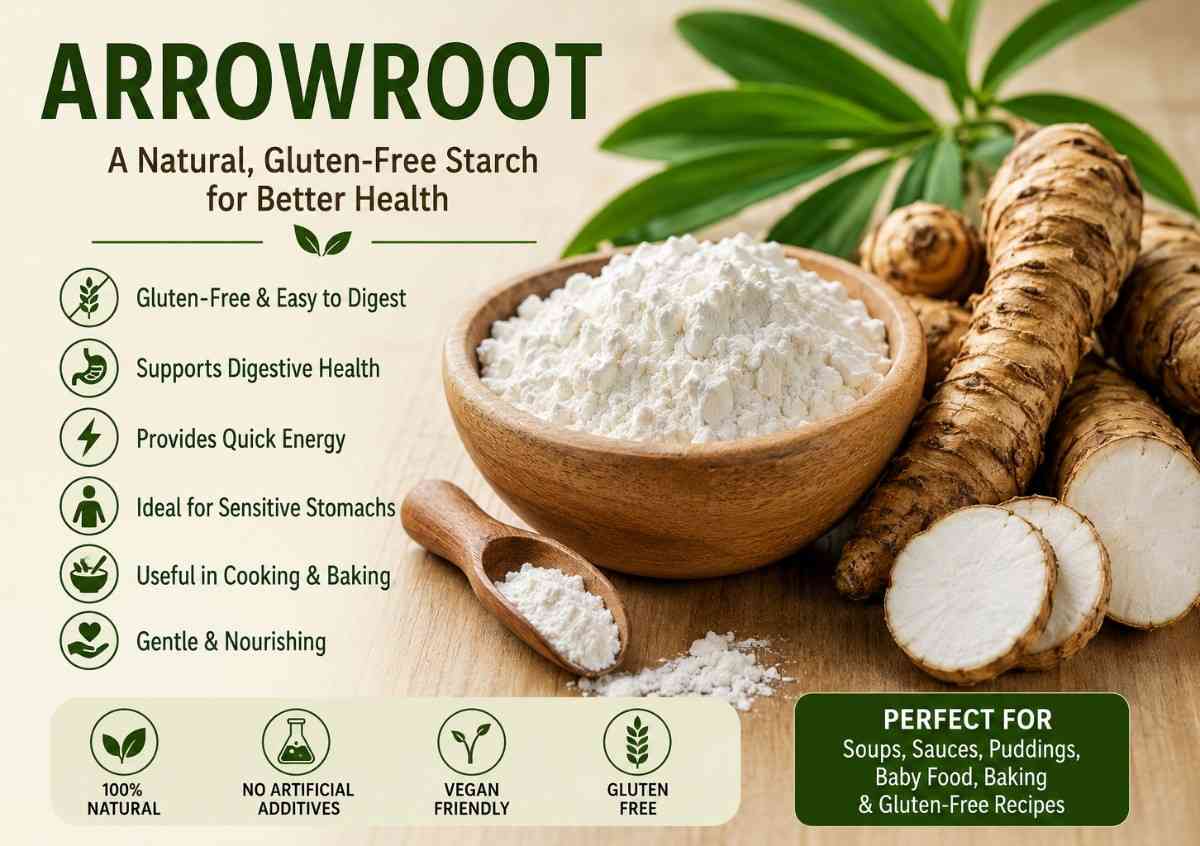
Arrowroot is a naturally gluten-free starch that has been used for centuries in traditional cooking and natural health practices. Extracted from the rhizomes of the Maranta arundinacea plant, arrowroot is valued for its smooth texture, easy digestibility, and versatility. It is commonly used as a thickening agent in soups, sauces, gravies, desserts, and baby foods. Because it is gentle on the stomach and free from gluten, it has become increasingly popular among people with digestive sensitivities and those following gluten-free diets.
This guide explains everything you need to know about arrowroot, including its nutrition, health benefits, side effects, cooking methods, storage tips, precautions, and more.
What is Arrowroot?
Arrowroot is a tropical tuber whose underground stems (rhizomes) are processed into a fine white powder known as arrowroot flour or arrowroot starch. Native to South America and widely cultivated in the Caribbean, Southeast Asia, and parts of India, arrowroot has long been used as both food and traditional medicine.
Unlike cornstarch, arrowroot remains stable in acidic recipes and creates a glossy, smooth consistency without becoming cloudy. It is naturally gluten-free, grain-free, and easy to digest, making it a preferred choice for individuals with celiac disease, gluten intolerance, or sensitive digestive systems.
Nutrition Facts of Arrowroot (Per 100 g Powder)
| Nutrient | Amount |
|---|---|
| Calories | 357 kcal |
| Carbohydrates | 88 g |
| Protein | 0.3 g |
| Fat | 0.1 g |
| Dietary Fiber | 3.4 g |
| Calcium | 40 mg |
| Iron | 0.3 mg |
| Magnesium | 3 mg |
| Phosphorus | 5 mg |
| Potassium | 11 mg |
| Sodium | 2 mg |
| Zinc | 0.1 mg |
| Folate | Small Amount |
Values are approximate and may vary depending on processing and brand.
20 Proven Health Benefits of Arrowroot
- Easy to Digest: Arrowroot is gentle on the digestive system and is often recommended during recovery from digestive discomfort.
- Naturally Gluten-Free: It is an excellent alternative to wheat flour for people with celiac disease or gluten sensitivity.
- Supports Gut Health: Its resistant starch may help nourish beneficial gut bacteria.
- Provides Quick Energy: The easily digestible carbohydrates offer a fast source of energy.
- May Help Relieve Diarrhea: Traditionally, arrowroot has been used to soothe digestive upset and loose stools.
- Gentle for Babies: Maranta Starch is commonly used in homemade baby foods because it is mild and easy to digest.
- Supports Healthy Weight Gain During Recovery: Its calorie-rich starch can help individuals recovering from illness meet energy needs.
- Low in Fat: Arrowroot contains virtually no fat, making it suitable for low-fat meal plans.
- May Promote Fullness: Resistant starch and fiber may help increase satiety when eaten with balanced meals.
- Suitable for Sensitive Stomachs: People recovering from gastrointestinal illnesses often tolerate arrowroot well.
- Acts as a Natural Thickener: It improves the texture of soups, sauces, gravies, and desserts without altering flavor.
- May Support Heart Health: Using arrowroot instead of refined flour may contribute to healthier dietary choices.
- Contains Small Amounts of Essential Minerals: It provides modest amounts of potassium, calcium, phosphorus, and iron.
- May Help Maintain Stable Digestion: Because it is gentle, it can be included in bland diets recommended during digestive recovery.
- Versatile in Gluten-Free Baking: Arrowroot improves the texture of gluten-free breads, cookies, and cakes.
- Naturally Grain-Free: It fits grain-free and paleo-style eating patterns.
- May Support Immune Function: Traditional uses suggest that its easy digestibility helps maintain nutritional intake during illness.
- Helps Create Smooth Recipes: It produces silky sauces and puddings without lumps.
- Suitable for Vegan Cooking: Arrowroot works well as a plant-based thickener in dairy-free and vegan recipes.
- Useful During Illness Recovery: Its bland nature makes it a practical carbohydrate source for people recovering from stomach illnesses.
10 Side Effects of Arrowroot
- High in Carbohydrates: Eating excessive amounts may increase daily carbohydrate intake.
- May Raise Blood Sugar: Large servings can contribute to elevated blood glucose levels.
- Low in Protein: Arrowroot should not replace protein-rich foods in the diet.
- Low in Essential Nutrients: It provides fewer vitamins and minerals than whole grains.
- Digestive Discomfort: Excessive intake may cause bloating or gas in some individuals.
- Weight Gain Risk: Frequent large servings may contribute to excess calorie consumption.
- Possible Allergic Reactions: Although uncommon, some people may experience allergies.
- Not Ideal as a Sole Food Source: It lacks many nutrients needed for a balanced diet.
- May Interfere with Specialized Diet Plans: High carbohydrate content may not suit certain therapeutic diets.
- Risk of Highly Processed Products: Some commercial arrowroot products may contain additives or fillers.
How to Eat Arrowroot?
Arrowroot can be enjoyed in several ways:
- Mix arrowroot powder into soups for natural thickening.
- Add it to sauces and gravies.
- Use it in gluten-free baking.
- Prepare Maranta Starch porridge.
- Add it to smoothies.
- Make puddings and custards.
- Use it in homemade baby food.
- Prepare pancakes using arrowroot flour.
- Add it to homemade crackers.
- Mix into dairy-free desserts.
Tips for Consuming Arrowroot
- Buy pure arrowroot powder from reputable brands.
- Store it in an airtight container.
- Use cold water to make a slurry before heating.
- Avoid overheating for extended periods.
- Combine it with protein-rich foods for balanced nutrition.
- Use moderate serving sizes.
- Read ingredient labels to avoid fillers.
- Pair it with fruits and vegetables for added nutrients.
- Rotate starch sources instead of relying solely on Maranta Starch.
- Consult a healthcare professional if you have diabetes or special dietary needs.
How to Cook Arrowroot?
Arrowroot is simple to cook:
- Mix the powder with cold water until smooth.
- Stir the slurry into hot soup, sauce, or gravy.
- Cook gently while stirring.
- Remove from heat once thickened.
- Avoid prolonged boiling, which may reduce thickening quality.
- Use in baking recipes as directed.
- Blend into puddings and pie fillings.
- Add to fruit sauces for a glossy finish.
- Use in gluten-free bread recipes.
- Serve immediately for the best texture.
Other Uses of Arrowroot
- Natural Thickener: Used in soups, sauces, gravies, and desserts.
- Gluten-Free Baking: Improves texture in gluten-free baked goods.
- Baby Food Ingredient: Added to homemade infant foods.
- Homemade Biscuits: Commonly used in arrowroot biscuits.
- Dessert Preparation: Thickens puddings, custards, and pie fillings.
- Natural Cosmetic Ingredient: Included in homemade face powders and dry shampoos.
- Body Powder Base: Helps absorb moisture in natural body powders.
- Plant-Based Recipes: Ideal for vegan cooking.
- Food Coating: Used for coating vegetables before frying.
- Traditional Home Remedies: Historically used in soothing digestive preparations.
How Much Arrowroot Can You Eat in a Day?
There is no official recommended daily intake for arrowroot. For most healthy adults, consuming approximately 1–2 tablespoons (8–16 grams) of arrowroot powder per day as part of a balanced diet is generally sufficient for cooking and baking purposes.
People with diabetes, kidney disease, or other medical conditions should consult a healthcare provider or registered dietitian regarding appropriate serving sizes.
Best Time to Eat Arrowroot
Arrowroot can be consumed at any time of the day.
- Breakfast in porridges or pancakes.
- Mid-morning in smoothies.
- Lunch as a thickener in soups.
- Afternoon in healthy desserts.
- Dinner in sauces or gluten-free recipes.
- During illness recovery as part of bland meals.
Who Should Eat Arrowroot?
- People with Gluten Intolerance: It provides a naturally gluten-free starch alternative.
- Individuals with Sensitive Digestion: It is easy to digest compared with many grains.
- People Recovering from Illness: It offers gentle carbohydrates for energy.
- Children: It can be included in age-appropriate meals.
- Older Adults: Its mild texture makes it easy to consume.
- People Following Grain-Free Diets: Arrowroot fits many grain-free eating patterns.
- Home Bakers: It improves gluten-free baking results.
- Vegetarians and Vegans: It serves as a versatile plant-based ingredient.
- People Looking for Natural Thickeners: It replaces processed thickening agents.
- Individuals Seeking Easy-to-Digest Foods: It can be included in bland diets when appropriate.
Who Should Not Eat Arrowroot?
- People Allergic to Arrowroot: They should avoid consumption completely.
- Individuals with Poorly Controlled Diabetes: Large servings may affect blood sugar levels.
- People on Low-Carbohydrate Diets: Maranta Starch is predominantly carbohydrate.
- Individuals Following Ketogenic Diets: It generally does not fit keto carbohydrate limits.
- People Relying on Nutrient-Dense Foods: Maranta Starch should not replace nutrient-rich whole foods.
- Those with Portion Control Challenges: Excess intake may increase calorie consumption.
- Individuals with Specific Medical Restrictions: Follow personalized medical advice.
- People Consuming Highly Processed Arrowroot Products: Check ingredient labels carefully.
- Individuals with Unexplained Food Reactions: Seek medical evaluation before continued use.
- Anyone Advised by a Healthcare Provider to Limit Starches: Follow professional recommendations.
How to Store Arrowroot?
- Keep in an Airtight Container: Protects against moisture.
- Store in a Cool Place: Avoid heat exposure.
- Avoid Direct Sunlight: Helps maintain quality.
- Keep Away from Humidity: Prevents clumping.
- Use a Dry Spoon: Reduces contamination.
- Seal Immediately After Use: Preserves freshness.
- Check Expiration Date: Discard expired products.
- Store Away from Strong Odors: Prevents odor absorption.
- Inspect Regularly: Watch for moisture or pests.
- Label the Container: Helps track purchase and expiry dates.
Precautions and Interactions
- Consume in Moderation: Excessive intake may increase carbohydrate consumption.
- Monitor Blood Sugar: Individuals with diabetes should monitor their response.
- Choose Pure Products: Avoid brands containing unnecessary additives.
- Maintain a Balanced Diet: Do not rely on arrowroot as the primary carbohydrate source.
- Consult Your Healthcare Provider During Pregnancy: Use normal culinary amounts unless otherwise advised.
- Discuss with a Dietitian if You Have Kidney Disease: Personalized advice may be needed.
- Watch for Allergic Reactions: Stop use if symptoms develop.
- Use Proper Cooking Methods: Avoid prolonged boiling.
- Follow Portion Sizes: Prevent unnecessary calorie intake.
- Seek Medical Advice for Persistent Digestive Symptoms: Do not self-treat ongoing gastrointestinal issues.
FAQs
Can arrowroot cause gas?
Ararot is usually easy to digest but may cause gas or bloating if eaten in large amounts.
Is Arrowroot safe for pregnant women?
Yes, Ararot is generally safe during pregnancy when consumed in normal food amounts.
Is Arrowroot safe for children?
Yes, Ararot is safe for children and is often used in easily digestible foods.
What is Arrowroot good for?
Ararot supports digestion, thickens foods, and provides gluten-free starch.
What is arrowroot called in India?
Arrowroot is called Ararot in India.
Is arrowroot maida?
No, Ararot is a starch, while maida is refined wheat flour.
What is the best substitute for arrowroot?
Cornstarch, tapioca starch, potato starch, or rice flour can replace Ararot.
Is arrowroot good for kidneys?
Ararot may be suitable for some people, but kidney patients should consult a doctor.
Is arrowroot high in sugar?
No, Ararot is low in sugar but high in starch.
Is arrowroot good for urinary tract infection?
Ararot does not treat UTIs but may support overall nutrition.
What is arrowroot used for medically?
Traditionally, Ararot is used to soothe digestive discomfort.
Is arrowroot good for gastritis?
Ararot may be gentle on the stomach but does not cure gastritis.
Is arrowroot acidic or alkaline?
Ararot is considered mildly alkaline-forming and not acidic.
Is arrowroot high glycemic?
Yes, Ararot may have a moderate to high glycemic effect due to its starch content.
Is arrowroot good for IBS?
Ararot may suit some people with IBS because it is gluten-free and easy to digest.
Which is healthier, cornstarch or arrowroot?
Arrowroot may be preferred for being gluten-free and less processed.
Why use arrowroot instead of cornflour?
Ararot gives a smooth texture and works well in sauces, desserts, and gluten-free recipes.
Can people with celiac disease eat arrowroot?
Yes. Pure Ararot is naturally gluten-free, but always check labels for cross-contamination.
Is arrowroot healthy?
Yes. Ararot is naturally gluten-free, easy to digest, and provides quick energy. It can be part of a balanced diet when consumed in moderation.
What is arrowroot used for?
Ararot is used to thicken soups, sauces, gravies, puddings, pie fillings, smoothies, and gluten-free baked goods.
Is arrowroot gluten-free?
Yes. Pure Ararot powder is naturally gluten-free and is suitable for people with celiac disease or gluten intolerance.
Can people with diabetes eat arrowroot?
People with diabetes can eat Ararot in moderation, but because it is high in carbohydrates, portion control and blood sugar monitoring are important.
Is arrowroot good for digestion?
Yes. Ararot is considered gentle on the stomach and has traditionally been used to support digestive comfort during mild digestive upset.
Can arrowroot help with diarrhea?
Ararot has traditionally been used as part of a bland diet to help soothe digestive discomfort, but persistent diarrhea should be evaluated by a healthcare professional.
Is arrowroot safe for babies?
Ararot is commonly used in homemade baby foods due to its mild taste and easy digestibility. Consult your pediatrician before introducing it to infants.
Can I eat arrowroot every day?
Yes. Most healthy adults can enjoy moderate amounts of Ararot daily as part of a varied, balanced diet.
Does arrowroot contain protein?
No. Ararot contains very little protein and should be paired with protein-rich foods for balanced nutrition.
Is arrowroot good for weight loss?
Ararot is not a weight-loss food, but it can fit into a calorie-controlled diet when consumed in appropriate portions.
Can I use arrowroot instead of flour?
Yes. Ararot can replace a portion of wheat flour in gluten-free recipes and works especially well as a thickening agent.
Is arrowroot keto-friendly?
No. Ararot is high in carbohydrates and is generally not suitable for ketogenic diets.
What does arrowroot taste like?
Ararot has a very mild, neutral flavor, making it ideal for both sweet and savory dishes without changing their taste.
Can arrowroot be used in baking?
Yes. Ararot is widely used in gluten-free baking to improve texture and create lighter baked goods.
Is arrowroot suitable for vegans?
Yes. Ararot is completely plant-based, making it suitable for vegan and vegetarian diets.
Sources / References:
- U.S. Department of Agriculture (USDA) FoodData Central
- World Health Organization (WHO)
- Academy of Nutrition and Dietetics
- MedlinePlus
- Cleveland Clinic
- Mayo Clinic
About the Author:
Kirti Solanki is a Health Content Researcher who creates evidence-based health and nutrition articles by reviewing scientific literature, clinical guidelines, and reputable medical resources. Her goal is to make complex health information accurate, practical, and easy to understand for everyday readers.
Disclaimer:
This article is for educational purposes only and should not replace professional medical advice, diagnosis, or treatment. Always consult a qualified healthcare provider before making significant dietary or health changes.
Also Read: