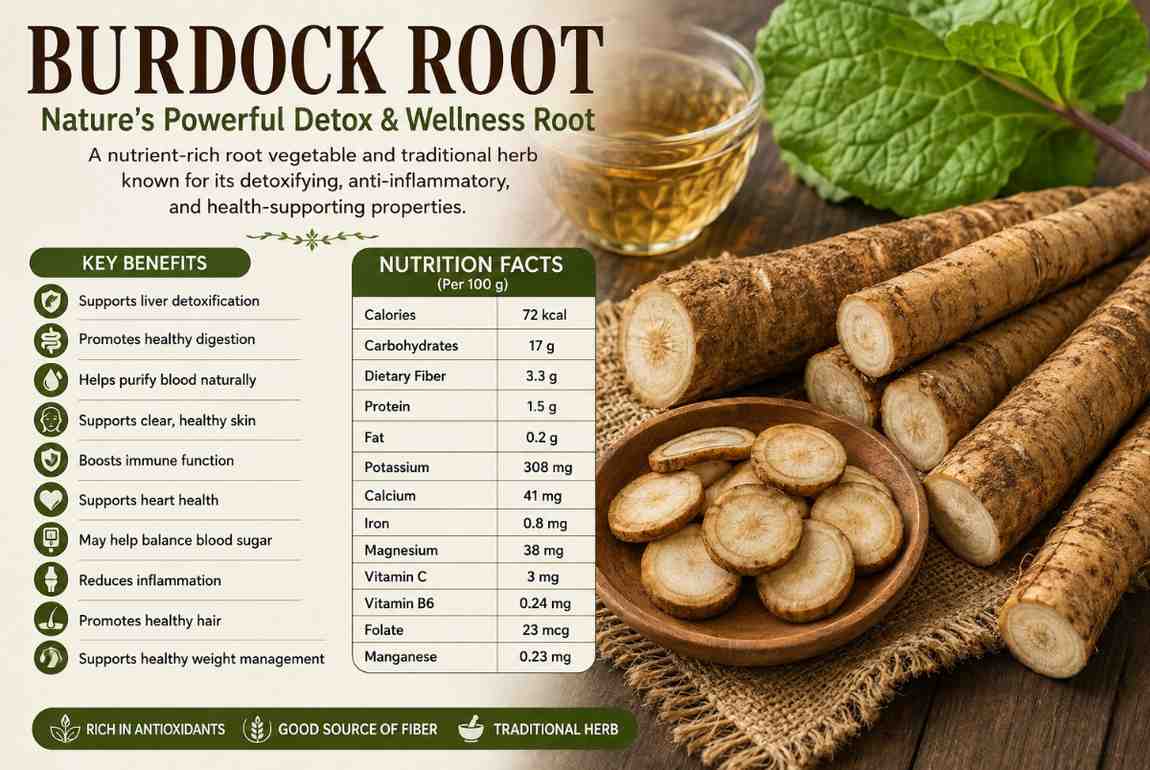
Burdock root is a traditional medicinal herb and edible root vegetable that has been used for centuries in Asian and European herbal medicine. Known for its earthy flavor and impressive nutritional profile, burdock root is valued for supporting digestion, liver health, skin wellness, and overall well-being. Today, it is gaining popularity among health-conscious individuals due to its natural antioxidants, fiber, vitamins, and beneficial plant compounds.
This guide covers everything you need to know about burdock root, including its nutrition facts, health benefits, side effects, cooking methods, storage tips, precautions, and more.
What is Burdock Root?
Burdock root is the long, brown taproot of the burdock plant (Arctium lappa), a member of the daisy family. Native to Europe and Asia, it is widely cultivated in Japan, where it is commonly known as “gobo.”
The root has a crunchy texture similar to carrots and a mildly sweet, earthy taste. Besides being a nutritious vegetable, burdock root has been traditionally used in herbal medicine to support digestion, promote healthy skin, and aid the body’s natural detoxification processes.
It contains dietary fiber, especially inulin (a prebiotic fiber), along with antioxidants such as quercetin, luteolin, and phenolic acids that contribute to its health-promoting properties.
Nutrition Facts of Burdock Root (Per 100 g)
| Nutrient | Amount |
|---|---|
| Calories | 72 kcal |
| Carbohydrates | 17 g |
| Dietary Fiber | 3.3 g |
| Protein | 1.5 g |
| Fat | 0.2 g |
| Potassium | 308 mg |
| Calcium | 41 mg |
| Magnesium | 38 mg |
| Phosphorus | 51 mg |
| Iron | 0.8 mg |
| Vitamin C | 3 mg |
| Vitamin B6 | 0.24 mg |
| Folate | 23 mcg |
| Manganese | 0.23 mg |
Values are approximate and may vary depending on growing conditions.
20 Proven Health Benefits of Burdock Root
- Rich in Antioxidants: Burdock root contains powerful antioxidants that help protect cells from oxidative stress.
- Supports Digestive Health: Its high fiber content promotes healthy digestion and regular bowel movements.
- Acts as a Natural Prebiotic: Inulin nourishes beneficial gut bacteria and supports a healthy microbiome.
- May Reduce Inflammation: Plant compounds may help lower inflammation throughout the body.
- Supports Liver Function: Traditional medicine uses burdock root to support the liver’s natural detoxification processes.
- Promotes Healthy Skin: Antioxidants and anti-inflammatory compounds may help maintain clearer, healthier skin.
- May Help Balance Blood Sugar: Fiber slows carbohydrate absorption and may improve blood sugar control.
- Supports Heart Health: Potassium and antioxidants contribute to healthy cardiovascular function.
- May Lower Cholesterol: Dietary fiber may help reduce LDL (“bad”) cholesterol levels.
- Boosts Immune Function: Vitamins and plant compounds help support the body’s natural immune defenses.
- Supports Kidney Health: Traditionally used as a mild diuretic that may assist fluid balance.
- Promotes Healthy Weight Management: Fiber increases fullness and may reduce overall calorie intake.
- Supports Healthy Blood Pressure: Potassium helps maintain normal blood pressure levels.
- May Improve Joint Comfort: Anti-inflammatory compounds may help reduce joint discomfort.
- Supports Healthy Hair: Vitamins and minerals contribute to healthier hair growth.
- Promotes Wound Healing: Antioxidants may support tissue repair and skin recovery.
- May Protect Against Cellular Damage: Phytochemicals help defend cells against free radicals.
- Supports Healthy Aging: Antioxidants may help slow age-related cellular damage.
- Provides Essential Minerals: Burdock root supplies magnesium, potassium, manganese, and iron.
- May Improve Overall Wellness: Regular consumption as part of a balanced diet may contribute to better long-term health.
10 Side Effects of Burdock Root
- Allergic Reactions: People allergic to daisies, chrysanthemums, or ragweed may react to burdock root.
- Digestive Discomfort: Large amounts may cause bloating, gas, or stomach upset.
- Low Blood Sugar: Burdock root may enhance blood sugar-lowering effects in some individuals.
- Increased Urination: Its mild diuretic properties may increase urine production.
- Possible Dehydration: Excessive intake combined with inadequate fluid intake may contribute to dehydration.
- Pregnancy Concerns: Pregnant women should avoid medicinal amounts unless advised by a healthcare professional.
- Breastfeeding Uncertainty: Safety during breastfeeding has not been well established.
- Medication Interactions: It may interact with diabetes medications, diuretics, or blood-thinning medicines.
- Contamination Risk: Wild burdock may be contaminated or confused with toxic plants if improperly identified.
- Digestive Irritation: Excessive consumption may irritate sensitive digestive systems.
How to Eat Burdock Root?
Burdock root is highly versatile and can be included in many meals.
- Eat it raw after peeling and slicing it thinly into salads.
- Stir-fry it with vegetables and sesame oil.
- Add sliced burdock root to soups and stews.
- Roast it as a healthy side dish.
- Pickle it for a traditional Japanese side dish.
- Brew dried burdock root into herbal tea.
- Add cooked Greater burdock to rice dishes.
- Blend cooked burdock root into vegetable purees.
- Use it in noodle dishes.
- Enjoy it alongside lean proteins for balanced meals.
Tips for Consuming Burdock Root
- Wash the root thoroughly before peeling.
- Soak sliced burdock root in water to reduce browning.
- Start with small servings if trying it for the first time.
- Pair it with healthy fats to improve flavor.
- Drink enough water due to its fiber content.
- Choose fresh, firm roots without soft spots.
- Cook thoroughly for a softer texture.
- Include it as part of a balanced diet rather than relying on it as a single health food.
How to Cook Burdock Root?
Burdock root becomes tender and flavorful after cooking.
Stir-Frying
Slice into thin strips and cook with sesame oil, garlic, carrots, and soy sauce.
Boiling
Boil sliced burdock root for 15–20 minutes until tender before adding it to recipes.
Roasting
Toss with olive oil and herbs, then roast at 400°F (200°C) for about 25–30 minutes.
Soups
Add chopped burdock root to vegetable or chicken soup during cooking.
Steaming
Steam until tender and season lightly with herbs and spices.
Tea
Simmer dried burdock root in water for 10–15 minutes to prepare herbal tea.
Other Uses of Burdock Root
- Herbal Tea: Dried burdock root is commonly brewed into caffeine-free herbal tea.
- Traditional Herbal Medicine: Used in traditional wellness practices for centuries.
- Natural Skin Care: Included in herbal skincare products for soothing properties.
- Hair Care Products: Added to shampoos and scalp treatments.
- Dietary Supplements: Available as capsules, powders, and liquid extracts.
- Fermented Foods: Used in some traditional fermented recipes.
- Vegetable Side Dish: Frequently served as a cooked vegetable.
- Functional Food Ingredient: Added to health-focused recipes for extra fiber.
- Traditional Japanese Cuisine: A popular ingredient in many Japanese dishes.
- Herbal Preparations: Used in tinctures and botanical blends.
How Much Burdock Root Can You Eat in a Day?
There is no officially established daily intake for burdock root.
For most healthy adults:
- Fresh burdock root: 50–100 grams per day is generally considered a moderate food serving.
- Burdock root tea: 1–3 cups daily is commonly consumed.
- Supplements should only be taken according to the manufacturer’s instructions or a healthcare provider’s advice.
Avoid excessive intake, especially if you have medical conditions or take prescription medications.
Best Time to Eat Burdock Root
There is no single best time, but these options may help:
- Morning with breakfast for extra fiber.
- Lunch as part of a balanced meal.
- Dinner in soups or stir-fries.
- Herbal tea between meals if desired.
- Before meals may help increase fullness due to fiber content.
Consistency is generally more important than timing.
Who Should Eat Burdock Root?
- People Seeking More Fiber: Greater burdock supports digestive health through its fiber content.
- Individuals Supporting Gut Health: Prebiotic inulin nourishes beneficial gut bacteria.
- Health-Conscious Adults: Its vitamins, minerals, and antioxidants support overall wellness.
- People Looking for Plant-Based Foods: Burdock root fits well into vegetarian and vegan diets.
- Individuals Managing Weight: Fiber may help improve satiety.
- People Wanting Heart-Healthy Foods: Potassium and fiber support cardiovascular health.
- Those Seeking Natural Antioxidants: Plant compounds help protect cells from oxidative damage.
- People Interested in Traditional Foods: Burdock root has a long history in traditional cuisines.
- Adults Following Balanced Diets: It adds nutritional variety to meals.
- People Exploring Functional Foods: Greater burdock provides nutrients beyond basic nutrition.
Who Should Not Eat Burdock Root?
- People Allergic to Daisy Family Plants: Cross-reactivity may occur.
- Pregnant Women Without Medical Advice: Medicinal amounts should be avoided.
- Breastfeeding Mothers: Limited safety information is available.
- People Taking Diabetes Medications: Blood sugar levels should be monitored.
- Individuals Taking Diuretics: Combined effects may increase fluid loss.
- People Taking Blood Thinners: Consult a healthcare provider before regular use.
- Individuals with Severe Kidney Disease: Seek medical guidance before increasing potassium intake.
- People with Digestive Disorders: High fiber may worsen symptoms in some cases.
- Children Using Supplements: Herbal supplements should only be used under professional guidance.
- Anyone Preparing for Surgery: Stop herbal supplements in advance as advised by a healthcare provider.
How to Store Burdock Root?
- Refrigerate Fresh Root: Store in the refrigerator for maximum freshness.
- Keep It Dry: Avoid excess moisture to reduce spoilage.
- Wrap Properly: Store in a paper towel inside a perforated plastic bag.
- Use Within Two Weeks: Fresh Greater burdock tastes best when used promptly.
- Freeze After Blanching: Blanch slices before freezing for longer storage.
- Store Dried Root Airtight: Keep dried burdock root in a sealed container.
- Avoid Direct Sunlight: Store dried products in a cool, dark place.
- Check for Spoilage: Discard roots that become soft, moldy, or develop an unpleasant odor.
- Keep Away from Strong Odors: Greater burdock can absorb surrounding smells.
- Label Frozen Portions: Mark storage dates for easier rotation.
Precautions and Interactions
- Consult Your Healthcare Provider: Seek medical advice before using burdock root medicinally.
- Monitor Blood Sugar: People with diabetes should monitor glucose levels carefully.
- Avoid Excessive Intake: Moderation helps reduce digestive side effects.
- Stay Hydrated: Drink enough water due to its fiber content.
- Purchase from Trusted Sources: Avoid wild-harvested roots unless properly identified.
- Watch for Allergies: Stop use immediately if allergic symptoms develop.
- Inform Your Doctor About Supplements: Mention herbal products before medical procedures.
- Use Supplements Responsibly: Follow label instructions carefully.
- Avoid Self-Treating Serious Conditions: Greater burdock should not replace prescribed treatment.
- Monitor Medication Interactions: Discuss regular use with your healthcare provider if taking prescription medicines.
Conclusion
Burdock root is a nutritious root vegetable with a long history of culinary and traditional medicinal use. Rich in fiber, antioxidants, vitamins, and minerals, it may support digestive health, heart health, healthy blood sugar management, and overall wellness when consumed as part of a balanced diet. While it offers numerous potential health benefits, it should not be considered a cure for disease or a substitute for medical treatment.
Including moderate amounts of fresh Greater burdock in soups, stir-fries, salads, or herbal teas can be a simple way to diversify your diet. As with any herbal food or supplement, individuals with medical conditions, allergies, or those taking medications should consult a healthcare professional before regular use.
FAQ’s
What is burdock root good for?
Greater burdock is commonly used to support digestive health, promote healthy skin, provide antioxidants, and add fiber, vitamins, and minerals to the diet.
Can you eat burdock root every day?
Yes, most healthy adults can eat Greater burdock in moderate amounts as part of a balanced diet. Excessive intake may cause digestive discomfort in some people.
What does burdock root taste like?
Greater burdock has a mildly sweet, earthy flavor with a crunchy texture similar to carrots when fresh.
Is burdock root safe to eat raw?
Yes, Greater burdock can be eaten raw after washing and peeling, although many people prefer it cooked because it becomes softer and sweeter.
Is burdock root good for the liver?
Traditional herbal medicine has long used Greater burdock to support liver health. Some studies suggest it contains antioxidants that may help protect liver cells, but more human research is needed.
Can burdock root help with weight loss?
Its high fiber content may increase fullness and support healthy weight management when combined with a nutritious diet and regular exercise.
Does burdock root lower blood sugar?
Some research suggests Greater burdock may help support healthy blood sugar levels, but people taking diabetes medications should consult their healthcare provider before using it regularly.
Is burdock root good for digestion?
Yes. Greater burdock contains inulin, a prebiotic fiber that supports beneficial gut bacteria and promotes healthy digestion.
Can burdock root improve skin health?
Its antioxidants and anti-inflammatory compounds may help support healthy skin, although it should not replace medical treatment for skin conditions.
Is burdock root a vegetable or a herb?
Greater burdock is both an edible root vegetable and a traditional medicinal herb.
Is burdock root rich in fiber?
Yes. Greater burdock is a good source of dietary fiber, including prebiotic inulin, which supports gut health.
Can people with diabetes eat burdock root?
Yes, but they should monitor their blood sugar levels and consult their healthcare provider, especially if they take diabetes medications.
Is burdock root good for the kidneys?
Traditionally, Greater burdock has been used as a mild diuretic, but people with kidney disease should seek medical advice before increasing their intake.
Is burdock root gluten-free?
Yes. Fresh Greater burdock is naturally gluten-free and suitable for people following a gluten-free diet.
Is burdock root safe for pregnant women?
Pregnant women should avoid medicinal amounts unless advised by a healthcare provider.
Is burdock root safe for children?
Yes, as a food in moderation. Supplements should only be used with medical advice.
What is burdock root called in India?
It is usually sold as Burdock Root or Arctium lappa.
What is a good substitute for burdock root?
Parsnips, carrots, daikon radish, salsify, and lotus root are good substitutes.
What is similar to burdock root?
Daikon radish, parsnips, lotus root, and salsify have similar textures and flavors.
Where can you find burdock root?
It is available at Asian grocery stores, health food stores, and online.
What is the Ayurvedic name for burdock root?
Burdock root has no widely recognized Ayurvedic or Sanskrit name.
Is burdock root available in India?
Yes, it is available through specialty stores and online retailers.
What organ does burdock root help?
It is traditionally used to support the liver, digestive system, skin, and kidneys.
Is burdock root expensive?
It is generally affordable, though imported products may cost more.
What not to mix with burdock root?
Avoid combining it with diabetes medicines, diuretics, or blood thinners without medical advice.
What happens if you take burdock root every day?
Moderate food amounts are generally safe, but excessive intake may cause side effects.
Does burdock root have all 102 minerals?
No. It contains several essential minerals, but not all 102.
Which is better, dandelion root or burdock root?
Both are beneficial. Dandelion is often used for liver support, while burdock is valued for its fiber and antioxidants.
Sources / References:
- U.S. Department of Agriculture (USDA) FoodData Central
- National Center for Complementary and Integrative Health (NCCIH)
- National Institutes of Health (NIH)
- MedlinePlus
- European Food Information Council (EUFIC)
Disclaimer:
This article is for educational and informational purposes only and should not be considered medical advice. Always consult a qualified healthcare professional before making changes to your diet, using herbal supplements, or treating any medical condition.
Also Read: