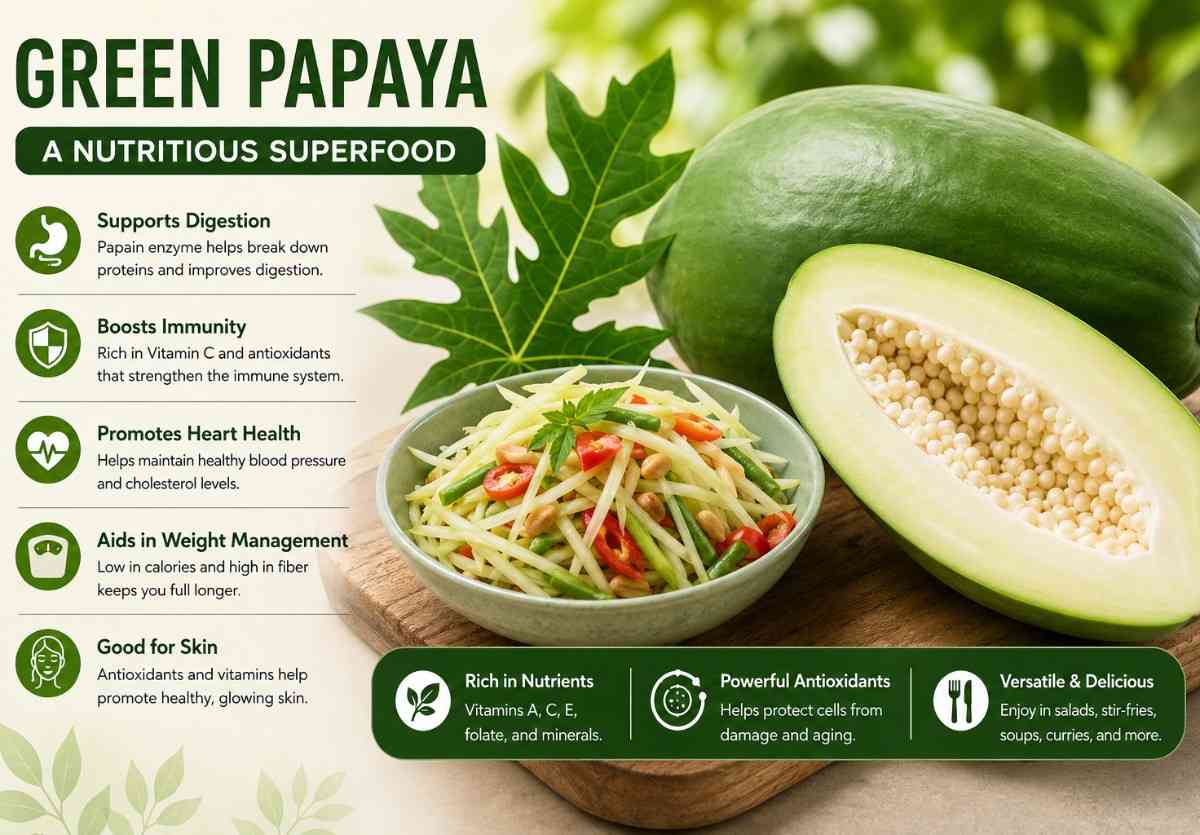
Green papaya is the unripe form of the papaya fruit, harvested before it develops its sweet taste and orange flesh. Unlike ripe papaya, green papaya has a firm texture, mild flavor, and is widely used as a vegetable in Asian, Caribbean, African, and Latin American cuisines. It is commonly added to salads, curries, soups, stir-fries, and pickles.
Beyond its culinary value, green papaya is packed with vitamins, minerals, dietary fiber, antioxidants, and digestive enzymes such as papain and chymopapain. These natural compounds have made green papaya a popular ingredient in traditional medicine for supporting digestion, immunity, skin health, and overall wellness.
This guide explores everything you need to know about green papaya (also called raw papaya, or unripe papaya), including its nutritional value, science-backed health benefits, potential side effects, cooking methods, storage tips, and precautions.
What is Green Papaya?
Green papaya is the immature fruit of the papaya tree (Carica papaya). It is picked before ripening, giving it green skin, pale white to light-green flesh, and a crisp texture.
Unlike ripe papaya, green papaya contains:
- Less natural sugar
- Higher levels of digestive enzymes
- More resistant starch
- A neutral flavor that absorbs spices and seasonings well
Because of these characteristics, it is often prepared as a vegetable rather than eaten like a fruit.
Nutrition Facts of Green Papaya
Approximate nutrition per 100 grams (raw)
| Nutrient | Amount |
|---|---|
| Calories | 43 kcal |
| Water | 88 g |
| Carbohydrates | 10.8 g |
| Dietary Fiber | 1.7 g |
| Protein | 0.5 g |
| Fat | 0.3 g |
| Vitamin C | 60.9 mg |
| Vitamin A | 47 µg |
| Folate | 37 µg |
| Potassium | 182 mg |
| Calcium | 20 mg |
| Magnesium | 21 mg |
| Phosphorus | 10 mg |
| Iron | 0.3 mg |
| Sodium | 8 mg |
Values may vary depending on variety and maturity.
20 Proven Health Benefits of Green Papaya
- Supports Healthy Digestion: Green papaya contains papain, a natural digestive enzyme that helps break down proteins and may improve digestion.
- Rich in Vitamin C: Its high vitamin C content supports immune function and helps protect cells from oxidative stress.
- Promotes Gut Health: The fiber in green papaya encourages healthy bowel movements and supports beneficial gut bacteria.
- May Relieve Constipation: Regular consumption may help soften stools and improve digestive regularity.
- Supports Weight Management: Low in calories and high in fiber, green papaya helps promote fullness and reduce overeating.
- May Reduce Inflammation: Antioxidants and plant compounds may help reduce chronic inflammation.
- Supports Heart Health: Potassium and antioxidants may contribute to healthy blood pressure and cardiovascular function.
- Helps Maintain Healthy Cholesterol Levels: Dietary fiber may assist in reducing LDL cholesterol as part of a balanced diet.
- Supports Healthy Blood Sugar: Fiber slows carbohydrate absorption, helping maintain stable blood sugar levels.
- Promotes Healthy Skin: Vitamin C contributes to collagen production, supporting skin elasticity and repair.
- Supports Wound Healing: Nutrients like vitamin C aid normal tissue repair.
- Provides Antioxidant Protection: Green papaya contains carotenoids and flavonoids that help combat oxidative stress.
- May Support Liver Health: Antioxidant compounds may help protect liver cells from damage.
- Supports Eye Health: Vitamin A precursors contribute to maintaining normal vision.
- Promotes Healthy Hair: Vitamins and minerals nourish hair follicles and support healthy hair growth.
- May Support Immune Function: Antioxidants and vitamins strengthen the body’s natural defenses.
- Supports Bone Health: Calcium, magnesium, and vitamin C contribute to maintaining healthy bones.
- Helps Maintain Hydration: Its high water content contributes to daily fluid intake.
- May Support Healthy Aging: Antioxidants help reduce free radical damage associated with aging.
- Versatile Nutrient-Dense Food: Green papaya provides multiple essential nutrients while remaining low in calories.
10 Side Effects of Green Papaya
- May Trigger Latex Allergy: People allergic to latex may also react to green papaya due to similar proteins.
- Unsafe During Pregnancy in Large Amounts: Unripe papaya latex may stimulate uterine contractions, so pregnant women should avoid consuming large amounts unless advised otherwise by a healthcare provider.
- May Cause Digestive Upset: Eating excessive quantities can cause stomach discomfort, bloating, or diarrhea.
- Can Irritate Sensitive Stomachs: The digestive enzymes may cause irritation in some individuals.
- Possible Allergic Reactions: Some people may develop itching, swelling, or skin rashes.
- May Interact with Blood Thinners: Vitamin K content is low, but papaya extracts may interact with certain medications, so medical advice is recommended.
- May Lower Blood Sugar: Individuals taking diabetes medications should monitor blood sugar when consuming large amounts.
- Can Cause Mouth Irritation: Raw green papaya may cause mild tingling or irritation in sensitive individuals.
- Excess Fiber May Cause Gas: Eating too much at once may result in bloating or flatulence.
- Improper Preparation May Affect Taste: Undercooked green papaya can have a strong bitter taste that some people find unpleasant.
How to Eat Green Papaya?
Green papaya is extremely versatile and can be enjoyed in many ways.
- Shredded into fresh salads
- Stir-fried with vegetables
- Added to curries
- Cooked in soups
- Steamed as a side dish
- Pickled
- Grated into slaws
- Added to stews
- Used in vegetable noodles
- Blended into savory recipes
Tips for Consuming Green Papaya
- Wash thoroughly before peeling.
- Remove seeds before cooking.
- Cook until tender for easier digestion.
- Pair with healthy fats to improve carotenoid absorption.
- Combine with lean proteins for balanced meals.
- Start with small portions if trying it for the first time.
- Avoid consuming excessive amounts daily.
- Use fresh green papaya whenever possible.
- Refrigerate leftovers promptly.
- Choose firm fruits without soft spots.
How to Cook Green Papaya?
Green papaya can be prepared in several delicious ways:
- Peel the fruit.
- Cut it in half and remove the seeds.
- Slice, cube, or grate as needed.
- Boil for 10–20 minutes until tender.
- Stir-fry with garlic, onions, and vegetables.
- Add to curries with coconut milk and spices.
- Cook in soups or stews.
- Steam for a healthier side dish.
- Pickle with vinegar and spices.
- Roast with herbs and olive oil.
Other Uses of Green Papaya
- Natural Meat Tenderizer: The enzyme papain helps soften tough cuts of meat.
- Homemade Face Masks: Unripe papaya is sometimes used in DIY skincare masks.
- Traditional Herbal Remedies: Various cultures use it in folk medicine for digestive support.
- Fruit Preserves: It is commonly used in jams and preserves.
- Pickling Ingredient: Green papaya makes flavorful homemade pickles.
- Fermented Foods: It is used in fermented vegetable dishes.
- Animal Feed: In some regions, surplus fruit is used as livestock feed.
- Compost Material: Peels and scraps can enrich compost.
- Natural Enzyme Source: Papain is extracted for food and pharmaceutical applications.
- Culinary Garnishes: Thin slices are used as decorative vegetable garnishes.
How Much Green Papaya Can You Eat in a Day?
Most healthy adults can safely enjoy approximately 1–2 cups (150–250 grams) of cooked or raw green papaya as part of a balanced diet.
Moderation is important, especially for people with digestive sensitivities. If you have underlying health conditions or take medications, consult your healthcare provider for personalized guidance.
Best Time to Eat Green Papaya
There is no single best time, but these options work well:
- Lunch
- Dinner
- As part of a balanced salad
- Before a workout as a light meal
- After exercise with protein
- Midday meals for better digestion
Avoid eating very large portions immediately before bedtime if it causes digestive discomfort.
Who Should Eat Green Papaya?
- People Looking to Improve Digestion: The digestive enzymes may support healthy digestion.
- Individuals Managing Weight: Its fiber promotes fullness with relatively few calories.
- People Seeking More Vitamin C: Green papaya is an excellent source of vitamin C.
- Those Wanting More Fiber: It helps increase daily fiber intake.
- Active Individuals: Nutrients support overall recovery and wellness.
- People Following Heart-Healthy Diets: Low fat and potassium make it a nutritious choice.
- Individuals Increasing Vegetable Intake: It adds variety and nutrition to meals.
- Adults Seeking Antioxidants: It provides beneficial plant compounds.
Who Should Not Eat Green Papaya?
- Pregnant Women Without Medical Advice: Large amounts of unripe papaya should generally be avoided because of its latex content.
- People with Latex Allergy: Cross-reactivity may trigger allergic reactions.
- Individuals Allergic to Papaya: Avoid completely.
- People Taking Certain Blood-Thinning Medicines: Speak with your healthcare provider before regular consumption.
- Individuals with Severe Digestive Disorders: Introduce gradually and seek medical advice if symptoms worsen.
- Young Infants: Introduce only when age-appropriate and following pediatric guidance.
- People with Unexplained Food Allergies: Exercise caution when trying Unripe papaya.
- Those Experiencing Persistent Digestive Symptoms: Consult a healthcare professional before increasing intake.
How to Store Green Papaya?
- Store Whole at Room Temperature: Keep uncut Unripe papaya in a cool, dry place for several days.
- Refrigerate After Cutting: Store cut pieces in an airtight container.
- Use Within Three to Five Days: Fresh cut papaya tastes best within this period.
- Freeze for Long-Term Storage: Blanch and freeze pieces for future cooking.
- Keep Away from Direct Sunlight: Heat speeds spoilage.
- Avoid Excess Moisture: Dry the fruit before refrigeration.
- Separate from Strong-Smelling Foods: It may absorb odors.
- Inspect Regularly: Discard fruit showing mold or spoilage.
Precautions and Interactions
- Consume in Moderation: Excessive intake may cause digestive discomfort.
- Avoid During Pregnancy Unless Advised: Unripe papaya latex may not be suitable during pregnancy.
- Monitor Blood Sugar: People with diabetes should watch glucose levels when increasing intake.
- Watch for Allergic Reactions: Stop eating if symptoms occur.
- Consult Before Surgery: Papaya supplements may influence bleeding risk.
- Check Medication Interactions: Discuss regular intake with your healthcare provider if taking prescription medicines.
- Wash Thoroughly Before Preparation: Proper cleaning reduces contamination risk.
- Choose Fresh Produce: Avoid damaged or spoiled fruits.
Conclusion
Green papaya is a nutritious, low-calorie vegetable rich in fiber, vitamin C, antioxidants, and digestive enzymes. It can support digestion, immunity, heart health, skin health, and weight management while adding versatility to your meals. Although it offers many health benefits, moderation is important, especially for pregnant women, people with latex allergies, and individuals taking certain medications.
FAQ’s
Is green papaya healthier than ripe papaya?
Both are nutritious, but they offer different benefits. Green papaya contains more digestive enzymes like papain and less natural sugar, while ripe papaya is sweeter and richer in certain antioxidants such as lycopene.
Can you eat green papaya raw?
Yes. Unripe papaya can be eaten raw when properly peeled and cleaned. It is commonly shredded into salads like Thai green papaya salad.
What does green papaya taste like?
Unripe papaya has a mild, slightly earthy flavor with a crisp texture. It absorbs the flavors of herbs, spices, and dressings very well.
Is green papaya good for digestion?
Yes. Unripe papaya contains papain, a natural enzyme that helps break down proteins and may support healthy digestion.
Can green papaya help with weight loss?
Raw papaya may support weight management because it is low in calories, high in fiber, and helps you feel full for longer when included in a balanced diet.
Is green papaya good for people with diabetes?
Raw papaya has a lower sugar content than ripe papaya and provides dietary fiber, making it a suitable choice for many people with diabetes. However, portion control is still important.
Can pregnant women eat green papaya?
Pregnant women should avoid consuming large amounts of unripe green papaya because its latex content may stimulate uterine contractions. Always consult a healthcare provider before eating it during pregnancy.
Is green papaya good for the liver?
Raw papaya contains antioxidants that may help protect cells from oxidative stress, but more human research is needed to confirm its specific effects on liver health.
Does green papaya improve skin health?
Yes. Its vitamin C and antioxidants support collagen production and help protect the skin from oxidative damage, contributing to healthier-looking skin.
Is green papaya good for constipation?
Yes. The fiber and digestive enzymes in Raw papaya may help promote regular bowel movements and relieve mild constipation.
Can green papaya be frozen?
Yes. Peel, cut, and blanch the pieces before freezing them in airtight containers or freezer bags for longer storage.
Is green papaya a fruit or a vegetable?
Botanically, Raw papaya is a fruit. However, because it is harvested before ripening and has a mild flavor, it is commonly cooked and eaten as a vegetable.
Is green papaya good for the immune system?
Yes. Raw papaya is an excellent source of vitamin C, which supports normal immune function and helps protect cells from oxidative stress.
How do you choose a good green papaya?
Select a firm fruit with smooth green skin and no deep bruises, soft spots, or signs of mold.
Can I eat Green Papaya every day?
Yes, most healthy adults can enjoy Raw papaya daily in moderation as part of a balanced diet.
Is Green Papaya safe for children?
Yes, cooked Raw papaya is generally safe for children when served in age-appropriate portions.
What is Green Papaya good for?
Raw papaya supports digestion, immunity, heart health, skin health, and healthy weight management.
Which papaya is best, green or yellow?
Both are healthy. Green papaya is better for cooking and digestion, while yellow papaya is sweeter and richer in antioxidants.
Sources / References:
- U.S. Department of Agriculture (USDA) FoodData Central
- World Health Organization (WHO)
- Harvard T.H. Chan School of Public Health
- National Institutes of Health (NIH)
- MedlinePlus
About the Author:
Kirti Solanki is a Health Content Researcher who creates evidence-based nutrition and wellness content. Her articles are developed using information from reputable health organizations and peer-reviewed scientific literature to provide readers with accurate, practical, and easy-to-understand guidance.
Disclaimer:
This article is for educational purposes only and should not be considered medical advice. Always consult a qualified healthcare professional before making significant dietary or health-related changes, especially if you are pregnant, nursing, have a medical condition, or take prescription medications.
Also Read: