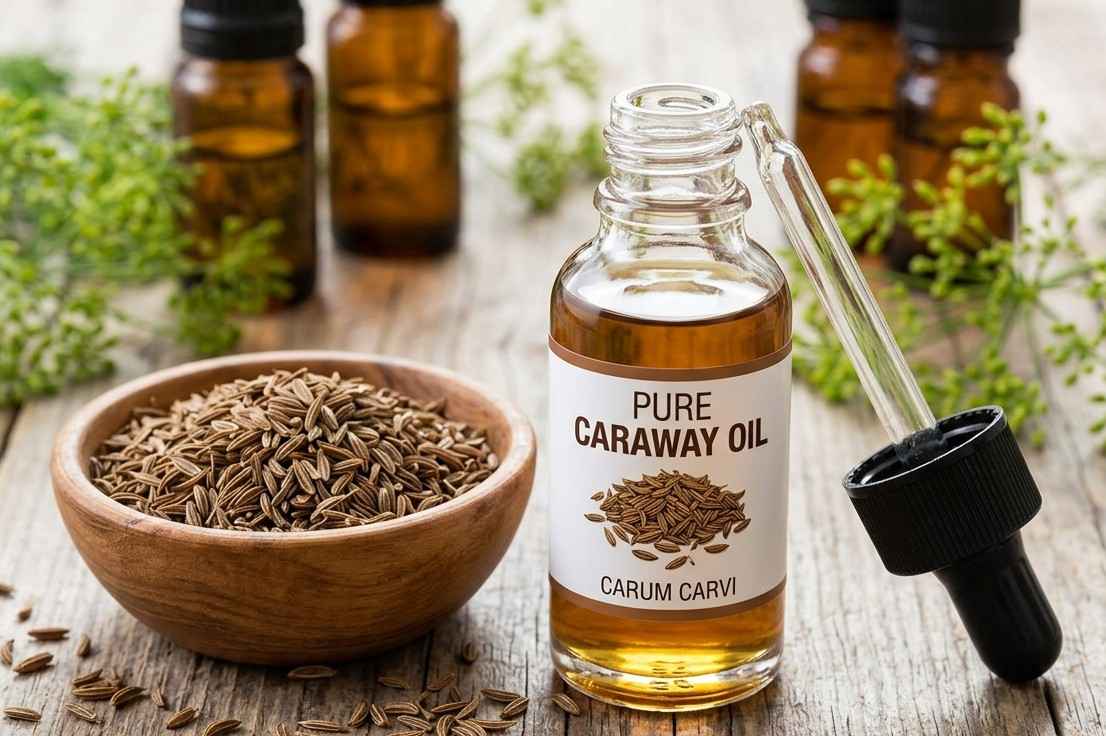
Caraway oil is one of those traditional remedies that has quietly supported digestive health and overall wellness for centuries. Extracted from the seeds of the caraway plant, this aromatic oil carries a warm, slightly peppery, and sweet aroma that instantly reminds many people of traditional breads and herbal teas. But beyond its flavor, caraway seed oil offers powerful therapeutic properties that make it valuable in both natural medicine and modern wellness routines.
In this guide, you will learn everything about caraway oil — from its science-backed health benefits to dosage, precautions, and how to make it at home.
What is Caraway Oil?
Caraway oil is an essential oil extracted from the dried seeds of the caraway plant (Carum carvi), a flowering plant belonging to the Apiaceae family. This plant is closely related to fennel, cumin, coriander, and dill.
The oil is typically obtained through steam distillation of crushed caraway seeds. It contains active compounds such as carvone and limonene, which are responsible for its distinctive aroma and medicinal properties.
Traditionally, caraway oil has been used for:
- Digestive discomfort
- Bloating and gas
- Appetite stimulation
- Respiratory support
- Lactation support
- Antimicrobial protection
It has a long history in European, Middle Eastern, and Indian herbal systems, especially for digestive issues.
Components of Caraway Oil (Per 100 g)
Since caraway seed oil is an essential oil, it is highly concentrated and used in very small quantities. The table below provides approximate nutritional and phytochemical information.
| Nutrient / Compound | Approximate Amount |
|---|---|
| Energy | 884 kcal |
| Total Fat | 100 g |
| Saturated Fat | Trace |
| Monounsaturated Fat | Present |
| Polyunsaturated Fat | Present |
| Carvone | 50–65% |
| Limonene | 20–30% |
| Flavonoids | Present |
| Antioxidants | High |
| Vitamins | Trace amounts |
| Minerals | Trace amounts |
Note: Essential oils are not consumed in large quantities and should always be diluted before internal use.
20 Proven Benefits of Caraway Oil
- Improves Digestion: Caraway essential oil stimulates digestive enzymes, helping the body break down food more efficiently.
- Reduces Bloating: It relieves abdominal bloating by relaxing intestinal muscles and reducing trapped gas.
- Prevents Gas Formation: Caraway seed oil acts as a carminative, preventing excessive gas buildup in the digestive tract.
- Relieves Indigestion: It soothes the stomach lining and reduces discomfort caused by indigestion.
- Supports Gut Health: The antimicrobial properties help balance harmful gut bacteria.
- Eases Stomach Cramps: Its antispasmodic nature reduces stomach and intestinal cramps.
- Improves Appetite: Caraway seed oil can stimulate appetite in people experiencing loss of hunger.
- Supports Lactation: Traditionally used to enhance breast milk production in nursing mothers.
- Relieves Menstrual Discomfort: It may help reduce menstrual cramps due to its muscle-relaxing effect.
- Boosts Immunity: The antioxidants in caraway oil help strengthen immune defense.
- Fights Bacterial Infections: It has antibacterial properties that inhibit harmful microbes.
- Supports Respiratory Health: Inhalation can help clear congestion and soothe cough.
- Freshens Breath: Caraway oil reduces bad breath by eliminating odor-causing bacteria.
- Promotes Healthy Skin: Its antimicrobial properties help manage minor skin infections.
- Reduces Inflammation: It contains compounds that may help reduce mild inflammation.
- Improves Liver Function: Caraway seed oil may stimulate bile production, aiding liver detoxification.
- Enhances Metabolism: It can help support metabolic processes and digestive efficiency.
- Relieves Headaches: Mild headaches linked to digestive discomfort may improve with its use.
- Acts as a Natural Antioxidant: Caraway seed oil helps protect cells from oxidative stress.
- Supports Oral Health: It can be used in diluted form as a natural mouth rinse for oral hygiene.
10 Side Effects of Caraway Oil
Despite its benefits, caraway oil must be used carefully.
- Skin Irritation: Undiluted caraway seed oil may cause redness or irritation when applied directly to skin.
- Allergic Reactions: Some individuals may experience allergic responses like itching or rash.
- Stomach Irritation: Excessive internal use may irritate the stomach lining.
- Nausea: High doses may cause nausea or digestive discomfort.
- Dizziness: Overconsumption can occasionally lead to mild dizziness.
- Heartburn: In sensitive individuals, it may trigger acid reflux symptoms.
- Interaction with Medications: Caraway seed oil may interact with digestive or liver medications.
- Low Blood Sugar Risk: It may lower blood sugar levels in some people.
- Hormonal Sensitivity Issues: Excess use may affect hormone-sensitive conditions.
- Not Safe for Undiluted Internal Use: Essential oils should never be consumed directly without proper dilution and guidance.
How to Use Caraway Oil?
Caraway seed oil can be used in multiple ways:
1. Aromatherapy
Add 2–3 drops to a diffuser to support digestion and respiratory comfort.
2. Massage Oil
Dilute 2–3 drops in a tablespoon of carrier oil (such as coconut or almond oil) and massage on the abdomen for bloating relief.
3. Steam Inhalation
Add 1–2 drops to hot water and inhale steam for respiratory support.
4. Internal Use (Only with Guidance)
Mix 1 drop in honey or warm water under professional supervision.
Other Uses of Caraway Oil
Caraway seed oil is not limited to health purposes.
- Used in flavoring baked goods and confectionery
- Added to herbal liqueurs and beverages
- Used in toothpaste and mouthwash
- Included in soaps and cosmetic products
- Used in traditional food preservation
Tips for Consuming Caraway Oil
- Always dilute before use.
- Start with very small amounts.
- Avoid direct consumption without professional advice.
- Perform a patch test before skin application.
- Store in a dark glass bottle.
How to Take Caraway Oil?
For internal use (only under professional supervision):
- Mix 1 drop with honey.
- Add 1 drop to warm herbal tea.
- Use in capsule form designed for essential oil consumption.
Never exceed recommended doses.
How to Make Caraway Oil?
You can prepare infused caraway oil (not essential oil) at home.
Ingredients:
- 2 tablespoons crushed caraway seeds
- 1 cup carrier oil (olive oil or coconut oil)
Method:
- Slightly crush the seeds.
- Heat carrier oil gently (do not boil).
- Add seeds and simmer on very low heat for 10–15 minutes.
- Let cool completely.
- Strain and store in a glass bottle.
This is an infused oil and much milder than essential oil.
How Much Caraway Oil Can You Use Per Day?
For essential oil:
- 1–2 drops per day maximum (only under supervision).
- For topical use: 2–3 drops diluted in 1 tablespoon carrier oil.
For infused oil:
- ½ to 1 teaspoon daily is generally considered mild.
Caraway Oil Dosage
- Aromatherapy: 2–3 drops in diffuser
- Topical use: 1–3% dilution
- Internal (if approved): 1 drop diluted
Never use high doses due to potency.
Best Time to Use Caraway Oil
- After meals for digestion
- Before bedtime for bloating relief
- During cold or congestion episodes for inhalation
- During menstrual discomfort
Who Should Use Caraway Oil?
Caraway seed oil may benefit:
- Individuals with bloating and gas
- People with mild indigestion
- Those seeking natural digestive support
- Adults looking for herbal respiratory support
Who Should Not Use Caraway Oil?
- Pregnant women without medical advice
- Children under 6 years
- People with severe liver disorders
- Individuals allergic to Apiaceae family plants
- Those on blood sugar medication without consultation
How to Store Caraway Oil?
- Store in a dark amber glass bottle
- Keep away from sunlight
- Store in a cool, dry place
- Keep lid tightly closed
- Avoid moisture contamination
Proper storage maintains potency for 1–2 years.
Precautions and Interactions
- Always dilute before topical use.
- Consult a doctor if you have chronic illness.
- Avoid contact with eyes and mucous membranes.
- Discontinue use if irritation occurs.
- May interact with antidiabetic drugs.
- Use cautiously with liver medications.
Final Thoughts
Caraway oil is a powerful yet gentle traditional remedy known mainly for its digestive support. From relieving bloating and gas to offering antimicrobial protection, it has a well-deserved place in herbal wellness. However, because it is a concentrated essential oil, it must be used responsibly and in proper dilution.
If used correctly, oil can be a valuable addition to a natural health routine — especially for those seeking digestive comfort and holistic support.
Always remember: natural does not mean risk-free. Respect the potency, follow dosage guidelines, and consult a healthcare professional when in doubt.
FAQ’s
What is caraway oil mainly used for?
Oil is mainly used for improving digestion, reducing bloating and gas, relieving stomach cramps, and supporting respiratory health.
Is caraway oil safe for daily use?
Oil can be used daily in small, properly diluted amounts, but internal use should only be done under professional guidance.
Can I apply caraway oil directly to my skin?
No, oil should always be diluted with a carrier oil before applying to the skin to avoid irritation.
Does caraway oil help with bloating?
Yes, oil is well known for its carminative properties that help relieve bloating and trapped gas.
Can caraway oil be ingested?
Caraway essential oil should only be ingested in very small amounts and under medical supervision; infused oil is milder and safer in small quantities.
Is caraway oil good for hair?
Oil may help improve scalp health due to its antimicrobial properties when diluted properly.
Can pregnant women use caraway oil?
Pregnant women should consult a healthcare provider before using oil, especially for internal consumption.
Is caraway oil safe for children?
Oil is not recommended for young children unless advised by a healthcare professional.
What does caraway oil smell like?
Oil has a warm, spicy, slightly sweet aroma similar to rye bread or fennel.
Can caraway oil help with acid reflux?
In small diluted amounts, oil may support digestion, but excessive use could worsen heartburn in sensitive individuals.
How long does it take for caraway oil to work?
For digestive discomfort, relief may be noticed within 20–60 minutes after proper use.
Can caraway oil reduce bad breath?
Yes, due to its antibacterial properties, diluted oil may help reduce odor-causing bacteria in the mouth.
What is the difference between caraway oil and cumin oil?
Although both belong to the same plant family, oil has a sweeter aroma and higher carvone content compared to cumin oil.
Can caraway oil lower blood sugar?
Oil may mildly influence blood sugar levels, so people with diabetes should use it cautiously.
Does caraway oil expire?
Yes, oil typically remains potent for 1–2 years if stored properly.
Can I mix caraway oil with coconut oil?
Yes, oil can be safely mixed with coconut oil as a carrier oil for topical use.
Is caraway oil good for cough?
When used in steam inhalation, oil may help relieve mild congestion and cough.
Can caraway oil cause allergies?
Yes, some individuals may experience allergic reactions, so a patch test is recommended before use.
What is the recommended dilution for topical use?
A 1–3% dilution is generally recommended, which equals about 1–3 drops of oil per tablespoon of carrier oil.
Also Read: