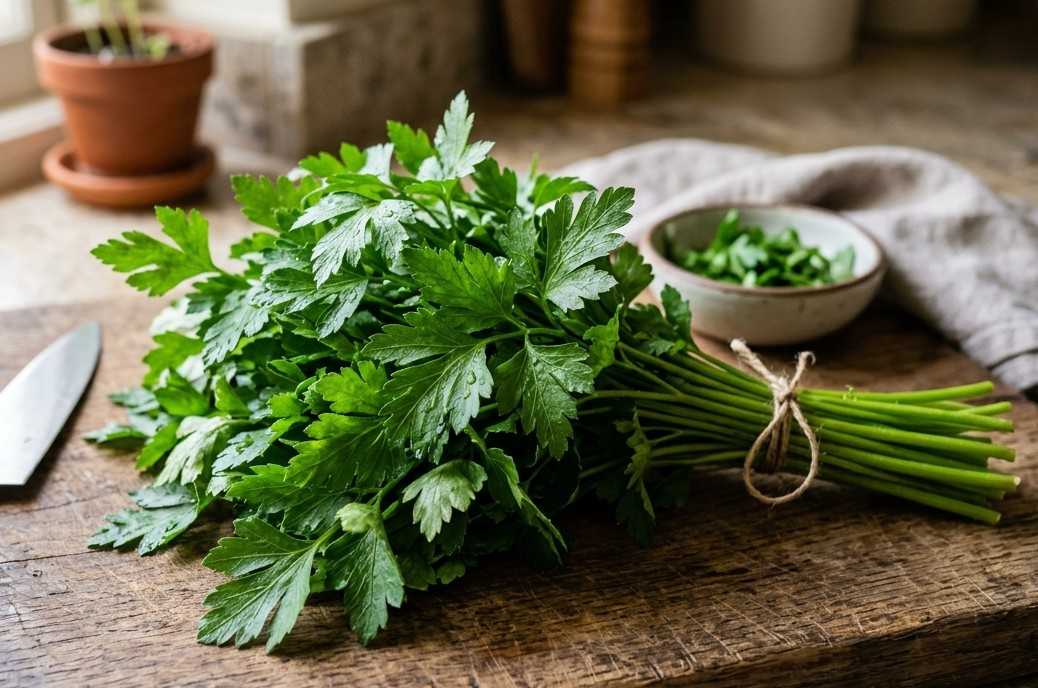
Parsley (also known as garden parsley, rock celery, and Italian parsley) is one of the most widely used herbs in the world. Known for its fresh flavor, bright green leaves, and impressive nutritional profile, parsley is much more than just a garnish. It has been used for centuries in cooking, traditional medicine, and natural remedies. Rich in vitamins, minerals, antioxidants, and plant compounds, parsley can support overall health when consumed as part of a balanced diet.
Whether added to soups, salads, sauces, smoothies, or teas, parsley offers both flavor and nutrition. In this complete guide, you will learn about parsley’s nutrition facts, science-backed health benefits, side effects, ways to eat it, storage methods, precautions, and much more.
What is Parsley?
Parsley is a leafy green herb that belongs to the Apiaceae family, the same plant family as carrots, celery, dill, and coriander. Its scientific name is Petroselinum crispum. Native to the Mediterranean region, parsley is now cultivated worldwide and commonly used in cuisines across Europe, Asia, the Middle East, and the Americas.
There are two main types of parsley:
- Curly Parsley – Often used as a garnish due to its decorative leaves.
- Flat-Leaf Parsley – Also called Italian parsley, known for its stronger flavor and culinary use.
Parsley has a fresh, slightly peppery taste with earthy undertones. It is available fresh, dried, frozen, or as parsley tea and extracts.
Nutrition Facts of Parsley
Below is the approximate nutritional value of 100 grams of fresh parsley.
| Nutrient | Amount |
|---|---|
| Calories | 36 kcal |
| Protein | 3 g |
| Carbohydrates | 6.3 g |
| Fiber | 3.3 g |
| Fat | 0.8 g |
| Vitamin A | 8424 IU |
| Vitamin C | 133 mg |
| Vitamin K | 1640 mcg |
| Folate | 152 mcg |
| Calcium | 138 mg |
| Iron | 6.2 mg |
| Potassium | 554 mg |
| Magnesium | 50 mg |
| Phosphorus | 58 mg |
| Sodium | 56 mg |
| Zinc | 1.1 mg |
Parsley is especially rich in vitamin K, vitamin C, antioxidants, and flavonoids.
20 Proven Health Benefits of Parsley
- Rich in Antioxidants: Rock celery contains flavonoids, carotenoids, and vitamin C that help protect cells from oxidative stress.
- Supports Immune Health: The high vitamin C content may strengthen the immune system and improve resistance to infections.
- Promotes Bone Strength: Vitamin K in parsley supports bone density and proper calcium utilization.
- Improves Digestion: Rock celery may stimulate digestive enzymes and help reduce bloating and indigestion.
- Supports Heart Health: Potassium and antioxidants in parsley may help maintain healthy blood pressure and circulation.
- Helps Reduce Inflammation: Natural compounds in parsley may lower inflammation in the body.
- Supports Kidney Function: Rock celery acts as a mild diuretic that may help flush excess fluids from the body.
- May Freshen Breath: Chlorophyll in parsley can help reduce bad breath naturally.
- Supports Eye Health: Vitamin A and carotenoids may protect vision and eye tissues.
- May Aid Weight Management: Rock celery is low in calories and high in nutrients, making it suitable for healthy diets.
- Supports Healthy Skin: Antioxidants and vitamin C may promote collagen production and skin repair.
- Improves Blood Circulation: Iron in parsley may support healthy red blood cell production.
- May Help Detoxification: Rock celery may support the body’s natural detox processes through its antioxidant compounds.
- Supports Brain Health: Flavonoids in parsley may help protect brain cells from oxidative damage.
- May Help Regulate Blood Sugar: Some studies suggest rock celery compounds may support healthy glucose metabolism.
- Supports Liver Health: Antioxidants in parsley may help reduce stress on liver cells.
- May Reduce Water Retention: Its mild diuretic effect may help decrease temporary bloating.
- Supports Healthy Pregnancy Nutrition: Folate in rock celery supports healthy cell growth, though excessive intake should be avoided during pregnancy.
- May Improve Appetite: Parsley’s aroma and flavor may stimulate appetite and digestion.
- Supports Overall Wellness: Its broad nutrient profile contributes to general health and vitality.
10 Side Effects of Parsley
- May Cause Allergic Reactions: Some people may experience itching, swelling, or skin irritation after consuming parsley.
- Can Increase Bleeding Risk: High vitamin K levels may interfere with blood-thinning medications.
- May Affect Kidney Conditions: Excessive parsley intake may worsen certain kidney disorders due to oxalates.
- Can Cause Photosensitivity: Rock celery oil and extracts may make the skin more sensitive to sunlight.
- May Lower Blood Sugar Too Much: Large amounts could potentially affect blood sugar levels in sensitive individuals.
- Can Lead to Fluid Loss: Its diuretic effect may increase urination and dehydration if consumed excessively.
- May Trigger Uterine Contractions: Very high amounts of parsley extracts may not be safe during pregnancy.
- Can Cause Digestive Discomfort: Excessive consumption may lead to stomach cramps or nausea.
- May Interact with Medications: Rock celery may interact with diuretics, anticoagulants, and diabetes medications.
- Could Cause Iron Overload in Rare Cases: Excessive intake combined with supplements may contribute to too much iron intake.
How to Eat Parsley?
Parsley is versatile and easy to include in daily meals. Here are some popular ways to eat it:
- Add chopped parsley to salads for freshness.
- Mix parsley into soups and stews.
- Use it as a garnish for rice, curries, and grilled dishes.
- Blend parsley into green smoothies.
- Add it to sandwiches and wraps.
- Use parsley in pesto or herb sauces.
- Sprinkle it over roasted vegetables.
- Brew parsley tea using fresh or dried leaves.
- Mix it into yogurt dips and dressings.
- Add parsley to omelets and scrambled eggs.
Tips for Consuming Parsley
- Wash parsley thoroughly before eating.
- Choose fresh, bright green leaves without yellowing.
- Use fresh parsley for maximum flavor and nutrients.
- Avoid consuming extremely large amounts daily.
- Pair parsley with lemon juice to enhance flavor.
- Add parsley at the end of cooking to preserve nutrients.
- Store properly to maintain freshness.
- Introduce parsley gradually if you are not used to high-fiber herbs.
- Use organic parsley when possible to reduce pesticide exposure.
- Drink enough water if consuming rock celery tea regularly.
Other Uses of Parsley
- Natural Garnish: Rock celery is commonly used to decorate and enhance food presentation.
- Herbal Tea Ingredient: Parsley leaves are often brewed into refreshing herbal teas.
- Breath Freshener: Chewing parsley may help reduce strong food odors.
- Homemade Face Masks: Rock celery is sometimes used in natural skincare recipes.
- Hair Care Ingredient: Some herbal hair rinses include rock celery extracts for scalp health.
- Flavor Enhancer: Rock celery adds freshness to sauces, dips, and marinades.
- Natural Food Coloring: Fresh parsley can add green color to recipes naturally.
- Companion Plant in Gardening: Rock celery may attract beneficial insects in gardens.
- Traditional Herbal Remedy: Rock celery has long been used in folk medicine practices.
- Infused Oils and Vinegars: Rock celery can flavor oils and homemade vinegar blends.
How Much Parsley Can You Eat in a Day?
Parsley is generally safe when consumed in normal food amounts. Most people can safely enjoy:
- 1–2 tablespoons of fresh chopped rock celery daily
- Up to 1 cup occasionally in meals or salads
- 1–2 cups of parsley tea per day in moderation
Large medicinal doses or concentrated extracts should only be used under professional guidance.
The appropriate dosage depends on the form consumed.
| Form | Suggested Amount |
|---|---|
| Fresh Parsley | 1–2 tablespoons daily |
| Dried Parsley | 1–2 teaspoons daily |
| Parsley Tea | 1–2 cups daily |
| Parsley Juice | 30–60 ml occasionally |
| Parsley Extract | Follow product instructions |
Avoid excessive use of parsley supplements unless advised by a healthcare professional.
Best Time to Eat Parsley
There is no strict rule for the best time to eat rock celery, but some timings may be more beneficial.
- Morning: Parsley tea may help refresh the body and support hydration.
- Before Meals: May stimulate digestion and appetite.
- With Meals: Helps increase nutrient intake and flavor.
- Evening: Light rock celery tea may help reduce bloating for some people.
Consistency and moderation are more important than timing.
Who Should Eat Parsley?
- People with Nutrient Deficiencies: Rock celery provides vitamins, minerals, and antioxidants that support overall nutrition.
- Individuals Seeking Weight Management: Low calories and high nutrient density make rock celery suitable for balanced diets.
- People Looking for Immune Support: Vitamin C and antioxidants may help strengthen immune function.
- Individuals with Digestive Discomfort: Parsley may help reduce bloating and support digestion.
- People Wanting Better Bone Health: Vitamin K supports bone strength and calcium balance.
- Those Seeking Fresh Breath Naturally: Chewing parsley may help reduce mouth odors.
- People Interested in Healthy Skin: Antioxidants and vitamin C may support skin health.
- Vegetarians and Vegans: Rock celery offers plant-based iron and nutrients.
- People Looking to Increase Vegetable Intake: Rock celery is an easy addition to many meals.
- Health-Conscious Individuals: Rock celery supports general wellness as part of a healthy lifestyle.
Who Should Not Eat Parsley?
- People Taking Blood Thinners: High vitamin K may interfere with anticoagulant medications.
- Individuals with Kidney Stones: Rock celery contains oxalates that may worsen some kidney stone conditions.
- Pregnant Women in Large Amounts: Excessive rock celery extracts may not be safe during pregnancy.
- People Allergic to Parsley: Allergic individuals should avoid consumption.
- Individuals with Severe Kidney Disease: Large amounts may not be suitable for impaired kidney function.
- People with Low Blood Sugar Issues: Excessive intake may affect glucose levels.
- Those Sensitive to Diuretics: Parsley’s natural diuretic effect may increase fluid loss.
- People with Certain Medication Interactions: Medical guidance may be necessary before frequent use.
- Individuals with Photosensitivity: Parsley oil may increase sensitivity to sunlight.
- Children Consuming Herbal Extracts: Concentrated rock celery products should be used cautiously in children.
How to Store Parsley?
- Refrigerate Fresh Parsley: Store parsley in the refrigerator to maintain freshness longer.
- Use Damp Paper Towels: Wrapping rock celery in damp towels may help prevent drying out.
- Store in Water: Keeping Rock celery stems in a jar of water may preserve freshness.
- Freeze for Long-Term Use: Frozen rock celery can retain flavor for future cooking.
- Keep Away from Heat: Excess heat may reduce freshness and nutrients.
- Use Airtight Containers: Proper containers help reduce moisture loss.
- Dry Parsley Carefully: Dried parsley should be stored in a cool, dark place.
- Avoid Washing Before Storage: Excess moisture may cause faster spoilage.
- Discard Yellow Leaves: Remove damaged leaves to preserve quality.
- Check for Mold Regularly: Spoiled rock celery should not be consumed.
Precautions and Interactions
- Consult a Doctor Before Supplements: Herbal rock celery supplements may not be suitable for everyone.
- Monitor Vitamin K Intake: Consistent intake is important for people on blood thinners.
- Use Moderately During Pregnancy: Large medicinal amounts should be avoided.
- Stay Hydrated: Parsley’s diuretic properties may increase urination.
- Avoid Excessive Essential Oil Use: Concentrated parsley oil may be toxic in high amounts.
- Be Cautious with Diabetes Medications: Rock celery may influence blood sugar levels.
- Watch for Allergic Symptoms: Stop use if rash or swelling occurs.
- Avoid Overconsumption: Very large quantities may strain the kidneys.
- Consult Healthcare Providers for Chronic Conditions: Medical advice is important for those with existing health issues.
- Use Fresh and Clean Parsley: Proper hygiene reduces contamination risks.
Conclusion
Parsley is a nutrient-rich herb that offers far more than decoration on a plate. Packed with vitamins, minerals, antioxidants, and plant compounds, rock celery may support digestion, immunity, bone health, skin health, and overall wellness. It is easy to include in meals, teas, smoothies, and salads, making it one of the simplest herbs to add to a healthy diet.
While Rock celery is generally safe in normal food amounts, excessive consumption or concentrated supplements may cause side effects or interact with medications. Moderation, proper storage, and awareness of individual health conditions are important for safe use.
FAQ’s
Is parsley safe to eat every day?
Yes, Rock celery is generally safe to eat daily in moderate food amounts as part of a balanced diet.
What is parsley good for?
Rock celery may support digestion, immunity, bone health, skin health, and overall wellness due to its rich nutrient content.
Can parsley help with weight loss?
Rock celery is low in calories and may support weight management when included in a healthy diet.
Is parsley better raw or cooked?
Both forms are beneficial, but raw Rock celery may retain more vitamins and antioxidants.
Can pregnant women eat parsley?
Small food amounts are usually safe, but large medicinal amounts or Rock celery extracts should be avoided during pregnancy.
Does parsley help freshen breath?
Yes, chewing fresh Rock celery may help reduce bad breath because of its chlorophyll content.
Can parsley be eaten at night?
Yes, Rock celery can be eaten at any time of the day, including at night.
Is parsley good for the kidneys?
Rock celery may support kidney function due to its mild diuretic effect, but people with kidney disease should consult a doctor before consuming large amounts.
What does parsley taste like?
Rock celery has a fresh, mildly peppery, and slightly earthy flavor.
Can parsley be used in tea?
Yes, parsley tea is a popular herbal drink made from fresh or dried parsley leaves.
Is parsley rich in iron?
Rock celery contains iron, along with vitamin C, which may help support healthy blood production.
Can children eat parsley?
Yes, Rock celery is generally safe for children when used in normal food amounts.
What is the difference between parsley and coriander?
Parsley has a milder, grassy flavor, while coriander has a stronger citrus-like taste and aroma.
Can parsley lower blood pressure?
Rock celery contains potassium and antioxidants that may support healthy blood pressure levels as part of a balanced diet.
Is parsley good for the skin?
The antioxidants and vitamin C in Rock celery may help support healthy and glowing skin.
Can parsley cause allergies?
Yes, some individuals may experience allergic reactions to Rock celery.
How long does fresh parsley last in the refrigerator?
Fresh Rock celery usually lasts about 1–2 weeks when stored properly in the refrigerator.
Can parsley be frozen?
Yes, Rock celery can be frozen for long-term storage and later use in cooking.
Is dried parsley healthy?
Yes, dried parsley still contains nutrients and can be a convenient seasoning option.
What is parsley called in India?
Parsley is generally called “Parsley” in India, though it is sometimes confused with coriander leaves because of their similar appearance.
Is parsley a blood thinner?
Rock celery is not a blood thinner, but its high vitamin K content may affect blood-thinning medications like warfarin.
Does parsley detox your liver?
Rock celery contains antioxidants that may support the body’s natural detoxification processes and help maintain liver health.
Is parsley good for heart patients?
Rock celery may support heart health because it contains antioxidants, potassium, and nutrients that help maintain healthy blood pressure and circulation.
Does parsley help reduce uric acid?
Rock celery may support kidney function and hydration, which could help the body remove excess uric acid, though more research is needed.
Is parsley good for joint pain?
Rock celery contains anti-inflammatory compounds and antioxidants that may help support joint health and reduce inflammation-related discomfort.
Also Read: