Walking has always been one of the simplest and most effective forms of exercise. But what if you could make your daily walk more challenging, burn more calories, and build strength at the same time? That’s where rucking comes in.
Originally used by military personnel during training and operations, rucking has become one of the fastest-growing fitness trends among people looking for a low-impact, full-body workout. Unlike running or high-intensity interval training, rucking is accessible to almost everyone. All you need is a sturdy backpack, some added weight, and a safe place to walk.
In this guide, you’ll learn what rucking (also known as ruck marching or loaded marching) is, its science-backed health benefits, potential risks, how to start safely, and expert tips to get the most from every ruck.
What Is Rucking?
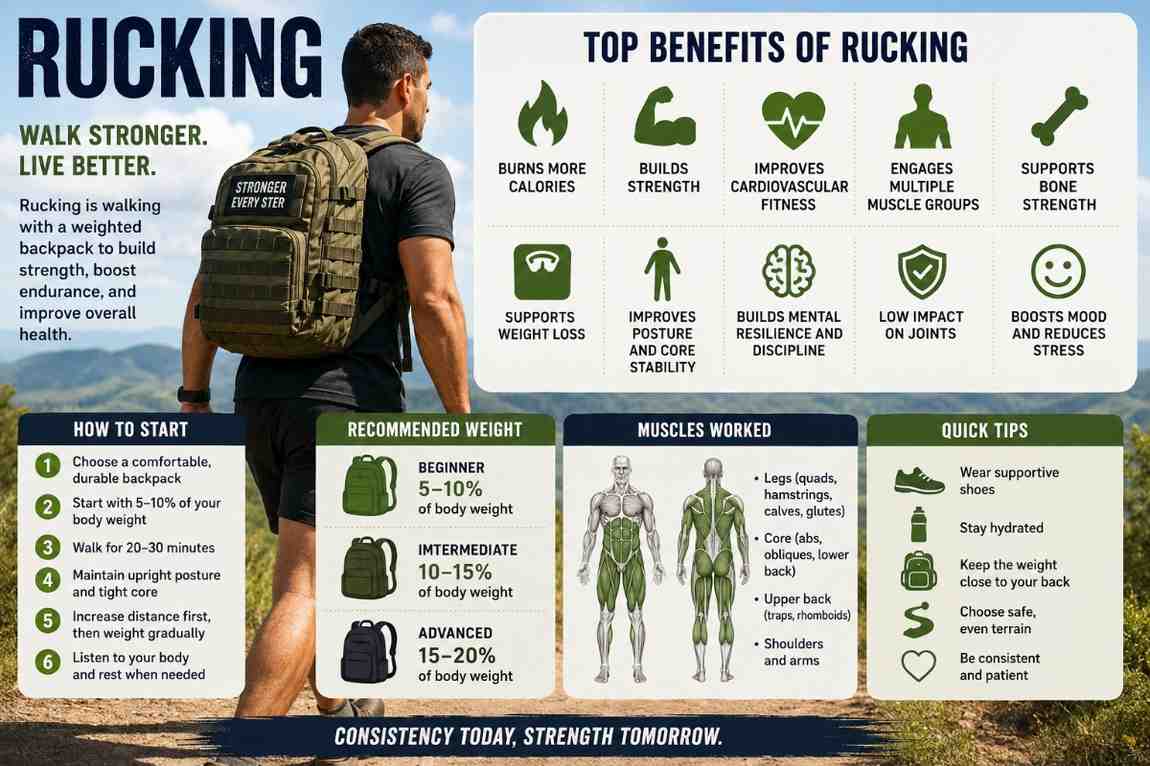
Rucking is the practice of walking or hiking while carrying a weighted backpack (called a rucksack).
The concept originated in military training, where soldiers carry essential equipment over long distances. Today, civilians use rucking as an effective fitness activity because it combines cardio and resistance training into one workout.
Unlike hiking with camping gear, fitness rucking focuses on intentional exercise using controlled weight.
Typical beginner weights include:
| Experience Level | Recommended Weight |
|---|---|
| Beginner | 5–10% of body weight |
| Intermediate | 10–15% of body weight |
| Advanced | 15–20% of body weight |
The goal isn’t to carry the heaviest load possible. Instead, it’s to maintain good posture and walk consistently over time.
How Does Rucking Work?
When you carry additional weight on your back:
- Your muscles work harder.
- Your heart pumps more blood.
- Your lungs deliver more oxygen.
- Your core stabilizes your spine.
- Your legs generate more force with every step.
This increases your overall energy expenditure while keeping the movement low impact.
Instead of adding speed like running, rucking increases intensity by adding resistance.
20 Proven Benefits of Rucking
1. Burns More Calories Than Walking
Carrying extra weight forces your body to use more energy, increasing calorie expenditure compared to regular walking.
2. Builds Functional Strength
Rucking strengthens muscles used in everyday activities, making lifting, climbing stairs, and carrying groceries easier.
3. Improves Cardiovascular Fitness
Your heart works harder to circulate blood, improving endurance and cardiovascular health.
4. Strengthens Leg Muscles
The calves, quadriceps, hamstrings, and glutes become stronger with regular rucking sessions.
5. Engages the Core
A weighted backpack naturally activates your abdominal and lower back muscles to stabilize your body.
6. Improves Posture
Using proper rucking technique encourages an upright posture and stronger upper-back muscles.
7. Supports Weight Loss
Combined with a healthy diet, rucking helps create the calorie deficit needed for gradual weight loss.
8. Low-Impact on Joints
Compared with running, rucking places less repetitive impact on the knees and hips.
9. Increases Bone Strength
Weight-bearing exercise stimulates bones, helping maintain bone density over time.
10. Improves Balance
Walking with controlled weight improves stability and body awareness.
11. Enhances Endurance
Regular rucking gradually increases physical stamina for daily life and outdoor activities.
12. Builds Mental Resilience
Completing longer walks with added weight develops discipline and perseverance.
13. Supports Better Metabolism
Resistance-based aerobic exercise helps improve overall metabolic health.
14. Improves Grip Strength
Holding backpack straps and maintaining control strengthens the hands and forearms.
15. Strengthens the Back
The upper and lower back muscles work continuously to support the load.
16. May Improve Blood Sugar Control
Regular physical activity helps muscles use glucose more efficiently.
17. Encourages Better Walking Mechanics
Maintaining good form improves walking efficiency over time.
18. Supports Healthy Aging
Strength, balance, and cardiovascular fitness are all essential components of healthy aging.
19. Can Improve Mood
Outdoor exercise increases endorphins and may help reduce stress and anxiety.
20. Requires Minimal Equipment
Unlike many fitness programs, rucking only requires a backpack, weight, and comfortable shoes.
Related Articles:
- Power Walking: 20 Benefits, Technique, Risks & How to Start
- Backward Walking: 20 Benefits, Risks & How to Start Safely
- Barefoot Walking: 20 Benefits, Risks & How to Start Safely
Muscles Worked During Rucking
Rucking activates multiple muscle groups simultaneously.
Lower Body
- Quadriceps
- Hamstrings
- Glutes
- Calves
- Hip flexors
Core
- Rectus abdominis
- Obliques
- Transverse abdominis
- Lower back muscles
Upper Body
- Trapezius
- Shoulders
- Rhomboids
- Forearms
Is Rucking Good for Weight Loss?
Yes. Because you’re carrying extra weight, your body burns more calories than during regular walking. Combined with balanced nutrition, consistent rucking can contribute to sustainable fat loss while preserving muscle better than cardio alone.
Results depend on:
- Walking speed
- Distance
- Backpack weight
- Body weight
- Terrain
- Workout frequency
How to Start Rucking Safely?
If you’re new to rucking, start slowly.
Step 1
Choose a comfortable backpack with padded shoulder straps.
Step 2
Begin with 5–10% of your body weight.
Step 3
Walk for 20–30 minutes.
Step 4
Maintain an upright posture.
Step 5
Increase distance before increasing weight.
Step 6
Rest if you experience pain rather than normal muscle fatigue.
Best Equipment for Rucking
You’ll need:
- A durable backpack
- Weight plates or sandbags
- Water bottle
- Supportive walking shoes
- Moisture-wicking clothing
- Thick socks to prevent blisters
Risks of Rucking
While rucking is generally considered a safe and effective form of exercise, carrying extra weight can increase the risk of injury if you use poor technique or progress too quickly. Here are some potential risks to be aware of:
- Back Pain: Carrying too much weight or using an improperly fitted backpack can strain the lower and upper back.
- Shoulder and Neck Discomfort: Heavy loads may cause soreness, muscle tension, or pressure on the shoulders and neck.
- Knee and Ankle Stress: Long distances or excessive weight can increase stress on the knees, ankles, and hips, especially on uneven terrain.
- Blisters and Foot Pain: Poor-fitting shoes or prolonged walking can lead to blisters, calluses, and foot fatigue.
- Poor Posture: Leaning forward to compensate for a heavy backpack may cause muscle imbalances and discomfort.
- Overuse Injuries: Rucking too often without adequate rest can contribute to shin splints, tendonitis, or stress injuries.
- Fatigue and Muscle Soreness: Beginners may experience temporary muscle soreness, particularly in the legs, glutes, shoulders, and core.
- Dehydration and Heat Exhaustion: Rucking in hot or humid weather increases fluid loss and the risk of overheating if you don’t stay hydrated.
- Balance Issues: Carrying a heavy backpack may affect balance, increasing the risk of trips or falls on uneven surfaces.
- Risk of Injury from Excessive Weight: Starting with a load that’s too heavy can increase the likelihood of muscle strains, joint pain, or other injuries.
How to Reduce the Risks?
- Start with 5–10% of your body weight.
- Increase weight and distance gradually.
- Wear supportive walking or hiking shoes.
- Use a backpack with padded shoulder straps and a waist or chest strap if available.
- Maintain an upright posture and engage your core.
- Stay hydrated, especially during warm weather.
- Warm up before and stretch after your rucking session.
- Stop exercising and consult a healthcare professional if you experience severe pain, dizziness, chest pain, or persistent joint discomfort.
Beginner Rucking Plan
| Week | Weight | Time |
| 1 | 5% body weight | 20 minutes |
| 2 | 5% body weight | 30 minutes |
| 3 | 8% body weight | 35 minutes |
| 4 | 10% body weight | 40 minutes |
Increase either time or weight gradually—not both at once.
Common Rucking Mistakes
Avoid these common errors:
- Starting with too much weight
- Leaning forward excessively
- Wearing an unstable backpack
- Ignoring pain
- Wearing improper footwear
- Skipping warm-ups
- Increasing weight too quickly
- Not staying hydrated
Rucking Safety Tips
To reduce injury risk:
- Warm up before every session.
- Keep the load close to your back.
- Tighten shoulder and chest straps.
- Walk on even surfaces when starting.
- Drink water before, during, and after exercise.
- Listen to your body.
- Stop if you experience dizziness, chest pain, or severe joint pain.
Who Should Avoid Rucking?
Rucking may not be appropriate without medical advice for individuals with:
- Severe arthritis
- Recent surgery
- Serious back injuries
- Herniated discs
- Uncontrolled heart disease
- Balance disorders
- Pregnancy (unless approved by a healthcare provider)
If you have a chronic medical condition, consult your healthcare provider before beginning a weighted exercise program.
Rucking vs Walking
| Feature | Walking | Rucking |
| Added Weight | No | Yes |
| Calories Burned | Moderate | Higher |
| Strength Training | Minimal | Yes |
| Core Activation | Low | High |
| Muscle Engagement | Moderate | Greater |
| Bone Loading | Moderate | Higher |
Rucking vs Running
| Feature | Running | Rucking |
| Joint Impact | High | Lower |
| Muscle Strength | Moderate | Higher |
| Equipment Needed | Shoes | Backpack and weight |
| Beginner Friendly | Moderate | Yes |
| Injury Risk | Higher | Lower when performed correctly |
Nutrition Tips for Ruckers
Support your workouts with balanced nutrition:
- Eat protein after training to support muscle recovery.
- Include whole grains for sustained energy.
- Stay hydrated throughout the day.
- Eat fruits and vegetables for vitamins and antioxidants.
- Replace electrolytes after long or hot-weather sessions.
FAQ’s
How much weight should beginners carry when rucking?
Beginners should start with 5–10% of their body weight. Once comfortable, they can gradually increase the weight or distance over time.
How often should I go rucking?
Most beginners can start with 2–3 sessions per week, allowing at least one rest day between sessions. Experienced individuals may ruck more frequently based on their fitness level.
Does rucking build muscle?
Yes. ruck marching strengthens the legs, glutes, core, shoulders, and back. While it won’t replace heavy weightlifting, it helps build functional strength and muscular endurance.
Is rucking better than walking?
Ruck marching offers greater intensity than regular walking by adding resistance. It generally burns more calories and engages more muscles while remaining lower impact than running.
Is rucking safe for beginners?
Yes, provided you start with a light load, wear supportive footwear, use proper posture, and increase weight gradually.
Can I ruck every day?
You can, but it’s important to vary the intensity and allow your muscles and joints enough time to recover. If you experience persistent soreness or pain, take a rest day.
What muscles does rucking work?
Rucking primarily targets the quadriceps, hamstrings, glutes, calves, core, shoulders, upper back, and lower back, making it an effective full-body workout.
Do I need special equipment for rucking?
No. A sturdy backpack, some added weight (such as weight plates or sandbags), supportive walking shoes, and comfortable clothing are enough to get started.
Is rucking bad for your knees?
When done with proper form and an appropriate amount of weight, ruck marching is generally safe for healthy knees. However, carrying excessive weight or progressing too quickly may increase joint stress.
Is rucking good for losing belly fat?
Ruck marching can support overall fat loss by increasing calorie expenditure. Spot reduction of belly fat is not possible, but regular exercise and a balanced diet can reduce body fat over time.
Final Thoughts
Rucking is a simple yet highly effective exercise that combines the benefits of walking and resistance training into one accessible workout. It improves cardiovascular fitness, strengthens muscles, supports weight management, and enhances endurance without placing the same repetitive stress on the joints as running.
Success with ruck marching doesn’t depend on carrying the heaviest backpack. It comes from consistent practice, proper technique, gradual progression, and listening to your body. Whether you’re walking around your neighborhood, exploring hiking trails, or adding variety to your fitness routine, rucking offers an enjoyable and practical way to become stronger and healthier.
Sources / References:
- American College of Sports Medicine (ACSM)
- Centers for Disease Control and Prevention (CDC) – Physical Activity
- World Health Organization (WHO) – Physical Activity Guidelines
- National Institute on Aging – Exercise and Physical Activity
- Harvard T.H. Chan School of Public Health
About the Author:
Written by: Kirti Solanki (Health Content Researcher)
Kirti Solanki is a Health Content Researcher who creates evidence-based wellness articles by reviewing trusted medical literature, public health guidelines, and nutrition research. Her goal is to simplify complex health information into practical, reader-friendly content that supports informed lifestyle choices. Every article is carefully researched and updated to reflect current scientific understanding whenever possible.
Disclaimer:
This guide is intended for educational and informational purposes only and should not be considered medical advice, diagnosis, or treatment. The information provided is based on publicly available research and reputable health organizations but may not apply to every individual. Always consult a qualified healthcare professional before starting a new exercise program, especially if you are pregnant, have a chronic medical condition, have experienced a recent injury or surgery, or have concerns about your fitness level.
Also Read: