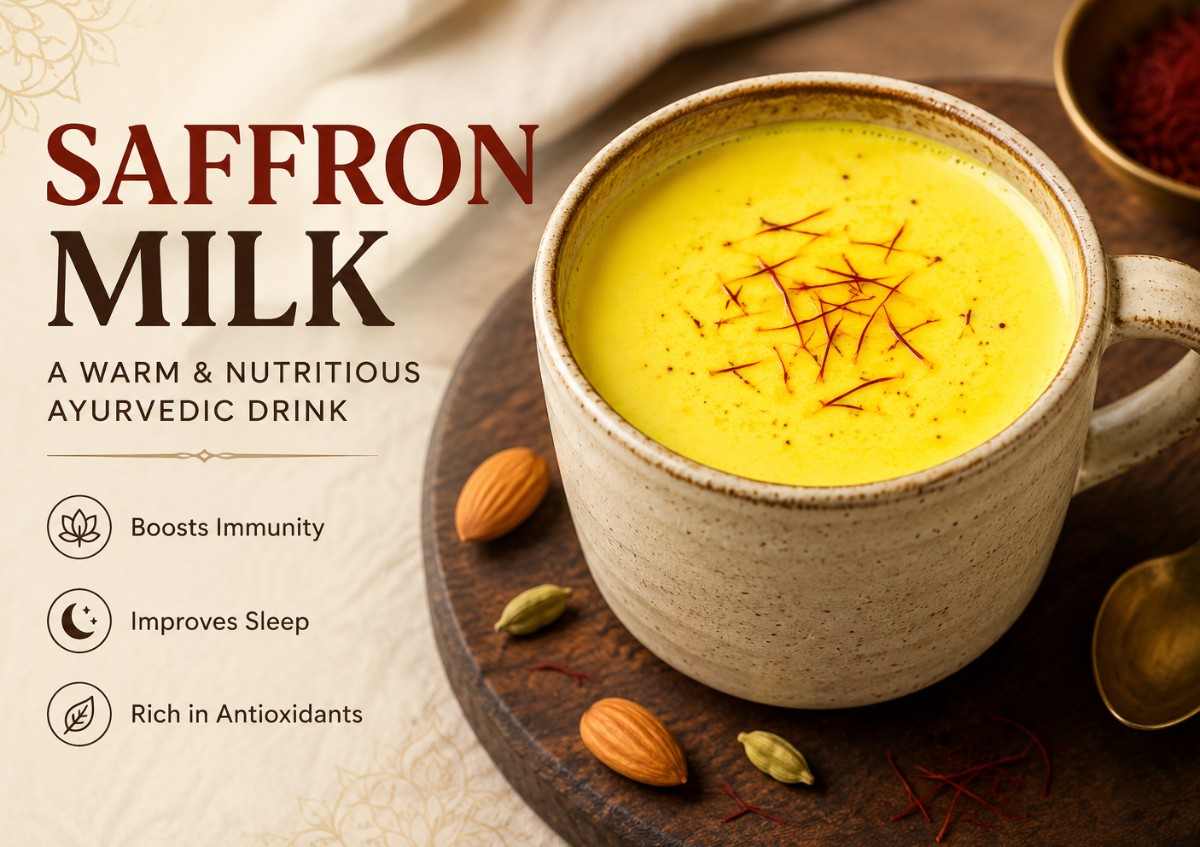
Saffron milk is a traditional warm drink made by infusing a small amount of saffron in milk. Known for its golden color, delicate aroma, and slightly floral taste, it has been enjoyed in Indian, Persian, Middle Eastern, and South Asian food traditions for generations.
Saffron contains naturally occurring compounds such as crocin, crocetin, picrocrocin, and safranal, which are being studied for their antioxidant and other biological effects. Research on saffron supplementation has found promising results in areas such as mood, some cardiometabolic markers, and cognitive function, although the strength of evidence varies by health outcome.
Saffron milk is best viewed as a nourishing food or traditional beverage rather than a medicine. The amount of saffron used in a typical cup is very small, and many of the clinical studies examining saffron used standardized extracts or supplements rather than saffron milk itself. Therefore, research findings about saffron supplements should not automatically be interpreted as proof that a cup of saffron milk produces the same effects.
What Is Saffron Milk?
Saffron milk is milk flavored and infused with saffron threads. It can be prepared with dairy milk or a suitable fortified plant-based milk. The saffron is usually soaked or gently heated in the milk so that its color, aroma, and flavor are released.
In Indian households, saffron milk is often associated with relaxation, celebrations, traditional wellness practices, and festive recipes. Some people drink it before bedtime, while others enjoy it in the morning or as an occasional nourishing beverage.
The milk provides nutrients such as protein, calcium, phosphorus, vitamin B12, and other micronutrients depending on the type of milk used. Saffron contributes very little energy or macronutrients in the tiny quantities normally used, but it provides distinctive plant compounds.
Nutrition Facts of Saffron Milk
The following is an approximate nutrition profile for 1 cup (240 ml) of unsweetened whole dairy milk infused with a small culinary amount of saffron.
| Nutrient | Approximate Amount per 240 ml |
|---|---|
| Calories | 145 kcal |
| Protein | 7.7 g |
| Total Fat | 7.9 g |
| Saturated Fat | 4.6 g |
| Carbohydrates | 11.5 g |
| Natural Sugars | 12 g |
| Fiber | 0 g |
| Calcium | 275–300 mg |
| Phosphorus | 200–220 mg |
| Potassium | 320–360 mg |
| Vitamin B12 | 1.0–1.2 mcg |
| Vitamin D | Varies by fortification |
| Saffron | Small culinary amount |
Adding sugar or honey increases the calorie and carbohydrate content.
20 Proven Health Benefits of Saffron Milk
1. Provides Antioxidant Compounds: Saffron contains compounds such as crocin, crocetin, and safranal that have antioxidant activity and may help protect cells from oxidative stress.
2. May Support a Positive Mood: Clinical research suggests saffron supplementation may improve some symptoms of depression and anxiety, although more high-quality research is needed before it can be considered a treatment.
3. May Support Emotional Well-Being: The bioactive compounds in saffron have been investigated for their effects on mood-related pathways, making saffron an interesting ingredient for overall wellness.
4. Supports Bone Health: Milk naturally supplies calcium and phosphorus, two minerals that contribute to maintaining normal bones and teeth.
5. Provides High-Quality Protein: Dairy milk provides complete protein containing all essential amino acids, supporting normal muscle maintenance and body functions.
6. May Support Cognitive Function: Research involving saffron has reported potentially beneficial effects on cognitive measures, although current evidence remains limited and should be interpreted cautiously.
7. May Help Protect Against Oxidative Stress: Saffron’s carotenoid-related compounds have antioxidant properties that are being investigated for their ability to counter oxidative damage.
8. May Support Cardiometabolic Health: Meta-analysis of randomized trials has reported modest improvements in several cardiovascular risk markers with saffron supplementation, although these findings do not establish saffron milk as a treatment.
9. May Support Healthy Blood Pressure: Some clinical research has found reductions in blood pressure with saffron supplementation, but the doses and preparations studied differ from ordinary saffron milk.
10. May Support Healthy Blood Sugar: Some clinical trials have reported improvements in fasting blood glucose and related markers with saffron supplementation, although the evidence is not sufficient to recommend saffron as a diabetes treatment.
11. May Support Healthy Cholesterol Levels: Research has found modest reductions in total cholesterol and triglycerides in some saffron supplementation trials.
12. Provides Calcium for Teeth: Regular milk consumption can contribute meaningful calcium to the diet, supporting normal tooth mineralization and maintenance.
13. Provides Vitamin B12: Dairy milk is a natural source of vitamin B12, which is important for normal red blood cell formation and nervous-system function.
14. Can Be a Satisfying Beverage: The combination of protein and fat in whole milk can make saffron milk more filling than many sugar-sweetened beverages.
15. May Complement a Relaxing Evening Routine: A warm, unsweetened cup can become a comforting nighttime ritual, although saffron milk should not be considered a proven sleep treatment.
16. May Support Normal Energy Metabolism: Milk provides nutrients including protein, vitamin B12, phosphorus, and other micronutrients involved in normal energy metabolism.
17. May Provide Nutritional Support During Busy Days: A cup of milk can contribute protein and several micronutrients when incorporated into an otherwise balanced diet.
18. May Support Overall Dietary Quality: Replacing highly sweetened beverages with an unsweetened or lightly sweetened milk-based drink can help increase nutrient intake.
19. Adds Flavor Without Needing Many Ingredients: A few saffron threads can give milk a distinctive aroma and golden color without requiring a large amount of added sugar.
20. Combines Traditional Food Use With Modern Research Interest: Saffron has a long culinary history, while modern clinical research continues to investigate its possible effects on mood, cognition, and cardiometabolic health.
10 Side Effects of Saffron Milk
Saffron used in normal culinary quantities is generally different from concentrated saffron extracts or very high doses. Excessive saffron consumption can cause serious toxicity.
1. Nausea: Larger amounts of saffron may cause nausea or stomach discomfort in sensitive individuals.
2. Vomiting: Excessive saffron intake can cause vomiting and gastrointestinal distress.
3. Dizziness: Some people may experience dizziness after consuming larger amounts of saffron.
4. Headache: Headache has been reported among possible adverse effects of saffron consumption.
5. Drowsiness: Saffron may cause mild drowsiness in some people, particularly when used in concentrated forms.
6. Stomach Upset: Gastrointestinal discomfort can occur, especially when saffron is consumed in higher-than-culinary quantities.
7. Allergic Reaction: Although uncommon, people sensitive to saffron may develop an allergic reaction.
8. Bleeding Risk at High Doses: Very high saffron doses have been associated with bleeding and changes affecting blood clotting, making excessive intake particularly concerning for people taking anticoagulant medicines.
9. Uterine Stimulation at High Doses: Large medicinal quantities may stimulate uterine contractions and are a particular concern during pregnancy.
10. Serious Toxicity From Excessive Intake: Very large amounts can cause severe symptoms, and extremely high doses have been associated with life-threatening toxicity.
How to Make Saffron Milk?
Ingredients:
- 1 cup milk
- 4–6 saffron threads
- 1–2 teaspoons warm milk or water for soaking
- Optional: a small amount of honey, dates, or sugar
- Optional: a pinch of cardamom
Method:
- Warm the milk gently in a saucepan without bringing it to a vigorous boil.
- Place the saffron threads in a small bowl.
- Add a teaspoon or two of warm milk and allow the saffron to soak for about 5–10 minutes.
- Add the soaked saffron and liquid to the warm milk.
- Simmer gently for a few minutes while stirring.
- Add cardamom if desired.
- Sweeten lightly if preferred.
- Serve warm.
Using a small culinary amount of saffron is preferable to adding large quantities in an attempt to increase its health effects.
How to Drink Saffron Milk?
Saffron milk can be consumed warm or lukewarm. Sip it slowly rather than treating it like a concentrated herbal supplement.
For a simple everyday version, use unsweetened milk and a small amount of saffron. If you prefer a sweeter drink, keep added sugar modest.
People who are lactose intolerant can choose lactose-free milk or a fortified plant-based alternative that suits their dietary needs.
Tips for Consuming Saffron Milk
- Use genuine, good-quality saffron from a reputable source.
- A few threads are generally enough to provide color and flavor.
- Avoid adding excessive sugar if you drink it regularly.
- Do not assume that using more saffron will provide greater health benefits.
- If using plant milk, choose an unsweetened, calcium-fortified variety when appropriate.
- Avoid combining saffron milk with concentrated saffron supplements unless advised by a healthcare professional.
- Introduce it gradually if you have never consumed saffron before.
- Stop using it if you develop symptoms suggesting an allergic reaction.
Other Uses of Saffron Milk
Saffron milk can be used beyond a simple beverage. It can be incorporated into:
- Rice pudding and kheer
- Custards
- Shahi desserts
- Cakes and baked goods
- Smoothies
- Oatmeal
- Chia pudding
- Milk-based desserts
- Festive drinks
- Homemade saffron sauces
It can also be used as a flavorful base for traditional Indian desserts and other milk-based recipes.
How Much Saffron Milk Can You Drink in a Day?
For most healthy adults, one small cup of saffron milk containing a culinary amount of saffron is a reasonable food-based serving.
There is no universally established medical dosage for saffron milk because clinical studies have generally used standardized saffron preparations rather than homemade milk. Therefore, it is not appropriate to translate supplement doses directly into cups of saffron milk.
Avoid using large quantities of saffron. High-dose saffron can be toxic, and doses several grams above normal culinary use have been associated with serious adverse effects.
Best Time to Drink Saffron Milk
There is no scientifically established “best” time to drink saffron milk.
- At night: Many people enjoy it before bed because a warm milk drink can be comforting and part of a relaxing routine.
- In the morning: It can be consumed with breakfast if you enjoy its flavor and want the protein and nutrients supplied by milk.
- After dinner: A small unsweetened serving can work as a warm alternative to dessert or sweetened beverages.
The best time is therefore largely a matter of personal preference, digestion, and overall diet.
Who Should Drink Saffron Milk?
- Healthy Adults: Adults who enjoy milk and saffron can include a small culinary serving as part of a balanced diet.
- People Looking for a Nutrient-Rich Warm Drink: Saffron milk can provide protein, calcium, vitamin B12, and other nutrients when made with fortified or dairy milk.
- People Who Enjoy Traditional Foods: Those interested in traditional Indian and Middle Eastern food practices may enjoy saffron milk as an occasional beverage.
- People Avoiding Highly Sweetened Drinks: Unsweetened saffron milk can be a more nutrient-dense option than many sugary beverages.
- People Using Lactose-Free Milk: Individuals with lactose intolerance may be able to enjoy saffron milk when it is prepared with suitable lactose-free milk.
- People Using Fortified Plant Milk: Those who avoid dairy can prepare saffron milk with a suitable fortified plant-based milk.
Who Should Avoid Saffron Milk?
- Pregnant People Should Be Cautious: Culinary quantities of saffron in food are different from medicinal doses, but concentrated or high-dose saffron should be avoided during pregnancy unless specifically recommended by a qualified healthcare professional because larger amounts may stimulate the uterus.
- People With Saffron Allergies: Anyone with a known saffron allergy should avoid saffron milk.
- People Taking Blood-Thinning Medicines: People using anticoagulant or antiplatelet medicines should consult their healthcare professional before regularly consuming concentrated saffron preparations because high doses may affect bleeding risk.
- People With Bleeding Disorders: Those with bleeding disorders should seek medical advice before using saffron medicinally.
- People With Bipolar Disorder: Saffron may affect mood, and concentrated supplementation may not be appropriate for people with bipolar disorder without professional guidance.
- People Preparing for Surgery: Anyone scheduled for surgery should tell their healthcare team about saffron supplements or medicinal use because saffron may interact with medicines and physiological processes relevant to surgery.
- People With Milk Allergy: Anyone with a cow’s milk protein allergy should not drink conventional dairy-based saffron milk.
- People With Significant Lactose Intolerance: Those who experience symptoms from lactose should choose lactose-free milk or another suitable alternative.
How to Store Saffron Milk?
- Refrigerate Promptly: Store leftover saffron milk in a clean, covered container in the refrigerator rather than leaving it at room temperature for extended periods.
- Use a Sealed Container: A tightly covered container helps prevent the milk from absorbing odors from other foods.
- Avoid Repeated Warming: Reheat only the amount you intend to drink rather than repeatedly heating and cooling the entire batch.
- Check Before Drinking: Discard milk if it develops an unusual smell, appearance, or texture.
- Keep Saffron Separately: Store unused saffron threads in an airtight container away from heat, moisture, and direct sunlight.
Precautions and Interactions
Saffron milk made with a small culinary quantity of saffron is very different from high-dose saffron supplementation. Many studies reporting possible health effects have used standardized extracts, often at doses measured in milligrams, so their results should not be interpreted as evidence that larger quantities of saffron milk are better.
People taking blood-thinning or antiplatelet medicines, medicines affecting blood pressure or blood sugar, or multiple prescription medicines should discuss regular medicinal use of saffron with a healthcare professional.
People who are pregnant or breastfeeding should be particularly cautious about concentrated saffron products. Saffron used as an ordinary culinary spice is not equivalent to medicinal doses, but high amounts are not considered safe during pregnancy. Current evidence regarding supplemental saffron during pregnancy remains limited and inconclusive.
If saffron milk causes nausea, dizziness, unusual bleeding, an allergic reaction, or other concerning symptoms, stop consuming it and seek appropriate medical advice.
Most importantly, saffron milk should complement—not replace—a balanced diet, medical treatment, adequate sleep, and other healthy lifestyle habits.
What Does the Research Actually Say About Saffron?
Saffron is one of the more extensively researched culinary spices, but it is important to distinguish promising evidence from established medical treatment.
A 2021 meta-research review evaluated 19 systematic reviews and meta-analyses and found evidence suggesting possible benefits for several outcomes, including depressive symptoms, cognitive function, and some metabolic markers. However, the researchers also emphasized limitations in the quality and consistency of the available evidence.
More recently, a 2026 systematic review and meta-analysis of 34 randomized controlled trials involving 1,769 adults found that saffron supplementation was associated with improvements in some measures of depression and anxiety, with moderate certainty for the overall evidence. However, substantial variation existed among studies, and saffron should not be viewed as a replacement for professional treatment of depression or anxiety.
Research has also examined saffron’s potential effects on cardiovascular and metabolic markers, including blood pressure, fasting glucose, cholesterol, and triglycerides. Findings are promising but do not establish saffron milk as a treatment for diabetes, hypertension, high cholesterol, or cardiovascular disease.
This distinction is important for responsible health content: saffron milk can be a flavorful, nutritious food, but it should not be presented as a cure or guaranteed treatment for any disease.
FAQ’s
Is saffron milk healthy?
Yes, when consumed in moderation, saffron milk can provide protein, calcium, vitamin B12, and antioxidant compounds from saffron.
Can I drink saffron milk every day?
A small cup containing a culinary amount of saffron can generally fit into a balanced diet for healthy adults.
Can saffron milk help with sleep?
A warm cup may feel relaxing before bed, but there is not enough evidence to say that saffron milk treats sleep problems.
Does saffron milk help with weight gain?
Saffron milk does not automatically cause weight gain, but whole milk and added sugar can increase calorie intake.
Can saffron milk improve skin health?
Saffron contains antioxidant compounds, but more research is needed to determine whether drinking saffron milk directly improves skin health.
Is saffron milk good for digestion?
Milk can be nutritious, but some people may experience bloating or digestive discomfort, particularly if they are lactose intolerant.
Can children drink saffron milk?
Children can generally consume saffron in normal culinary amounts, but concentrated saffron products should only be used with professional guidance.
Can pregnant women drink saffron milk?
Pregnant women should avoid concentrated or medicinal amounts of saffron unless advised by their healthcare professional. Culinary amounts used in food are different from high-dose supplementation.
How much saffron should I put in one cup of milk?
A few saffron threads are generally enough to flavor and color one cup of milk.
Can I drink saffron milk at night?
Yes. Many people enjoy warm saffron milk at night as part of a relaxing evening routine.
Does saffron milk increase energy?
Milk provides protein, carbohydrates, and several micronutrients that contribute to normal energy metabolism, but saffron milk is not an energy booster in the medical sense.
Can saffron milk be made with almond milk?
Yes. Saffron milk can be prepared with almond, soy, oat, or other plant-based milk. For better nutritional value, choose an unsweetened, fortified option.
Can saffron milk help reduce stress?
Saffron has been studied for mood-related effects, but saffron milk should not be considered a treatment for anxiety or chronic stress.
Can I drink saffron milk on an empty stomach?
Some people can drink it without food, while others may experience stomach discomfort. If it bothers your stomach, have it with or after a meal.
Is saffron milk good for bones?
Milk is a good source of calcium and phosphorus, nutrients that help maintain normal bones and teeth.
Can saffron milk replace a meal?
No. Although it provides several nutrients, saffron milk does not contain all the nutrients and fiber needed for a balanced meal.
What does Saffron Milk taste like?
Saffron milk has a mild, creamy, slightly sweet taste with delicate floral, earthy, and honey-like notes. The flavor becomes stronger when more saffron is used.
How long does it take for Saffron Milk to work?
There is no specific time for saffron milk to “work.” Its nutritional benefits come from regular dietary intake, while research on saffron supplements has studied effects over weeks rather than after a single cup.
What does Saffron Milk smell like?
Saffron milk has a warm, distinctive aroma that can be described as floral, slightly earthy, sweet, and subtly honey-like.
What is Saffron Milk good for?
Saffron milk is a nutritious beverage that can provide protein, calcium, vitamin B12, and antioxidant compounds from saffron. Saffron is also being studied for potential mood and cognitive benefits.
Is it okay to boil saffron in milk?
Yes, saffron can be gently heated in milk. However, there is no need to vigorously boil it for a long time. Soaking the saffron in warm milk for several minutes and then gently simmering the milk can help release its color, aroma, and flavor.
Sources / References:
About the Author:
Written by: Kirti Solanki (Health Content Researcher): Kirti Solanki creates research-informed health and nutrition content designed to make complex wellness information easier to understand and use in everyday life.
Disclaimer:
This article is for educational purposes only and does not replace professional medical advice, diagnosis, or treatment. If you are pregnant, breastfeeding, taking medication, or managing a medical condition, consult a qualified healthcare professional before using saffron in concentrated or medicinal amounts.
Also Read: