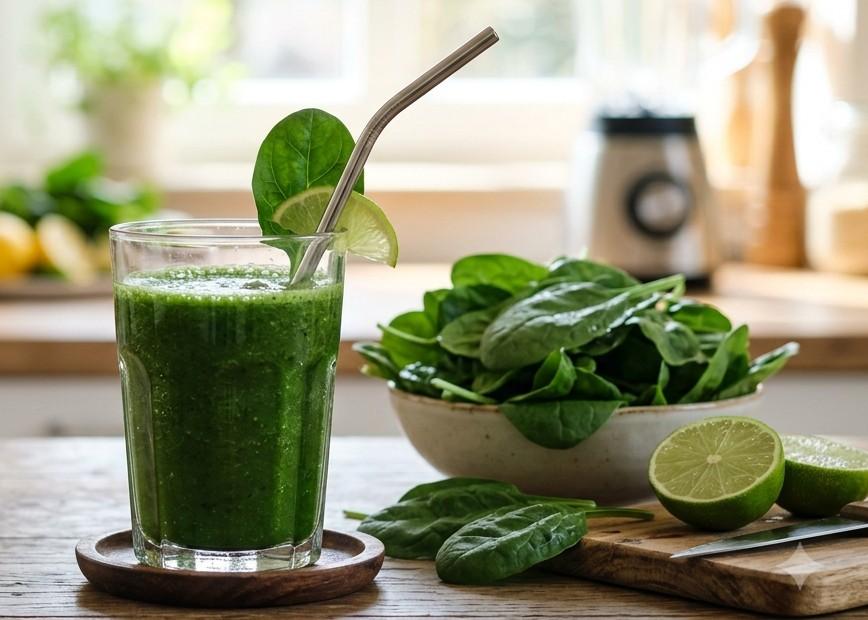
Spinach juice is a refreshing green drink made by blending or juicing fresh spinach leaves with water or other fruits and vegetables. It is naturally rich in vitamins, minerals, antioxidants, and plant compounds that support overall health. While whole spinach provides more dietary fiber, spinach juice offers a convenient way to increase your intake of essential nutrients, especially for people who struggle to eat enough leafy greens. When consumed as part of a balanced diet, spinach juice can contribute to better heart health, stronger immunity, healthier skin, and improved energy levels.
What is Spinach Juice?
Spinach juice is a nutrient-rich beverage prepared from fresh spinach (Spinacia oleracea). It may be made using a juicer or blender and is often combined with ingredients such as cucumber, celery, apple, lemon, ginger, or mint to improve its flavor.
Spinach is considered one of the world’s most nutrient-dense leafy vegetables. Its juice contains vitamins A, C, K, folate, iron, magnesium, potassium, lutein, zeaxanthin, nitrates, and polyphenol antioxidants that help protect the body from oxidative stress and inflammation.
Nutrition Facts of Spinach Juice
Approximate nutrition per 1 cup (240 ml) fresh spinach juice made from raw spinach.
| Nutrient | Amount |
|---|---|
| Calories | 35 kcal |
| Protein | 2.8 g |
| Carbohydrates | 4.2 g |
| Dietary Fiber* | 0.8 g |
| Natural Sugars | 0.5 g |
| Fat | 0.4 g |
| Vitamin A | 180% DV |
| Vitamin C | 40% DV |
| Vitamin K | 450% DV |
| Folate | 45% DV |
| Iron | 18% DV |
| Magnesium | 20% DV |
| Potassium | 16% DV |
| Calcium | 10% DV |
| Lutein & Zeaxanthin | High |
Fiber content depends on whether the juice is strained.
20 Science-Backed Health Benefits of Spinach Juice
- Rich in Essential Nutrients: Spinach juice provides an impressive combination of vitamins, minerals, and antioxidants that nourish the body.
- Supports Eye Health: Lutein and zeaxanthin help protect the eyes from age-related macular degeneration and digital eye strain.
- Strengthens Immunity: Vitamin C, vitamin A, and antioxidants support healthy immune function.
- Promotes Healthy Skin: Vitamins A and C contribute to collagen production and healthier-looking skin.
- Supports Heart Health: Natural dietary nitrates may improve blood vessel function and circulation.
- May Help Lower Blood Pressure: Research suggests spinach nitrates can support healthy blood pressure levels in some individuals.
- Reduces Oxidative Stress: Antioxidants help neutralize harmful free radicals that damage cells.
- Supports Bone Health: Vitamin K plays an important role in maintaining strong bones.
- Improves Red Blood Cell Production: Folate and iron contribute to healthy red blood cell formation.
- Supports Brain Function: Folate and antioxidants may help maintain healthy cognitive function.
- May Improve Exercise Performance: Dietary nitrates can increase nitric oxide production, potentially improving endurance.
- Supports Healthy Digestion: Unstrained spinach juice retains some fiber that promotes digestive health.
- May Reduce Inflammation: Spinach contains plant compounds that possess anti-inflammatory properties.
- Supports Healthy Weight Management: Low in calories yet rich in nutrients, spinach juice can fit into weight-loss diets.
- Helps Maintain Healthy Blood Sugar: Spinach has a low glycemic impact and may support healthy glucose metabolism.
- Supports Healthy Pregnancy: Folate is essential for fetal neural tube development during pregnancy.
- Contributes to Healthy Hair: Iron and vitamins support healthy hair growth when nutritional deficiencies are present.
- Supports Liver Function: Antioxidants may help protect liver cells from oxidative damage.
- Hydrates the Body: Spinach juice contributes water along with electrolytes such as potassium.
- Promotes Overall Wellness: Regular intake of leafy greens is associated with a reduced risk of several chronic diseases.
10 Side Effects of Spinach Juice
- High Oxalate Content: Excessive intake may increase the risk of kidney stones in susceptible individuals.
- May Interfere with Blood Thinners: High vitamin K intake can affect medications like warfarin.
- Possible Digestive Discomfort: Large amounts may cause bloating or stomach upset.
- May Cause Loose Stools: Excess consumption may temporarily affect bowel movements.
- Can Lower Blood Pressure Too Much: Individuals taking blood pressure medications should monitor intake.
- Possible Allergic Reactions: Although uncommon, some people may experience allergies to spinach.
- May Reduce Mineral Absorption: Oxalates can decrease calcium absorption.
- Risk of Foodborne Illness: Improperly washed spinach may contain harmful bacteria.
- May Cause Green Stool: The chlorophyll content can temporarily change stool color.
- Excessive Intake Is Not Recommended: Drinking large quantities daily may lead to an imbalance of certain nutrients.
How to Make Spinach Juice?
Ingredients:
- 2 cups fresh spinach leaves
- 1 cucumber
- 1 green apple (optional)
- Juice of ½ lemon
- Small piece of ginger
- ½ cup cold water
Instructions:
- Wash the spinach thoroughly.
- Chop the vegetables into small pieces.
- Blend all ingredients until smooth.
- Strain if desired.
- Serve immediately for maximum nutrient retention.
Tips for Consuming Spinach Juice
- Drink freshly prepared juice whenever possible.
- Wash spinach thoroughly before juicing.
- Pair spinach with vitamin C-rich fruits like lemon or orange to improve iron absorption.
- Rotate leafy greens instead of consuming spinach every day.
- Avoid adding excessive sugar.
- Start with small servings if you are new to green juices.
- Consume as part of a balanced diet rather than replacing meals.
- Keep portions moderate for long-term use.
Other Uses of Spinach Juice
- Added to green smoothies.
- Mixed into vegetable soups.
- Used in healthy salad dressings.
- Frozen into ice cubes for smoothies.
- Added to homemade popsicles.
- Mixed into pancake or pasta batter for natural green color.
- Used in detox-style vegetable blends.
- Combined with celery or cucumber juice.
How Much Spinach Juice Can You Drink in a Day?
For most healthy adults, 150–250 ml (about ½–1 cup) of fresh spinach juice per day is generally sufficient as part of a balanced diet. Drinking significantly larger amounts regularly is not recommended because spinach is naturally high in oxalates. Individuals with kidney disease, kidney stones, or those taking certain medications should consult a healthcare professional before making spinach juice a daily habit.
Best Time to Drink Spinach Juice
Many people prefer drinking spinach juice:
- In the morning on an empty stomach.
- With breakfast.
- Before exercise for dietary nitrate benefits.
- As a mid-morning snack.
- Avoid drinking large amounts immediately before bedtime if it causes digestive discomfort.
Who Should Drink Spinach Juice?
- Health-Conscious Adults: A nutritious addition to a balanced diet.
- People with Low Vegetable Intake: Helps increase leafy green consumption.
- Athletes: Natural nitrates may support exercise performance.
- Busy Professionals: Offers a quick source of vitamins and minerals.
- Older Adults: Provides antioxidants that support healthy aging.
- Vegetarians: Contributes iron and folate from plant sources.
- People Focused on Heart Health: May support healthy circulation.
- Individuals Seeking Weight Management: Low in calories yet nutrient-dense.
Who Should Avoid Spinach Juice?
- People with Kidney Stones: High oxalate content may increase stone risk.
- Individuals Taking Warfarin: Vitamin K can interfere with anticoagulant therapy.
- People with Advanced Kidney Disease: Mineral balance may require medical supervision.
- Those with Spinach Allergy: Should completely avoid spinach products.
- Individuals on Certain Blood Pressure Medications: Monitor intake with healthcare guidance.
- People Following Low-Oxalate Diets: Spinach juice may not be suitable.
- Anyone Experiencing Digestive Intolerance: Reduce or discontinue if symptoms occur.
How to Store Spinach Juice?
- Refrigerate Immediately: Store in the refrigerator after preparation.
- Use an Airtight Glass Bottle: Reduces oxidation and preserves freshness.
- Consume Within 24 Hours: Fresh juice has the best nutritional value.
- Avoid Room Temperature Storage: Prevents bacterial growth.
- Keep Away from Sunlight: Light can reduce certain vitamins.
- Shake Before Drinking: Natural separation is normal.
- Freeze if Necessary: Freeze in small portions for up to one month.
Precautions and Interactions
- Wash spinach carefully to reduce contamination risk.
- Drink in moderation due to its oxalate content.
- Maintain a consistent vitamin K intake if taking blood-thinning medication.
- Consult a healthcare provider if you have kidney disease or a history of kidney stones.
- Pregnant and breastfeeding women can generally consume spinach as part of a balanced diet, but large amounts of juice should be discussed with a healthcare professional.
- Do not rely on spinach juice as a replacement for whole vegetables.
- Pair with a varied diet for optimal nutrition.
FAQ’s
Can I drink spinach juice every day?
Most healthy adults can drink ½–1 cup (150–250 ml) daily as part of a balanced diet. Avoid excessive intake due to its high oxalate content.
Is spinach juice good for weight loss?
Yes. juice is low in calories and nutrient-dense, making it a healthy addition to a weight management plan when paired with a balanced diet and regular exercise.
Can spinach juice increase iron levels?
Spinach contains iron, but it is non-heme iron, which is absorbed less efficiently than animal-based iron. Pairing it with vitamin C-rich foods can improve absorption.
Is spinach juice safe during pregnancy?
Spinach is a good source of folate, which supports fetal development. However, pregnant women should consume freshly prepared, properly washed spinach juice and consult their healthcare provider before drinking it regularly.
Can people with diabetes drink spinach juice?
Yes. Unsweetened juice is naturally low in sugar and may fit into a diabetes-friendly diet. Monitor portion sizes and seek personalized medical advice if needed.
Does spinach juice detox the body?
There is no scientific evidence that spinach juice detoxifies the body. However, its antioxidants and nutrients support normal liver function and overall health.
Is spinach juice good for the skin?
Yes. Vitamins A and C, along with antioxidants, help support collagen production and protect skin cells from oxidative stress.
Can spinach juice help lower blood pressure?
Spinach contains natural nitrates that may help support healthy blood pressure in some people as part of a heart-healthy diet.
Can spinach juice cause kidney stones?
Excessive consumption may increase the risk in people prone to calcium oxalate kidney stones because spinach is naturally high in oxalates.
Should spinach juice be strained?
It depends on your preference. Unstrained juice contains more fiber, while strained juice has a smoother texture.
Can children drink spinach juice?
Yes. Children can enjoy small amounts of freshly prepared spinach juice as part of a balanced diet, but it should not replace whole vegetables or fruits.
How long does fresh spinach juice last?
Fresh juice is best consumed immediately but can be stored in an airtight container in the refrigerator for up to 24 hours.
What does Spinach Juice taste like?
Juice has a fresh, earthy, and mildly grassy flavor with a slight natural sweetness. Mixing it with apple, lemon, cucumber, or ginger makes it more refreshing and palatable.
How long does it take for Spinach Juice to work?
Some people notice improved hydration and energy within a few hours, while benefits such as better nutrient intake, skin health, or heart health generally require consistent consumption over several weeks as part of a balanced diet.
What does Spinach Juice smell like?
Fresh spinach juice has a clean, leafy, and earthy aroma. If it develops a sour or unpleasant smell, it has likely spoiled and should not be consumed.
What is Spinach Juice good for?
Spinach juice is good for supporting heart health, eye health, immunity, bone strength, healthy skin, digestion, hydration, and overall wellness. It is also a rich source of vitamins A, C, and K, folate, iron, magnesium, and antioxidants.
Can I drink spinach juice raw?
Yes. Fresh raw spinach juice is safe for most healthy people when the spinach is thoroughly washed before juicing. However, people with kidney stones, kidney disease, or those taking blood-thinning medications should consult a healthcare professional before drinking it regularly.
Sources / References:
- U.S. Department of Agriculture (USDA) FoodData Central
- Harvard T.H. Chan School of Public Health – The Nutrition Source
- World Health Organization (WHO) – Healthy Diet
- National Institutes of Health (NIH) Office of Dietary Supplements
- Centers for Disease Control and Prevention (CDC) – Fruits and Vegetables
About the Author:
Written by: Kirti Solanki (Health Content Researcher)
Kirti Solanki is a Health Content Researcher who creates evidence-based, reader-friendly wellness articles by reviewing information from trusted medical organizations and peer-reviewed research. Her goal is to simplify complex nutrition and health topics into practical, accurate, and actionable guidance for everyday readers.
Disclaimer:
This guide is intended for educational and informational purposes only and should not be considered medical advice. Spinach juice is not a substitute for professional diagnosis, treatment, or individualized nutritional guidance. Always consult a qualified healthcare professional before making significant dietary changes, especially if you are pregnant, breastfeeding, have kidney disease, take prescription medications, or have any underlying medical condition.
Also Read: