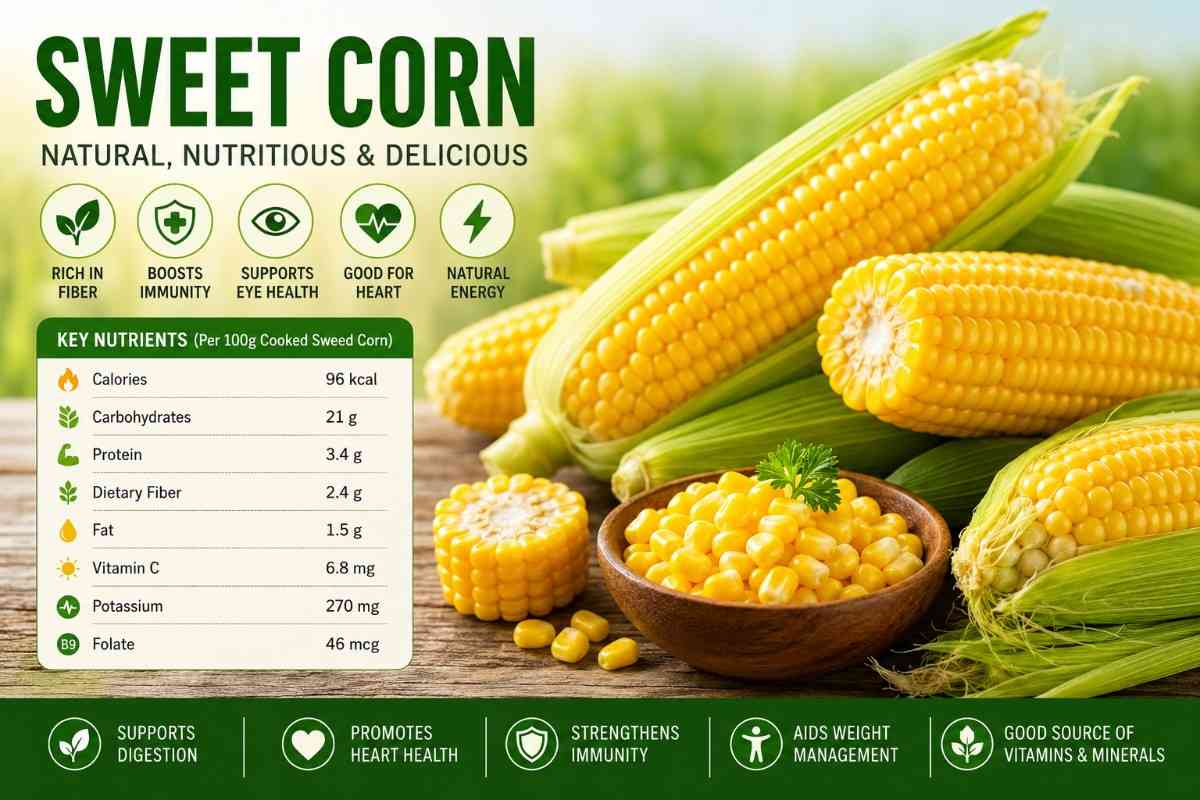
Sweet corn is one of the world’s most loved vegetables, known for its naturally sweet flavor, juicy kernels, and versatility in countless recipes. Whether enjoyed boiled, grilled, roasted, steamed, or added to soups and salads, sweet corn offers far more than great taste. It provides fiber, vitamins, minerals, antioxidants, and plant compounds that can support overall health when eaten as part of a balanced diet.
Unlike field corn, which is mainly used for animal feed and processed foods, sweet corn is harvested while the kernels are still tender and naturally high in sugar. It is widely consumed across America, Europe, and Asia, making it a popular ingredient in healthy home cooking.
In this guide, you’ll learn about sweet corn (also known as sugar corn, or pole corn) nutrition, its proven health benefits, possible side effects, cooking methods, storage tips, precautions, and much more.
What is Sweet Corn?
Sweet corn (Zea mays convar. saccharata) is a variety of maize harvested before it fully matures. The kernels contain more natural sugars and less starch than regular field corn, giving sweet corn its signature sweet taste and tender texture.
Sweet corn is commonly available as:
- Fresh corn on the cob
- Frozen sweet corn
- Canned sweet corn
- Vacuum-packed cooked kernels
Its yellow, white, or bi-colored kernels are rich in carbohydrates, dietary fiber, antioxidants, vitamins, and minerals, making it both nutritious and satisfying.
Nutrition Facts of Sweet Corn
Approximate nutrition per 100 grams of cooked sweet corn
| Nutrient | Amount |
|---|---|
| Calories | 96 kcal |
| Carbohydrates | 21 g |
| Protein | 3.4 g |
| Fat | 1.5 g |
| Dietary Fiber | 2.4 g |
| Natural Sugar | 4.5 g |
| Water | 73 g |
| Potassium | 270 mg |
| Magnesium | 37 mg |
| Phosphorus | 89 mg |
| Folate | 46 mcg |
| Vitamin C | 6.8 mg |
| Vitamin B1 (Thiamine) | 0.2 mg |
| Vitamin B6 | 0.09 mg |
| Lutein + Zeaxanthin | 644 mcg |
Values are approximate and may vary by variety and cooking method.
20 Proven Health Benefits of Sweet Corn
- Provides Long-Lasting Energy: Sweet corn supplies complex carbohydrates that provide sustained energy throughout the day.
- Supports Digestive Health: Its dietary fiber promotes regular bowel movements and supports a healthy digestive system.
- Helps Maintain Healthy Weight: Fiber helps increase fullness, which may reduce overeating.
- Supports Eye Health: Lutein and zeaxanthin help protect the eyes from age-related vision problems.
- Rich in Antioxidants: Sweet corn contains antioxidants that help fight oxidative stress.
- Promotes Heart Health: Potassium and fiber contribute to maintaining healthy blood pressure and cholesterol levels.
- Supports Immune Function: Vitamin C helps strengthen the body’s natural immune defenses.
- Aids Healthy Brain Function: B vitamins support normal nervous system function and energy metabolism.
- Supports Healthy Pregnancy: Folate contributes to healthy fetal development during pregnancy.
- Helps Build Healthy Muscles: Sweet corn provides plant protein that supports muscle maintenance.
- Supports Bone Health: Magnesium and phosphorus contribute to strong bones and teeth.
- Promotes Healthy Skin: Antioxidants and vitamin C help support collagen production and skin health.
- Supports Healthy Hair: Essential nutrients help nourish hair follicles.
- May Help Reduce Inflammation: Natural antioxidants may help reduce oxidative stress associated with inflammation.
- Supports Healthy Blood Circulation: Potassium helps regulate normal circulation and fluid balance.
- Provides Gut-Friendly Fiber: Fiber supports beneficial gut bacteria and digestive wellness.
- Naturally Gluten-Free: Sweet corn is naturally gluten-free, making it suitable for people with gluten intolerance.
- Supports Healthy Metabolism: B vitamins assist in converting food into usable energy.
- Helps Maintain Electrolyte Balance: Potassium supports normal muscle and nerve function.
- Easy to Include in a Balanced Diet: Its versatility makes healthy eating more enjoyable and sustainable.
10 Side Effects of Sweet Corn
- May Cause Gas and Bloating: Eating large amounts of fiber-rich corn may lead to digestive discomfort.
- Can Raise Blood Sugar if Overeaten: Excessive portions may increase blood glucose levels, especially in people with diabetes.
- Possible Corn Allergy: Some individuals may experience allergic reactions after consuming corn.
- May Cause Digestive Upset: Eating excessive amounts can occasionally cause stomach discomfort.
- High-Calorie Additions Increase Calories: Butter, cheese, and creamy sauces significantly increase calorie intake.
- May Trigger IBS Symptoms: Some individuals with irritable bowel syndrome may be sensitive to corn.
- Can Cause Fullness: Large servings may cause temporary heaviness after meals.
- May Contain Added Sodium: Canned sweet corn can be high in sodium unless rinsed.
- Processed Corn Products Are Less Healthy: Sweetened or highly processed corn products often contain excess sugar and unhealthy fats.
- Not Suitable for Everyone: Individuals with certain digestive disorders should consult a healthcare professional before increasing intake.
How to Eat Sweet Corn?
There are many delicious ways to enjoy sweet corn:
- Boiled corn on the cob
- Steamed sweet corn
- Grilled corn
- Roasted corn
- Corn salad
- Vegetable soup
- Sweet corn chaat
- Pasta
- Pizza topping
- Sandwiches
- Burritos
- Tacos
- Fried rice
- Vegetable stir-fries
- Homemade salsa
Tips for Consuming Sweet Corn
- Choose fresh corn with bright green husks.
- Eat soon after harvesting for maximum sweetness.
- Steam instead of overboiling to preserve nutrients.
- Avoid excessive butter and salt.
- Pair with vegetables for a balanced meal.
- Include a protein source for better satiety.
- Rinse canned corn before use.
- Select frozen corn without added sauces.
- Practice portion control.
- Consume as part of a varied diet.
How to Cook Sweet Corn?
1. Boiling
Cook corn in boiling water for 5–7 minutes until tender.
2. Steaming
Steam for about 7–10 minutes to retain nutrients.
3. Grilling
Brush lightly with olive oil and grill until lightly charred.
4. Roasting
Roast in the oven until golden and tender.
5. Microwave
Microwave the cob with its husk for several minutes for quick cooking.
6. Stir-Frying
Add kernels to vegetables, rice, or noodles.
7. Soups
Mix cooked kernels into creamy or broth-based soups.
Other Uses of Sweet Corn
- Corn Flour: Ground sweet corn can be used in baking and cooking.
- Corn Salsa: Fresh kernels make flavorful homemade salsa.
- Corn Chowder: Sweetcorn is a classic ingredient in creamy soups.
- Baby Food: Cooked sugar corn can be blended with other vegetables for older infants as appropriate.
- Salad Ingredient: Adds sweetness and texture to fresh salads.
- Wrap Filling: Makes nutritious sandwich and wrap fillings.
- Rice Alternative: Mix kernels with rice for extra nutrition.
- Vegetable Patties: Blend with vegetables to prepare patties.
- Healthy Snacks: Roasted kernels make a convenient snack.
- Party Recipes: Sweetcorn is widely used in dips, casseroles, and appetizers.
How Much Sweet Corn Can You Eat in a Day?
For most healthy adults:
- 1–2 medium ears of sweet corn
- or ½ to 1 cup cooked kernels (about 90–165 grams)
can comfortably fit into a balanced diet.
People with diabetes or those following lower-carbohydrate meal plans should monitor portion sizes and pair sweetcorn with protein and healthy fats.
Best Time to Eat Sweet Corn
There is no single best time, but it can be enjoyed:
- Lunch
- Evening snack
- Before exercise
- After exercise
- Dinner as a vegetable side dish
Avoid eating very large portions immediately before bedtime if you experience digestive discomfort.
Who Should Eat Sweet Corn?
- Children: Growing children benefit from its vitamins, minerals, and energy.
- Active Adults: Complex carbohydrates help fuel daily activities.
- Athletes: Sweet corn can help replenish energy after exercise.
- Pregnant Women: Folate supports healthy fetal development as part of a balanced diet.
- Older Adults: Fiber and antioxidants support healthy aging.
- Vegetarians: It contributes carbohydrates, fiber, and plant protein.
- People Seeking Weight Management: Fiber may help improve fullness.
- Individuals with Gluten Intolerance: Naturally gluten-free sugar corn can be included in gluten-free diets.
- Students: Provides steady energy for learning and concentration.
- Busy Professionals: Makes a quick and nutritious meal addition.
Who Should Not Eat Sweet Corn?
- People with Corn Allergy: Should completely avoid sugar corn.
- Individuals with Severe IBS: Corn may worsen symptoms in some people.
- People with Poorly Controlled Diabetes: Large portions should be limited.
- Individuals on Very Low-Carbohydrate Diets: Corn may not fit strict carbohydrate goals.
- People Sensitive to High Fiber Foods: Large servings may cause discomfort.
- Individuals with Certain Digestive Disorders: Medical advice may be necessary.
- Those Following Specific Medical Diets: Intake should follow healthcare recommendations.
- People Avoiding Sodium: Limit canned varieties with added salt.
- Individuals with Difficulty Chewing: Whole kernels may require modification.
- Anyone Experiencing Allergic Symptoms: Stop consumption and seek medical evaluation.
How to Store Sweet Corn?
- Refrigerate Immediately: Store fresh corn in the refrigerator soon after purchase.
- Keep the Husk On: The husk helps preserve moisture and sweetness.
- Use Within Two Days: Fresh corn tastes best when eaten quickly.
- Freeze for Long-Term Storage: Blanch before freezing for better quality.
- Store Cooked Corn Properly: Refrigerate cooked kernels in an airtight container.
- Avoid Room Temperature Storage: Warm conditions speed quality loss.
- Separate from Strong Odors: Corn may absorb surrounding food odors.
- Use Airtight Containers: Protect kernels from moisture loss.
- Check Before Eating: Discard corn showing mold or spoilage.
- Label Frozen Corn: Mark the freezing date for best quality.
Precautions and Interactions
- Practice Portion Control: Moderate servings help maintain balanced nutrition.
- Monitor Blood Sugar: People with diabetes should track carbohydrate intake.
- Choose Low-Sodium Options: Prefer fresh or frozen corn over salted canned products.
- Limit High-Calorie Toppings: Butter and cheese can significantly increase calories.
- Wash Fresh Corn: Clean thoroughly before preparation.
- Check for Food Allergies: Avoid if allergic to corn.
- Consult During Medical Conditions: Ask a healthcare provider if you have digestive disorders.
- Balance Your Plate: Pair corn with vegetables and protein.
- Read Food Labels: Processed corn products may contain added sugar or sodium.
- Store Safely: Refrigerate leftovers promptly to reduce food safety risks.
FAQs
Is sweet corn healthy?
Yes. Sweetcorn is rich in fiber, vitamins, minerals, antioxidants, and complex carbohydrates that support overall health.
Can I eat sweet corn every day?
Yes, most healthy adults can enjoy sugar corn daily in moderation as part of a balanced diet.
Is sweet corn good for weight loss?
Yes. Its fiber content helps keep you full for longer, which may support healthy weight management when eaten in appropriate portions.
Is sweet corn a vegetable or a grain?
Fresh sugar corn is generally considered a starchy vegetable, while dried mature corn is classified as a whole grain.
Is sweet corn high in carbohydrates?
Yes. Sweetcorn is naturally rich in complex carbohydrates, making it a good source of energy.
Is sweet corn high in sugar?
Sweetcorn contains natural sugars, but it also provides fiber, vitamins, and minerals, making it a nutritious whole food.
Can people with diabetes eat sweet corn?
Yes. People with diabetes can enjoy sugar corn in moderation while monitoring portion sizes and pairing it with protein or healthy fats.
Is sweet corn gluten-free?
Yes. Sweetcorn is naturally gluten-free and suitable for people with celiac disease or gluten sensitivity.
Is boiled sweet corn healthier than fried sweet corn?
Yes. Boiled or steamed sugar corn retains nutrients without adding unnecessary fats and calories.
Is sweet corn good for digestion?
Yes. Its dietary fiber supports healthy digestion and promotes regular bowel movements.
Can children eat sweet corn?
Yes. Sweetcorn is nutritious for children when cooked properly and served in age-appropriate portions.
Is sweet corn good during pregnancy?
Yes. Sweetcorn contains folate and other nutrients that can support a healthy pregnancy when included in a balanced diet.
Does sweet corn help with constipation?
Yes. The fiber in sugar corn may help improve bowel regularity and relieve mild constipation.
Can I eat sweet corn at night?
Yes. Sweetcorn can be eaten at night in moderate portions, although very large servings may cause digestive discomfort in some people.
Is canned sweet corn healthy?
Yes. Choose low-sodium canned sugar corn and rinse it before use to reduce excess sodium.
Is frozen sweet corn as nutritious as fresh?
Yes. Frozen sugar corn retains most of its nutrients and is a convenient, healthy option.
Does sweet corn contain protein?
Yes. Sweetcorn contains a moderate amount of plant-based protein, along with carbohydrates and fiber.
What is Sweet Corn good for?
Sweetcorn is good for providing energy, supporting digestion, promoting heart and eye health, boosting immunity, and supplying essential nutrients like fiber, vitamin C, folate, potassium, and antioxidants.
What does Sweet Corn taste like?
Sweetcorn has a naturally sweet, juicy, and mildly buttery flavor with a tender, crisp texture when fresh. It becomes softer and sweeter when cooked.
What is the difference between corn and sweet corn?
Sweetcorn is harvested while the kernels are young and high in natural sugars, making it tender and sweet. Field corn (regular corn) is harvested after it matures, contains more starch and less sugar, and is mainly used for animal feed, cornmeal, corn flour, and processed food products.
Conclusion:
Sweet corn is a delicious, versatile, and nutrient-rich vegetable that fits well into a healthy diet. It provides energy, dietary fiber, antioxidants, essential vitamins, and important minerals that support digestion, heart health, eye health, immunity, and overall wellness. While it offers numerous health benefits, moderation remains important, especially for individuals managing blood sugar or digestive conditions. By choosing fresh or minimally processed sweetcorn and preparing it with healthy cooking methods, you can enjoy its natural sweetness while maximizing its nutritional value.
Sources / References:
- U.S. Department of Agriculture (USDA) FoodData Central
- Harvard T.H. Chan School of Public Health
- Academy of Nutrition and Dietetics
- National Institutes of Health (NIH) Office of Dietary Supplements
- World Health Organization (WHO)
Disclaimer:
This article is intended for educational and informational purposes only and should not be considered medical advice. Always consult a qualified healthcare professional or registered dietitian before making significant changes to your diet or using food for the management of any medical condition.
Also Read: