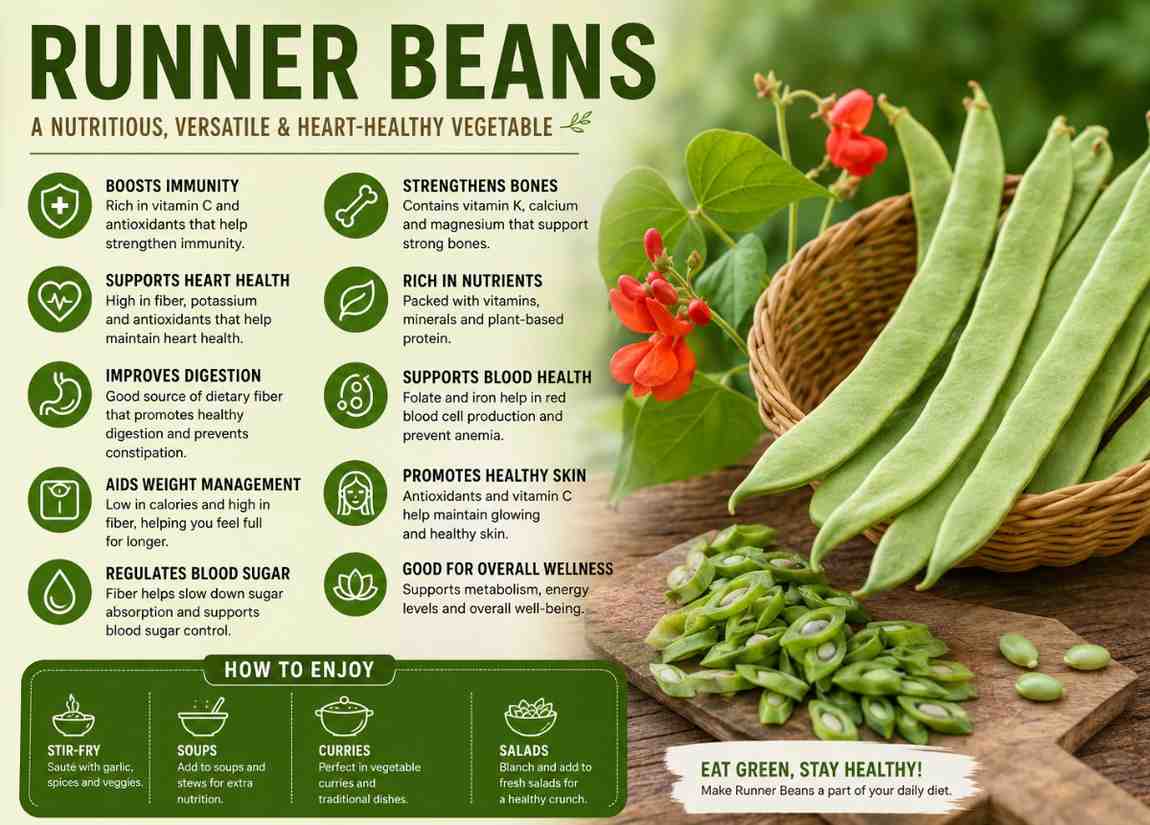
Runner beans are one of the most nutritious green vegetables you can add to your diet. Known for their long, flat pods and mild, slightly sweet flavor, runner beans are packed with vitamins, minerals, fiber, and antioxidants that support overall health. They are commonly enjoyed in salads, stir-fries, soups, curries, and steamed vegetable dishes.
Originally native to Central and South America, runner beans (most commonly known as scarlet runner beans or multiflora beans) are now cultivated in many parts of Europe, Asia, and North America. They are valued not only for their edible pods but also for their beautiful red, white, or bi-colored flowers.
Whether you’re looking to improve digestion, support heart health, manage weight, or simply increase your vegetable intake, runner beans are a healthy addition to a balanced diet.
What are Runner Beans?
Runner beans (Phaseolus coccineus) are climbing legumes grown for their tender green pods and edible seeds. Unlike common green beans, runner beans have larger, flatter pods and a firmer texture. Young pods are harvested before they become fibrous and are cooked before eating.
Runner beans belong to the legume family and are rich in dietary fiber, vitamin C, vitamin K, folate, potassium, magnesium, and plant-based antioxidants.
Nutrition Facts of Runner Beans (Per 100 g, Cooked)
| Nutrient | Amount |
|---|---|
| Calories | 31 kcal |
| Water | 90 g |
| Protein | 2 g |
| Carbohydrates | 7 g |
| Dietary Fiber | 3.4 g |
| Sugar | 2.5 g |
| Fat | 0.2 g |
| Vitamin C | 18 mg |
| Vitamin K | 19 mcg |
| Folate | 33 mcg |
| Vitamin A | 35 mcg |
| Potassium | 210 mg |
| Calcium | 37 mg |
| Magnesium | 25 mg |
| Phosphorus | 38 mg |
| Iron | 1 mg |
Values are approximate and may vary depending on variety and cooking method.
20 Proven Health Benefits of Runner Beans
- Supports Digestive Health: The high fiber content promotes regular bowel movements and supports a healthy digestive system.
- Promotes Heart Health: Fiber, potassium, and antioxidants help maintain healthy blood pressure and cholesterol levels.
- Aids Healthy Weight Management: Runner beans are low in calories yet filling, making them excellent for weight-control diets.
- Improves Gut Microbiome: Dietary fiber nourishes beneficial gut bacteria for better digestive health.
- Supports Blood Sugar Control: Their fiber slows carbohydrate absorption, helping stabilize blood glucose levels.
- Boosts Immune Function: Vitamin C helps strengthen immune defenses against infections.
- Promotes Healthy Skin: Antioxidants and vitamin C support collagen production and skin repair.
- Supports Bone Health: Vitamin K, calcium, and magnesium contribute to stronger bones.
- Provides Plant-Based Protein: Runner beans offer protein that helps maintain muscles and body tissues.
- Reduces Oxidative Stress: Natural antioxidants help protect cells from free radical damage.
- Supports Healthy Pregnancy: Folate contributes to normal fetal neural tube development during pregnancy.
- Helps Maintain Healthy Blood Pressure: Potassium supports healthy fluid balance and blood vessel function.
- Supports Eye Health: Vitamin A contributes to maintaining normal vision.
- Encourages Healthy Cholesterol Levels: Soluble fiber may help lower LDL cholesterol.
- Improves Satiety: Fiber and water content help you feel full for longer.
- Supports Healthy Metabolism: B vitamins assist the body in converting food into energy.
- Promotes Healthy Red Blood Cell Formation: Iron and folate contribute to normal blood cell production.
- Supports Healthy Aging: Antioxidants may help reduce age-related cellular damage.
- Contributes to Hydration: Their high water content supports overall hydration.
- Encourages Overall Nutritional Balance: Runner beans provide a variety of vitamins and minerals essential for daily health.
10 Side Effects of Runner Beans
- Digestive Discomfort: Eating large amounts may cause gas or bloating due to their fiber content.
- Stomach Cramps: Excessive intake may lead to mild abdominal discomfort in sensitive individuals.
- Raw Bean Toxicity: Raw runner beans contain lectins that can cause nausea and vomiting if not cooked properly.
- Possible Allergic Reactions: Some people may be allergic to legumes, including runner beans.
- Digestive Upset from Overeating: Excessive consumption may cause diarrhea in some individuals.
- Reduced Mineral Absorption: Naturally occurring phytates may slightly reduce mineral absorption when consumed in very large amounts.
- Interaction with Blood Thinners: Vitamin K may affect people taking anticoagulant medications.
- Kidney Concerns: Individuals with advanced kidney disease may need to monitor potassium intake.
- Not Suitable if Undercooked: Undercooked beans can cause digestive symptoms due to remaining lectins.
- May Worsen IBS Symptoms: People with irritable bowel syndrome may experience increased gas from high-fiber vegetables.
How to Eat Runner Beans?
Runner beans are always best eaten cooked. Remove both ends of the pods, pull away any tough strings if present, and slice into smaller pieces before cooking.
You can enjoy runner beans by:
- Steaming
- Boiling
- Stir-frying
- Roasting
- Grilling
- Adding to vegetable curries
- Mixing into soups
- Including in casseroles
- Tossing into pasta dishes
- Serving as a healthy side dish
Tips for Consuming Runner Beans
- Choose young, tender pods.
- Wash thoroughly before cooking.
- Remove tough strings before slicing.
- Cook until just tender to retain nutrients.
- Avoid overcooking.
- Pair with olive oil for better absorption of fat-soluble vitamins.
- Season with herbs and garlic for extra flavor.
- Include them in balanced meals with protein.
- Eat a variety of vegetables rather than relying on one.
- Increase intake gradually if you’re not used to high-fiber foods.
How to Cook Runner Beans?
Boiling
Cook sliced runner beans in boiling water for 5–8 minutes until tender but still slightly crisp.
Steaming
Steam for approximately 6–8 minutes to preserve nutrients.
Stir-Frying
Stir-fry with garlic, onions, olive oil, mushrooms, or bell peppers for a quick side dish.
Roasting
Toss with olive oil, herbs, black pepper, and roast until lightly browned.
Adding to Curries
Multiflora beans pair well with potatoes, tomatoes, lentils, and spices in vegetable curries.
Soups and Stews
Add sliced Multiflora beans during the final cooking stages to retain texture.
Other Uses of Runner Beans
- Garden Ornament: Runner bean plants are widely grown for their attractive flowers.
- Natural Privacy Screen: Climbing vines can cover fences and trellises.
- Pollinator Attraction: Their flowers attract bees and beneficial insects.
- Composting Material: Plant residues can be composted after harvest.
- Nitrogen Improvement: As legumes, they help improve soil fertility through nitrogen fixation.
- Companion Planting: Runner beans grow well alongside many vegetables.
- Seed Saving: Mature seeds can be collected for future planting.
- Educational Gardening: They are excellent plants for teaching children about gardening.
- Wildlife Support: Flowers provide nectar for pollinators.
- Sustainable Home Gardening: Multiflora beans are productive and easy to grow in home gardens.
How Much Runner Beans Can You Eat in a Day?
For most healthy adults, 1–2 cups (approximately 100–200 grams) of cooked runner beans per day can comfortably fit into a balanced diet alongside other vegetables.
Individuals with digestive sensitivity should start with smaller portions and increase intake gradually.
Best Time to Eat Runner Beans
Runner beans can be eaten at any meal.
They are particularly suitable:
- Lunch
- Dinner
- As a vegetable side dish
- After exercise as part of a balanced meal
- In healthy meal-prep recipes
Who Should Eat Runner Beans?
- People Seeking Weight Loss: Their low-calorie, high-fiber profile supports fullness.
- Individuals with Constipation: Fiber helps maintain regular bowel movements.
- Heart-Conscious Adults: Nutrients support cardiovascular wellness.
- People with Diabetes: Their fiber may help support healthy blood sugar control as part of a balanced diet.
- Vegetarians and Vegans: They contribute plant protein and micronutrients.
- Older Adults: Vitamins and minerals support healthy aging.
- Athletes: They provide carbohydrates and nutrients for recovery meals.
- Pregnant Women: Folate supports normal fetal development when included in a balanced diet.
- Children: Cooked runner beans add valuable nutrients to growing bodies.
- Anyone Looking to Eat More Vegetables: They are a nutritious way to increase vegetable intake.
Who Should Not Eat Runner Beans?
- People with Legume Allergies: They should avoid Multiflora beans if allergic.
- Individuals Taking Blood Thinners: Consult a healthcare provider regarding consistent vitamin K intake.
- People with Severe IBS: Large portions may increase digestive symptoms.
- Individuals with Advanced Kidney Disease: Potassium intake may need monitoring.
- Anyone Unable to Digest High-Fiber Foods: Smaller servings may be better tolerated.
- People Who Eat Raw Beans: Runner beans should never be consumed raw.
- Individuals Experiencing Acute Digestive Illness: Temporary reduction in fiber may be advised.
- People Sensitive to FODMAP Foods: Multiflora beans may trigger symptoms in some individuals.
- Infants: Introduce only when age-appropriate and thoroughly cooked.
- Anyone with Medical Dietary Restrictions: Follow advice from a healthcare professional.
How to Store Runner Beans?
- Refrigerate Immediately: Store fresh runner beans in the refrigerator after purchase.
- Use Within One Week: Fresh beans are best consumed within several days.
- Keep Them Dry: Moisture can encourage spoilage.
- Store in a Perforated Bag: This helps maintain freshness while allowing airflow.
- Freeze for Long-Term Storage: Blanch before freezing.
- Avoid Washing Before Storage: Wash only before cooking.
- Inspect Regularly: Remove damaged pods promptly.
- Store Away from Ethylene-Producing Fruits: This helps slow spoilage.
- Keep Cooked Beans Refrigerated: Consume within 3–4 days.
- Label Frozen Beans: Mark the freezing date for quality control.
Precautions and Interactions
- Cook Thoroughly: Proper cooking destroys harmful lectins naturally present in raw runner beans.
- Increase Fiber Gradually: This helps reduce digestive discomfort.
- Drink Enough Water: Adequate hydration supports fiber digestion.
- Monitor Vitamin K Intake: People on anticoagulants should maintain consistent intake.
- Watch Potassium Intake: Kidney patients should seek medical advice.
- Practice Portion Control: Excessive amounts may cause bloating.
- Wash Before Cooking: Remove dirt and pesticide residues.
- Avoid Spoiled Beans: Discard beans with mold or unpleasant odors.
- Store Properly: Refrigeration helps preserve freshness and safety.
- Consult Your Healthcare Provider: Seek personalized advice if you have chronic health conditions or dietary restrictions.
FAQs
Are runner beans healthy?
Yes. Multiflora beans are low in calories and rich in fiber, vitamins, minerals, and antioxidants that support overall health.
Can you eat runner beans raw?
No. Multiflora beans should always be cooked because raw beans contain lectins that may cause digestive problems.
What do runner beans taste like?
Multiflora beans have a mild, slightly sweet, earthy flavor with a firm texture when cooked properly.
Are runner beans the same as green beans?
No. Runner beans are generally longer, flatter, and have a stronger flavor than common green beans.
Should runner beans be peeled?
Young Multiflora beans usually don’t need peeling, but older pods may need the tough strings removed before cooking.
How long should you boil runner beans?
Boil them for about 5–8 minutes until they are tender but still slightly crisp.
Can you freeze runner beans?
Yes. Blanch them for 2–3 minutes, cool them quickly, and freeze in airtight containers or freezer bags.
Are runner beans good for weight loss?
Yes. They are low in calories and high in fiber, helping you feel full for longer.
Are runner beans good for diabetes?
Yes. Their fiber content may help support healthy blood sugar levels when eaten as part of a balanced diet.
Do runner beans contain protein?
Yes. They provide a moderate amount of plant-based protein along with essential nutrients.
Are runner beans good for heart health?
Yes. Their fiber, potassium, and antioxidants may help support healthy blood pressure and cholesterol levels.
Can pregnant women eat runner beans?
Yes. Properly cooked Multiflora beans can be a healthy choice during pregnancy because they contain folate and fiber.
Are runner beans high in fiber?
Yes. Multiflora beans are an excellent source of dietary fiber that supports digestive health.
Can runner beans cause gas?
Yes. Like many high-fiber vegetables, they may cause gas or bloating in some people, especially if eaten in large amounts.
What vitamins are found in runner beans?
Multiflora beans contain vitamin C, vitamin K, vitamin A, folate, and several B vitamins.
Can I eat Runner Beans every day?
Yes. Most healthy adults can eat cooked Multiflora beans every day as part of a balanced diet. A serving of about 1–2 cups (100–200 grams) provides fiber, vitamins, and minerals that support overall health. Avoid eating them raw, and vary your vegetable intake for the best nutritional balance.
Is Runner Beans safe for children?
Yes. Properly cooked Multiflora beans are safe for children and can be a nutritious addition to their meals. Slice them into small, bite-sized pieces for younger children to reduce the risk of choking.
What is Runner Beans good for?
Multiflora beans are good for supporting digestive health, heart health, weight management, healthy blood sugar levels, bone health, and immune function. They are also a good source of fiber, vitamin C, vitamin K, folate, potassium, and antioxidants.
How long to soak runner beans before cooking?
Fresh green runner bean pods do not need soaking before cooking. Simply wash them, trim the ends, remove any tough strings, and cook them. If you’re cooking dried runner bean seeds, soak them for 8–12 hours or overnight before boiling until tender.
Is it better to steam or boil runner beans?
Both methods are healthy, but steaming is generally better because it helps retain more vitamins and minerals. Boiling is also a good option, especially when cooked for only 5–8 minutes, until the beans are tender but still slightly crisp.
Sources / References:
- World Health Organization (WHO)
- U.S. Department of Agriculture FoodData Central
- MedlinePlus
- Academy of Nutrition and Dietetics
- National Institutes of Health Office of Dietary Supplements
Disclaimer:
This article is for educational purposes only and should not be considered medical advice. Consult a qualified healthcare professional before making significant dietary changes or using foods for therapeutic purposes, especially if you are pregnant, nursing, taking medications, or have an existing medical condition.
Also Read: