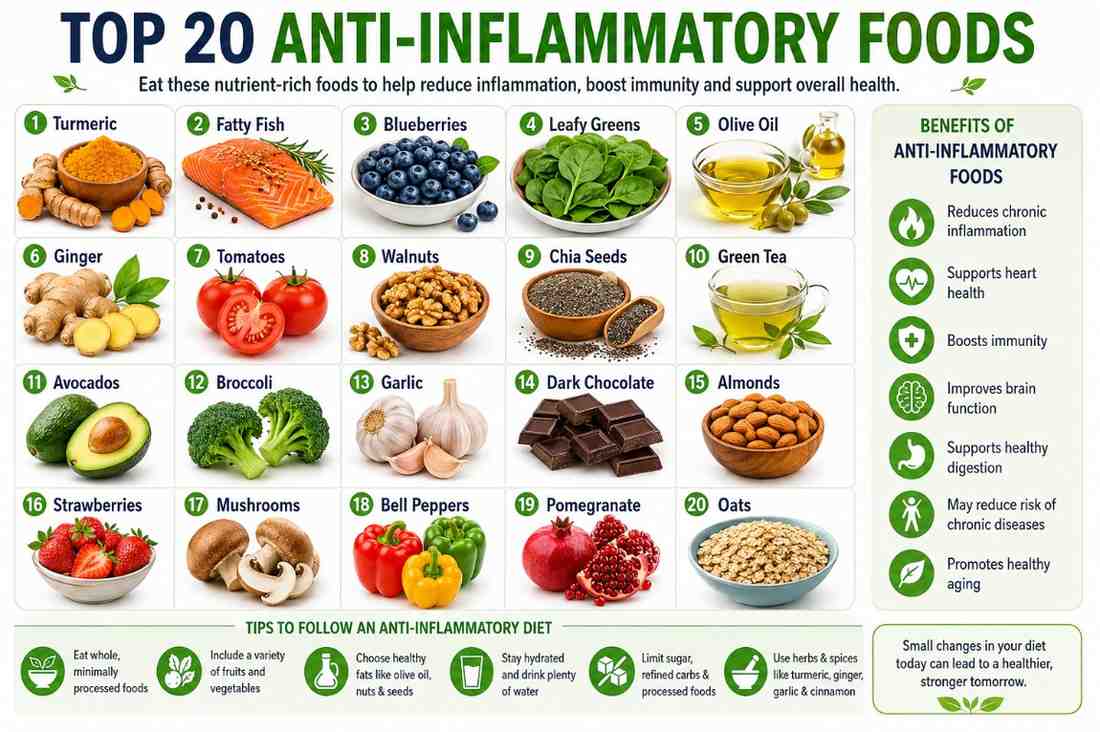
Inflammation is a natural process that helps the body fight infections, heal injuries, and protect itself from harmful substances. However, when inflammation becomes chronic, it can contribute to various health problems, including heart disease, diabetes, arthritis, obesity, digestive disorders, and certain autoimmune conditions.
One of the most effective ways to reduce chronic inflammation is through diet. Many foods contain powerful antioxidants, vitamins, minerals, healthy fats, and plant compounds that help combat inflammation naturally. Incorporating anti-inflammatory foods into your daily meals can improve overall health, support immune function, and reduce the risk of chronic disease.
In this guide, we’ll explore the top 20 anti-inflammatory foods, their nutritional benefits, and practical ways to include them in your diet.
What Are Anti-Inflammatory Foods?
Anti-inflammatory foods are natural foods that contain nutrients and bioactive compounds that help reduce inflammation in the body. These foods typically include:
- Fruits and vegetables
- Whole grains
- Nuts and seeds
- Fatty fish
- Herbs and spices
- Healthy fats
Regular consumption of these foods may help lower inflammatory markers and support long-term health.
Top 20 Anti-Inflammatory Foods for Better Health
1. Turmeric
Turmeric is one of the most researched anti-inflammatory spices. It contains curcumin, a powerful compound known for its ability to reduce inflammation and oxidative stress.
Benefits:
- Supports joint health
- May reduce arthritis symptoms
- Helps protect against chronic diseases
- Supports brain function
How to Use:
Add turmeric to curries, soups, rice dishes, smoothies, and herbal teas.
2. Fatty Fish
Fatty fish such as salmon, sardines, mackerel, and trout are rich in omega-3 fatty acids.
Benefits:
- Reduces inflammatory markers
- Supports heart health
- Promotes brain function
- May ease joint pain
How to Use:
Aim for two servings of fatty fish per week.
3. Blueberries
Blueberries are packed with antioxidants called anthocyanins that help combat inflammation.
Benefits:
- Protects cells from damage
- Supports memory and cognition
- Improves heart health
- Strengthens immunity
How to Use:
Add blueberries to yogurt, smoothies, oatmeal, or salads.
4. Leafy Green Vegetables
Spinach, kale, Swiss chard, and other leafy greens contain vitamins, minerals, and antioxidants.
Benefits:
- Supports immune function
- Helps reduce oxidative stress
- Promotes heart health
- Supports healthy aging
How to Use:
Enjoy them in salads, soups, smoothies, and stir-fries.
5. Extra Virgin Olive Oil
Extra virgin olive oil contains oleocanthal, a compound with anti-inflammatory properties similar to certain medications.
Benefits:
- Supports cardiovascular health
- Helps lower inflammation
- Rich in healthy monounsaturated fats
- Supports brain health
How to Use:
Use as a salad dressing or drizzle over cooked vegetables.
6. Ginger
Ginger has been used in traditional medicine for centuries.
Benefits:
- Helps reduce inflammation
- Supports digestive health
- May reduce muscle soreness
- Helps alleviate nausea
How to Use:
Add fresh ginger to tea, soups, curries, and smoothies.
7. Tomatoes
Tomatoes are rich in lycopene, a potent antioxidant.
Benefits:
- Supports heart health
- May reduce inflammatory markers
- Promotes skin health
- Protects cells from oxidative damage
How to Use:
Consume fresh tomatoes, tomato soup, or tomato sauce.
8. Walnuts
Walnuts provide healthy fats, fiber, and antioxidants.
Benefits:
- Supports brain health
- Reduces inflammation
- Promotes heart health
- Helps improve cholesterol levels
How to Use:
Eat as a snack or add to salads and oatmeal.
9. Chia Seeds
Chia seeds are loaded with omega-3 fatty acids and fiber.
Benefits:
- Supports digestive health
- Helps manage inflammation
- Promotes heart health
- Supports blood sugar control
How to Use:
Add to smoothies, yogurt, or puddings.
10. Green Tea
Green tea contains catechins, especially EGCG, known for anti-inflammatory effects.
Benefits:
- Supports metabolism
- Promotes heart health
- Protects cells from damage
- Supports brain function
How to Use:
Drink 1–3 cups daily.
11. Avocados
Avocados contain healthy fats, fiber, and antioxidants.
Benefits:
- Supports heart health
- Helps reduce inflammation
- Promotes healthy skin
- Supports nutrient absorption
How to Use:
Add to salads, sandwiches, and smoothies.
12. Broccoli
Broccoli is a cruciferous vegetable rich in sulforaphane.
Benefits:
- Supports detoxification
- Reduces oxidative stress
- Promotes immune health
- Supports healthy aging
How to Use:
Steam, roast, or stir-fry broccoli.
13. Garlic
Garlic contains sulfur compounds that help reduce inflammation.
Benefits:
- Supports immune function
- Promotes heart health
- Helps fight infections
- Reduces inflammation
How to Use:
Add fresh garlic to sauces, soups, and vegetable dishes.
14. Dark Chocolate
Dark chocolate contains flavonoids with antioxidant properties.
Benefits:
- Supports cardiovascular health
- Reduces oxidative stress
- Improves mood
- Promotes brain health
How to Use:
Choose chocolate containing at least 70% cocoa.
15. Almonds
Almonds are rich in healthy fats, vitamin E, and fiber.
Benefits:
- Supports heart health
- Helps lower inflammation
- Promotes satiety
- Supports healthy cholesterol levels
How to Use:
Eat as a snack or add to meals.
16. Strawberries
Strawberries contain vitamin C and anthocyanins.
Benefits:
- Supports immunity
- Helps reduce inflammation
- Promotes skin health
- Supports cardiovascular health
How to Use:
Add to fruit bowls, smoothies, and yogurt.
17. Mushrooms
Certain mushrooms contain compounds that may reduce inflammation.
Benefits:
- Supports immune function
- Provides antioxidants
- Promotes overall wellness
- Supports metabolic health
How to Use:
Include mushrooms in soups, stir-fries, and salads.
18. Bell Peppers
Bell peppers are rich in vitamin C and antioxidants.
Benefits:
- Supports immune health
- Helps reduce inflammation
- Promotes healthy skin
- Supports eye health
How to Use:
Eat raw, roasted, or grilled.
19. Pomegranate
Pomegranate contains powerful antioxidants called punicalagins.
Benefits:
- Supports heart health
- Helps combat inflammation
- Protects cells from damage
- Supports healthy aging
How to Use:
Eat fresh seeds or drink unsweetened pomegranate juice.
20. Oats
Oats are a whole grain rich in beta-glucan fiber.
Benefits:
- Supports digestive health
- Helps manage cholesterol
- Promotes heart health
- Reduces inflammation
How to Use:
Enjoy oatmeal, overnight oats, or oat-based snacks.
Why Chronic Inflammation Is Harmful?
Long-term inflammation may contribute to:
- Heart disease
- Type 2 diabetes
- Arthritis
- Obesity
- Alzheimer’s disease
- Autoimmune disorders
- Digestive diseases
Following an anti-inflammatory diet may help lower the risk of these conditions and improve overall well-being.
Foods That May Increase Inflammation
While adding anti-inflammatory foods is important, limiting inflammatory foods can also help.
Examples include:
- Sugary beverages
- Processed snacks
- Refined carbohydrates
- Deep-fried foods
- Excess alcohol
- Processed meats
- Foods high in trans fats
Sample Anti-Inflammatory Meal Plan
| Time | Meal | Foods Included | Anti-Inflammatory Benefits |
|---|---|---|---|
| 7:00–8:00 AM | Breakfast | Oatmeal topped with blueberries, walnuts, chia seeds, and cinnamon | Provides fiber, omega-3 fatty acids, and antioxidants that help reduce inflammation |
| 10:00 AM | Morning Snack | Green tea and a handful of almonds | Rich in polyphenols, vitamin E, and healthy fats that support heart health |
| 1:00 PM | Lunch | Mixed leafy green salad with grilled salmon, avocado, tomatoes, and olive oil dressing | Supplies omega-3s, healthy fats, vitamins, and antioxidants |
| 4:00 PM | Afternoon Snack | Fresh strawberries and pomegranate seeds | Packed with vitamin C and anti-inflammatory plant compounds |
| 7:00 PM | Dinner | Grilled fish with steamed broccoli, bell peppers, and brown rice | Combines protein, fiber, antioxidants, and essential nutrients |
| 9:00 PM | Evening Drink | Warm ginger and turmeric tea | Contains natural compounds that may help reduce inflammation and support digestion |
Daily Hydration Tips
| Beverage | Recommended Amount |
|---|---|
| Water | 8–10 glasses daily |
| Green Tea | 1–3 cups daily |
| Herbal Tea (Ginger/Turmeric) | 1–2 cups daily |
| Fresh Vegetable Juice (Unsweetened) | Optional, 1 glass daily |
This meal plan provides a balanced combination of fruits, vegetables, whole grains, healthy fats, lean protein, and antioxidant-rich foods that may help support the body’s natural anti-inflammatory response.
Tips for Following an Anti-Inflammatory Diet
1. Eat More Whole Foods
Focus on minimally processed foods.
2. Include Colorful Fruits and Vegetables
Different colors provide different antioxidants.
3. Choose Healthy Fats
Use olive oil, nuts, seeds, and fatty fish.
4. Stay Hydrated
Drink sufficient water throughout the day.
5. Limit Processed Foods
Reduce intake of refined sugar and unhealthy fats.
6. Use Herbs and Spices
Turmeric, ginger, garlic, and cinnamon can boost anti-inflammatory effects.
Final Thoughts
Chronic inflammation is linked to many modern health problems, but diet can play a powerful role in managing it. Including anti-inflammatory foods such as turmeric, fatty fish, berries, leafy greens, olive oil, nuts, seeds, and whole grains can support overall health and reduce the risk of chronic disease.
Rather than focusing on a single “superfood,” aim to build a balanced dietary pattern rich in a variety of anti-inflammatory foods. Consistency over time is what delivers the greatest health benefits.
FAQ’s
Which fruit is most anti-inflammatory?
Berries such as blueberries, strawberries, raspberries, and blackberries are among the most anti-inflammatory fruits due to their high antioxidant content.
Can anti-inflammatory foods help with arthritis?
Yes, many anti-inflammatory foods, especially fatty fish, turmeric, ginger, and olive oil, may help reduce joint inflammation and support arthritis management when combined with medical treatment.
How long does it take for an anti-inflammatory diet to work?
Some people notice improvements in energy, digestion, and inflammation-related symptoms within a few weeks, while long-term benefits may take several months of consistent healthy eating.
Are anti-inflammatory foods good for weight loss?
Yes, many anti-inflammatory foods are rich in fiber, protein, and healthy fats, which can help control appetite, support metabolism, and promote healthy weight management.
Is coffee anti-inflammatory?
Coffee contains antioxidants that may have anti-inflammatory effects when consumed in moderation. However, excessive sugar and high-calorie additives can reduce its health benefits.
What foods should I avoid to reduce inflammation?
Limit processed foods, sugary drinks, refined carbohydrates, deep-fried foods, processed meats, trans fats, and excessive alcohol to help reduce inflammation.
Is turmeric the most powerful anti-inflammatory food?
Turmeric is one of the most studied anti-inflammatory foods due to its active compound curcumin, but it works best as part of an overall healthy diet rich in various anti-inflammatory foods.
Can anti-inflammatory foods lower blood pressure?
Many anti-inflammatory foods, such as leafy greens, berries, fatty fish, and olive oil, may support heart health and help maintain healthy blood pressure levels.
Are eggs inflammatory?
Eggs are generally not considered inflammatory for most people and can be part of a healthy diet. However, individual responses may vary, especially in those with specific sensitivities.
What is the number one anti-inflammatory drink?
Green tea is often considered one of the best anti-inflammatory drinks because it contains powerful antioxidants called catechins.
Can anti-inflammatory foods improve gut health?
Yes, foods rich in fiber and antioxidants, such as oats, fruits, vegetables, and legumes, help support beneficial gut bacteria and digestive health.
Are anti-inflammatory foods safe during pregnancy?
Most natural anti-inflammatory foods, including fruits, vegetables, whole grains, nuts, and fish low in mercury, are generally safe during pregnancy. Consult your healthcare provider for personalized advice.
Can children eat anti-inflammatory foods?
Yes, anti-inflammatory foods are healthy for children and can support growth, immunity, and overall health when included as part of a balanced diet.
What is the easiest way to start an anti-inflammatory diet?
Start by eating more fruits, vegetables, whole grains, healthy fats, nuts, seeds, and fish while gradually reducing processed foods, sugary snacks, and refined carbohydrates.
Sources / References:
- Harvard T.H. Chan School of Public Health
- National Institutes of Health (NIH)
- National Center for Complementary and Integrative Health
- Academy of Nutrition and Dietetics
- American Heart Association
- Mayo Clinic
- Cleveland Clinic
- Johns Hopkins Medicine
- World Health Organization (WHO)
- Harvard Health Publishing
Also Read:
- Lunch Food Combinations That Cause Bloating & How to Avoid Them
- 10 Fruits That Improve Digestion Naturally & Keep Your Gut Healthy
- 10 Fruits That Increase Body Heat & How to Eat Them Safely
About the Author:
Written by: Kirti Solanki (Health Content Researcher)
This article was reviewed and written by a health and nutrition content specialist dedicated to creating evidence-based wellness resources. Our goal is to provide accurate, practical, and easy-to-understand information that helps readers make informed dietary and lifestyle decisions. Content is developed using reputable scientific sources and current nutrition research.
Disclaimer:
This guide is intended for educational and informational purposes only and should not be considered medical advice, diagnosis, or treatment. Always consult a qualified physician, registered dietitian, or healthcare professional before making significant dietary changes, especially if you are pregnant, nursing, taking medications, or managing a medical condition. The publisher and author are not responsible for any adverse effects resulting from the use of information presented in this guide.