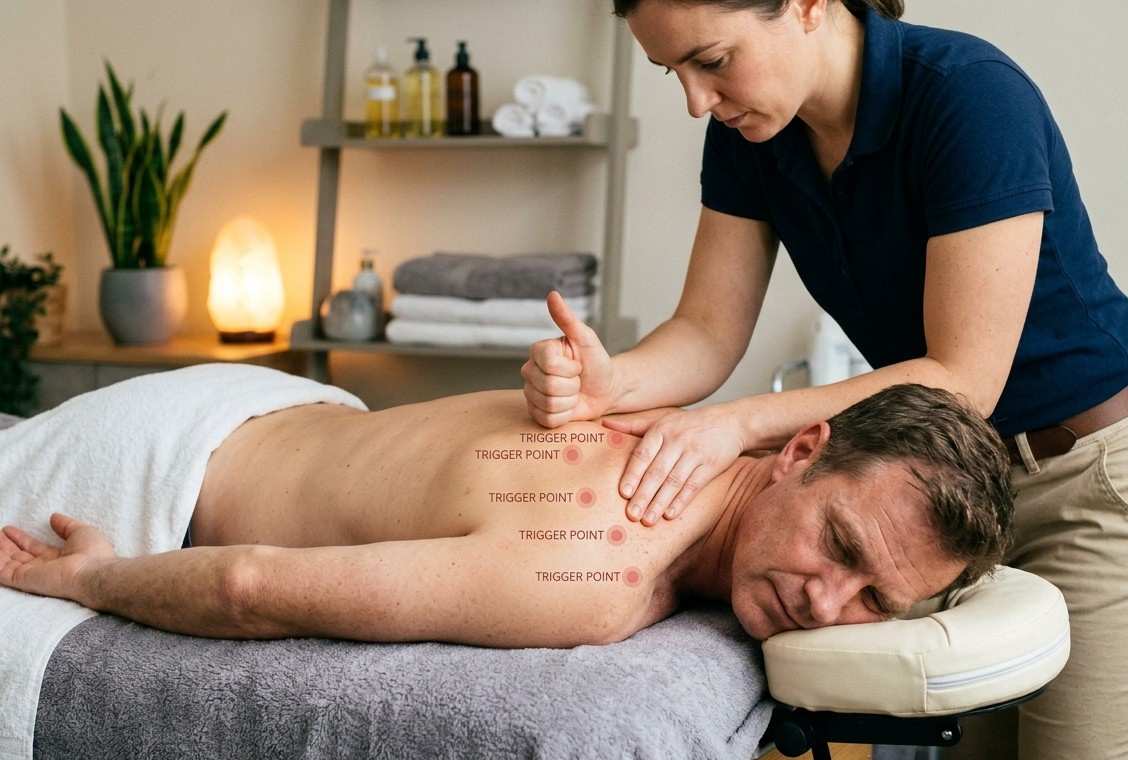
Muscle pain and tension have become common problems in modern life. Long hours at desks, poor posture, stress, intense workouts, and repetitive movements can create tight knots in muscles that lead to discomfort and restricted movement. One of the most effective ways to relieve this type of muscular tension is Trigger Point Massage.
Trigger Point Massage is a specialized massage technique that focuses on releasing tight areas within muscle tissue known as trigger points. These sensitive spots can cause pain not only where they are located but also in other parts of the body. By applying targeted pressure, trigger point therapy helps reduce pain, improve flexibility, and restore muscle function.
In this guide, you will learn what Trigger Point Massage is, how it works, its science-backed benefits, techniques, side effects, aftercare tips, and much more.
What Is Trigger Point Massage?
Trigger Point Massage is a therapeutic massage technique designed to identify and release trigger points within muscles and connective tissues.
A trigger point is a tight and sensitive area in a muscle that feels like a small knot or lump. These points can form due to:
- Muscle overuse
- Stress and tension
- Poor posture
- Repetitive motions
- Sports injuries
- Lack of movement
- Trauma or strain
When pressure is applied to a trigger point, it may produce pain locally or refer pain to another area of the body. For example:
- A trigger point in the shoulder may cause headaches
- A trigger point in the lower back may create hip pain
- A trigger point in the neck may cause arm discomfort
The goal of Trigger Point Massage is to deactivate these painful knots and restore normal muscle movement and circulation.
How Trigger Points Develop?
Trigger points often form when muscle fibers remain contracted for long periods. Reduced blood flow and oxygen supply cause irritation and inflammation in the area.
Several lifestyle factors contribute to trigger point formation:
Poor Posture
Slouching at desks or looking down at phones can strain neck and shoulder muscles.
Stress
Emotional stress causes muscles to tighten unconsciously, especially in the neck, shoulders, and jaw.
Repetitive Movements
Typing, lifting, running, or repetitive sports activities may overload specific muscles.
Physical Injuries
Muscle trauma can create long-lasting trigger points if not properly treated.
Lack of Stretching
Tight muscles become more vulnerable to knots and tension.
Types of Trigger Points
Active Trigger Points
These trigger points cause pain even without pressure and may produce referred pain.
Latent Trigger Points
These remain inactive until touched but can restrict movement and muscle flexibility.
Satellite Trigger Points
These develop near primary trigger points due to stress spreading to surrounding muscles.
How Trigger Point Massage Works
Trigger Point Massage involves applying concentrated pressure to specific muscle knots using fingers, knuckles, elbows, or massage tools.
The therapist typically:
- Locates the trigger point
- Applies sustained pressure
- Holds pressure for several seconds
- Releases gradually
- Repeats until tension decreases
This process helps:
- Increase blood circulation
- Reduce muscle tightness
- Improve oxygen delivery
- Relax contracted muscle fibers
- Reduce inflammation
- Interrupt pain signals
Over time, the muscle returns to a healthier and more relaxed state.
Common Areas Treated with Trigger Point Massage
Trigger points can develop almost anywhere in the body, but they are especially common in certain muscle groups.
Neck and Shoulders
Stress and poor posture often create painful knots in these areas.
Upper Back
Desk work and prolonged sitting commonly affect upper back muscles.
Lower Back
Heavy lifting and improper movement patterns may cause chronic tension.
Glutes and Hips
Sitting for long periods can tighten hip muscles and glutes.
Calves
Athletes and runners frequently develop calf trigger points.
Jaw Muscles
Teeth grinding and stress may create trigger points in facial muscles.
20 Proven Benefits of Trigger Point Massage
1. Relieves Muscle Pain
Trigger Point Massage helps reduce localized muscle pain and discomfort.
2. Reduces Muscle Knots
Targeted pressure breaks down tight muscle bands and adhesions.
3. Improves Blood Circulation
Enhanced circulation helps deliver nutrients and oxygen to muscles.
4. Increases Flexibility
Releasing tight muscles improves range of motion and mobility.
5. Helps Chronic Pain Conditions
People with chronic neck pain, shoulder pain, or back pain may benefit significantly.
6. Reduces Tension Headaches
Trigger points in neck and shoulder muscles can contribute to headaches.
7. Supports Athletic Recovery
Athletes use trigger point therapy to reduce post-workout soreness.
8. Improves Posture
Relaxing tight muscles may help correct posture imbalances.
9. Enhances Muscle Function
Muscles perform more efficiently after trigger points are released.
10. Decreases Stress
Massage therapy promotes relaxation and reduces stress hormones.
11. Improves Sleep Quality
Reduced pain and muscle tension may support better sleep.
12. Helps Sciatica Symptoms
Trigger point therapy may ease muscle-related sciatic discomfort.
13. Reduces Shoulder Stiffness
Massage improves movement in tight shoulder muscles.
14. Helps Fibromyalgia Symptoms
Some individuals with fibromyalgia experience relief from gentle trigger point work.
15. Speeds Injury Recovery
Improved circulation may assist tissue healing.
16. Reduces Jaw Tension
Trigger point massage can relax jaw muscles affected by clenching.
17. Improves Physical Performance
Flexible muscles often perform better during physical activities.
18. Decreases Muscle Fatigue
Relaxed muscles use energy more efficiently.
19. Supports Better Movement Patterns
Balanced muscles reduce strain during movement.
20. Promotes Overall Relaxation
The therapy creates a calming effect on both body and mind.
Trigger Point Massage Techniques
Different techniques are used depending on the severity and location of trigger points.
Sustained Pressure Technique
Steady pressure is applied directly to the trigger point for several seconds.
Deep Stroking
The therapist uses slow strokes along muscle fibers to reduce tightness.
Circular Friction
Small circular movements help release adhesions and tension.
Stretch and Release
The muscle is stretched after pressure application to improve flexibility.
Myofascial Release
This technique targets connective tissue surrounding muscles.
Ischemic Compression
Pressure temporarily restricts blood flow and then encourages circulation upon release.
Trigger Point Massage vs Deep Tissue Massage
Although they are similar, these therapies are not identical.
| Feature | Trigger Point Massage | Deep Tissue Massage |
|---|---|---|
| Focus | Specific trigger points | Entire muscle layers |
| Pressure | Concentrated | Broad and deep |
| Goal | Release knots | Relieve chronic tension |
| Pain Referral | Common | Less common |
| Technique | Static pressure | Long strokes |
Trigger Point Massage is more targeted, while deep tissue massage works larger muscle areas.
What Happens During a Trigger Point Massage Session?
A typical session may last between 30 and 90 minutes.
- Initial Assessment: The therapist asks about pain areas, posture, injuries, and lifestyle habits.
- Trigger Point Identification: The therapist locates tight knots through palpation.
- Pressure Application: Targeted pressure is applied using hands, elbows, or tools.
- Stretching: Gentle stretching may follow trigger point release.
- Hydration Advice: Clients are often encouraged to drink water afterward.
Some discomfort during treatment is normal because the therapist works directly on sensitive areas.
Is Trigger Point Massage Painful?
Trigger Point Massage can feel intense, especially when pressure is applied to tight knots. Many people describe the sensation as “good pain” because it often brings relief afterward.
However, the discomfort should remain manageable. Severe or sharp pain is not normal and should be communicated to the therapist immediately.
10 Possible Side Effects of Trigger Point Massage
Although generally safe, Trigger Point Massage may cause temporary side effects.
1. Muscle Soreness
Mild soreness after treatment is common.
2. Bruising
Sensitive skin may bruise after deep pressure.
3. Fatigue
Some people feel tired after intense sessions.
4. Temporary Redness
Pressure may cause mild skin redness.
5. Headaches
Occasional headaches can occur after release of neck tension.
6. Dizziness
Changes in circulation may briefly cause lightheadedness.
7. Tenderness
Treated areas may remain sensitive for a short time.
8. Mild Swelling
Inflammation may temporarily increase in sensitive muscles.
9. Emotional Release
Some individuals experience emotional reactions during deep bodywork.
10. Temporary Increase in Pain
Pain may worsen briefly before improving.
Who Can Benefit from Trigger Point Massage?
This therapy may help many individuals.
- Office Workers: Long hours of sitting often lead to neck and shoulder tension.
- Athletes: Sports activities frequently create muscle knots and tightness.
- Seniors: Gentle trigger point work may improve mobility and comfort.
- People with Chronic Pain: Conditions involving muscular tension may improve with therapy.
- Fitness Enthusiasts: Recovery after workouts can become faster and more effective.
Who Should Avoid Trigger Point Massage?
Certain people should consult a healthcare professional before treatment.
- Individuals with Blood Clotting Disorders: Deep pressure may increase bleeding risk.
- Pregnant Women: Some pressure points should be avoided during pregnancy.
- People with Severe Osteoporosis: Strong pressure may damage fragile bones.
- Individuals with Open Wounds or Skin Infections: Massage should not be performed over affected areas.
- People with Recent Surgeries: Healing tissues require medical clearance first.
Trigger Point Massage for Specific Conditions
- Trigger Point Massage for Neck Pain: Tight neck muscles often refer pain to the head and shoulders. Releasing these points may reduce stiffness and headaches.
- Trigger Point Massage for Back Pain: Trigger points in the lower back can restrict movement and cause chronic discomfort.
- Trigger Point Massage for Sciatica: Tight glute muscles sometimes irritate the sciatic nerve.
- Trigger Point Massage for Plantar Fasciitis: Trigger points in calf muscles may contribute to foot pain.
- Trigger Point Massage for Tennis Elbow: Forearm trigger points may worsen elbow pain and tightness.
Self Trigger Point Massage Techniques
Self-massage can help manage mild trigger points at home.
- Tennis Ball Technique: Place a tennis ball between your body and a wall to apply pressure.
- Foam Rolling: Foam rollers help release larger muscle groups.
- Massage Gun: Percussion therapy devices may reduce muscle tension.
- Hand Pressure: Use fingers or thumbs to apply direct pressure to knots.
Always avoid excessive force that causes sharp pain.
Best Oils for Trigger Point Massage
Massage oils help reduce friction and improve comfort.
- Coconut Oil: Provides smooth glide and moisturizes skin.
- Sweet Almond Oil: Lightweight and suitable for most skin types.
- Jojoba Oil: Absorbs easily and feels non-greasy.
- Arnica Oil: Often used for sore muscles and bruising.
- Peppermint Essential Oil: Creates a cooling sensation when diluted properly.
Aftercare Tips Following Trigger Point Massage
Proper aftercare improves recovery and results.
- Drink Plenty of Water: Hydration supports muscle recovery.
- Stretch Gently: Light stretching helps maintain flexibility.
- Avoid Intense Exercise: Muscles may need rest after treatment.
- Apply Heat: Warm compresses can relax sore muscles.
- Maintain Good Posture: Reducing strain prevents trigger points from returning.
How Often Should You Get Trigger Point Massage?
The ideal frequency depends on the severity of symptoms.
- Mild tension: once every few weeks
- Chronic pain: weekly sessions initially
- Athletes: after intense training cycles
- Maintenance: once or twice monthly
Consistency often produces better long-term results.
Trigger Point Massage and Mental Health
Physical tension and emotional stress are closely connected. Tight muscles may increase stress levels, while emotional stress can create more muscle tightness.
Trigger Point Massage may support mental wellness by:
- Lowering stress hormones
- Promoting relaxation
- Improving sleep
- Encouraging body awareness
- Reducing physical discomfort linked to anxiety
Although not a replacement for mental health treatment, massage therapy can be part of a balanced wellness routine.
Scientific Research on Trigger Point Therapy
Research suggests Trigger Point Massage may help reduce pain and improve mobility in certain conditions.
Studies have explored benefits for:
- Chronic neck pain
- Fibromyalgia
- Tension headaches
- Shoulder pain
- Sports recovery
While more research is still needed, many individuals report significant improvements in pain and quality of life.
Common Myths About Trigger Point Massage
Myth 1: It Should Always Be Extremely Painful
Effective therapy does not require unbearable pain.
Myth 2: Muscle Knots Are Actual Knots
Trigger points are tight muscle fibers, not literal knots.
Myth 3: One Session Fixes Everything
Chronic tension often requires multiple sessions and lifestyle changes.
Myth 4: Only Athletes Need Trigger Point Therapy
Anyone with muscular tension may benefit.
Myth 5: Massage Alone Solves All Problems
Posture, stretching, hydration, and exercise also matter.
Combining Trigger Point Massage with Other Therapies
Many people combine Trigger Point Massage with:
- Physical therapy
- Chiropractic care
- Yoga
- Stretching routines
- Strength training
- Acupuncture
- Heat therapy
A comprehensive approach may improve long-term outcomes.
Tips for Choosing a Trigger Point Massage Therapist
Finding a qualified therapist is important.
- Check Certifications: Choose licensed and trained professionals.
- Read Reviews: Client experiences can provide useful insight.
- Discuss Your Pain Areas: Clear communication improves treatment quality.
- Ask About Experience: Therapists familiar with your condition may provide better results.
- Start Slowly: Gentle sessions may help sensitive individuals adjust comfortably.
Natural Ways to Prevent Trigger Points
Prevention is often easier than treatment.
- Exercise Regularly: Movement keeps muscles flexible and healthy.
- Stretch Daily: Stretching reduces tension buildup.
- Improve Ergonomics: Proper workstation setup helps posture.
- Manage Stress: Relaxation techniques may reduce muscle tension.
- Stay Hydrated: Hydrated muscles function more efficiently.
- Warm Up Before Exercise: Preparing muscles lowers injury risk.
Conclusion
Trigger Point Massage is a powerful therapy for relieving muscle tension, reducing pain, and improving overall mobility. By targeting specific trigger points within muscles, this specialized technique helps restore healthy muscle function and promote relaxation throughout the body.
Whether you are an athlete recovering from training, an office worker dealing with posture-related tension, or someone managing chronic muscular pain, Trigger Point Massage may provide meaningful benefits. Combined with proper stretching, hydration, exercise, and stress management, it can become an important part of a healthy wellness routine.
FAQ’s
What does Trigger Point Massage do?
It targets tight muscle knots to reduce pain, improve circulation, and restore muscle movement.
How long does it take to feel results?
Some people notice relief after one session, while chronic issues may require multiple treatments.
Is Trigger Point Massage safe?
Yes, it is generally safe when performed by a trained professional.
How long do trigger points last?
Without treatment or lifestyle changes, trigger points can persist for months or even years.
Should I rest after Trigger Point Massage?
Light activity is usually fine, but intense workouts may be best avoided for a day.
Does Trigger Point Massage hurt?
It can feel intense or slightly uncomfortable, but the pain should remain manageable and often leads to relief afterward.
How long does a Trigger Point Massage session last?
Most sessions last between 30 and 90 minutes depending on the treatment area and severity of tension.
How often should you get Trigger Point Massage?
People with chronic pain may benefit from weekly sessions, while others may only need treatment once or twice a month.
What causes trigger points in muscles?
Poor posture, stress, overuse, repetitive movements, injuries, and lack of stretching commonly cause trigger points.
Can Trigger Point Massage help headaches?
Yes, trigger points in the neck and shoulders may contribute to tension headaches and migraines.
Should I drink water after Trigger Point Massage?
Yes, drinking water may help support muscle recovery and reduce soreness after treatment.
Can athletes benefit from Trigger Point Massage?
Yes, many athletes use it to reduce muscle soreness, improve flexibility, and speed recovery.
Is Trigger Point Massage safe during pregnancy?
Pregnant women should consult a healthcare professional and choose a therapist trained in prenatal massage.
Can Trigger Point Massage improve posture?
Yes, releasing tight muscles may help reduce postural imbalances and muscle strain.
What should I wear for a Trigger Point Massage?
Loose and comfortable clothing is usually recommended.
Can I do Trigger Point Massage at home?
Yes, tools like foam rollers, massage balls, and massage guns can help manage mild trigger points at home.
Also Read: