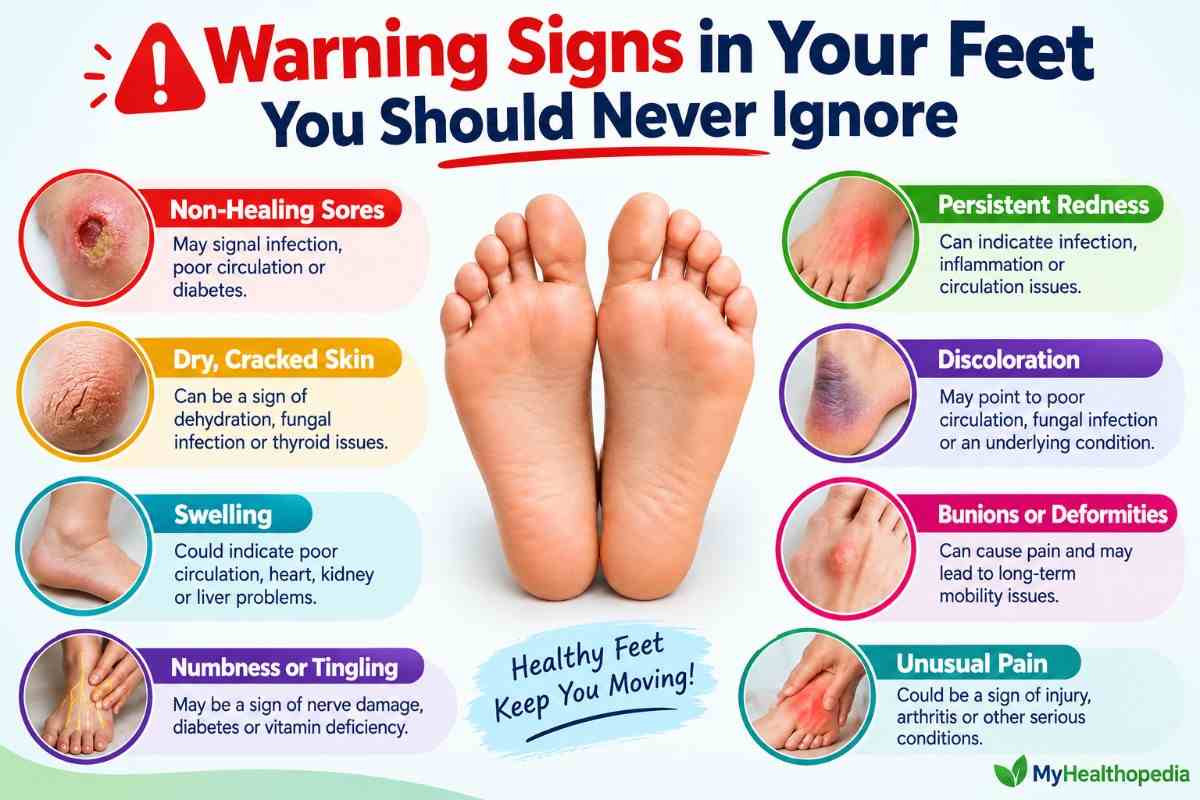
Your feet do much more than help you walk. They can sometimes reveal problems involving your nerves, blood circulation, blood sugar, infections, joints, skin, and overall health. A small blister or occasional soreness may be harmless, but persistent changes in your feet should not always be dismissed as normal aging, uncomfortable shoes, or overuse.
Some warning signs are especially important when they appear suddenly, keep getting worse, or occur along with swelling, color changes, numbness, an open wound, or difficulty walking.
20 Warning Signs in Your Feet You Should Never Ignore
Here are the foot changes you should pay attention to and when they may require medical evaluation.
1. Persistent Numbness or Loss of Feeling
Numbness, reduced sensation, or a feeling that your feet are “asleep” repeatedly can indicate a problem with the nerves.
Peripheral neuropathy can cause numbness, tingling, burning, pain, or weakness, and the feet are often among the first areas affected. Diabetes is one possible cause, although other conditions can also affect the nerves.
The concern is not only the numbness itself. Reduced sensation can make it difficult to notice cuts, blisters, burns, or pressure injuries.
Do not ignore: Persistent or progressively worsening numbness, especially if it affects both feet or interferes with walking.
2. Burning or Tingling Feet
A burning sensation, pins-and-needles feeling, or unusual sensitivity in the feet can be another sign of nerve irritation or damage.
Some people notice these sensations more strongly at night. Diabetes-related nerve damage is one possible explanation, but persistent burning feet can have several causes and should be evaluated rather than automatically attributed to poor circulation.
3. A Foot That Suddenly Changes Color
Pay attention if one or both feet become noticeably:
- Pale
- Blue or purple
- Very red
- Darker than usual
- Unusually blotchy
A significant change in foot color can sometimes be associated with circulation problems, inflammation, infection, injury, or other conditions.
The CDC specifically recommends medical evaluation for people with diabetes who develop changes in foot color or temperature.
A sudden color change, particularly when accompanied by severe pain, coldness, numbness, or weakness, deserves prompt medical attention.
4. Your Feet Feel Unusually Cold
Cold feet are common, especially in cold weather. However, feet that remain unusually cold or feel substantially colder than the other foot may warrant evaluation.
When unusual coldness occurs together with color changes, numbness, pain, or reduced pulses, it may indicate a circulation problem.
Do not assume persistent cold feet are simply a normal part of getting older.
5. Swelling That Does Not Go Away
Foot or ankle swelling can happen after standing for a long time, traveling, exercising, or experiencing an injury. But unexplained or persistent swelling should not automatically be ignored.
Especially concerning is sudden swelling in one foot or leg, particularly when it is painful, warm, red, or tender. Mayo Clinic advises prompt medical attention for unexplained painful swelling, particularly when it affects only one leg.
Swelling accompanied by shortness of breath, chest pain, fainting, or severe illness requires urgent medical assessment.
6. A Sore That Does Not Heal
A small cut, blister, or scrape should generally begin improving with appropriate care.
If a foot wound remains open, becomes larger, develops drainage, or does not begin healing, it should be evaluated.
This is particularly important for people with diabetes because nerve damage can reduce sensation while reduced blood flow can make wounds harder to heal.
Never ignore: An open sore, ulcer, bleeding wound, or wound that repeatedly reopens.
7. Redness, Warmth, and Increasing Pain
A foot that becomes increasingly red, warm, swollen, and painful may have an infection or significant inflammation.
The combination of warmth, swelling, redness, and pain is especially concerning when accompanied by fever or chills. A hot, swollen, painful foot with systemic symptoms a reason for urgent assessment.
People with diabetes should be particularly cautious about new redness, swelling, wounds, or infections.
8. Pus, Drainage, or a Bad Smell
An unpleasant smell or fluid coming from a wound is not something to simply cover with a bandage and forget about.
Pus, increasing drainage, foul odor, spreading redness, or worsening pain can indicate infection. Mayo Clinic lists bad smell, swelling, warmth, skin-color changes, and worsening foot sores among signs that require professional attention.
9. Cracked or Bleeding Skin
Dry feet are common, but deep cracks can create openings through which bacteria can enter.
Pay particular attention when cracks:
- Bleed
- Become painful
- Become red or swollen
- Keep returning
- Develop around the heel or between the toes
The CDC includes dry, cracked skin among foot changes that people with diabetes should discuss with a healthcare professional.
10. Sudden or Severe Foot Pain
Not every episode of foot pain is dangerous. Muscle strain, uncomfortable footwear, minor injuries, and overuse are common causes.
However, severe pain without an obvious explanation, rapidly worsening pain, or pain that makes it difficult to walk deserves medical attention.
Urgent evaluation is particularly important when severe pain occurs with swelling, redness, warmth, numbness, fever, or a noticeable change in the shape of the foot.
11. Your Foot Shape Starts Changing
A gradual or sudden change in the shape of your foot can be a warning sign.
For example, the toes may begin to curl differently, the arch may change, or the foot may appear swollen or deformed.
In people with diabetes and nerve damage, a condition called Charcot foot can cause the bones and joints of the foot to deteriorate. The foot may become warm, red, swollen, unstable, or deformed, sometimes without severe pain because sensation is reduced.
A new structural change should therefore be evaluated rather than treated as simply an aging-related change.
12. New Difficulty Walking
If walking suddenly becomes difficult because of pain, weakness, numbness, swelling, or instability, your feet may be signaling an underlying problem.
Difficulty walking can result from injuries and musculoskeletal problems, but it can also accompany nerve, circulation, or joint disorders.
If you cannot put weight on your foot, particularly after an injury or when severe pain is present, seek prompt medical care.
13. Hair Loss on Your Toes or Feet
Hair loss on the toes, feet, or lower legs can have several causes, including normal aging and hormonal changes.
However, new or noticeable hair loss accompanied by cold feet, skin-color changes, pain, or other circulation symptoms should be discussed with a healthcare professional.
The CDC lists loss of hair on the toes, feet, and lower legs among foot changes that warrant medical evaluation in people with diabetes.
14. Thick, Yellow, or Changing Toenails
Toenails can become thicker, discolored, brittle, or distorted because of fungal infections, repeated trauma, certain skin conditions, or other causes.
A thick yellow nail is not necessarily a sign of a serious systemic disease, but persistent nail changes should not be ignored, especially when accompanied by pain, swelling, drainage, or an open area around the nail.
The CDC specifically identifies thick, yellow toenails and fungal infections as foot problems that people with diabetes should have evaluated.
15. An Ingrown Toenail That Becomes Painful or Infected
An ingrown toenail can initially seem like a minor nuisance.
But increasing pain, redness, swelling, pus, or spreading inflammation can indicate infection.
People with diabetes or reduced circulation should be especially cautious because even relatively small foot injuries can become harder to heal.
16. Repeated Blisters or Sores in the Same Area
A blister that repeatedly develops in the same location may indicate pressure or friction from footwear, abnormal walking mechanics, or changes in the structure of the foot.
Repeated injuries should not simply be treated over and over without addressing the underlying cause.
This is especially important if you have reduced sensation because you may not notice an injury until it has become significant.
17. A Foot That Becomes Hot, Red, and Swollen Without a Clear Injury
If you did not twist, hit, or otherwise injure your foot but it suddenly becomes warm, red, and swollen, do not automatically assume it is simple inflammation.
Several conditions can cause these symptoms, including infection, gout, joint inflammation, or other problems. In people with diabetes and neuropathy, Charcot joint is another possibility.
A healthcare professional can determine the actual cause.
18. Loss of Ability to Feel Heat or Cold
Your feet should normally be able to sense temperature.
If you repeatedly cannot tell whether water is hot or cold, or you notice a significant reduction in temperature sensation, it may indicate nerve dysfunction.
This matters because reduced temperature sensation can make burns and other injuries easier to sustain without realizing it. The CDC lists loss of the ability to sense heat or cold as a warning sign requiring medical attention in people with diabetes.
19. A Foot Wound That Gets Bigger
A wound that is increasing in size rather than healing is a significant warning sign.
Mayo Clinic recommends contacting a healthcare professional for a foot sore that becomes larger, takes longer than expected to heal, or becomes deep enough that underlying tissue or bone can be seen.
Do not repeatedly self-treat a worsening wound without having it assessed.
20. Foot Problems Along With Other Symptoms
Sometimes the most important clue is not a single foot symptom but a combination of symptoms.
For example, seek medical advice when foot changes occur alongside:
- Unexplained weakness
- Significant numbness
- Fever or chills
- Shortness of breath
- Severe swelling
- New difficulty walking
- Persistent leg pain
- Slow-healing wounds
- Major color or temperature changes
The combination can help healthcare professionals determine whether the problem involves the nerves, circulation, infection, joints, or another underlying condition.
What Can These Foot Warning Signs Mean?
Foot symptoms have many possible causes, so one symptom does not automatically point to one disease.
Some possibilities include:
| Foot warning sign | Possible causes |
|---|---|
| Numbness or tingling | Nerve irritation, peripheral neuropathy, diabetes |
| Burning feet | Nerve problems, neuropathy, other medical conditions |
| Persistent swelling | Injury, inflammation, circulation problems, other conditions |
| Color changes | Circulation problems, inflammation, infection, injury |
| Slow-healing wound | Poor circulation, diabetes, infection, repeated pressure |
| Redness and warmth | Infection, inflammation, injury |
| Thick yellow toenails | Fungal infection, trauma, other nail conditions |
| Severe sudden pain | Injury, inflammation, infection, circulation problems |
| Foot deformity | Joint problems, injury, neuropathy-related conditions |
| Cold feet with color changes | Possible circulation problems |
These are possible explanations, not diagnoses. A healthcare professional may need to examine your feet, check circulation and nerve function, review your medical history, and order tests when appropriate.
Who Should Pay Extra Attention to Foot Changes?
Everyone should pay attention to unusual or persistent foot symptoms, but regular foot checks are particularly important for people with:
- Diabetes
- Peripheral neuropathy
- Circulation problems
- Previous foot ulcers
- Previous foot surgery or significant injury
- Reduced sensation in the feet
- Conditions that affect wound healing
- A history of recurrent foot infections
People with diabetes are advised to check their feet every day because nerve damage can reduce the ability to feel injuries, while circulation problems can make wounds harder to heal.
How to Check Your Feet at Home
A simple daily foot check can help you notice changes early.
Look at the:
- Tops and bottoms of your feet
- Heels
- Spaces between your toes
- Toenails
- Areas around corns and calluses
Look for cuts, blisters, redness, swelling, cracks, discoloration, nail changes, drainage, or unusual skin changes.
If you cannot easily see the bottom of your feet, use a mirror or ask someone you trust to help. The CDC recommends daily foot checks for people with diabetes.
Keep your feet clean and dry, wear properly fitting footwear, and avoid walking barefoot when there is a higher risk of injury.
When Should You Seek Medical Care?
You should arrange a medical evaluation for persistent numbness, burning, unexplained swelling, repeated sores, significant color changes, or wounds that are not healing.
Seek urgent medical attention if your foot becomes suddenly very painful, cold, pale or blue, significantly swollen, severely infected-looking, or if you cannot walk normally.
A foot problem does not always mean something serious. However, getting an unusual or persistent change checked early is often safer than waiting for it to become more complicated.
Final Takeaway
Your feet can provide important clues about your health. Persistent numbness, burning, swelling, color or temperature changes, unexplained pain, infected-looking skin, and wounds that do not heal should never be casually ignored.
Most importantly, do not wait for severe pain before paying attention. Some nerve problems can reduce sensation, meaning a serious foot injury may develop without causing much pain. Regular foot checks and early medical evaluation can help identify problems before they become more difficult to treat.
FAQ’s
When should I worry about foot pain?
You should seek medical advice when foot pain is severe, persistent, unexplained, worsening, or makes it difficult to walk.
Can your feet show signs of diabetes?
Yes, diabetes can cause numbness, tingling, burning, reduced sensation, slow-healing wounds, dry or cracked skin, and other foot changes.
Why are my feet numb or tingling?
Numbness and tingling can result from nerve irritation or damage, including peripheral neuropathy, diabetes, vitamin deficiencies, or other medical conditions.
Why are my feet suddenly swollen?
Foot swelling can occur because of injury, inflammation, prolonged standing, circulation problems, or other medical conditions. Sudden unexplained swelling, especially in one leg, should be medically evaluated.
Are cold feet a sign of poor circulation?
Cold feet can have many causes, but persistent coldness combined with pain, numbness, or color changes may indicate a circulation problem.
What does a change in foot color mean?
Pale, blue, purple, or unusually red feet can have several causes, including circulation problems, inflammation, infection, or injury and should be evaluated when persistent or sudden.
Why is my foot wound not healing?
A wound may heal slowly because of infection, repeated pressure, poor circulation, diabetes, or nerve damage and should be checked if it does not improve.
What does redness and warmth in the foot mean?
Redness, warmth, swelling, and increasing pain can indicate inflammation or infection and may require prompt medical evaluation.
Can foot problems be an early sign of nerve damage?
Yes. Burning, tingling, numbness, reduced temperature sensation, and weakness can occur when nerves affecting the feet become damaged.
When should a swollen foot be considered serious?
A swollen foot deserves prompt medical attention when swelling is sudden, severe, painful, accompanied by redness or warmth, or occurs with other concerning symptoms.
What does a non-healing sore on the foot mean?
A non-healing sore can be associated with infection, diabetes, reduced blood flow, nerve damage, or repeated pressure and should be evaluated by a healthcare professional.
Are thick yellow toenails a warning sign?
Thick or yellow toenails are commonly associated with fungal infections or repeated trauma, but persistent changes should be assessed, particularly in people with diabetes.
Can foot problems be related to poor blood circulation?
Yes. Circulation problems may cause symptoms such as cold feet, skin-color changes, pain, numbness, reduced hair growth, and wounds that heal slowly.
Why do my feet hurt every day?
Daily foot pain can be caused by uncomfortable footwear, overuse, injuries, arthritis, nerve problems, plantar fasciitis, or other underlying health conditions, so persistent pain should be evaluated.
What are signs of unhealthy feet?
Signs of unhealthy feet can include persistent pain, swelling, numbness, tingling, burning, color changes, cracked skin, infections, thick or discolored toenails, and wounds that do not heal.
What are signs of heart failure in your feet?
Heart failure can cause swelling in the feet, ankles, and lower legs because fluid may build up in the body, often along with symptoms such as shortness of breath, fatigue, or rapid weight gain.
What do feet look like with heart problems?
Feet affected by fluid retention related to heart problems may appear swollen or puffy around the ankles and feet, with swelling that may leave an indentation after pressing the skin.
Can swollen feet be a sign of heart problems?
Yes, persistent swelling in both feet or ankles can sometimes occur with heart failure, although kidney, liver, vein, medication, and other conditions can also cause swelling.
Sources / References:
Disclaimer:
This guide is for general educational purposes only and does not replace professional medical advice, diagnosis, or treatment. If you have a severe, sudden, or worsening foot problem, seek medical care promptly.
Also Read: