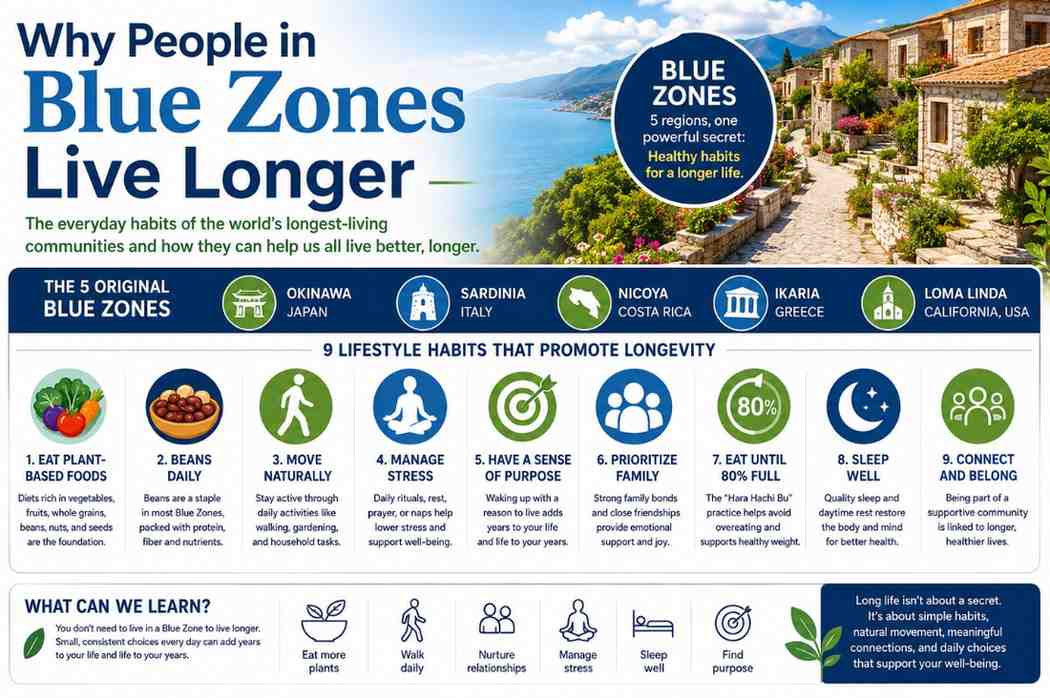
Have you ever wondered why some people live healthy, active lives well into their 90s and even past 100 years of age?
Around the world, researchers have identified a few unique regions where people consistently enjoy longer life expectancies and lower rates of chronic diseases. These areas are known as “Blue Zones.” Residents of these regions often remain physically active, mentally sharp, and socially connected far longer than people in many other parts of the world. Similar healthy lifestyle principles can also be found in topics like the Mediterranean Diet, Healthy Aging, and Anti-Inflammatory Foods.
The concept of Blue Zones gained worldwide attention after researchers studied communities with unusually high numbers of centenarians—people who live to 100 years or older. What they discovered was fascinating: longevity is not determined by a single factor. Instead, it results from a combination of healthy eating, daily movement, strong social relationships, purpose-driven living, and low stress levels.
In this guide, we’ll explore what Blue Zones are, where they are located, and the lifestyle habits that help people in these regions live longer, healthier lives.
What Are Blue Zones?
Blue Zones are regions of the world where people have significantly higher life expectancy rates and lower incidences of chronic illnesses such as heart disease, diabetes, obesity, and certain cancers.
The term “Blue Zones” was popularized by researcher and author Dan Buettner after collaborating with scientists, demographers, and public health experts to study communities known for exceptional longevity.
Researchers identified five major Blue Zones:
- Okinawa, Japan
- Sardinia, Italy
- Nicoya Peninsula, Costa Rica
- Ikaria, Greece
- Loma Linda, California, USA
Despite being separated by thousands of miles and different cultures, these communities share several lifestyle characteristics that appear to promote healthy aging and longevity.
The Five Original Blue Zones
1. Okinawa, Japan
Okinawa is famous for having one of the highest concentrations of centenarians in the world, especially women.
Key characteristics include:
- Plant-based diets rich in vegetables and sweet potatoes
- Strong social support groups known as “Moai”
- Regular physical activity throughout life
- Respect for elders and community involvement
- Lower calorie consumption compared to many Western populations
2. Sardinia, Italy
Located in the Mediterranean Sea, Sardinia has an unusually high number of male centenarians.
Common lifestyle habits include:
- Daily walking on hilly terrain
- Mediterranean-style eating patterns
- Strong family bonds
- Moderate wine consumption
- Active lifestyles into old age
3. Nicoya Peninsula, Costa Rica
The Nicoya region has one of the world’s lowest middle-age mortality rates.
Residents often:
- Eat bean-based diets
- Spend considerable time outdoors
- Maintain strong family relationships
- Have a clear sense of life purpose
- Stay physically active through work and daily routines
4. Ikaria, Greece
Often called the “island where people forget to die,” Ikaria is known for exceptionally low rates of dementia and chronic diseases.
Notable habits include:
- Mediterranean dietary patterns
- Afternoon naps
- Strong social networks
- Daily walking
- Low stress lifestyles
5. Loma Linda, California, USA
Unlike the other Blue Zones, Loma Linda is located in the United States.
Many residents belong to the Seventh-day Adventist community and typically:
- Follow plant-focused diets
- Avoid smoking and excessive alcohol
- Prioritize faith and spirituality
- Exercise regularly
- Maintain strong social connections
Related Articles:
- What Really Happens to Your Body as You Age?
- What Is Normal Body Temperature? Why It Changes & When to Worry
- Largest Organs in the Human Body: Largest to Smallest Ranked
Why Do People in Blue Zones Live Longer?
Researchers found that longevity is influenced by a collection of healthy habits rather than one magical food or supplement.
Let’s examine the major factors.
1. They Eat Mostly Plant-Based Foods
One of the strongest common factors across all Blue Zones is a diet centered around plant foods.
Typical foods include:
- Beans
- Lentils
- Vegetables
- Fruits
- Whole grains
- Nuts
- Seeds
Animal products are often consumed sparingly or in small portions.
Plant-rich diets provide:
- Fiber
- Antioxidants
- Vitamins
- Minerals
- Anti-inflammatory compounds
These nutrients may help reduce the risk of heart disease, obesity, diabetes, and certain cancers.
2. Beans Are a Dietary Staple
If there is one food shared among nearly all Blue Zones, it is beans.
Common varieties include:
- Black beans
- Chickpeas
- Lentils
- Soybeans
- Fava beans
Beans are packed with:
- Protein
- Fiber
- Iron
- Magnesium
- Folate
Research suggests that regular bean consumption is associated with improved heart health and lower mortality risk.
3. They Move Naturally Throughout the Day
People in Blue Zones rarely spend hours at a gym.
Instead, movement is naturally built into daily life.
Examples include:
- Gardening
- Walking
- Farming
- Housework
- Climbing hills
- Cycling
This consistent low-intensity activity helps maintain:
- Muscle strength
- Joint mobility
- Cardiovascular health
- Healthy body weight
Unlike sedentary lifestyles, natural movement keeps the body active throughout the day.
4. They Avoid Chronic Stress
Chronic stress contributes to:
- High blood pressure
- Heart disease
- Inflammation
- Poor sleep
- Weakened immunity
Blue Zone communities often have routines that reduce stress.
Examples include:
Okinawa
Daily remembrance of ancestors.
Ikaria
Afternoon naps and relaxed schedules.
Sardinia
Frequent social gatherings.
Loma Linda
Weekly Sabbath rest practices.
These habits may help lower stress hormone levels and support overall well-being.
5. They Have a Strong Sense of Purpose
Many Blue Zone residents wake up with a clear reason to start the day.
Researchers found that having a sense of purpose may contribute to longer life expectancy.
Purpose can come from:
- Family responsibilities
- Community involvement
- Faith
- Career contributions
- Personal passions
People who feel their lives have meaning often experience better mental and emotional health.
6. Strong Family Connections Matter
Family plays a central role in all Blue Zone communities.
Common characteristics include:
- Multiple generations living together
- Frequent family gatherings
- Caring for elderly relatives
- Emotional support systems
Research consistently shows that strong social relationships are linked to better health outcomes and lower mortality rates.
7. They Build Social Networks That Support Healthy Behaviors
People tend to adopt habits similar to those around them.
Blue Zone residents often belong to close-knit communities where healthy behaviors are the norm.
Benefits include:
- Emotional support
- Reduced loneliness
- Greater accountability
- Shared meals
- Increased physical activity
Positive social environments can significantly influence long-term health.
8. They Eat Until They Are Comfortably Full
In Okinawa, a traditional practice called “Hara Hachi Bu” encourages people to stop eating when they are about 80% full.
This habit may:
- Prevent overeating
- Support healthy weight management
- Improve metabolic health
- Reduce calorie intake over time
Mindful eating helps people develop a healthier relationship with food.
9. They Prioritize Sleep and Rest
Quality sleep is essential for:
- Brain function
- Immune health
- Hormone regulation
- Recovery
Many Blue Zone populations maintain regular sleep schedules and make time for rest during the day when needed.
Good sleep habits may contribute significantly to healthy aging.
10. They Maintain Healthy Body Weight Naturally
Rather than following restrictive diets, Blue Zone residents typically maintain healthy body weights through:
- Balanced eating
- Natural movement
- Portion control
- Low consumption of processed foods
This combination helps lower the risk of obesity-related diseases.
What Can We Learn from Blue Zones?
You don’t need to move to a Blue Zone to benefit from their lifestyle habits.
Small daily changes can make a significant difference.
Consider adopting these practices:
- Eat more vegetables and legumes
- Walk daily
- Spend time with family and friends
- Reduce highly processed foods
- Get adequate sleep
- Manage stress effectively
- Find meaningful activities
- Practice mindful eating
- Stay socially connected
- Make movement part of your routine
Longevity often results from consistent healthy choices rather than extreme interventions.
Foods Commonly Eaten in Blue Zones
Many Blue Zone diets include:
Vegetables
Leafy greens, squash, onions, carrots, and seasonal produce.
Legumes
Beans, lentils, peas, and chickpeas.
Whole Grains
Oats, barley, brown rice, and traditional grains.
Fruits
Berries, citrus fruits, apples, and tropical fruits.
Nuts
Almonds, walnuts, pistachios, and peanuts.
Olive Oil
A primary fat source in Mediterranean Blue Zones.
Herbal Teas
Frequently consumed instead of sugary beverages.
Common Myths About Blue Zones
Myth 1: It’s All About Genetics
Genetics influence longevity, but lifestyle and environment play major roles.
Research suggests that daily habits account for much of healthy aging.
Myth 2: You Must Follow a Strict Diet
Blue Zone eating patterns are flexible and culturally diverse.
The focus is on whole foods rather than rigid rules.
Myth 3: Exercise Must Be Intense
Most Blue Zone residents stay active through daily living rather than strenuous workouts.
Myth 4: Longevity Requires Expensive Supplements
Blue Zone lifestyles rely primarily on simple habits rather than costly products.
Potential Limitations of Blue Zone Research
While Blue Zone findings are valuable, some experts note certain limitations:
- Cultural differences can be difficult to replicate elsewhere.
- Lifestyle factors often overlap.
- Population data may vary over time.
- Longevity is influenced by both genetics and environment.
Even so, many Blue Zone habits align with broader scientific evidence supporting healthy aging.
Final Thoughts
The remarkable longevity seen in Blue Zones is not the result of a miracle diet, secret supplement, or advanced medical treatment. Instead, it reflects a lifestyle built around nutritious food, regular movement, strong relationships, purpose, and stress management.
The lessons from Blue Zones show that healthy aging is often shaped by everyday habits practiced consistently over many years. Whether you’re in your twenties or your seventies, adopting even a few of these principles may improve your quality of life and support long-term health.
FAQs
What is the lifespan of people in the Blue Zones?
People in Blue Zones often live into their 90s and have a much higher chance of reaching 100 years or older than the global average.
How many eggs do Blue Zone people eat?
Blue Zone residents typically eat 2–4 eggs per week, while focusing mainly on plant-based foods such as beans, vegetables, fruits, and whole grains.
Is genetics the main reason Blue Zone people live longer?
Genetics plays a role, but lifestyle and environmental factors appear to contribute significantly to longevity.
Can anyone follow a Blue Zone lifestyle?
Yes. Many Blue Zone habits, such as eating more plants, walking daily, and maintaining social connections, can be adopted almost anywhere.
Do Blue Zone residents exercise regularly?
They stay active through daily life activities like walking, gardening, farming, and household tasks rather than structured gym workouts.
What is the Blue Zone diet?
The Blue Zone diet emphasizes whole plant foods, legumes, vegetables, fruits, whole grains, nuts, and limited amounts of animal products.
Which Blue Zone has the most centenarians?
Okinawa, Japan, and Sardinia, Italy, are particularly known for high concentrations of centenarians.
Which country has the most Blue Zones?
Japan, Italy, Greece, Costa Rica, and the United States each contain one of the five original Blue Zones identified by researchers.
What is the secret of Blue Zone longevity?
There is no single secret. Longevity appears to result from a combination of healthy eating, regular physical activity, strong social connections, stress management, and a sense of purpose.
Do Blue Zone people follow a specific diet?
Not exactly. Their diets vary by region, but most are rich in vegetables, beans, fruits, whole grains, nuts, and minimally processed foods.
What do Blue Zone people eat for breakfast?
Common breakfasts include oatmeal, beans, fruits, whole grains, sweet potatoes, and other plant-based foods rather than heavily processed meals.
Do people in Blue Zones eat meat?
Yes, but usually in small amounts and less frequently than in many Western diets. Plant foods make up the majority of their meals.
What is the most common food eaten in Blue Zones?
Beans are considered one of the most commonly consumed foods across Blue Zone communities.
Do Blue Zone residents drink alcohol?
Some Blue Zone populations consume alcohol moderately, particularly wine in Sardinia and Ikaria, while others consume little or none.
How much exercise do Blue Zone people get?
Most do not follow formal exercise programs. Instead, they stay active through walking, gardening, farming, housework, and other daily activities.
What is “Hara Hachi Bu”?
“Hara Hachi Bu” is an Okinawan practice of eating until about 80% full, which may help prevent overeating and support healthy weight management.
How important are social relationships in Blue Zones?
Very important. Strong family ties, close friendships, and community involvement are common features of all Blue Zone regions.
Do Blue Zone people take supplements?
Most rely on nutrient-rich whole foods rather than supplements as the foundation of their health.
Can a Blue Zone lifestyle help prevent disease?
Research suggests that many Blue Zone habits may lower the risk of heart disease, type 2 diabetes, obesity, and other chronic illnesses.
Can I create a Blue Zone lifestyle at home?
Yes. Eating more plant-based foods, walking daily, managing stress, sleeping well, and maintaining strong social connections are practical ways to adopt Blue Zone principles.
Are Blue Zones scientifically proven?
Blue Zone research is based on demographic studies and observations. While some findings continue to be debated, many of the lifestyle habits identified are supported by broader health and longevity research.
Which Blue Zone has the longest life expectancy?
Okinawa (Japan) and Sardinia (Italy) are among the most famous Blue Zones for exceptional longevity and high concentrations of centenarians.
Sources / References:
- Blue Zones Project
- National Institute on Aging
- World Health Organization (WHO)
- Harvard T.H. Chan School of Public Health
- National Center for Biotechnology Information (NCBI)
- American Heart Association
- Mayo Clinic
- Centers for Disease Control and Prevention (CDC)
Also Read:
- How Long Can You Live Without Water? Survival Limits & Risks
- How Long Can You Live Without Food? Survival Limits & Risks
- Why Do You Feel Better After Crying? Science & Psychology Explained
- 20 Proven Ways to Live Longer and Healthier Life
About the Author:
Written by: Kirti Solanki (Health Content Researcher)
Kirti Solanki is a health and wellness content researcher who specializes in creating evidence-based, easy-to-understand articles on nutrition, healthy living, pregnancy, parenting, and preventive healthcare. Her content focuses on translating scientific research into practical guidance that readers can apply in everyday life.
Disclaimer:
This guide is for educational and informational purposes only and should not be considered medical advice. Always consult a qualified healthcare professional before making changes to your diet, lifestyle, or health routine.