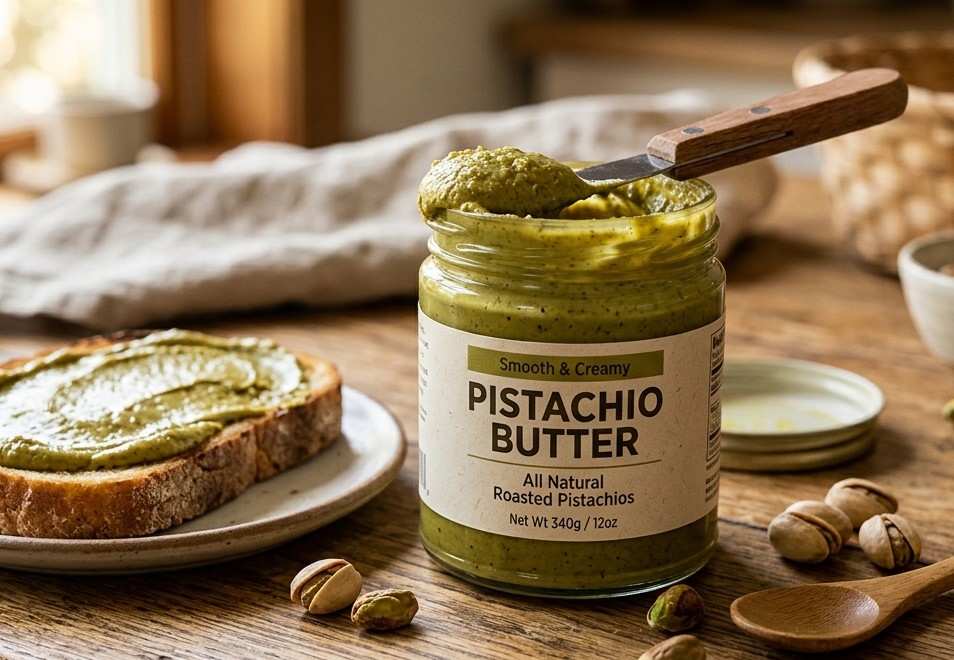
Pistachio butter is quickly becoming one of the most popular nut butters among health-conscious people. Made by blending roasted or raw pistachios into a smooth, creamy spread, it offers a naturally rich flavor, vibrant green color, and an impressive nutritional profile. Unlike many commercial spreads that contain added sugars and unhealthy oils, pure pistachio butter delivers healthy fats, plant-based protein, fiber, vitamins, minerals, and powerful antioxidants in every spoonful.
Pistachios have long been recognized as one of the healthiest tree nuts. Turning them into butter makes them convenient to enjoy on toast, in smoothies, oatmeal, yogurt, desserts, or simply by the spoonful. Because pistachio butter is minimally processed, it retains most of the nutrients found in whole pistachios while providing a delicious alternative to peanut or almond butter.
In this guide, you’ll learn what pistachio butter is, its nutritional value, its proven health benefits, and potential side effects so you can decide whether it deserves a place in your healthy eating routine.
What is Pistachio Butter?
Pistachio butter is a creamy spread made primarily from finely ground pistachios. Depending on the recipe, it may contain only pistachios or small amounts of salt and natural oil to improve texture. High-quality pistachio butter contains no added sugar, preservatives, artificial flavors, or hydrogenated oils.
Its naturally sweet, buttery, and slightly earthy taste makes it versatile for both sweet and savory recipes. Compared to peanut butter, pistachio butter contains more vitamin B6, lutein, zeaxanthin, potassium, and antioxidants while offering a unique flavor profile.
The butter can be made from roasted pistachios for a richer taste or raw pistachios for a milder, fresher flavor. Because pistachios are naturally rich in healthy monounsaturated and polyunsaturated fats, they blend into a smooth spread without requiring much added oil.
Nutrition Facts of Pistachio Butter
| Nutrient | Amount (Per 2 tablespoons (32 g) |
|---|---|
| Calories | 180–200 kcal |
| Protein | 6–7 g |
| Total Fat | 15–17 g |
| Saturated Fat | 1.5–2 g |
| Monounsaturated Fat | 8–9 g |
| Polyunsaturated Fat | 4–5 g |
| Carbohydrates | 7–8 g |
| Dietary Fiber | 3–4 g |
| Natural Sugars | 2–3 g |
| Calcium | 35–40 mg |
| Iron | 1.1–1.4 mg |
| Magnesium | 35–40 mg |
| Potassium | 250–300 mg |
| Phosphorus | 120–140 mg |
| Vitamin B6 | 0.4 mg |
| Vitamin E | 1–2 mg |
| Copper | 0.3–0.4 mg |
| Manganese | 0.3–0.5 mg |
Values are approximate and may vary depending on the brand and preparation method.
20 Proven Health Benefits of Pistachio Butter
- Supports Heart Health: The healthy unsaturated fats in pistachio butter may help reduce LDL cholesterol and support overall cardiovascular health when consumed as part of a balanced diet.
- Rich in Plant Protein: Its plant-based protein helps build and repair muscles while contributing to greater fullness after meals.
- High in Healthy Fats: Monounsaturated and polyunsaturated fats provide lasting energy and support healthy cell function.
- Excellent Source of Antioxidants: Pistachio butter contains antioxidants like lutein, zeaxanthin, and polyphenols that help protect cells from oxidative stress.
- Promotes Eye Health: The lutein and zeaxanthin naturally present in pistachios may help maintain healthy vision and protect the eyes from age-related damage.
- Supports Healthy Cholesterol Levels: Regular consumption of pistachios has been associated with improved cholesterol balance by lowering LDL and maintaining HDL cholesterol.
- Helps Manage Blood Sugar: The combination of healthy fats, protein, and fiber slows carbohydrate digestion, helping reduce rapid blood sugar spikes.
- Improves Digestive Health: Dietary fiber supports healthy digestion and nourishes beneficial gut bacteria.
- May Aid Weight Management: Protein, fiber, and healthy fats increase satiety, helping reduce unnecessary snacking and overeating.
- Supports Brain Function: Vitamin B6 plays an important role in neurotransmitter production, supporting normal brain function and cognitive health.
- Boosts Energy Production: B vitamins, healthy fats, and minerals help convert food into usable energy throughout the day.
- Strengthens the Immune System: Vitamins, minerals, and antioxidants contribute to a healthy immune response.
- Supports Healthy Skin: Vitamin E and healthy fats help protect skin cells from oxidative damage and maintain skin hydration.
- Promotes Healthy Hair: Nutrients such as protein, copper, and healthy fats contribute to healthy hair growth and strength.
- May Reduce Inflammation: Antioxidants and healthy fats may help reduce low-grade inflammation associated with chronic diseases.
- Supports Bone Health: Minerals including phosphorus, calcium, and magnesium contribute to maintaining strong bones.
- Helps Maintain Healthy Blood Pressure: Potassium helps balance sodium levels and supports healthy blood pressure in many individuals.
- Supports Red Blood Cell Formation: Vitamin B6 and copper assist in the production of healthy red blood cells.
- May Improve Athletic Recovery: Protein and minerals help support muscle recovery after exercise and physical activity.
- Provides Long-Lasting Fullness: The balanced combination of fats, protein, and fiber makes pistachio butter a satisfying snack that helps control hunger between meals.
Related Articles:
- Pistachio Oil: 20 Benefits, Side Effects, Uses & How to Make It
- Tahini: 20 Benefits, Nutrition, Side Effects, Uses & How to Make It
- Brazil Nut Butter: 20 Benefits, Nutrition, Side Effects & How to Make It
10 Side Effects of Pistachio Butter
- Nut Allergies: People with pistachio or tree nut allergies should completely avoid pistachio butter because it may trigger severe allergic reactions.
- High Calorie Content: Eating large amounts regularly may contribute to excess calorie intake and weight gain.
- Digestive Discomfort: Excessive consumption may cause bloating, gas, or stomach discomfort due to its fiber and fat content.
- Added Sugar Concerns: Some commercial brands contain added sugar, reducing the overall nutritional quality.
- High Sodium Intake: Salted varieties may increase daily sodium intake, especially for individuals with high blood pressure.
- Possible Medication Interactions: Its vitamin and mineral content is generally safe, but people with chronic medical conditions should consult a healthcare professional regarding dietary restrictions.
- May Trigger Migraines in Sensitive Individuals: Certain people report headaches after eating nuts, although this varies from person to person.
- Risk of Overeating: Its rich taste and creamy texture make it easy to consume large portions without realizing the calorie intake.
- Potential Cross-Contamination: Some products are processed in facilities that also handle peanuts or other allergens, increasing allergy risks.
- Storage-Related Spoilage: Improper storage may cause the healthy oils to become rancid, affecting both taste and nutritional quality.
How to Eat Pistachio Butter?
Pistachio butter is incredibly versatile and can be enjoyed in many ways. Whether you’re looking for a quick breakfast, a healthy snack, or a nutritious ingredient for cooking, it can easily fit into your daily diet.
- Spread it on whole-grain toast, sourdough, or multigrain bread.
- Stir it into oatmeal or overnight oats for added creaminess.
- Mix it into plain Greek yogurt with fresh berries.
- Blend it into smoothies for extra protein and healthy fats.
- Use it as a dip for apple slices, bananas, pears, or strawberries.
- Spread it on rice cakes or whole-grain crackers.
- Add it to homemade energy balls or protein bars.
- Drizzle it over pancakes, waffles, or whole-grain pancakes.
- Use it as a filling for dates.
- Enjoy one spoonful as a satisfying snack.
Tips for Consuming Pistachio Butter
- Choose 100% pistachio butter with no added sugar or hydrogenated oils.
- Read the ingredient label before purchasing.
- Stir natural pistachio butter before each use if oil separates.
- Pair it with fruits or whole grains for a balanced snack.
- Practice portion control because it is calorie-dense.
- Refrigerate after opening if recommended by the manufacturer.
- Introduce it gradually if you are increasing dietary fiber.
- Avoid eating it if you have a tree nut allergy.
- Combine it with protein-rich foods for longer-lasting fullness.
- Use clean, dry utensils to prevent contamination.
How to Use Pistachio Butter
Pistachio butter works well in both sweet and savory recipes.
- Spread on toast or bagels.
- Mix into smoothies.
- Stir into oatmeal or porridge.
- Add to yogurt bowls.
- Use as a fruit dip.
- Blend into salad dressings.
- Mix into homemade sauces.
- Add to baked goods.
- Swirl into ice cream.
- Use in homemade protein shakes.
- Spread inside sandwiches.
- Drizzle over pancakes or waffles.
- Mix into chia pudding.
- Add to homemade granola.
- Use as a topping for roasted sweet potatoes.
Other Uses of Pistachio Butter
- Healthy Dessert Ingredient: Adds creaminess and natural flavor to desserts without relying on excessive sugar.
- Homemade Frosting: Can be blended into cream cheese or yogurt-based frostings for cakes and cupcakes.
- Energy Ball Base: Works as a binding ingredient in homemade energy bites.
- Protein Snack Spread: Makes a nutritious topping for crackers and whole-grain bread.
- Smoothie Enhancer: Increases creaminess and nutritional value in smoothies.
- Breakfast Booster: Adds protein and healthy fats to breakfast bowls.
- Homemade Granola Mix: Can be mixed with oats and seeds before baking.
- Nutty Sauce Base: Creates rich sauces for grain bowls and roasted vegetables.
- Healthy Baking Ingredient: Replaces butter or oil in some baking recipes.
- Gift-Worthy Homemade Spread: Homemade pistachio butter can be packaged as a thoughtful edible gift.
How to Make Pistachio Butter?
Ingredients:
- 2 cups shelled unsalted pistachios
- ½ teaspoon sea salt (optional)
- 1–2 teaspoons neutral oil (optional, for smoother consistency)
Instructions:
- Roast the pistachios at 325°F (160°C) for 8–10 minutes (optional but enhances flavor).
- Allow them to cool slightly.
- Add the pistachios to a high-powered food processor.
- Blend continuously, scraping down the sides as needed.
- The nuts will first become crumbly, then form a thick paste, and finally turn into a smooth butter.
- Add salt if desired.
- If needed, add a small amount of neutral oil for a creamier texture.
- Blend until silky smooth.
- Transfer to a clean, airtight glass jar.
- Store according to the storage recommendations below.
How Much Pistachio Butter Can You Eat in a Day?
For most healthy adults, 1–2 tablespoons (16–32 grams) per day is considered a reasonable serving as part of a balanced diet. This amount provides healthy fats, protein, fiber, vitamins, and minerals without adding excessive calories.
People with higher energy needs, such as athletes, may consume slightly more under the guidance of a registered dietitian or healthcare provider. Individuals trying to lose weight should account for pistachio butter’s calorie content within their daily intake.
| Age Group | Recommended Amount |
|---|---|
| Children (4–8 years) | 1 teaspoon to 1 tablespoon |
| Older Children | 1 tablespoon |
| Teenagers | 1–2 tablespoons |
| Healthy Adults | 1–2 tablespoons |
| Active Individuals | Up to 2–3 tablespoons if calorie needs are higher |
| Older Adults | 1–2 tablespoons |
Serving sizes vary depending on overall diet, activity level, and individual nutritional needs.
Best Time to Eat Pistachio Butter
Pistachio butter can be enjoyed at any time of day.
- Breakfast with whole-grain toast or oatmeal.
- Mid-morning snack for sustained energy.
- Before exercise as part of a balanced snack.
- After workouts with fruit or yogurt to support recovery.
- Afternoon snack to help manage hunger.
- Evening snack in moderate portions if it fits your daily calorie needs.
Who Should Eat Pistachio Butter?
- Fitness Enthusiasts: Its protein and healthy fats support muscle recovery and sustained energy.
- Vegetarians and Vegans: It provides plant-based protein and beneficial nutrients.
- Students: Healthy fats and vitamin B6 support normal brain function.
- Working Professionals: Makes a convenient and filling snack during busy days.
- Older Adults: Offers healthy fats, protein, and minerals that support overall nutrition.
- People Following Heart-Healthy Diets: Unsaturated fats may support cardiovascular health when replacing saturated fats.
- Individuals Seeking Healthy Weight Gain: Adds nutrient-dense calories to meals and snacks.
- People Looking for Healthy Snacks: Helps promote fullness between meals.
Who Should Not Eat Pistachio Butter?
- People with Tree Nut Allergies: Should avoid pistachio butter completely due to the risk of severe allergic reactions.
- Individuals with Severe Food Allergies: Should check labels carefully for cross-contamination warnings.
- People Following Strict Low-Fat Diets: Should consume only if permitted by their healthcare provider.
- Individuals on Sodium-Restricted Diets: Should choose unsalted varieties.
- People Sensitive to High-Calorie Foods: Should monitor portion sizes carefully.
- Infants: Should only be introduced according to pediatric feeding recommendations to reduce choking and allergy risks.
- Individuals with Digestive Sensitivities: May need to limit intake if high-fat foods cause discomfort.
How to Store Pistachio Butter?
- Use an Airtight Container: Store it in a tightly sealed glass jar to maintain freshness.
- Refrigerate After Opening: Refrigeration helps preserve natural oils and extend shelf life.
- Keep Away from Heat: Avoid storing near ovens or direct sunlight.
- Use Clean Utensils: Always use a dry, clean spoon to prevent contamination.
- Stir Before Use: Natural oil separation is normal; stir well before serving.
- Check for Spoilage: Discard if it develops an off smell, unusual taste, or mold.
- Label Homemade Batches: Note the preparation date to help track freshness.
Precautions and Interactions
- Tree Nut Allergy: Do not consume if you are allergic to pistachios or other tree nuts.
- Watch Portion Sizes: Excessive intake can contribute to high calorie consumption.
- Choose Unsweetened Products: Avoid varieties with added sugars and unnecessary additives.
- Select Low-Sodium Options: Unsalted pistachio butter is generally the healthier choice.
- Consult Your Healthcare Provider: If you have kidney disease, heart disease, or other chronic conditions requiring dietary modifications, seek personalized advice.
- Monitor Blood Sugar: Although generally low in carbohydrates, people with diabetes should include it within their meal plan.
- Check Ingredient Labels: Some products contain additional oils, sweeteners, or preservatives.
- Store Properly: Proper storage helps prevent rancidity and preserves nutritional quality.
FAQ’s
Can I eat pistachio butter every day?
Yes, you can eat pistachio butter daily in moderation. A serving of 1–2 tablespoons provides healthy fats, protein, fiber, vitamins, and minerals as part of a balanced diet.
What is pistachio butter good for?
Pistachio butter is good for supporting heart health, providing plant-based protein, promoting fullness, supplying antioxidants, supporting eye and brain health, and adding healthy fats to your diet.
Is pistachio butter healthier than regular butter?
Yes. Pistachio butter is generally considered healthier than regular butter because it contains mostly unsaturated fats, plant protein, fiber, vitamins, minerals, and antioxidants, whereas regular butter is high in saturated fat and contains little or no fiber.
Why is pistachio butter so expensive?
Pistachio butter is more expensive because pistachios cost more to grow and harvest than many other nuts. It also takes a large quantity of pistachios to produce a single jar of butter, increasing production costs.
Where can I buy pistachio butter?
You can buy pistachio butter from supermarkets, health food stores, specialty grocery stores, organic food retailers, and online marketplaces. Look for brands made with 100% pistachios and no added sugar or hydrogenated oils for the healthiest option.
Is pistachio butter healthy?
Yes, pure pistachio butter is rich in healthy fats, plant-based protein, fiber, vitamins, minerals, and antioxidants, making it a nutritious addition to a balanced diet.
What does pistachio butter taste like?
Pistachio butter has a naturally sweet, nutty, buttery flavor with a rich and creamy texture.
Is pistachio butter better than peanut butter?
Both are nutritious, but pistachio butter generally contains more vitamin B6, lutein, zeaxanthin, and antioxidants, while peanut butter is usually higher in protein and more affordable.
Can I eat pistachio butter every day?
Yes, most healthy adults can enjoy 1–2 tablespoons of pistachio butter daily as part of a balanced diet.
Is pistachio butter good for weight loss?
It can support weight management because its protein, healthy fats, and fiber help keep you feeling full. However, portion control is important due to its calorie content.
Does pistachio butter contain protein?
Yes. A 2-tablespoon serving typically provides around 6–7 grams of plant-based protein.
Is pistachio butter keto-friendly?
Yes. Unsweetened pistachio paste is relatively low in carbohydrates and can fit into many ketogenic or low-carb diets when eaten in moderation.
Can people with diabetes eat pistachio butter?
Yes, in moderation. Its healthy fats, protein, and fiber may help reduce rapid blood sugar spikes when included in a balanced meal plan.
Does pistachio butter need to be refrigerated?
Natural pistachio butter is best stored in the refrigerator after opening to help maintain freshness and prevent the oils from becoming rancid.
Is pistachio butter gluten-free?
Pure pistachio butter made only from pistachios is naturally gluten-free. Always check the label for added ingredients or cross-contamination warnings.
Can children eat pistachio butter?
Yes, children without tree nut allergies can enjoy pistachio butter in age-appropriate portions. Introduce it according to your pediatrician’s guidance.
Is pistachio butter safe during pregnancy?
Generally, yes. It provides healthy fats, protein, and important nutrients. Pregnant women with nut allergies or specific dietary concerns should consult their healthcare provider.
How long does pistachio butter last?
When stored in an airtight container in the refrigerator, homemade pistachio butter typically stays fresh for about 2–4 weeks.
Can pistachio butter go bad?
Yes. If it develops a sour smell, mold, unusual taste, or the oils become rancid, it should be discarded.
Sources / References:
- U.S. Department of Agriculture (USDA) FoodData Central
- American Heart Association
- Academy of Nutrition and Dietetics
- Harvard T.H. Chan School of Public Health – The Nutrition Source
- International Nut & Dried Fruit Council (INC)
- National Institutes of Health (NIH) Office of Dietary Supplements
- U.S. Food and Drug Administration (FDA)
About the Author:
Written by: Kirti Solanki (Health Content Researcher)
Kirti Solanki is a Health Content Researcher who creates evidence-based nutrition and wellness content using trusted scientific and medical sources to provide accurate, practical, and reader-friendly health information.
Disclaimer:
This guide is for informational purposes only and is not a substitute for professional medical advice, diagnosis, or treatment. Always consult a qualified healthcare provider before making changes to your diet or health routine.
Also Read: