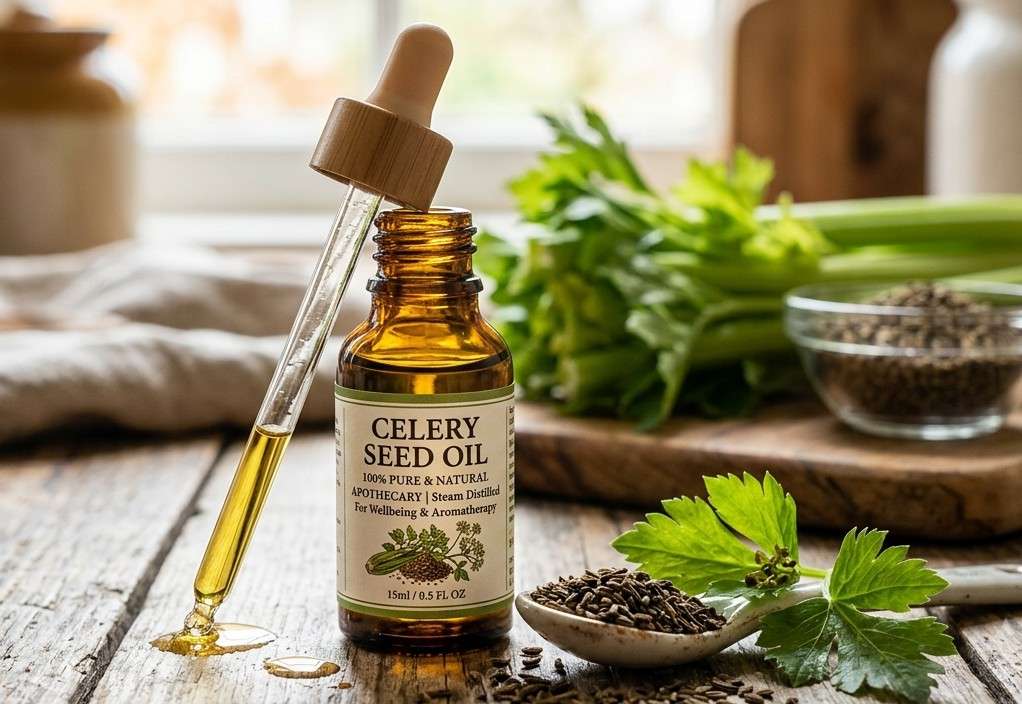
Celery seed oil is a natural essential oil extracted from the tiny seeds of the celery plant (Apium graveolens). While celery stalks are commonly enjoyed as a crunchy vegetable, its seeds have been valued in traditional herbal medicine for centuries due to their unique aroma and potential health-supporting properties. Today, celery seed oil is used in aromatherapy, massage blends, skincare products, and herbal wellness routines because of its concentrated plant compounds.
The oil contains naturally occurring antioxidants, flavonoids, terpenes, and volatile compounds such as limonene, selinene, and phthalides that contribute to its characteristic fragrance and therapeutic potential. Although scientific research on celery seed oil is still growing, preliminary studies and traditional use suggest it may support healthy digestion, promote relaxation, help maintain joint comfort, and contribute to overall wellness when used appropriately.
In this guide, you’ll learn what celery seed oil is, its nutritional profile, potential health benefits, possible side effects, and important safety considerations.
What is Celery Seed Oil?
Celery seed oil is a highly concentrated essential oil obtained through steam distillation of the dried seeds of the celery plant (Apium graveolens). Unlike celery seed extract, which is often used in dietary supplements, celery seed oil is primarily used externally in aromatherapy and skincare or in very small amounts for flavoring under professional guidance.
The oil has a warm, earthy, spicy, slightly sweet aroma with herbal undertones. Its distinctive fragrance makes it a popular ingredient in perfumes, soaps, massage oils, and aromatherapy blends.
Celery seed oil contains numerous naturally occurring plant compounds, including:
- Limonene
- Sedanolide
- Beta-selinene
- Alpha-selinene
- Pinene
- Flavonoids
- Natural antioxidants
- Volatile oils
These compounds are believed to contribute to many of the oil’s traditional wellness applications.
Components of Celery Seed Oil
| Nutrient/Compound | Amount |
|---|---|
| Calories | Negligible |
| Protein | 0 g |
| Carbohydrates | 0 g |
| Fat | Trace |
| Dietary Fiber | 0 g |
| Vitamin C | Trace |
| Calcium | Trace |
| Potassium | Trace |
| Magnesium | Trace |
| Limonene | Naturally present |
| Alpha-Selinene | Naturally present |
| Beta-Selinene | Naturally present |
| Sedanolide | Naturally present |
| Pinene | Naturally present |
| Flavonoids | Present |
| Natural Antioxidants | Present |
| Volatile Plant Compounds | High |
Note: The exact composition varies depending on the extraction method, growing conditions, and manufacturer.
20 Science-Backed Benefits of Celery Seed Oil
- Rich in Natural Antioxidants: Celery seed oil contains antioxidant compounds that may help protect cells from oxidative stress caused by free radicals.
- Supports Healthy Digestion: Traditionally, celery seed oil has been used to promote comfortable digestion and reduce occasional digestive discomfort.
- May Help Reduce Inflammation: Its naturally occurring plant compounds may support a healthy inflammatory response as part of an overall healthy lifestyle.
- Promotes Joint Comfort: Many people use diluted celery seed oil during massage to help soothe tired muscles and support joint mobility.
- Supports Urinary Health: Traditional herbal practices have long associated celery seed preparations with healthy urinary function.
- May Encourage Relaxation: The calming herbal aroma may help reduce everyday stress when used in aromatherapy.
- Supports Healthy Blood Circulation: Massage with diluted celery seed oil may promote temporary improvements in local circulation.
- Helps Freshen the Air: Its warm herbal scent works well in diffusers to create a clean and refreshing indoor environment.
- Supports Skin Health: When properly diluted, celery seed oil may help maintain healthy-looking skin due to its antioxidant properties.
- May Help Balance Oily Skin: Some natural skincare formulations include celery seed oil to help reduce excess oil production.
- Provides Aromatherapy Benefits: The earthy fragrance can help create a peaceful atmosphere during meditation or relaxation.
- Supports Muscle Recovery: Diluted celery seed oil is commonly added to massage oils for post-exercise muscle comfort.
- May Help Ease Minor Muscle Tension: Gentle massage with diluted oil may temporarily relieve muscle tightness.
- Contains Beneficial Plant Compounds: Natural terpenes and flavonoids contribute to the oil’s traditional wellness applications.
- May Support Respiratory Comfort: The refreshing aroma may help create a feeling of clearer breathing during steam inhalation or diffusion (avoid direct inhalation of concentrated oil).
- Natural Insect Repellent Properties: Some of its aromatic compounds may help repel certain insects naturally.
- Supports Overall Wellness: Regular use in aromatherapy may contribute to a relaxing self-care routine.
- May Help Reduce Everyday Fatigue: The stimulating herbal scent may promote mental alertness and improve mood.
- Useful in Massage Therapy: It blends well with carrier oils for relaxing massage sessions.
- Versatile Natural Ingredient: Celery seed oil is widely used in cosmetics, soaps, perfumes, massage oils, and aromatherapy products.
10 Side Effects of Celery Seed Oil
- Skin Irritation: Applying undiluted celery seed oil directly to the skin may cause redness, burning, or irritation.
- Allergic Reactions: Individuals allergic to celery or related plants may develop itching, swelling, or rash after exposure.
- Photosensitivity: Celery seed oil may increase skin sensitivity to sunlight, making sunburn more likely after topical use.
- Digestive Upset: Excessive oral consumption may lead to nausea, stomach discomfort, or diarrhea.
- May Lower Blood Pressure: Celery seed oil may contribute to reduced blood pressure, which could be problematic for individuals already taking blood pressure medications.
- Possible Drug Interactions: The oil may interact with diuretics, anticoagulants, or certain prescription medications.
- Not Recommended During Pregnancy: High concentrations of celery seed oil may stimulate uterine activity and should generally be avoided during pregnancy unless advised by a healthcare professional.
- May Affect Kidney Conditions: People with kidney disorders should consult a healthcare provider before using celery seed oil supplements.
- Headache or Dizziness: Strong aromas may occasionally trigger headaches or dizziness in sensitive individuals.
- Risk of Toxicity if Overused: Essential oils are highly concentrated, and excessive internal or external use may cause harmful effects.
How to Use Celery Seed Oil?
Celery seed oil is a versatile essential oil that can be used in several ways depending on your needs. Because it is highly concentrated, it should almost always be diluted with a carrier oil before applying it to the skin and should only be taken internally if the product is labeled food-grade and recommended by a qualified healthcare professional. Common ways to use celery seed oil include:
- Aromatherapy: Add 2–4 drops to a diffuser to enjoy its warm, earthy aroma.
- Massage Oil: Mix 2–3 drops with one tablespoon of carrier oil such as coconut, jojoba, or sweet almond oil.
- Bath Oil: Blend a few drops with a carrier oil before adding it to warm bath water.
- Skin Care: Dilute properly before applying to small areas of the skin.
- Homemade Body Oils: Add a few drops to DIY massage oils or body lotions.
- Natural Home Fragrance: Use it in room sprays or diffuser blends with other essential oils.
Other Uses of Celery Seed Oil
Besides its wellness applications, celery seed oil has several practical uses around the home.
- Added to natural perfumes for its spicy herbal scent.
- Used in handcrafted soaps and candles.
- Included in massage therapy blends.
- Added to skincare products designed for oily skin.
- Used in homemade air fresheners.
- Blended with other essential oils for aromatherapy.
- Used in natural cleaning products for fragrance.
- Included in herbal wellness routines.
- Used in spa treatments.
- Occasionally used as a natural insect repellent in diluted formulations.
Tips for Consuming Celery Seed Oil
Note: Internal use of essential oils should only be considered if the product is specifically labeled as food-grade and after consulting a qualified healthcare professional.
- Always Dilute: Never consume concentrated celery seed oil without proper dilution and professional guidance.
- Choose Food-Grade Oil: Only use products specifically labeled as safe for internal use.
- Start Small: Begin with the lowest recommended amount to monitor your body’s response.
- Follow Manufacturer Instructions: Always read and follow the dosage instructions provided by the manufacturer.
- Stay Hydrated: Drink enough water throughout the day if using celery seed supplements or food-grade oil.
- Avoid Long-Term Self-Medication: Do not use internally for extended periods without medical advice.
- Check for Allergies: Stop using immediately if you experience allergic symptoms.
- Do Not Replace Medical Treatment: Use celery seed oil as a complementary wellness product, not as a substitute for prescribed medications.
- Store Properly: Keep the bottle tightly sealed to maintain quality.
- Consult Your Healthcare Provider: Seek professional advice if you have a chronic health condition or take prescription medications.
How to Take Celery Seed Oil?
If recommended by a healthcare professional and using a food-grade product, celery seed oil may be taken in very small amounts according to the manufacturer’s instructions. However, topical application and aromatherapy remain the most common and safest methods of use for most people.
For topical use:
- Mix 2–3 drops with one tablespoon of carrier oil.
- Perform a patch test before applying to larger areas.
- Massage gently into the desired area.
For aromatherapy:
- Add 2–4 drops to a diffuser.
- Diffuse for 30–60 minutes at a time in a well-ventilated room.
How to Make Celery Seed Oil at Home?
While true celery seed essential oil requires steam distillation equipment, you can prepare a simple infused oil at home.
Ingredients:
- ½ cup dried celery seeds
- 1 cup olive oil, jojoba oil, or sweet almond oil
- Clean glass jar
- Fine strainer or cheesecloth
Instructions:
- Lightly crush the celery seeds.
- Place them in a clean glass jar.
- Pour the carrier oil over the seeds until fully covered.
- Seal the jar tightly.
- Store it in a warm place for 2–4 weeks.
- Shake the jar gently every day.
- Strain the oil using cheesecloth.
- Transfer the infused oil to a dark glass bottle.
- Store in a cool, dark place.
Note: This homemade infused oil is not the same as steam-distilled celery seed essential oil.
How Much Celery Seed Oil Can You Use Per Day?
The appropriate amount depends on how the oil is being used.
- Aromatherapy: 2–4 drops per diffuser session.
- Massage: 2–3 drops mixed with one tablespoon of carrier oil.
- Bath: 3–5 diluted drops.
- Internal use: Only if approved by a healthcare professional and according to the product label.
Avoid excessive use, as essential oils are highly concentrated.
There is no universally established dosage for celery seed essential oil. The safest approach is to follow the manufacturer’s recommendations and consult a qualified healthcare provider before internal use.
General topical dilution guidelines:
| Purpose | Recommended Amount |
|---|---|
| Facial use | 1 drop in 1 teaspoon carrier oil |
| Body massage | 2–3 drops per tablespoon carrier oil |
| Bath | 3–5 diluted drops |
| Diffuser | 2–4 drops |
Best Time to Use Celery Seed Oil
The ideal time depends on your intended purpose.
- Morning: Diffuse to promote a refreshing and focused environment.
- After Exercise: Apply diluted oil during massage to help relax tired muscles.
- Evening: Use in aromatherapy to create a calming atmosphere.
- Before Bed: Add to a diffuser for a soothing nighttime routine.
- After a Warm Bath: Apply diluted oil to moisturize and massage the skin.
Who Should Use Celery Seed Oil?
- Adults Seeking Natural Wellness: Healthy adults may incorporate celery seed oil into aromatherapy or topical self-care routines.
- People Interested in Aromatherapy: Individuals who enjoy essential oils may appreciate its warm, earthy fragrance.
- Massage Therapy Users: Those looking for a relaxing massage oil blend may benefit from properly diluted celery seed oil.
- People with Active Lifestyles: It may be used after exercise as part of a muscle relaxation routine.
- Natural Skincare Enthusiasts: Diluted celery seed oil can be included in skincare routines for suitable skin types.
- DIY Product Makers: It is a useful ingredient in homemade soaps, candles, lotions, and body oils.
- Individuals Seeking Relaxation: Diffusing the oil may help create a peaceful environment.
- Herbal Wellness Supporters: People who enjoy traditional herbal products may choose celery seed oil as part of their wellness practices.
Who Should Not Use Celery Seed Oil?
- Pregnant Women: Avoid use unless specifically recommended by a qualified healthcare provider.
- Breastfeeding Mothers: Safety has not been well established, so professional advice is recommended.
- Young Children: Essential oils should only be used for children under professional supervision.
- People with Celery Allergies: Avoid use due to the risk of allergic reactions.
- Individuals with Sensitive Skin: Always perform a patch test before topical application.
- People Taking Blood Thinners: Consult your healthcare provider because interactions may be possible.
- Individuals with Kidney Disorders: Medical advice is recommended before use.
- People with Low Blood Pressure: Use cautiously, as celery preparations may influence blood pressure in some individuals.
How to Store Celery Seed Oil?
Proper storage helps preserve the oil’s quality and effectiveness.
- Keep the bottle tightly sealed after every use.
- Store in a cool, dry, and dark place.
- Avoid direct sunlight and heat.
- Use dark amber or cobalt glass bottles.
- Keep away from moisture.
- Store out of reach of children and pets.
- Avoid contamination by using clean droppers.
- Check the expiration date before use.
- Discard the oil if it develops an unusual odor or appearance.
Precautions and Interactions
- Always Dilute Before Skin Use: Never apply undiluted celery seed oil directly to the skin.
- Perform a Patch Test: Test a small area of skin before regular use.
- Avoid Eye Contact: Keep the oil away from the eyes and other sensitive areas.
- Consult Your Healthcare Provider: Seek medical advice if you have chronic medical conditions.
- Monitor Medication Interactions: Celery seed oil may interact with certain medications, including blood thinners and diuretics.
- Avoid Excessive Internal Use: Only consume food-grade oil under professional supervision.
- Protect Skin from Sunlight: Some individuals may experience increased sensitivity to sunlight after topical use.
- Stop Use if Irritation Occurs: Discontinue immediately if redness, itching, or swelling develops.
- Keep Away from Children: Store safely to prevent accidental ingestion.
- Purchase High-Quality Products: Choose pure, reputable, and properly labeled essential oils.
FAQ’s
What is celery seed oil used for?
Celery seed oil is commonly used in aromatherapy, massage, skincare, and traditional herbal wellness practices. It may help support relaxation, digestion, and muscle comfort.
Is celery seed oil good for your health?
When used properly, celery seed oil may offer antioxidant and wellness benefits. However, more human research is needed to confirm many of its traditional uses.
Can celery seed oil be applied directly to the skin?
No. Celery seed oil should always be diluted with a carrier oil before applying it to the skin to reduce the risk of irritation.
Can you take celery seed oil orally?
Only food-grade celery seed oil should be taken internally, and only under the guidance of a qualified healthcare professional.
Does celery seed oil help with joint pain?
Some people use diluted celery seed oil in massage blends to support joint comfort, but it should not replace medical treatment.
Is celery seed oil safe during pregnancy?
Pregnant women should avoid celery seed oil unless advised otherwise by their healthcare provider.
What does celery seed oil smell like?
It has a warm, earthy, spicy, and slightly sweet herbal aroma.
Can celery seed oil be used every day?
Yes, it can be used daily in moderation for aromatherapy or diluted topical application, provided you follow the recommended usage guidelines.
How long does it take for Celery Seed Oil to work?
The effects vary depending on how it is used. Aromatherapy may provide a calming effect within minutes, while topical or internal use (under professional guidance) may take several days or weeks of consistent use.
Is Celery Seed Oil safe for children?
Celery seed oil is generally not recommended for young children unless advised by a qualified healthcare professional, as essential oils are highly concentrated and may cause irritation or allergic reactions.
What is Celery Seed Oil good for?
Celery seed oil is commonly used to support relaxation, aromatherapy, massage, healthy digestion, skin care, and overall wellness. It also contains natural antioxidants and is valued in traditional herbal practices.
Sources / References:
- National Center for Complementary and Integrative Health (NCCIH)
- MedlinePlus
- National Institutes of Health (NIH)
- PubMed
- Memorial Sloan Kettering Cancer Center – About Herbs
- American Herbal Pharmacopoeia
About the Author:
Written by: Kirti Solanki (Health Content Researcher)
Kirti Solanki is a Health Content Researcher dedicated to creating evidence-based, easy-to-understand articles on nutrition, natural remedies, and healthy living using trusted medical and scientific sources.
Disclaimer:
This guide is for informational purposes only and is not a substitute for professional medical advice, diagnosis, or treatment. Always consult a qualified healthcare provider before using celery seed oil, especially if you are pregnant, breastfeeding, have a medical condition, or take medications.
Also Read: