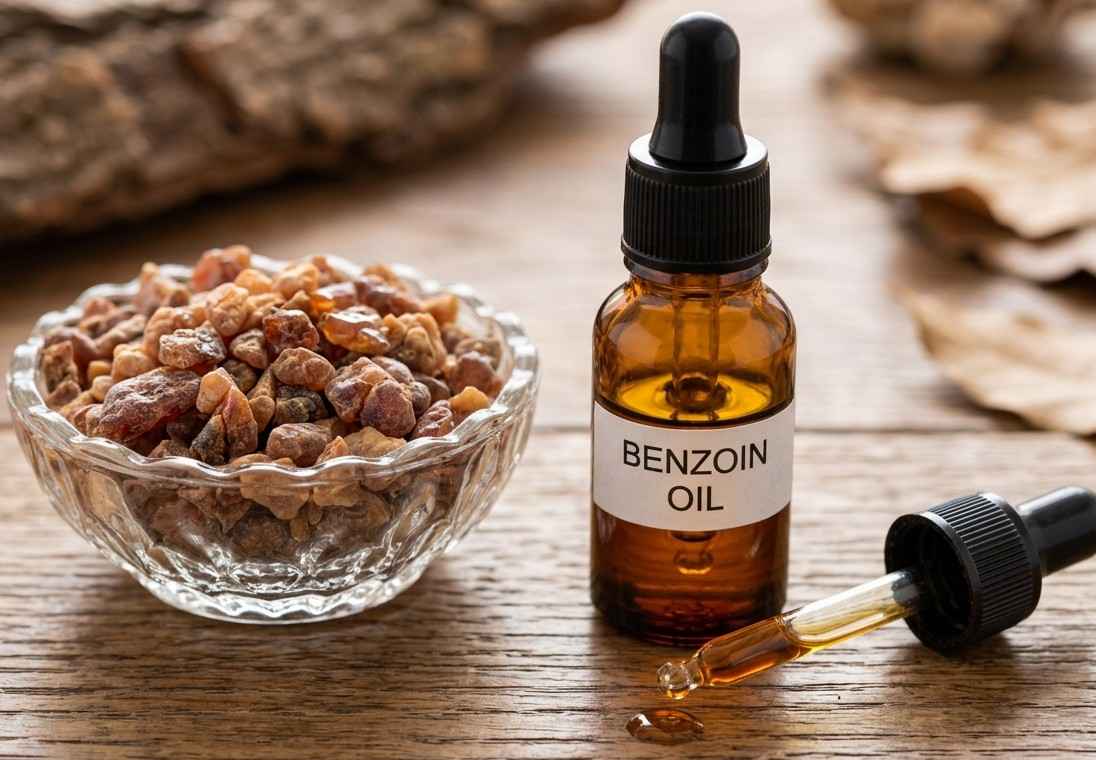
Benzoin oil is a fragrant essential oil derived from the resin of benzoin trees. Known for its warm, sweet, vanilla-like aroma, this oil has been used for centuries in traditional medicine, religious ceremonies, skincare products, perfumes, and aromatherapy. The resin is primarily obtained from trees belonging to the genus Styrax, particularly Styrax benzoin and Styrax tonkinensis.
Benzoin oil is valued for its soothing, antiseptic, anti-inflammatory, and calming properties. It is commonly used in aromatherapy to reduce stress, support respiratory health, promote healthy skin, and enhance emotional well-being. Because of its rich fragrance and therapeutic qualities, benzoin oil remains a popular ingredient in natural health and beauty products.
In this guide, we will explore everything you need to know about benzoin oil, including its nutrition facts, science-backed benefits, side effects, usage methods, storage tips, and precautions.
What is Benzoin Oil?
Benzoin oil is an aromatic essential oil extracted from the resin of benzoin trees through solvent extraction. The resulting product is often called benzoin absolute or benzoin resinoid and contains numerous natural compounds that contribute to its therapeutic properties.
The oil has a thick consistency and a sweet scent that resembles vanilla and balsamic notes. Traditionally, benzoin resin has been used for wound healing, respiratory support, stress relief, incense production, and skincare applications.
Today, benzoin oil is widely used in:
- Aromatherapy
- Perfumery
- Skin care products
- Massage oils
- Respiratory remedies
- Natural wellness practices
Components of Benzoin Oil
| Component | Approximate Presence |
|---|---|
| Benzoic Acid | High |
| Cinnamic Acid | Moderate |
| Benzyl Benzoate | Moderate |
| Vanillin | Present |
| Coniferyl Benzoate | Present |
| Resin Acids | High |
| Aromatic Esters | Present |
| Essential Oil Compounds | Present |
| Antioxidant Compounds | Present |
| Anti-inflammatory Constituents | Present |
Note: Composition may vary depending on extraction method, tree species, and growing conditions.
20 Proven Benefits of Benzoin Oil
- Supports Skin Healing: Benzoin essential oil may help support the healing of minor cuts, cracks, and skin irritations due to its protective properties.
- Promotes Healthy Skin: Regular topical use in diluted form may improve skin texture and appearance.
- Helps Reduce Dryness: Benzoin oil acts as a natural moisturizer that may soothe dry and rough skin.
- Provides Antimicrobial Protection: The oil contains compounds that may help inhibit certain microorganisms.
- Supports Respiratory Health: Inhalation of benzoin oil may help ease congestion and promote comfortable breathing.
- May Relieve Cough Symptoms: Traditional use suggests benzoin essential oil can help soothe irritated airways.
- Reduces Stress Levels: Its pleasant aroma may encourage relaxation and emotional balance.
- Promotes Better Sleep: Aromatherapy with benzoin oil may help create a calming environment conducive to sleep.
- May Ease Anxiety: The soothing scent may support mental relaxation and reduce nervous tension.
- Supports Meditation Practices: Benzoin essential oil is frequently used to enhance focus and mindfulness.
- Acts as a Natural Deodorizer: Its sweet fragrance helps neutralize unpleasant odors.
- Provides Antioxidant Support: Benzoin oil contains compounds that may help combat oxidative stress.
- May Reduce Minor Inflammation: Topical application may help calm irritated skin when properly diluted.
- Supports Wound Care: Traditional herbal practices have used benzoin resin for minor wound management.
- Enhances Mood: Aromatherapy sessions may promote feelings of comfort and positivity.
- May Help Chapped Skin: Benzoin oil is commonly included in products designed for cracked skin.
- Supports Oral Care Formulations: Certain traditional preparations have utilized benzoin resin for oral hygiene.
- Improves Aromatherapy Blends: Its rich scent serves as an excellent base note in essential oil blends.
- May Support Circulation During Massage: Diluted benzoin oil is sometimes incorporated into massage oils.
- Provides Emotional Comfort: The warm aroma may help create feelings of security and relaxation.
10 Side Effects of Benzoin Oil
- Skin Irritation: Some individuals may experience redness, itching, or irritation after topical use.
- Allergic Reactions: Sensitive individuals may develop allergic responses to benzoin oil.
- Respiratory Sensitivity: Strong aromas may trigger discomfort in people with fragrance sensitivities.
- Headaches: Excessive inhalation may occasionally cause headaches.
- Nausea: Strong concentrations may lead to mild nausea in sensitive individuals.
- Dizziness: Overexposure during aromatherapy sessions may contribute to lightheadedness.
- Eye Irritation: Contact with the eyes can cause burning and irritation.
- Skin Sensitization: Frequent undiluted use may increase skin sensitivity over time.
- Interaction Risks: Benzoin essential oil may interact with certain topical medications.
- Potential Toxicity if Misused: Improper ingestion or excessive use may result in unwanted effects.
How to Use Benzoin Oil?
Benzoin oil can be used in several ways depending on your needs:
Aromatherapy
Add a few drops to a diffuser to create a relaxing atmosphere.
Massage
Dilute with a carrier oil before applying to the skin during massage.
Steam Inhalation
Add a few drops to hot water and inhale the steam carefully.
Skin Care
Mix with creams, lotions, or carrier oils for skincare applications.
Bath Use
Add diluted benzoin essential oil to bathwater for relaxation.
Homemade Products
Use in soaps, candles, perfumes, and body care formulations.
Other Uses of Benzoin Oil
Benzoin oil has numerous applications beyond wellness:
- Natural perfume ingredient
- Incense manufacturing
- Candle making
- Soap production
- Air fresheners
- Meditation practices
- Religious ceremonies
- Cosmetic formulations
- Natural room sprays
- Massage blends
Important: Benzoin oil is generally intended for external use and aromatherapy. Internal consumption should only occur under professional guidance.
How to Take Benzoin Oil?
Benzoin essential oil is most commonly used through:
- Aromatherapy diffusion.
- Steam inhalation.
- Diluted topical application.
- Massage therapy.
- Addition to cosmetic products.
Internal use is generally not recommended without professional supervision.
How to Make Benzoin Oil at Home?
Producing true benzoin essential oil requires specialized extraction equipment. However, you can create a simple benzoin-infused preparation.
Ingredients:
- Benzoin resin
- Carrier oil (jojoba, coconut, or almond oil)
- Glass jar
Method:
- Crush the benzoin resin into small pieces.
- Place the resin in a clean glass jar.
- Pour carrier oil over the resin.
- Seal the jar tightly.
- Store in a warm place for 2–4 weeks.
- Shake gently every few days.
- Strain the mixture through cheesecloth.
- Store the infused oil in a dark glass bottle.
How Much Benzoin Oil Can You Use Per Day?
Usage depends on the method:
- Diffuser: 3–6 drops per session.
- Massage oil: 1–3% dilution.
- Bath: 3–5 diluted drops.
- Skin applications: Follow dilution guidelines.
Because benzoin essential oil is concentrated, moderation is recommended.
Aromatherapy
3–6 drops per diffuser session.
Massage
1–2 drops per teaspoon of carrier oil.
Bath Use
3–5 diluted drops.
Skincare
Typically diluted to 0.5–2% concentration.
Always follow product instructions and consult qualified practitioners when needed.
Best Time to Use Benzoin Oil
Evening Relaxation
Many people use benzoin essential oil before bedtime due to its calming aroma.
During Meditation
Its grounding scent makes it suitable for mindfulness practices.
After Stressful Days
Aromatherapy sessions may help promote relaxation.
During Massage
Use whenever physical and mental relaxation is desired.
In Cold Weather
Its warm fragrance is particularly comforting during colder months.
Who Should Use Benzoin Oil?
- People Seeking Relaxation: Individuals looking to reduce stress may benefit from its soothing aroma.
- Aromatherapy Enthusiasts: Benzoin essential oil is ideal for those who enjoy essential oil diffusion.
- People with Dry Skin: Properly diluted benzoin essential oil may help support skin hydration.
- Meditation Practitioners: The grounding scent may enhance mindfulness sessions.
- Massage Therapy Users: It can complement relaxing massage blends.
- Natural Fragrance Lovers: The sweet scent appeals to many perfume enthusiasts.
- Individuals Seeking Better Sleep Environments: Aromatherapy use may promote a calming atmosphere.
- DIY Skincare Creators: Benzoin oil is a popular ingredient in homemade products.
- People Interested in Traditional Remedies: It has a long history of traditional use.
- Wellness Enthusiasts: Many natural health practitioners incorporate it into holistic routines.
Who Should Not Use Benzoin Oil?
- People with Known Allergies: Anyone allergic to benzoin or related substances should avoid it.
- Individuals with Sensitive Skin: Those prone to reactions should exercise caution.
- Pregnant Women Without Medical Advice: Professional guidance is recommended before use.
- Breastfeeding Mothers Without Consultation: Medical approval is advisable.
- Young Children: Use only under qualified supervision.
- People with Severe Respiratory Sensitivities: Strong aromas may trigger discomfort.
- Individuals with Active Skin Conditions: Consult a healthcare provider before topical use.
- People Using Certain Medications: Potential interactions should be discussed with a professional.
- Individuals with Previous Essential Oil Reactions: Extra caution is warranted.
- Anyone Experiencing Adverse Effects: Discontinue use if symptoms occur.
How to Store Benzoin Oil?
Proper storage helps preserve quality and effectiveness.
- Keep in a dark glass bottle.
- Store away from direct sunlight.
- Maintain a cool, dry environment.
- Keep containers tightly sealed.
- Avoid excessive heat exposure.
- Prevent contamination by using clean droppers.
- Keep away from moisture.
- Store out of reach of children and pets.
When stored properly, benzoin essential oil may remain usable for several years.
Precautions and Interactions
- Patch Test First: Always perform a skin sensitivity test before topical use.
- Dilute Before Application: Undiluted use may increase irritation risk.
- Avoid Eye Contact: Keep benzoin oil away from the eyes and mucous membranes.
- Do Not Overuse: Excessive exposure may increase side effect risks.
- Use During Pregnancy Carefully: Seek medical advice before use.
- Consult Healthcare Providers: Discuss use if you have chronic health conditions.
- Monitor Allergic Responses: Stop immediately if allergic symptoms develop.
- Use Around Children Cautiously: Essential oils should be handled responsibly near children.
- Avoid Internal Consumption Without Guidance: Professional supervision is essential for internal use.
- Check Medication Compatibility: Consult a healthcare professional regarding possible interactions.
Conclusion
Benzoin oil is a versatile aromatic oil treasured for its soothing fragrance, skin-supporting properties, and calming effects. Traditionally used for centuries in wellness practices, skincare, perfumery, and aromatherapy, it continues to be valued by natural health enthusiasts around the world. While benzoin essential oil offers many potential benefits, it should always be used responsibly, properly diluted, and according to recommended guidelines. Understanding its uses, dosage, precautions, and storage requirements can help you safely incorporate this remarkable oil into your wellness routine.
FAQ’s
What is Benzoin Oil used for?
Benzoin essential oil is commonly used in aromatherapy, skincare, massage therapy, perfumery, and traditional wellness practices to promote relaxation, support skin health, and provide a pleasant fragrance.
Is Benzoin Oil safe for the skin?
Yes, benzoin essential oil is generally safe for the skin when properly diluted with a carrier oil. A patch test is recommended before widespread use.
Can Benzoin Oil help with stress and anxiety?
Its warm, sweet aroma is often used in aromatherapy to encourage relaxation and may help reduce feelings of stress and nervous tension.
What does Benzoin Oil smell like?
Benzoin essential oil has a rich, sweet, warm scent with notes similar to vanilla, caramel, and balsamic resin.
Can Benzoin Oil be ingested?
Benzoin essential oil is primarily intended for external use and aromatherapy. Internal use should only occur under the guidance of a qualified healthcare professional.
Is Benzoin Oil good for dry skin?
Yes, benzoin essential oil is commonly used in skincare products because it may help moisturize and soothe dry, cracked, or rough skin.
How do I use Benzoin Oil in a diffuser?
Add approximately 3–6 drops of benzoin essential oil to a diffuser filled with water according to the manufacturer’s instructions.
Can Benzoin Oil help with coughs and congestion?
Traditionally, benzoin essential oil has been used in steam inhalation and aromatherapy to support respiratory comfort and help soothe irritated airways.
Is Benzoin Oil safe during pregnancy?
Pregnant women should consult their healthcare provider before using benzoin essential oil or any essential oil.
Can Benzoin Oil be applied directly to the skin?
No, benzoin essential oil should generally be diluted with a carrier oil before topical application to reduce the risk of irritation.
How long does Benzoin Oil last?
When stored properly in a cool, dark place, benzoin essential oil can maintain its quality for several years.
Can Benzoin Oil be used in homemade skincare products?
Yes, benzoin essential oil is often added to lotions, creams, soaps, balms, and other DIY skincare formulations.
Does Benzoin Oil have antimicrobial properties?
Research suggests that compounds found in benzoin resin may possess antimicrobial properties that help protect the skin.
Can Benzoin Oil improve sleep quality?
Many people use benzoin essential oil before bedtime because its calming aroma may help create a relaxing sleep environment.
Is Benzoin Oil suitable for children?
Use around children should be approached with caution and preferably under the guidance of a healthcare professional.
What is the best carrier oil to mix with Benzoin Oil?
Popular carrier oils include jojoba oil, sweet almond oil, coconut oil, and grapeseed oil.
Can Benzoin Oil cause allergic reactions?
Yes, some individuals may experience allergic reactions or skin sensitivity. Always perform a patch test before use.
Is Benzoin Oil the same as benzoin resin?
No. Benzoin resin is the raw aromatic resin collected from the tree, while benzoin essential oil is the extracted aromatic product derived from that resin.
Can Benzoin Oil be used in perfumes?
Yes, benzoin essential oil is widely used in perfumes because of its sweet vanilla-like fragrance and excellent fixative properties.
Can I use Benzoin Oil every day?
Yes, it can be used daily when properly diluted and used as directed.
How long does it take for Benzoin Oil to work?
Aromatherapy effects may be felt within minutes, while skin benefits can take days or weeks.
What is Benzoin Oil good for?
Benzoin essential oil is used for relaxation, skin care, aromatherapy, natural fragrance, and respiratory support.
Also Read: