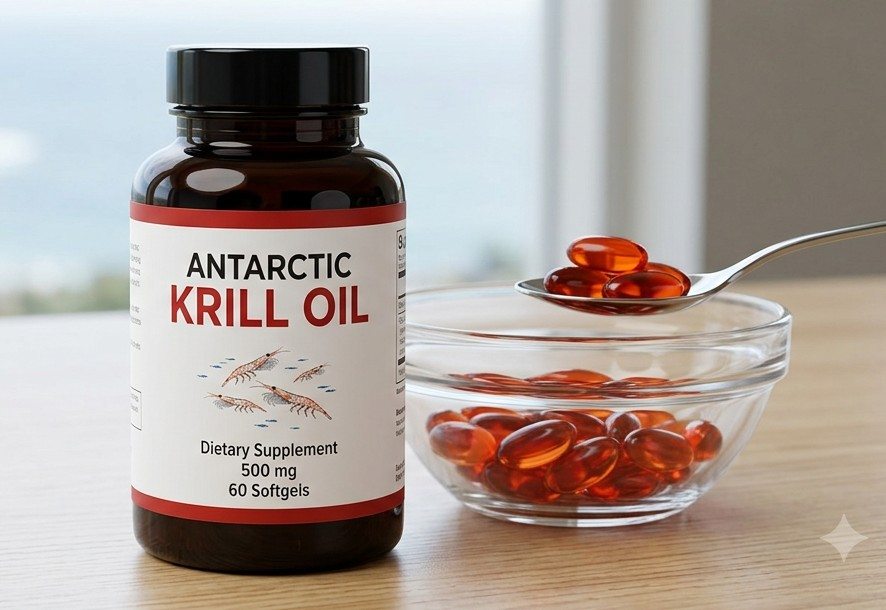
Krill oil has become a popular source of omega-3 fatty acids, particularly among people looking for an alternative to traditional fish oil supplements. It is extracted from tiny marine crustaceans called Antarctic krill and naturally provides the omega-3 fats EPA and DHA. Krill oil also contains phospholipids and the antioxidant pigment astaxanthin.
Like fish oil, krill oil is mainly used to increase dietary intake of EPA and DHA. However, the omega-3s in krill oil are primarily present as phospholipids, whereas many fish-oil products contain omega-3s mainly as triglycerides or ethyl esters. Research suggests that krill oil may help improve certain blood lipid measurements, although evidence does not establish that it is universally superior to fish oil. This guide explains what krill oil is, its potential benefits, nutrition, dosage, side effects, uses, precautions, and how to choose and store it safely.
What Is Krill Oil?
Krill oil is an oil extracted from small shrimp-like marine crustaceans known as krill. These organisms are found in oceans around the world, with Antarctic krill being an important source used commercially.
Krill oil naturally contains:
- EPA (eicosapentaenoic acid)
- DHA (docosahexaenoic acid)
- Phospholipids
- Astaxanthin
- Other fats and minor naturally occurring compounds
EPA and DHA are long-chain omega-3 fatty acids that are also found in fatty fish and fish-oil supplements. Krill oil is different from many fish oils because its omega-3s are primarily associated with phospholipids.
Astaxanthin is responsible for much of krill oil’s characteristic reddish color and acts as an antioxidant. Krill oil is generally sold as softgel capsules or liquid supplements.
Representative Nutrition Information of Krill Oil
The nutritional composition of krill oil varies substantially between brands and formulations. Therefore, the product label should always be checked for the actual amount of EPA and DHA.
| Nutrient/Component | Approximate Amount (Per 1 Gram) | Notes |
|---|---|---|
| Total oil | 1,000 mg | Amount varies by serving |
| EPA | Variable | Check the supplement label |
| DHA | Variable | Check the supplement label |
| Total omega-3 | Variable | Depends on formulation |
| Phospholipids | Variable | Naturally present in krill oil |
| Astaxanthin | Variable | Usually present in small amounts |
| Protein | 0 g | Purified oil contains essentially no protein |
| Carbohydrates | 0 g | Purified oil contains essentially no carbohydrate |
| Fiber | 0 g | Krill oil does not provide dietary fiber |
Unlike whole krill, purified krill oil is primarily fat and does not provide meaningful amounts of protein, carbohydrates, vitamins, or minerals.
20 Proven Health Benefits of Krill Oil
1. Supports Heart Health: The EPA and DHA in krill oil can contribute to overall cardiovascular health, while research on krill oil has particularly examined its effects on blood lipids.
2. May Help Lower Triglycerides: Clinical studies suggest that krill oil supplementation can reduce triglyceride levels, although the response varies between individuals and products.
3. May Support Healthy Cholesterol Levels: Some clinical trials have reported improvements in cholesterol measurements following krill oil supplementation.
4. Provides EPA Omega-3: Krill oil supplies EPA, an important long-chain omega-3 fatty acid involved in several physiological processes.
5. Provides DHA Omega-3: Oil supplies DHA, an omega-3 fatty acid that is particularly important for normal brain and retinal function.
6. Supports Normal Brain Function: DHA contributes to the structural components of cell membranes in the brain, although taking krill oil should not be considered a treatment for neurological disease.
7. Supports Eye Health: DHA is an important structural component of the retina, making adequate dietary omega-3 intake relevant to normal visual function.
8. Provides Phospholipids: Krill oil naturally contains phospholipid-associated omega-3s, which distinguishes it from many conventional fish-oil formulations.
9. Provides Astaxanthin: Oil naturally contains astaxanthin, a carotenoid antioxidant that contributes to the oil’s characteristic color.
10. Supports Healthy Fat Intake: Oil can provide long-chain omega-3 fats for people who do not regularly consume seafood.
11. May Support a Healthy Inflammatory Response: EPA and DHA participate in pathways involved in the body’s inflammatory processes, although supplementation should not be viewed as treatment for inflammatory diseases.
12. May Support Metabolic Health: Some krill-oil trials have investigated blood glucose and other metabolic markers, but evidence is not strong enough to consider krill oil a treatment for metabolic disorders.
13. May Support Joint Comfort: Omega-3 fatty acids have been studied for their role in inflammatory pathways and joint health, although evidence specific to krill oil remains limited.
14. May Support Healthy Lipid Metabolism: Clinical research indicates that oil can influence several blood lipid measurements, particularly triglycerides.
15. May Help Increase Omega-3 Intake: Krill oil can be a convenient supplement for people whose diets provide limited EPA and DHA.
16. May Offer Good Omega-3 Absorption: Some studies suggest phospholipid-bound omega-3s in krill oil may have higher bioavailability than some forms of fish oil, although research findings are not consistent.
17. Supports Normal Cell Membranes: EPA and DHA are incorporated into cell membranes and contribute to normal cellular function.
18. May Complement a Heart-Healthy Diet: Krill oil can provide additional EPA and DHA alongside a diet that includes fish, vegetables, whole grains, nuts, seeds, and other nutrient-rich foods.
19. May Help People With Low Seafood Intake: People who rarely eat seafood may use an omega-3 supplement to increase EPA and DHA intake after discussing supplementation with a healthcare professional.
20. Offers an Alternative to Fish Oil: Oil provides another marine source of EPA and DHA for people who prefer its formulation or find some fish-oil products difficult to tolerate.
10 Side Effects of Krill Oil
Krill oil is generally tolerated by many people when used as directed, but omega-3 supplements can cause mild digestive and other side effects.
1. Fishy or Marine Aftertaste: Some people may notice an unpleasant marine taste or aftertaste after taking krill oil.
2. Bad Breath: Omega-3 supplements can occasionally cause unpleasant breath or taste.
3. Heartburn: Krill oil may cause heartburn or reflux in some people, particularly when taken on an empty stomach.
4. Nausea: Some people may experience mild nausea after taking an omega-3 supplement.
5. Stomach Discomfort: Abdominal discomfort, bloating, or indigestion can occur in sensitive individuals.
6. Diarrhea: Higher amounts of omega-3 supplements may cause loose stools or diarrhea.
7. Headache: Headache has been reported as a possible side effect of omega-3 supplementation.
8. Allergic Reaction: People with an allergy to shellfish or crustaceans may need to avoid krill oil because it is derived from crustaceans.
9. Increased Bleeding Risk: High doses of omega-3 supplements may affect platelet aggregation and can be particularly important for people taking anticoagulant or antiplatelet medicines.
10. Possible Atrial Fibrillation Risk at High Doses: Some large trials of high-dose omega-3 supplementation have reported a small increase in atrial fibrillation among people with cardiovascular disease or elevated cardiovascular risk, although these findings concern high-dose omega-3 supplementation generally rather than proving the same effect for ordinary krill-oil doses.
How to Use Krill Oil?
Krill oil is usually taken as an oral dietary supplement in capsule or softgel form.
The amount needed depends on the product’s EPA and DHA content rather than simply the total weight of krill oil. Always read the Supplement Facts panel because two products containing the same amount of krill oil can provide different amounts of EPA and DHA.
For better tolerance, many people take krill oil with a meal.
Other Uses of Krill Oil
Krill oil is primarily used as an omega-3 dietary supplement. Other commonly marketed purposes include:
- Supporting dietary EPA and DHA intake
- Supporting healthy triglyceride levels
- Providing phospholipid-associated omega-3s
- Providing astaxanthin
- Supporting general cardiovascular nutrition
- Complementing a diet that is low in oily fish
Krill oil should not be promoted as a replacement for medical treatment or as a guaranteed treatment for high cholesterol, arthritis, heart disease, or other conditions.
Tips for Consuming Krill Oil
- Check EPA and DHA: Compare products according to their actual EPA and DHA content rather than only the total amount of krill oil.
- Take With Food: Taking oil with a meal may improve tolerance and reduce digestive discomfort.
- Start According to the Label: Follow the manufacturer’s recommended serving unless your healthcare professional gives you different instructions.
- Choose Quality Products: Look for products from reputable manufacturers that provide clear ingredient and dosage information.
- Check the Expiration Date: Do not use supplements that are past their expiration date or have been improperly stored.
- Consider Shellfish Allergies: Avoid krill oil unless a healthcare professional confirms it is appropriate if you have a crustacean allergy.
- Do Not Chase High Doses: More omega-3 is not automatically better, and high-dose supplementation should be medically supervised.
- Review Your Medicines: Tell your doctor or pharmacist about krill oil if you take prescription or over-the-counter medicines regularly.
- Compare Supplement Labels: Look for EPA, DHA, serving size, additional ingredients, and storage instructions.
- Use It Consistently: If you choose to take krill oil, use it according to the product instructions rather than taking large amounts occasionally.
How to Take Krill Oil?
Krill oil is most commonly taken as a softgel with water.
A practical approach is to take it with a meal, especially if you experience burping, reflux, nausea, or stomach discomfort when taking supplements on an empty stomach.
Do not chew a softgel unless the product specifically instructs you to do so.
If you are taking krill oil for a particular health concern, ask your healthcare professional what amount of EPA and DHA is appropriate for you.
How Much Krill Oil Can You Take Per Day?
There is no single universal daily dose of krill oil because products differ greatly in their EPA and DHA concentrations.
The important number to examine is the combined EPA + DHA amount, not merely the total milligrams of krill oil.
The U.S. FDA has concluded that dietary supplements providing no more than 5 grams per day of EPA and DHA combined are safe when used as recommended, while NIH notes that supplement labels should not recommend more than 2 grams per day of EPA and DHA combined under the FDA’s qualified health-claim framework. These figures should not be interpreted as a recommendation to take high doses.
Higher doses should only be used under medical supervision, particularly for people taking medicines or managing cardiovascular or lipid conditions.
Krill Oil Dosage
Krill-oil dosage depends on the product and the reason for supplementation.
A typical over-the-counter serving may contain several hundred milligrams of krill oil, but the amount of EPA and DHA can vary substantially between products.
When choosing a dose, consider:
- Total krill oil per serving
- EPA per serving
- DHA per serving
- Number of capsules per serving
- Other active ingredients
- Your dietary omega-3 intake
- Your health conditions and medications
For people using omega-3 supplements to address elevated triglycerides, a healthcare professional should determine the appropriate dose rather than relying on a general krill-oil recommendation.
Best Time to Take Krill Oil
There is no universally established “best” time of day to take krill oil.
For most people, taking it with breakfast, lunch, or dinner is reasonable.
Taking it with food may also make the supplement easier on the stomach.
If krill oil causes reflux or an aftertaste, taking it during a substantial meal rather than immediately before lying down may help.
Consistency is generally more important than choosing a particular time of day.
Who Should Take Krill Oil?
- People With Low Seafood Intake: Adults who rarely consume seafood may consider krill oil as one way to increase dietary EPA and DHA.
- People Seeking Omega-3 Supplementation: Individuals who want a marine-source omega-3 supplement may choose oil after reviewing their dietary needs.
- People Interested in Lipid Support: Some adults with concerns about triglycerides may discuss krill oil with their healthcare professional, although treatment decisions should be based on their complete lipid profile and medical history.
- People Who Prefer Krill Oil: Some people choose krill oil because they prefer its formulation or find it easier to tolerate than certain fish-oil products.
- Adults Following a Balanced Diet: Oil can be considered as a supplement to, rather than a replacement for, a nutrient-rich diet containing seafood and other healthy foods.
Who Should Avoid Krill Oil?
- People With Crustacean Allergies: Anyone with a known allergy to shrimp, krill, or other crustaceans should avoid oil unless specifically cleared by an allergy specialist.
- People Taking Blood Thinners: People taking anticoagulant or antiplatelet medication should consult a healthcare professional before using krill oil because high-dose omega-3 supplementation may affect bleeding.
- People With Bleeding Disorders: Individuals with bleeding disorders should obtain medical advice before starting an omega-3 supplement.
- People Preparing for Surgery: Tell your healthcare team about krill oil before surgery or invasive procedures so they can determine whether it should be stopped.
- People With Atrial Fibrillation: Anyone with atrial fibrillation or a history of rhythm problems should discuss omega-3 supplementation with their healthcare professional, especially before using high doses.
- Pregnant or Breastfeeding Women: Anyone who is pregnant or breastfeeding should discuss krill oil supplementation with a healthcare professional because individual nutritional needs and product safety considerations vary.
- Children: Children should not be given adult krill-oil products unless a pediatrician recommends an appropriate product and dose.
How to Store Krill Oil?
Store krill oil according to the manufacturer’s instructions.
In general:
- Keep capsules in a cool, dry place.
- Protect the product from excessive heat and direct sunlight.
- Keep the container tightly closed.
- Keep it away from moisture.
- Keep supplements out of children’s reach.
- Follow refrigeration instructions if the manufacturer recommends refrigeration.
- Do not use the product if it develops an unusual rancid odor, changes substantially in appearance, or is past its expiration date.
Proper storage helps reduce oxidation and preserve product quality.
Precautions and Interactions
- Blood-Thinning Medicines: Krill oil may require extra caution with anticoagulants such as warfarin and other medicines that affect blood clotting.
- Antiplatelet Medicines: People taking medicines such as aspirin or other antiplatelet drugs should discuss supplementation with a healthcare professional.
- Shellfish Allergy: Krill is a crustacean, so people with shellfish or crustacean allergies should use particular caution.
- Surgery: Inform your surgeon and healthcare team that you use oil before a planned procedure.
- High-Dose Supplementation: High amounts of EPA and DHA should not be taken without professional guidance because the risks and benefits differ according to individual health status.
- Atrial Fibrillation: High-dose omega-3 supplementation has been associated with a small increase in atrial fibrillation in some large trials involving people with cardiovascular disease or high cardiovascular risk.
- Other Supplements: Check whether other supplements you take also contain EPA, DHA, fish oil, or oil to avoid unintentionally increasing your total dose.
- Prescription Medicines: Give your doctor or pharmacist a complete list of supplements and medicines you use regularly.
- Pregnancy and Breastfeeding: Consult a qualified healthcare professional before starting krill oil during pregnancy or breastfeeding.
- Do Not Replace Prescribed Treatment: Oil should not be used to replace prescribed medicines for high cholesterol, triglycerides, cardiovascular disease, or other medical conditions.
What Does Research Say About Krill Oil?
Research specifically examining krill oil has produced some encouraging findings, particularly regarding blood lipids.
A 2023 systematic review and meta-analysis of 14 trials involving 1,458 participants found that krill oil supplementation was associated with improvements in total cholesterol, LDL cholesterol, and triglycerides. However, the researchers did not find significant effects on blood pressure, glycemic control, body composition, or inflammatory markers. They also noted that more research is needed to determine whether oil affects actual cardiovascular events or mortality.
Earlier research involving seven randomized trials and 662 participants also found reductions in LDL cholesterol and triglycerides and an increase in HDL cholesterol, while emphasizing the need for larger clinical studies.
These findings suggest that krill oil may have useful effects on certain lipid measurements, but they should not be interpreted as proof that oil prevents heart attacks or other cardiovascular events.
How to Choose a Krill Oil Supplement
When shopping for krill oil, look beyond the front of the bottle.
Check:
- EPA amount per serving
- DHA amount per serving
- Total omega-3 content
- Krill oil amount per serving
- Astaxanthin content, if listed
- Other added ingredients
- Serving size
- Expiration date
- Storage instructions
- Manufacturer quality information
- Independent testing or quality certifications when available
A product containing 1,000 mg of oil does not necessarily provide 1,000 mg of EPA and DHA. Always check the Supplement Facts panel.
FAQ’s
Is krill oil good for your heart?
Oil provides EPA and DHA, which may help support healthy triglyceride levels and overall cardiovascular health.
Does krill oil reduce belly fat?
Oil is not a proven weight-loss supplement and should not be relied on to reduce belly fat.
How long does krill oil take to work?
The time varies by purpose, but changes in blood lipid levels are generally assessed after several weeks rather than immediately.
Can I take krill oil at night?
Yes, oil can generally be taken at night, preferably with a meal to improve tolerance.
Can krill oil improve skin?
Oil provides omega-3 fatty acids that support normal cell and skin function, but evidence for specific skin benefits from oil remains limited.
Does krill oil help with joint pain?
Omega-3 fatty acids may influence inflammatory pathways, but evidence specifically supporting oil for joint pain is still developing.
Does krill oil help lower blood pressure?
Oil has been studied for cardiovascular effects, but it should not be considered a proven treatment for high blood pressure.
Can krill oil raise cholesterol?
Research generally does not show oil raising LDL cholesterol overall, although individual responses can vary.
Can krill oil cause weight gain?
Oil contains fat and therefore calories, but the small amounts normally taken as supplements are not generally expected to cause meaningful weight gain.
Is krill oil better than fish oil?
Both provide EPA and DHA, but their formulations differ, and research has not established that oil is universally superior to fish oil.
Can I take krill oil on an empty stomach?
It can be taken on an empty stomach, but taking it with food may reduce nausea, reflux, or other digestive discomfort.
Does krill oil contain vitamin D?
Oil is not generally considered a significant source of vitamin D, so check the product’s Supplement Facts label for added nutrients.
Does krill oil contain iodine?
Oil is not a reliable dietary source of iodine, and its iodine content can vary by product.
Can krill oil cause fishy burps?
Oil can cause a marine or fishy aftertaste or burping in some people, although some users find it easier to tolerate than fish oil.
Is krill oil safe to take every day?
Many adults can take oil daily according to the product directions, but people with allergies, medical conditions, or medication interactions should seek professional advice first.
Can pregnant women take krill oil?
Pregnant women should discuss oil supplementation with their healthcare professional before taking it, particularly because products and doses vary.
Can children take krill oil?
Children should only take oil when a pediatrician or other qualified healthcare professional recommends an appropriate product and dose.
Does krill oil help with brain health?
DHA is an important structural omega-3 fatty acid in the brain, but taking oil has not been established as a treatment for brain or neurological disorders.
How much EPA and DHA are in krill oil?
The amount varies considerably between products, so check the Supplement Facts label for the actual EPA and DHA content rather than relying on the total krill-oil amount.
What happens if you take too much krill oil?
High doses can increase the risk of side effects and may require additional caution with medicines that affect blood clotting, so excessive supplementation should be avoided unless medically supervised.
What is Krill Oil made from?
Oil is made by extracting oil from tiny shrimp-like marine crustaceans called krill, which naturally contain omega-3 fatty acids such as EPA and DHA.
What does Krill Oil smell like?
Oil usually has a mild marine or seafood-like smell, although high-quality, fresh products may have little noticeable odor.
Is krill oil the same as fish oil?
No. Both provide EPA and DHA, but oil contains omega-3s primarily in phospholipid form and naturally contains astaxanthin, while fish-oil formulations vary in their chemical forms.
What is krill oil good for?
Oil is primarily used as a source of EPA and DHA and may help support healthy blood lipid levels, particularly triglycerides.
Does krill oil lower triglycerides?
Research suggests oil can reduce triglycerides in some people, although the effect depends on the dose and individual characteristics.
Is krill oil safe for people with shellfish allergies?
People with known crustacean or krill allergies should avoid oil unless their healthcare professional or allergist specifically advises otherwise.
Can krill oil be taken with fish oil?
Combining supplements can unnecessarily increase total EPA and DHA intake, so it is best to check both labels and ask a healthcare professional before combining them.
Should krill oil be taken with food?
Yes, taking oil with a meal can be a practical way to improve tolerance and may reduce digestive complaints.
Can krill oil cause stomach problems?
Yes. Possible digestive effects include nausea, heartburn, abdominal discomfort, and diarrhea.
Does krill oil contain astaxanthin?
Yes. oil naturally contains astaxanthin, although the amount varies among products.
Final Thought
Krill oil is a marine omega-3 supplement that provides EPA and DHA along with phospholipids and naturally occurring astaxanthin. Research suggests it may help improve certain blood lipid measurements, particularly triglycerides, but evidence does not show that oil is universally superior to fish oil or that it should replace medical treatment.
For most people considering supplementation, the most useful step is to check the actual EPA and DHA content, review potential interactions, and choose a reputable product rather than focusing only on the total milligrams of oil.
Sources / References:
About the Author:
Written by: Kirti Solanki (Health Content Researcher)
Kirti Solanki is a health content researcher who focuses on creating reader-friendly, evidence-informed articles covering nutrition, wellness, supplements, and general health topics. Her content emphasizes clear explanations, responsible health information, and references to reputable scientific and medical sources.
Disclaimer:
This guide is intended for general educational purposes only and does not replace professional medical advice, diagnosis, or treatment. Speak with a qualified doctor, dietitian, or pharmacist before starting krill oil, especially if you are pregnant, breastfeeding, have a medical condition, have a shellfish allergy, take prescription medicines, or are preparing for surgery. Do not stop or change prescribed medication based solely on information in this article.
Also Read: