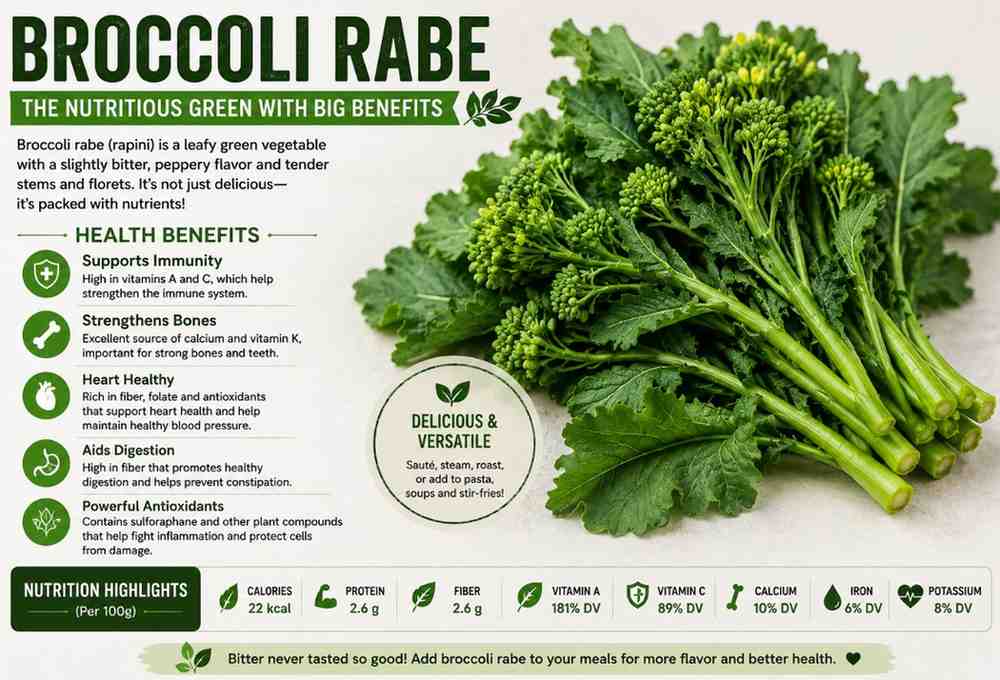
Broccoli rabe is a nutrient-dense green vegetable that has been enjoyed in Mediterranean cuisine for centuries. Despite its name, broccoli rabe is not the same as broccoli. It belongs to the turnip family and is known for its leafy greens, tender stems, and small florets with a pleasantly bitter flavor.
Rich in vitamins, minerals, antioxidants, and dietary fiber, broccoli rabe can be a healthy addition to a balanced diet. Research suggests that cruciferous vegetables like broccoli rabe may support heart health, digestion, immunity, and overall wellness when consumed regularly as part of a varied eating pattern.
This guide covers everything you need to know about broccoli rabe, including its nutrition facts, health benefits, side effects, cooking methods, storage tips, and safety precautions.
What is Broccoli Rabe?
Broccoli rabe (also called rapini or broccoli raab) is a leafy green vegetable scientifically known as Brassica rapa subsp. ruvo. Although it resembles young broccoli, it is actually more closely related to turnips than broccoli.
The vegetable features:
- Dark green leaves
- Thin edible stems
- Small broccoli-like buds
- Slightly bitter, earthy taste
Broccoli rabe is especially popular in Italian, Portuguese, Chinese, and Mediterranean cooking. It is commonly sautéed with garlic and olive oil, steamed, roasted, grilled, or added to soups and pasta dishes.
Nutrition Facts of Broccoli Rabe (Per 100 g)
| Nutrient | Amount |
|---|---|
| Calories | 22 kcal |
| Water | 92 g |
| Protein | 3.2 g |
| Carbohydrates | 2.9 g |
| Dietary Fiber | 2.7 g |
| Total Fat | 0.5 g |
| Vitamin A | 262 µg RAE |
| Vitamin C | 20 mg |
| Vitamin K | 224 µg |
| Folate | 83 µg |
| Calcium | 108 mg |
| Iron | 2.1 mg |
| Potassium | 196 mg |
| Magnesium | 22 mg |
| Phosphorus | 73 mg |
| Sodium | 33 mg |
Values are approximate and may vary depending on growing conditions and preparation.
20 Proven Health Benefits of Broccoli Rabe
- Rich in Antioxidants: Broccoli rabe contains powerful antioxidants that help protect cells from oxidative stress.
- Supports Heart Health: Its fiber, potassium, and plant compounds may contribute to maintaining healthy blood pressure and cholesterol levels.
- Boosts Immune Function: Vitamin C helps strengthen the immune system and supports the body’s natural defense mechanisms.
- Promotes Healthy Bones: High vitamin K and calcium content supports bone strength and healthy bone metabolism.
- Improves Digestion: Dietary fiber promotes regular bowel movements and supports digestive health.
- Supports Eye Health: Vitamin A and carotenoids help maintain healthy vision.
- May Lower Inflammation: Natural phytochemicals may help reduce chronic inflammation.
- Supports Healthy Blood Clotting: Vitamin K plays an essential role in normal blood clotting.
- Helps Maintain Healthy Skin: Vitamin C contributes to collagen production for healthy skin.
- Supports Healthy Pregnancy: Folate helps support healthy fetal development during pregnancy.
- May Reduce Cancer Risk: Cruciferous vegetables contain glucosinolates that are associated with cancer-protective properties in observational studies.
- Supports Weight Management: Low calories and high fiber help increase fullness.
- Promotes Healthy Blood Sugar Levels: Fiber slows carbohydrate absorption and supports stable blood glucose levels.
- Supports Brain Function: Antioxidants and essential nutrients contribute to healthy cognitive function.
- Improves Iron Intake: Iron supports healthy red blood cell production and oxygen transport.
- Supports Healthy Liver Function: Sulfur-containing compounds help support the body’s natural detoxification processes.
- Promotes Healthy Aging: Antioxidants may help reduce age-related cellular damage.
- Supports Healthy Gut Microbiome: Fiber nourishes beneficial gut bacteria.
- Helps Maintain Healthy Blood Pressure: Potassium helps balance sodium and supports cardiovascular health.
- Provides Excellent Nutrient Density: Broccoli rabe delivers numerous vitamins and minerals with very few calories.
10 Side Effects of Broccoli Rabe
- Digestive Discomfort: Eating large amounts may cause gas, bloating, or abdominal discomfort.
- May Interfere with Blood Thinners: High vitamin K intake can affect warfarin and similar medications.
- Possible Allergic Reactions: Some individuals may experience itching, swelling, or allergic symptoms.
- Bitter Taste Sensitivity: Its natural bitterness may not be well tolerated by everyone.
- May Affect Thyroid Function: Very high amounts of raw cruciferous vegetables may affect iodine utilization in susceptible individuals.
- Possible Stomach Irritation: Sensitive individuals may experience mild stomach upset after eating large servings.
- May Increase Fiber Too Quickly: Sudden increases in fiber intake can cause digestive discomfort.
- Potential Kidney Stone Consideration: Individuals with certain kidney stone conditions should discuss high-oxalate vegetables with their healthcare provider.
- May Cause Medication Interactions: Certain medications may require dietary consistency regarding vitamin K intake.
- Overconsumption May Reduce Dietary Variety: Eating excessive amounts may limit intake of other nutritious vegetables.
How to Eat Broccoli Rabe?
Broccoli rabe is highly versatile and can be enjoyed in many ways:
- Lightly sautéed with garlic and olive oil
- Steamed as a healthy side dish
- Roasted until tender
- Stir-fried with vegetables
- Mixed into pasta dishes
- Added to soups
- Served with grilled chicken or fish
- Included in grain bowls
- Added to omelets
- Blended into vegetable smoothies (small amounts)
Tips for Consuming Broccoli Rabe
- Wash thoroughly before cooking.
- Trim thick stem ends.
- Blanch briefly to reduce bitterness.
- Pair with olive oil for better absorption of fat-soluble vitamins.
- Add lemon juice to brighten the flavor.
- Avoid overcooking to preserve nutrients.
- Season with garlic, chili flakes, or Parmesan cheese.
- Eat alongside protein-rich foods for balanced meals.
- Introduce gradually if you are increasing fiber intake.
- Include it as part of a varied vegetable-rich diet.
How to Cook Broccoli Rabe?
1. Sautéing
Blanch for 1–2 minutes, then sauté with garlic and olive oil for about 5 minutes.
2. Steaming
Steam for 4–5 minutes until tender but still bright green.
3. Roasting
Toss with olive oil, garlic, salt, and pepper. Roast at 400°F (200°C) for 15–20 minutes.
4. Stir-Frying
Cook quickly with mushrooms, onions, or bell peppers.
5. Boiling
Boil briefly for 2–3 minutes before adding to recipes.
6. Grilling
Brush with olive oil and grill for a smoky flavor.
Other Uses of Broccoli Rabe
- Soup Ingredient: Adds nutrition and flavor to vegetable soups.
- Pizza Topping: Makes a delicious topping for homemade pizza.
- Pasta Addition: Pairs well with garlic, olive oil, and whole-grain pasta.
- Sandwich Filling: Can be added to grilled sandwiches and wraps.
- Rice Bowl Ingredient: Complements brown rice and quinoa bowls.
- Egg Dishes: Works well in omelets and frittatas.
- Salad Component: Blanched broccoli rabe can be added to salads.
- Stuffed Vegetables: Makes a nutritious stuffing ingredient.
- Side Dish: Serves as a healthy accompaniment to meats and seafood.
- Meal Prep Vegetable: Keeps well for healthy weekly meal planning.
How Much Broccoli Rabe Can You Eat in a Day?
For most healthy adults, about 1–2 cups of cooked broccoli rabe (roughly 90–180 grams) can comfortably fit into a balanced daily diet.
There is no official daily recommended intake specifically for broccoli rabe. Eating a variety of vegetables throughout the week is generally encouraged rather than relying on a single food.
People taking blood-thinning medications or those with specific medical conditions should consult their healthcare provider about appropriate serving sizes.
Best Time to Eat Broccoli Rabe
There is no single “best” time to eat broccoli rabe.
It can be enjoyed:
- At lunch
- With dinner
- In grain bowls
- Alongside lean protein
- As part of a balanced meal after exercise
Eating it with healthy fats like olive oil can improve absorption of vitamins A and K.
Who Should Eat Broccoli Rabe?
- Adults Seeking Nutrient-Dense Foods: It provides numerous vitamins and minerals with few calories.
- People Looking to Increase Fiber Intake: The fiber supports digestive health.
- Individuals Supporting Heart Health: It fits well into heart-friendly eating patterns.
- People Managing Weight: Its low calorie density helps promote fullness.
- Older Adults: Vitamin K and calcium support healthy bones.
- Vegetarians: It contributes plant-based iron and calcium.
- Athletes: Nutrients help support recovery and overall wellness.
- People Following Mediterranean Diets: It is a traditional Mediterranean vegetable.
- Individuals Seeking Antioxidant-Rich Foods: It provides beneficial phytochemicals.
- Families Wanting More Greens: It is an excellent vegetable to include in balanced meals.
Who Should Not Eat Broccoli Rabe?
- People Taking Warfarin: They should maintain consistent vitamin K intake under medical guidance.
- Individuals with Brassica Allergies: Allergic reactions are possible.
- People with Certain Thyroid Conditions: Large amounts of raw cruciferous vegetables may not be appropriate without medical advice.
- Those with Severe Digestive Sensitivity: High fiber may worsen symptoms.
- Individuals with Specific Kidney Stone Conditions: A healthcare provider can advise on dietary suitability.
- People Experiencing Persistent Digestive Problems: Medical evaluation is recommended before major dietary changes.
- Children Who Dislike Bitter Foods: Gradual introduction may improve acceptance.
- People on Restricted Medical Diets: They should follow individualized nutrition guidance.
- Individuals with Medication Concerns: Consult a healthcare professional regarding possible interactions.
- Anyone with Known Food Allergies to Similar Vegetables: Extra caution is advised.
How to Store Broccoli Rabe?
- Refrigerate Immediately: Store promptly after purchase to maintain freshness.
- Use a Perforated Bag: Allows airflow while preventing moisture buildup.
- Avoid Washing Before Storage: Wash only before use.
- Wrap in Paper Towels: Helps absorb excess moisture.
- Store in the Vegetable Drawer: Maintains optimal humidity.
- Use Within 3–5 Days: Fresh broccoli rabe tastes best when used quickly.
- Freeze After Blanching: Suitable for longer-term storage.
- Keep Away from Ethylene-Producing Fruits: Apples and bananas may speed spoilage.
- Inspect Regularly: Remove wilted leaves promptly.
- Discard if Slimy or Moldy: Do not consume spoiled vegetables.
Precautions and Interactions
- Maintain Consistent Vitamin K Intake: Important for people taking anticoagulant medications.
- Increase Fiber Gradually: Helps minimize digestive discomfort.
- Cook Thoroughly if Sensitive: Cooking reduces bitterness and improves digestibility.
- Practice Proper Food Hygiene: Wash thoroughly before cooking.
- Discuss Thyroid Concerns with Your Doctor: Particularly if consuming large amounts of raw cruciferous vegetables.
- Monitor Allergic Symptoms: Stop eating and seek medical advice if symptoms occur.
- Choose Fresh Produce: Fresher vegetables provide better taste and quality.
- Balance with Other Vegetables: Variety supports overall nutrition.
- Consult a Healthcare Professional During Medical Treatment: Dietary recommendations may vary.
- Avoid Excessive Consumption: Moderation is key as part of a balanced diet.
FAQs
Is broccoli rabe the same as broccoli?
No. Although they look similar, broccoli rabe belongs to the turnip family, while broccoli is a different species of cruciferous vegetable.
What does broccoli rabe taste like?
Broccoli rabe has a mildly bitter, earthy, and slightly nutty flavor. Cooking it with garlic, olive oil, or lemon helps balance its bitterness.
Is broccoli rabe healthy?
Yes. It is rich in vitamins A, C, and K, folate, calcium, iron, potassium, fiber, and antioxidants that support overall health.
Can you eat broccoli rabe raw?
Yes, but it has a stronger bitter flavor when raw. Most people prefer it cooked, steamed, sautéed, or roasted.
How do you reduce the bitterness of broccoli rabe?
Blanch it in boiling water for 1–2 minutes before sautéing or roasting. Adding olive oil, garlic, lemon juice, or Parmesan cheese also helps reduce bitterness.
Is broccoli rabe good for weight loss?
Yes. It is low in calories and high in fiber, making it a filling vegetable that can support healthy weight management.
Can people with diabetes eat broccoli rabe?
Yes. Its fiber and low carbohydrate content make it a nutritious choice for people with diabetes as part of a balanced diet.
Is broccoli rabe keto-friendly?
Yes. Broccoli rabe is naturally low in carbohydrates and fits well into ketogenic and low-carb diets.
Is broccoli rabe good for heart health?
Yes. Its fiber, potassium, antioxidants, and other nutrients may help support heart health when included in a balanced diet.
Does broccoli rabe contain protein?
Yes. It contains about 3 grams of protein per 100 grams, making it one of the higher-protein leafy green vegetables.
Can broccoli rabe help with digestion?
Yes. Its dietary fiber promotes healthy digestion and supports regular bowel movements.
Is broccoli rabe good for bones?
Yes. It is an excellent source of vitamin K and also provides calcium, both of which help support healthy bones.
Can you freeze broccoli rabe?
Yes. Blanch it for 2–3 minutes, cool it in ice water, drain well, and freeze it in airtight containers or freezer bags for up to 8–12 months.
How long does broccoli rabe last in the refrigerator?
Fresh rapini typically stays fresh for 3–5 days when stored in the refrigerator in a perforated plastic bag or wrapped in a paper towel.
Is broccoli rabe better than broccoli?
Both are highly nutritious. Broccoli rabe contains more vitamin K and a distinctive bitter flavor, while broccoli is milder and higher in vitamin C.
What is broccoli rabe called in India?
Broccoli rabe is commonly sold as Broccoli Rabe or Rapini in India. It does not have a widely recognized Indian regional name and is mainly available in gourmet stores and specialty vegetable markets.
Can I eat Broccoli Rabe every day?
Yes. Most healthy adults can enjoy 1–2 cups of cooked rapini daily as part of a balanced diet.
Is Broccoli Rabe safe for pregnant women?
Yes. Cooked rapini is generally safe during pregnancy and provides folate, iron, calcium, and vitamin C.
Is Broccoli Rabe safe for children?
Yes. Cooked rapini is safe for children and can be served in small, age-appropriate portions.
What is Broccoli Rabe good for?
Broccoli rabe supports heart, bone, digestive, immune, and overall health due to its vitamins, minerals, fiber, and antioxidants.
What is the closest to broccoli rabe?
Mustard greens, turnip greens, broccolini, broccoli, kale, and Chinese broccoli (gai lan) are the closest substitutes.
Sources / References:
- U.S. Department of Agriculture (USDA) FoodData Central
- National Institutes of Health (NIH) Office of Dietary Supplements
- World Health Organization (WHO)
- Academy of Nutrition and Dietetics
- Dietary Guidelines for Americans
Disclaimer:
This article is for educational and informational purposes only and should not be considered medical advice. Always consult a qualified healthcare professional before making significant dietary or lifestyle changes or if you have any medical condition.
Also Read: