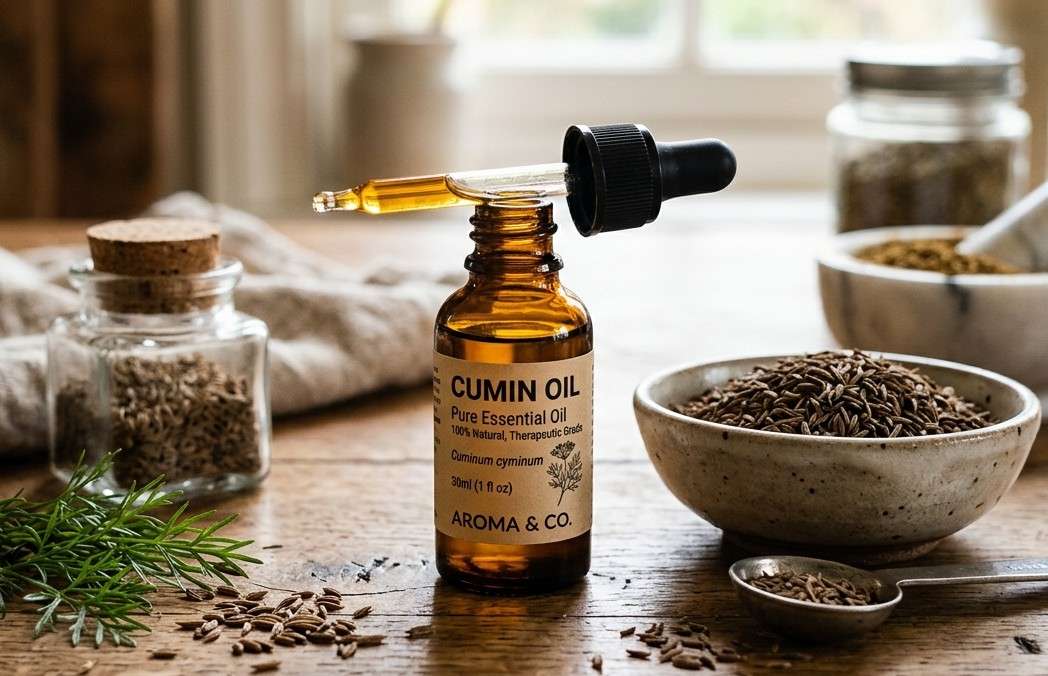
Cumin oil is a powerful herbal oil extracted from cumin seeds and valued for its digestive, immune-boosting, and skin-supporting properties. Used for centuries in traditional systems like Ayurveda and Middle Eastern medicine, cumin oil continues to gain popularity for both internal wellness and topical care.
In this guide, you will learn everything about cumin oil — from its nutritional profile and science-backed health benefits to side effects, dosage, and how to use it safely.
What is Cumin Oil?
Cumin oil is an essential oil or infused oil derived from the seeds of the cumin plant (Cuminum cyminum). Cumin is a flowering plant in the parsley family and is widely used as a spice in Indian, Middle Eastern, and Mediterranean cuisines.
There are two main types of cumin oil:
- Cumin Essential Oil – Extracted through steam distillation of cumin seeds. It is highly concentrated and used in aromatherapy and medicinal applications.
- Cumin Infused Oil – Made by soaking cumin seeds in a carrier oil like olive or coconut oil to extract their beneficial compounds.
Cumin essential oil has a warm, spicy, earthy aroma and contains active compounds such as cuminaldehyde, terpenes, flavonoids, and antioxidants. These compounds are responsible for its therapeutic effects.
Components of Cumin Oil
Although essential oils are not consumed in large quantities, cumin seed oil contains bioactive compounds that contribute to its health benefits. Below is a general nutritional and phytochemical profile of cumin seed oil:
| Nutrient / Compound | Amount (Approx.) | Health Role |
|---|---|---|
| Calories | 120 kcal (per tbsp infused oil) | Energy source |
| Total Fat | 14 g | Healthy fat support |
| Cuminaldehyde | Varies | Digestive stimulant |
| Terpenes | Present | Anti-inflammatory effects |
| Flavonoids | Present | Antioxidant support |
| Vitamin E | Small amount | Skin protection |
| Iron (trace in infused oil) | Small amount | Supports blood health |
| Thymol | Trace | Antimicrobial properties |
Note: Essential cumin oil is not consumed like cooking oil and does not provide significant macronutrients, but it is rich in potent plant compounds.
20 Proven Benefits of Cumin Oil
- Improves Digestion – Cumin seed oil stimulates digestive enzymes and helps relieve bloating, gas, and indigestion.
- Relieves Gas and Bloating – Its carminative properties help reduce intestinal gas and abdominal discomfort.
- Supports Weight Loss – Cumin oil may enhance metabolism and improve fat breakdown when combined with a healthy diet.
- Boosts Immunity – Rich in antioxidants, cumin seed oil helps protect the body against infections and oxidative stress.
- Regulates Blood Sugar – Some studies suggest cumin compounds may help stabilize blood glucose levels.
- Reduces Inflammation – Anti-inflammatory compounds help ease joint pain and swelling.
- Supports Respiratory Health – Cumin essential oil may help clear mucus and relieve mild cough and congestion.
- Improves Skin Health – Its antimicrobial and antioxidant properties help reduce acne and skin irritation.
- Promotes Hair Growth – Cumin seed oil nourishes the scalp and may reduce dandruff.
- Enhances Iron Absorption – Cumin compounds may assist in improving iron metabolism.
- Relieves Menstrual Discomfort – It may help reduce cramps and regulate menstrual cycles.
- Improves Liver Function – Cumin oil supports detoxification and liver enzyme activity.
- Fights Bacterial Infections – Its antimicrobial properties help combat harmful bacteria.
- Acts as a Natural Antioxidant – It protects cells from free radical damage.
- Supports Oral Health – Cumin seed oil may help reduce bad breath and oral bacteria.
- Enhances Appetite – Traditionally used to stimulate appetite in cases of weakness.
- Improves Gut Health – It supports a healthy balance of gut bacteria.
- May Help Lower Cholesterol – Some evidence suggests it may support healthy lipid levels.
- Relieves Stress and Fatigue – Aromatherapy with cumin essential oil may calm the nervous system.
- Supports Detoxification – Cumin seed oil promotes natural elimination of toxins.
10 Side Effects of Cumin Oil
While cumin oil is generally safe in moderate amounts, excessive use may cause unwanted effects.
- Skin Irritation – Undiluted essential oil may cause redness or irritation on sensitive skin.
- Allergic Reactions – Some individuals may experience itching or rash.
- Low Blood Sugar Risk – It may lower blood glucose too much in diabetics on medication.
- Heartburn – Excess consumption can trigger acid reflux in sensitive individuals.
- Liver Stress in High Doses – Overuse of concentrated essential oil may affect liver function.
- Photosensitivity – Topical use may increase sensitivity to sunlight.
- Hormonal Effects – It may influence estrogen levels in some cases.
- Interaction with Medications – May interact with diabetes or blood pressure drugs.
- Nausea – Strong aroma or high intake may cause nausea.
- Pregnancy Concerns – High doses may stimulate uterine contractions.
How to Use Cumin Oil?
Cumin oil can be used in multiple ways depending on the type (essential or infused):
- Add 1–2 drops of essential oil to a diffuser for aromatherapy.
- Mix a few drops with a carrier oil for massage.
- Add diluted cumin oil to warm bath water.
- Use infused cumin oil in cooking.
- Apply diluted oil to the scalp for hair care.
Always dilute essential oil before topical use.
Other Uses of Cumin Oil
Beyond health, cumin oil has additional practical uses:
- Flavoring agent in culinary dishes
- Natural preservative
- In perfumes and herbal cosmetics
- In traditional medicinal blends
- In massage therapy oils
- For room freshening and aromatherapy
Tips for Consuming Cumin Oil
- Always dilute essential oil before internal use.
- Use only food-grade cumin essential oil if consuming.
- Start with very small amounts.
- Avoid combining with alcohol.
- Consult a healthcare provider if on medication.
How to Take Cumin Oil?
For internal use (only if food-grade):
- Add 1 drop to a teaspoon of honey.
- Mix 1 drop in warm water.
- Use infused cumin essential oil in salad dressings.
For external use:
- Mix 2–3 drops with 1 tablespoon of coconut oil for massage.
- Apply diluted oil to affected areas.
How to Make Cumin Oil at Home?
Method for Cumin Infused Oil
Ingredients:
- 2 tablespoons cumin seeds
- 1 cup olive oil or coconut oil
Steps:
- Lightly crush the cumin seeds.
- Heat the carrier oil gently.
- Add cumin seeds and simmer on low heat for 5–10 minutes.
- Let it cool completely.
- Strain and store in a glass bottle.
Alternatively, you can soak crushed cumin seeds in oil for 2–3 weeks in a sealed jar and strain later.
Note: Essential oil requires steam distillation equipment and cannot be easily made at home.
How Much Cumin Oil Can You Use Per Day?
For infused cumin seed oil:
- 1–2 teaspoons per day in cooking is generally safe.
For essential oil:
- 1 drop once or twice daily (food-grade only and diluted).
Do not exceed recommended dosage without medical supervision.
Cumin Oil Dosage
- Aromatherapy: 2–3 drops in diffuser.
- Massage: 2–3 drops diluted in 1 tablespoon carrier oil.
- Internal: 1 drop diluted (only food-grade essential oil).
Dosage may vary depending on age, health condition, and purpose.
Best Time to Use Cumin Oil
- For digestion: After meals.
- For detox: Morning with warm water.
- For relaxation: Evening aromatherapy.
- For skin care: Nighttime application.
Who Should Use Cumin Oil?
- Individuals with digestive issues
- People with mild bloating or gas
- Those looking for natural immune support
- Individuals with mild acne or scalp problems
- People seeking natural metabolic support
Who Should Not Use Cumin Oil?
- Pregnant women (without medical advice)
- Breastfeeding mothers
- Children under 6 years
- People with severe liver conditions
- Individuals allergic to cumin or related herbs
- Diabetics on strong medication without supervision
How to Store Cumin Oil?
- Keep in a dark glass bottle.
- Store in a cool, dry place.
- Avoid direct sunlight.
- Keep tightly sealed to prevent oxidation.
- Use within 6–12 months for best potency.
Precautions and Interactions
- Always perform a patch test before topical use.
- Avoid contact with eyes and mucous membranes.
- Do not apply undiluted essential oil to skin.
- Consult a doctor if taking diabetes, blood pressure, or anticoagulant medication.
- Stop use if irritation occurs.
- Keep away from children and pets.
Final Thoughts
Cumin oil is a versatile and powerful natural remedy with digestive, immune, skin, and metabolic benefits. Whether used as an essential oil for aromatherapy or as an infused oil in cooking, it offers numerous health advantages when used responsibly.
However, like all potent herbal extracts, moderation and proper dilution are key. Understanding the correct dosage, precautions, and best usage methods ensures that you can safely enjoy the many benefits of cumin essential oil.
FAQ’s
What is cumin oil used for?
Cumin seed oil is commonly used for improving digestion, reducing bloating, supporting immunity, enhancing skin health, and promoting relaxation through aromatherapy.
Is cumin oil safe for daily use?
Yes, cumin seed oil can be used daily in small, recommended amounts, but essential oil must always be diluted and used cautiously.
Can I apply cumin oil directly to my skin?
No, essential cumin seed oil should not be applied directly to the skin; it must be diluted with a carrier oil to prevent irritation.
Can cumin oil help with weight loss?
Cumin seed oil may support metabolism and digestion, which can indirectly help with weight management when combined with a healthy diet and exercise.
Does cumin oil help with bloating and gas?
Yes, cumin seed oil has carminative properties that help relieve gas, bloating, and indigestion.
Can diabetics use cumin oil?
Cumin seed oil may help regulate blood sugar, but diabetics should consult a doctor before using it regularly, especially if taking medication.
Is cumin oil safe during pregnancy?
Pregnant women should avoid using cumin essential oil internally and consult a healthcare provider before use.
Can cumin oil improve skin health?
Yes, its antimicrobial and antioxidant properties may help reduce acne, soothe irritation, and promote clearer skin when diluted properly.
How long does it take for cumin oil to work?
Digestive benefits may be noticed within a few hours, while skin or metabolic benefits may take several weeks of consistent use.
Can cumin oil be used for hair growth?
Yes, when diluted and massaged into the scalp, cumin seed oil may help reduce dandruff and support healthier hair growth.
What does cumin oil smell like?
Cumin essential oil has a warm, spicy, earthy aroma similar to cumin spice but more concentrated.
Can I cook with cumin essential oil?
Only food-grade cumin essential oil should be used in extremely small amounts for flavoring; otherwise, use cumin-infused oil for cooking.
Can children use cumin oil?
Cumin seed oil should not be used on young children without medical advice, especially essential oil due to its strong concentration.
Also Read: