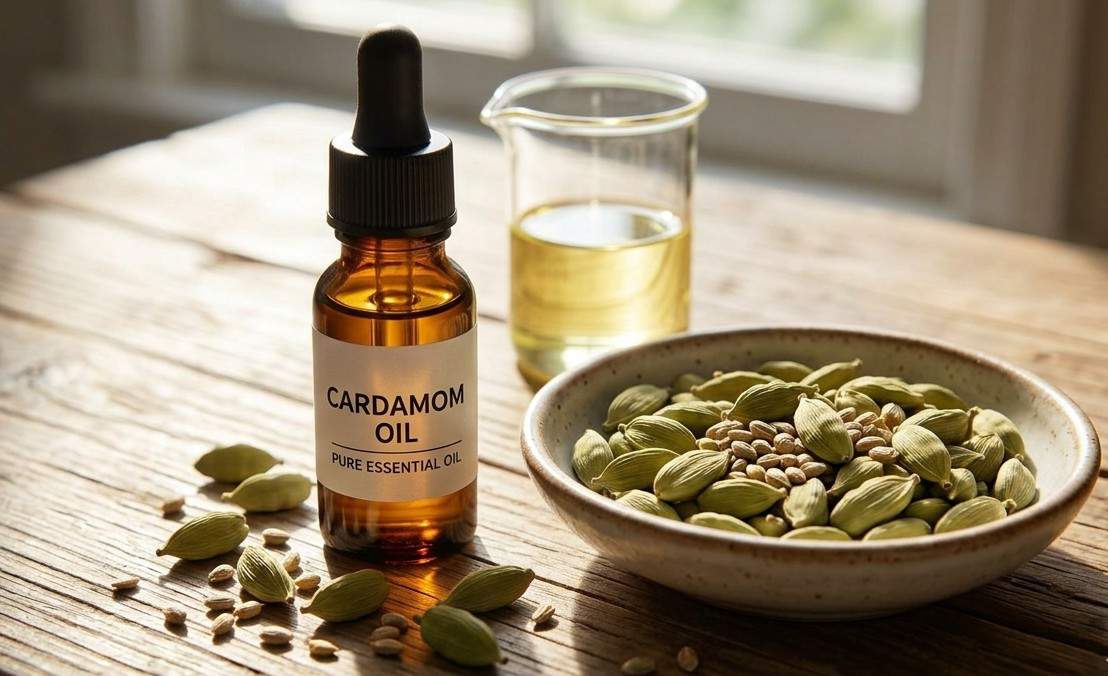
Cardamom oil is one of the most aromatic and therapeutic essential oils used in traditional and modern wellness practices. Extracted from the seeds of cardamom, this oil is valued for its warm, spicy, slightly sweet fragrance and its powerful medicinal properties. From digestive relief to respiratory support and emotional balance, cardamom oil has earned its place in natural healing systems across the world.
In this guide, you’ll learn everything about cardamom oil—what it is, its nutritional components, science-backed health benefits, side effects, how to use it safely, dosage guidelines, storage tips, and much more.
What is Cardamom Oil?
Cardamom oil is an essential oil extracted from the seeds of the cardamom plant, scientifically known as Elettaria cardamomum. The oil is usually obtained through steam distillation of dried cardamom seeds.
Cardamom belongs to the ginger family (Zingiberaceae) and has been widely used in Ayurveda, traditional Chinese medicine, and Middle Eastern remedies for centuries. While cardamom is commonly used as a culinary spice, its concentrated essential oil form offers potent therapeutic benefits.
The oil has a thin consistency and a pale yellow to clear appearance. Its fragrance is warm, sweet, spicy, and slightly balsamic, making it popular in aromatherapy and perfumery.
Components of Cardamom Oil
Since cardamom oil is an essential oil, it does not contain traditional macronutrients like carbohydrates or protein. Instead, it is rich in bioactive compounds responsible for its health effects.
| Component | Approximate Percentage | Function |
|---|---|---|
| 1,8-Cineole (Eucalyptol) | 20–50% | Supports respiratory health |
| Alpha-Terpinyl Acetate | 30–45% | Anti-inflammatory and calming |
| Linalool | 2–5% | Antimicrobial and relaxing |
| Limonene | 1–5% | Antioxidant properties |
| Sabinene | 1–4% | Digestive support |
| Myrcene | Trace | Anti-inflammatory |
| Terpineol | Trace | Antimicrobial |
| Natural Antioxidants | Present | Protects cells from oxidative stress |
These compounds work together to produce the therapeutic actions of cardamom essential oil.
20 Proven Benefits of Cardamom Oil
- Improves Digestion: Cardamom essential oil stimulates digestive enzymes and helps relieve bloating, gas, and indigestion.
- Relieves Nausea: Its soothing aroma helps calm nausea and motion sickness.
- Supports Respiratory Health: The cineole content helps clear congestion and ease breathing difficulties.
- Reduces Cough: Cardamom oil acts as an expectorant, helping remove mucus from the respiratory tract.
- Freshens Breath: Its antimicrobial properties help combat oral bacteria that cause bad breath.
- Enhances Mood: The warm aroma promotes emotional balance and reduces stress.
- Reduces Anxiety: Inhalation may calm nervous tension and mild anxiety.
- Improves Circulation: It stimulates blood flow, supporting overall cardiovascular health.
- Relieves Muscle Pain: When diluted and applied topically, it may ease muscle soreness.
- Supports Detoxification: It helps promote healthy liver function and detox pathways.
- Boosts Energy Levels: The stimulating scent can reduce mental fatigue.
- Improves Focus and Clarity: Aromatherapy use enhances mental alertness.
- Supports Oral Health: It has antibacterial properties that protect gums and teeth.
- May Reduce Inflammation: Natural compounds in the oil help reduce inflammatory responses.
- Promotes Healthy Skin: It may help cleanse pores and improve skin tone.
- Helps With Menstrual Discomfort: Its warming properties may ease mild cramps.
- Supports Immune Function: Antioxidant compounds strengthen immune defenses.
- Improves Appetite: It may stimulate appetite in individuals with low hunger.
- Acts as a Natural Antiseptic: It can help prevent minor infections when used properly.
- Supports Libido: Traditionally used as a natural aphrodisiac to improve vitality.
10 Side Effects of Cardamom Oil
Although generally safe when used properly, cardamom oil may cause side effects in certain individuals.
- Skin Irritation: Undiluted application may cause redness or irritation.
- Allergic Reactions: Sensitive individuals may develop itching or rash.
- Digestive Upset: Excess internal use may cause stomach discomfort.
- Heartburn: Large amounts may aggravate acid reflux.
- Low Blood Pressure: It may slightly lower blood pressure in some people.
- Drug Interactions: It may interact with blood-thinning medications.
- Hormonal Sensitivity: Excessive use could affect hormone-sensitive conditions.
- Pregnancy Concerns: High doses may not be safe during pregnancy.
- Breathing Sensitivity: Strong aroma may trigger sensitivity in asthmatics.
- Toxicity Risk if Overused: Essential oils are concentrated and must not be consumed in large amounts.
How to Use Cardamom Oil?
Cardamom essential oil can be used in several ways:
Aromatherapy:
Add 3–5 drops to a diffuser to promote relaxation and respiratory support.
Topical Application:
Dilute with a carrier oil (such as coconut or almond oil) before applying to the skin.
Massage Oil:
Mix a few drops with a carrier oil to relieve muscle pain.
Steam Inhalation:
Add 1–2 drops to hot water and inhale the steam for congestion relief.
Oral Care:
Add one diluted drop to warm water as a mouth rinse (do not swallow).
Other Uses of Cardamom Oil
- Natural room freshener
- Ingredient in perfumes
- Added to skincare products
- Used in herbal blends
- Flavoring agent in food industry (food-grade only)
- Added to massage therapy oils
- Used in meditation and spiritual rituals
Tips for Consuming Cardamom Oil
- Always use food-grade cardamom essential oil if consuming internally.
- Never consume undiluted essential oil.
- Dilute one drop in a teaspoon of honey or warm water.
- Consult a healthcare provider before internal use.
- Avoid long-term internal consumption without guidance.
How to Take Cardamom Oil?
If approved by a healthcare professional:
- 1 drop diluted in warm water
- 1 drop mixed in herbal tea
- 1 drop in honey
Internal use should be occasional and limited.
How to Make Cardamom Oil at Home?
While essential oil requires steam distillation equipment, you can prepare an infused cardamom essential oil at home.
Ingredients:
- 2 tablespoons crushed cardamom pods
- 1 cup carrier oil (olive oil or coconut oil)
Method:
- Crush cardamom pods slightly.
- Warm the carrier oil gently.
- Add cardamom pods to the oil.
- Let it infuse for 48–72 hours.
- Strain and store in a glass bottle.
This homemade version is milder than essential oil.
How Much Cardamom Oil Can You Use Per Day?
For aromatherapy: 3–6 drops per day in a diffuser.
For topical use: Dilute to 1–2% concentration (about 1–2 drops per teaspoon of carrier oil).
For internal use: No more than 1 drop per day, occasionally, and only under professional guidance.
Cardamom Oil Dosage
Topical Dilution Guide:
- Adults: 1–2% dilution
- Sensitive skin: 0.5–1% dilution
- Children: Consult healthcare provider
Aromatherapy:
- 3–5 drops in diffuser
Internal:
- 1 drop diluted (only if food-grade and approved)
Best Time to Use Cardamom Oil
- Morning: For energy and mental clarity
- After meals: For digestion support
- Evening: For stress relief and relaxation
- During cold symptoms: Anytime congestion occurs
Who Should Use Cardamom Oil?
- People with digestive discomfort
- Individuals experiencing stress or anxiety
- Those with mild respiratory congestion
- People seeking natural oral care support
- Individuals looking for natural muscle relief
Who Should Not Use Cardamom Oil?
- Pregnant women without medical advice
- Breastfeeding mothers without consultation
- Children under 6 years
- People with severe allergies
- Individuals taking blood thinners
- Those with chronic liver conditions
How to Store Cardamom Oil?
- Keep in a dark glass bottle
- Store in a cool, dry place
- Avoid direct sunlight
- Close tightly after use
- Keep away from children
Proper storage preserves potency for 2–3 years.
Precautions and Interactions
- Always perform a patch test before topical use.
- Do not apply near eyes or sensitive areas.
- Avoid undiluted skin application.
- Consult a doctor if taking anticoagulants.
- Stop use if irritation occurs.
- Do not exceed recommended dosage.
Final Thoughts
Cardamom oil is a powerful essential oil with a long history of use in traditional medicine. Its benefits range from digestive and respiratory support to emotional balance and skin health. However, due to its concentrated nature, it must be used carefully and responsibly.
When used properly, cardamom essential oil can be a valuable addition to your natural wellness routine. Always prioritize safety, proper dilution, and professional guidance when needed.
FAQ’s
What is cardamom oil used for?
Cardamom essential oil is commonly used for digestion support, relieving gas and bloating, improving respiratory health, reducing stress, freshening breath, and easing muscle discomfort.
Is cardamom oil safe for skin?
Yes, when properly diluted with a carrier oil. Undiluted use may cause irritation.
Can cardamom oil help with cough and cold?
Yes, its cineole content helps loosen mucus and ease breathing when used in steam inhalation or diffusion.
Does cardamom oil help with digestion?
Yes, it may stimulate digestive enzymes and relieve bloating, indigestion, and nausea.
Can I use cardamom oil daily?
Aromatherapy and properly diluted topical use can be done daily in moderation, but internal use should not be frequent without medical advice.
Is cardamom oil good for anxiety?
Its warm, calming aroma may help reduce mild stress and nervous tension.
What does cardamom oil smell like?
It has a warm, spicy, slightly sweet, and balsamic aroma.
Can pregnant women use cardamom oil?
Pregnant women should consult a healthcare professional before using cardamom essential oil, especially internally.
Is cardamom oil safe for children?
It is generally not recommended for children under six years unless advised by a healthcare provider.
Can cardamom oil lower blood pressure?
It may have mild blood pressure–lowering effects, so individuals with low blood pressure should use it cautiously.
How do you dilute cardamom oil for skin use?
Mix 1–2 drops of cardamom essential oil with one teaspoon of carrier oil such as coconut or almond oil.
Can cardamom oil cause allergies?
Yes, some people may experience skin irritation or allergic reactions, so a patch test is recommended.
How long does cardamom oil last?
When stored properly in a dark glass bottle away from heat and light, it typically lasts 2–3 years.
Can cardamom oil be used in cooking?
Only food-grade cardamom essential oil should be used in cooking, and in extremely small amounts.
Is cardamom oil good for oral health?
Yes, its antimicrobial properties may help combat bacteria that cause bad breath.
What is the best way to use cardamom oil for congestion?
Add 1–2 drops to hot water for steam inhalation or use 3–5 drops in a diffuser.
Can cardamom oil help with muscle pain?
Yes, when diluted and massaged into the affected area, it may help relieve mild muscle soreness.
Does cardamom oil boost energy?
Its stimulating aroma may help reduce fatigue and improve mental alertness.
Also Read: