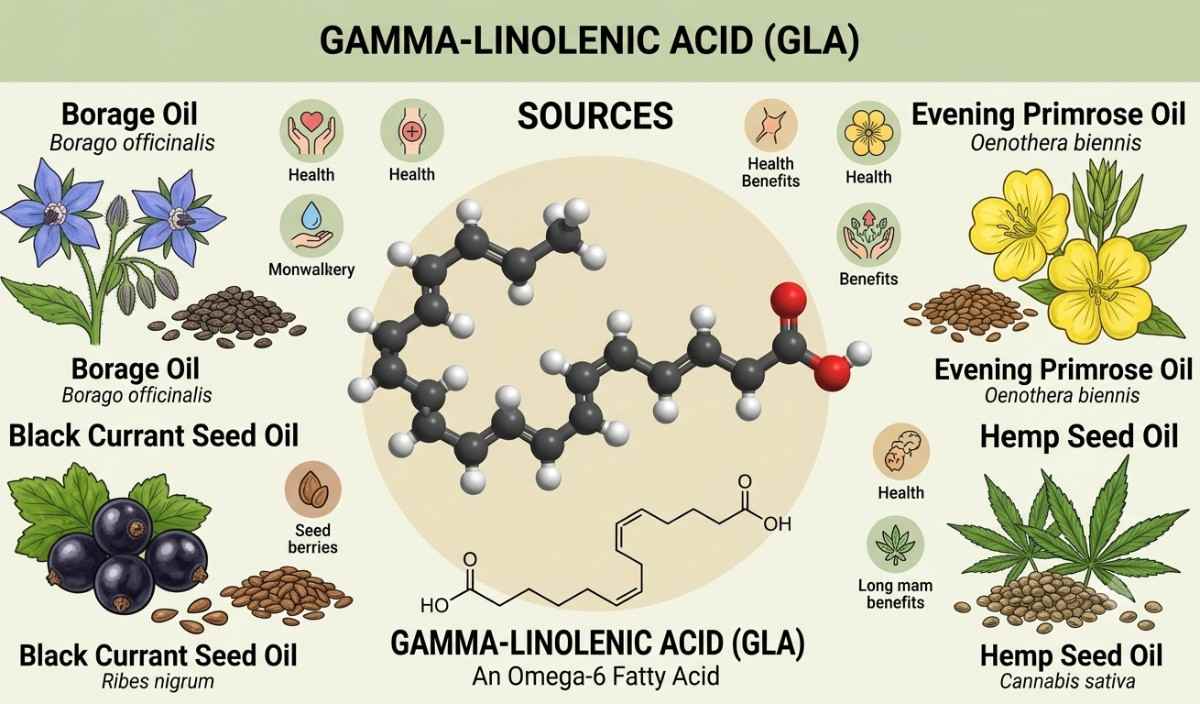
Gamma-Linolenic Acid (GLA) is a naturally occurring omega-6 polyunsaturated fatty acid found in certain plant seed oils, including evening primrose oil, borage seed oil, and black currant seed oil. Unlike many other fatty acids, GLA can be converted into dihomo-gamma-linolenic acid (DGLA), which participates in the production of signaling molecules involved in inflammation and immune regulation.
GLA has attracted scientific interest because of its potential role in inflammatory conditions, skin health, nerve function, and eye health. Research has produced promising findings for some conditions, particularly rheumatoid arthritis and diabetic peripheral neuropathy, although results are not equally strong for every proposed use.
GLA is generally consumed through supplements rather than as a major dietary fatty acid. Because supplements can contain substantially different amounts of GLA, it is important to distinguish the amount of GLA itself from the total amount of oil in a capsule.
What Is Gamma-Linolenic Acid?
Gamma-Linolenic Acid, commonly abbreviated as GLA, is an 18-carbon omega-6 fatty acid with the chemical structure 18:3 n-6.
The body can normally produce GLA from linoleic acid using the enzyme delta-6-desaturase. GLA is then elongated to DGLA, an intermediate involved in the production of several lipid mediators. Some DGLA-derived compounds can have inflammation-regulating effects.
GLA is naturally present in relatively small amounts in the diet. Important supplemental sources include:
- Evening primrose oil
- Borage seed oil
- Black currant seed oil
It is important to note that GLA is an omega-6 fatty acid, but it should not automatically be equated with all omega-6 fats. Different omega-6 fatty acids have different metabolic pathways and biological effects.
About of Gamma-Linolenic Acid
| Property | Details |
|---|---|
| Full name | Gamma-Linolenic Acid |
| Abbreviation | GLA |
| Chemical formula | C18H30O2 |
| Fatty acid type | Polyunsaturated fatty acid |
| Omega family | Omega-6 |
| Carbon atoms | 18 |
| Double bonds | 3 |
| Chemical notation | 18:3 n-6 |
| Main supplemental sources | Evening primrose, borage, and black currant seed oils |
| Main metabolic product | Dihomo-gamma-linolenic acid (DGLA) |
| Physical nature | Unsaturated fatty acid |
| Dietary status | Not considered an essential dietary fatty acid because the body can synthesize it from linoleic acid |
| Common supplement forms | Softgels, capsules, and oils |
| Main research areas | Inflammation, rheumatoid arthritis, skin health, diabetic neuropathy, and eye health |
How Does Gamma-Linolenic Acid Work?
After consumption, GLA is incorporated into cellular lipids and can be elongated to DGLA. DGLA can then participate in the production of signaling molecules, including certain prostaglandins and other lipid mediators.
One reason GLA is being studied for inflammatory conditions is that its metabolism can influence the balance of compounds involved in inflammatory signaling. Research suggests that GLA supplementation can alter leukotriene and prostaglandin pathways, although the overall effects depend on dose, tissue, metabolism, and other dietary fatty acids.
This does not mean GLA works as a conventional anti-inflammatory drug. Instead, it may influence the body’s fatty-acid signaling pathways.
20 Benefits of Gamma-Linolenic Acid
1. Supports Inflammation Regulation: GLA can be converted to DGLA, which participates in lipid signaling pathways that may influence inflammatory responses.
2. May Support Joint Comfort: Clinical studies have reported improvements in pain, joint tenderness, and stiffness among some people with rheumatoid arthritis taking relatively high doses of GLA.
3. May Reduce Rheumatoid Arthritis Symptoms: Systematic reviews have found potential benefits of GLA-containing oils for rheumatoid arthritis symptoms, although more high-quality research is needed.
4. May Support Joint Mobility: By potentially influencing inflammatory signaling, GLA may help some people experience improved joint function alongside appropriate medical treatment.
5. Supports Skin Barrier Function: A clinical study found that GLA-rich supplementation improved certain skin-barrier measurements in adults with dry skin and mild atopic dermatitis.
6. May Help With Dry Skin: GLA supplementation has been investigated for improving skin hydration and reducing transepidermal water loss, although results across studies are not consistent.
7. May Support Atopic Skin: Some studies have reported improvements in aspects of atopic dermatitis, but systematic evidence has also found no clinically relevant overall benefit, so the evidence remains mixed.
8. Supports Normal Cell Membranes: As a polyunsaturated fatty acid, GLA can become incorporated into cell membranes and contribute to normal cellular lipid composition.
9. May Support Nerve Function: Clinical trials have investigated GLA for diabetic peripheral neuropathy, with some studies reporting improvements in nerve-related measures.
10. May Reduce Diabetic Neuropathy Symptoms: A more recent randomized trial found that 320 mg/day of GLA produced improvements in pain measures over 12 weeks, although additional research is needed.
11. May Support Nerve Conduction: Earlier research found improvements in several nerve-conduction measurements among people with diabetic neuropathy receiving GLA.
12. May Support Eye Comfort: GLA has been studied in combination with other fatty acids for inflammatory dry-eye conditions, with some trials reporting improvements in symptoms.
13. May Support Ocular Surface Health: Research suggests that combinations containing GLA may influence inflammatory processes affecting the ocular surface, although GLA alone has not been established as a treatment for dry eye.
14. May Support Meibomian Gland Function: A clinical study using linoleic acid plus GLA reported improvements in certain measures of meibomian gland dysfunction.
15. May Influence Prostaglandin Production: GLA-derived DGLA can participate in pathways producing prostaglandins, which are important signaling molecules involved in inflammation and other physiological processes.
16. May Influence Leukotriene Pathways: Experimental and human metabolic research indicates that GLA supplementation can affect leukotriene production, providing a possible explanation for some of its anti-inflammatory effects.
17. May Support Immune Signaling: Because DGLA-derived lipid mediators can influence inflammatory and immune pathways, GLA may have a role in regulating aspects of immune signaling.
18. May Support Overall Fatty-Acid Balance: GLA provides a preformed intermediate in the omega-6 pathway, potentially helping bypass some of the metabolic steps required to convert linoleic acid into downstream fatty acids.
19. May Support Healthy Skin Appearance: By contributing to cellular lipid composition and potentially supporting the skin barrier, GLA may help maintain smoother and better-hydrated skin in some individuals.
20. Provides a Research-Based Source of Omega-6 GLA: GLA supplements provide a concentrated source of a specific omega-6 fatty acid that has been investigated for inflammatory, neurological, dermatological, and ocular applications.
Important: Many of these findings come from relatively small trials, older studies, combination products, or specific medical populations. GLA should not replace prescribed treatment.
10 Side Effects of Gamma-Linolenic Acid
GLA supplements are generally tolerated in clinical studies, but side effects can occur, particularly at higher doses.
1. Digestive Upset: GLA supplements may cause nausea, abdominal discomfort, indigestion, loose stools, or other gastrointestinal symptoms.
2. Nausea: Some people may experience mild nausea after taking concentrated fatty-acid supplements, particularly on an empty stomach.
3. Diarrhea: Higher supplemental doses may occasionally cause loose stools or diarrhea.
4. Bloating: Changes in digestion may result in temporary abdominal bloating or discomfort.
5. Headache: Headache has been reported with some fatty-acid supplementation, although it is not considered a universal reaction to GLA.
6. Soft-Stool Changes: Changes in stool consistency can occur because concentrated oils can affect gastrointestinal function.
7. Allergic Reactions: People sensitive to ingredients in a GLA product, including the source oil or capsule ingredients, may develop an allergic reaction.
8. Medication-Related Effects: GLA may interact with certain medications, making professional advice important for people taking prescription drugs.
9. Possible Seizure Concerns: People with seizure disorders or those taking medicines that may lower the seizure threshold should discuss GLA supplementation with a healthcare professional before use.
10. Unknown Long-Term Effects at High Doses: Long-term use of high-dose GLA has not been established as universally safe for every population, so prolonged high-dose supplementation should be medically supervised.
How to Take Gamma-Linolenic Acid?
GLA is usually taken as a softgel or capsule containing evening primrose oil, borage seed oil, or another GLA-containing oil.
The most important point is to check the actual GLA amount on the Supplement Facts label, because the total oil weight is not the same as the amount of GLA.
For example, a capsule may contain 1,000 mg of borage oil but provide only a few hundred milligrams of GLA.
General tips for taking GLA
- Follow the product’s serving instructions unless your healthcare professional recommends otherwise.
- Take it with food if it causes stomach discomfort.
- Do not assume that a higher dose will produce greater benefits.
- Give the supplement sufficient time if it is being used under professional guidance for a specific condition.
- Choose products from reputable manufacturers with clear labeling.
- Check whether the product contains other ingredients or additional fatty acids.
- Tell your healthcare professional about GLA before combining it with prescription medications.
What Is the Best Time to Take Gamma-Linolenic Acid?
There is no universally established best time of day for taking GLA.
For many people, taking it with a meal may be more comfortable and may help reduce gastrointestinal discomfort. If the daily amount is divided into multiple doses, it can be taken with different meals according to the product instructions or healthcare professional’s recommendation.
Consistency is generally more important than choosing a specific morning or evening time.
Who Should Take Gamma-Linolenic Acid?
GLA should not be considered necessary for everyone. It may be considered by adults who have a specific nutritional or health reason to use it and who have discussed supplementation with a qualified healthcare professional.
- People Interested in Specific GLA Supplementation: Adults seeking a concentrated source of GLA may consider supplements when dietary intake or a particular clinical goal warrants it.
- People With Rheumatoid Arthritis: Some clinical studies suggest that relatively high doses may improve certain rheumatoid arthritis symptoms, but GLA should be used as a complementary approach rather than a replacement for prescribed treatment.
- People With Diabetic Neuropathy: GLA has been studied for diabetic peripheral neuropathy and may have potential benefits for nerve symptoms in some patients.
- People With Dry Skin: Adults with dry skin may discuss GLA supplementation with a healthcare professional because some research suggests potential improvements in skin-barrier function.
- People Interested in Eye-Support Formulations: GLA is sometimes included in formulations studied for dry-eye symptoms, particularly alongside omega-3 fatty acids.
Who Should Avoid Gamma-Linolenic Acid?
Certain people should avoid self-prescribing GLA or seek medical advice before taking it.
- People Taking Blood-Thinning Medication: Anyone using anticoagulant or antiplatelet medicines should consult a healthcare professional before taking GLA-containing supplements.
- People With Seizure Disorders: People with epilepsy or a history of seizures should obtain medical advice before using GLA.
- People Preparing for Surgery: It is sensible to discuss GLA with the surgical team before a planned procedure because supplements may affect medication management or bleeding considerations.
- Pregnant Women: Pregnant women should not begin concentrated GLA supplementation without guidance from their obstetric or healthcare professional.
- Breastfeeding Women: People who are breastfeeding should discuss supplemental GLA with a healthcare professional before use.
- People With Medication Interactions: Anyone taking regular prescription or over-the-counter medicines should check for possible interactions before starting GLA.
- People With Supplement Allergies: Anyone who has previously reacted to evening primrose, borage, black currant, or another ingredient should avoid the relevant product.
- Children: GLA supplements should not be routinely given to children unless specifically recommended by a pediatric healthcare professional.
How Much Gamma-Linolenic Acid Should You Take Daily?
There is no single recommended daily allowance or established universal daily dose for GLA for healthy adults.
Supplement doses vary considerably depending on the product and the purpose for which GLA is being studied.
Clinical research has used doses ranging from several hundred milligrams per day to considerably higher amounts. For example, studies of diabetic neuropathy have used approximately 320–480 mg of GLA per day, while some rheumatoid arthritis trials have used approximately 1.4–2.8 grams per day.
These research doses should not be interpreted as a recommendation for self-treatment.
For everyday supplementation, follow the manufacturer’s labeled dose or the dose recommended by your healthcare professional. The appropriate amount depends on the product, GLA concentration, medical history, medications, and intended use.
Other Uses of Gamma-Linolenic Acid
GLA has been investigated for a wide range of health applications, including:
- Rheumatoid arthritis
- Diabetic peripheral neuropathy
- Dry skin
- Atopic dermatitis
- Dry-eye symptoms
- Meibomian gland dysfunction
- Inflammatory conditions
- Cellular membrane support
- Omega-6 fatty-acid supplementation
- Research involving immune and inflammatory signaling
However, being studied for a condition does not mean GLA has been proven to prevent, treat, or cure it. Evidence is strongest for some specific research areas and much weaker for others.
For example, systematic research on atopic dermatitis has produced inconsistent findings, while clinical trials and reviews of rheumatoid arthritis have reported more promising results.
Precautions and Interactions
- Medication Review: Speak with a healthcare professional before taking GLA if you regularly use prescription or over-the-counter medicines.
- Blood-Thinning Medicines: Extra caution is appropriate when GLA is combined with medicines that affect blood clotting.
- Seizure Medicines: People with seizure disorders should discuss GLA with their healthcare provider before supplementation.
- Surgery: Tell your surgeon and healthcare team about GLA and other supplements before a planned procedure.
- Pregnancy: Do not use concentrated GLA supplements during pregnancy unless specifically recommended by a qualified healthcare professional.
- Breastfeeding: Seek professional advice before taking GLA while breastfeeding because safety data for supplemental doses are limited.
- Product Quality: Choose supplements that clearly state the amount of actual GLA rather than only listing the total amount of seed oil.
- Borage Oil Quality: Borage-derived products should come from reputable manufacturers because improperly processed borage products may contain unwanted pyrrolizidine alkaloids.
- High-Dose Use: High-dose GLA should be used only with appropriate professional supervision because research doses can be substantially higher than routine supplement doses.
- Medical Treatment: Do not replace prescribed treatment for rheumatoid arthritis, diabetes, neuropathy, dermatitis, or other medical conditions with GLA supplementation.
- Combination Supplements: Check labels carefully because some products combine GLA with omega-3 fatty acids, vitamins, herbs, or other ingredients that may have their own interactions.
FAQ’s
What is Gamma-Linolenic Acid used for?
Gamma-Linolenic Acid is mainly studied for inflammation, rheumatoid arthritis, diabetic neuropathy, skin health, and certain eye conditions.
Is Gamma-Linolenic Acid good for skin?
GLA may support skin hydration and barrier function, particularly in people with dry skin, although research results are mixed.
Is Gamma-Linolenic Acid good for joints?
GLA may help support joint comfort and reduce some symptoms of rheumatoid arthritis when used under appropriate medical guidance.
Can Gamma-Linolenic Acid reduce inflammation?
GLA can influence fatty-acid pathways involved in inflammatory signaling, but it should not replace prescribed anti-inflammatory treatment.
Can I take Gamma-Linolenic Acid every day?
GLA can be taken daily when used according to product directions or healthcare-professional advice.
Is Gamma-Linolenic Acid the same as evening primrose oil?
No, evening primrose oil is a plant oil that naturally contains Gamma-Linolenic Acid.
Does Gamma-Linolenic Acid contain omega-3?
No, Gamma-Linolenic Acid is an omega-6 fatty acid.
Can Gamma-Linolenic Acid help diabetic neuropathy?
GLA has been studied for diabetic peripheral neuropathy, with some research suggesting potential improvements in nerve-related symptoms.
Is Gamma-Linolenic Acid safe during pregnancy?
Pregnant women should not take concentrated GLA supplements without first consulting their healthcare professional.
Can children take Gamma-Linolenic Acid?
Children should only take GLA supplements when specifically recommended by a pediatric healthcare professional.
Can Gamma-Linolenic Acid interact with medications?
GLA may interact with certain medicines, so people taking regular medications should consult a healthcare professional before supplementation.
Can Gamma-Linolenic Acid help dry eyes?
GLA has been investigated for dry-eye symptoms, particularly in combination with other fatty acids, but it is not an established standalone treatment.
Is Gamma-Linolenic Acid naturally produced by the body?
Yes, the body can produce GLA from linoleic acid through a metabolic pathway.
What is the difference between GLA and linoleic acid?
Both are omega-6 fatty acids, but GLA is a downstream product of linoleic acid metabolism and has a different biological role.
Can Gamma-Linolenic Acid help with dry skin?
Some studies suggest GLA may improve aspects of skin hydration and barrier function, although results are not consistent across all studies.
Sources / References:
About the Author:
Written by: Kirti Solanki (Health Content Researcher)
Kirti Solanki is a health content researcher focused on creating clear, evidence-informed articles covering nutrition, wellness, supplements, skincare, and general health topics. Her content emphasizes accessible explanations, scientific references, and responsible health communication.
Disclaimer:
This guide is for educational and informational purposes only and does not replace medical advice, diagnosis, or treatment. Gamma-Linolenic Acid supplements may not be appropriate for everyone and can interact with medicines or medical conditions. Consult a qualified healthcare professional before starting GLA supplementation, particularly if you are pregnant, breastfeeding, taking medication, preparing for surgery, or managing a chronic health condition.
Also Read: