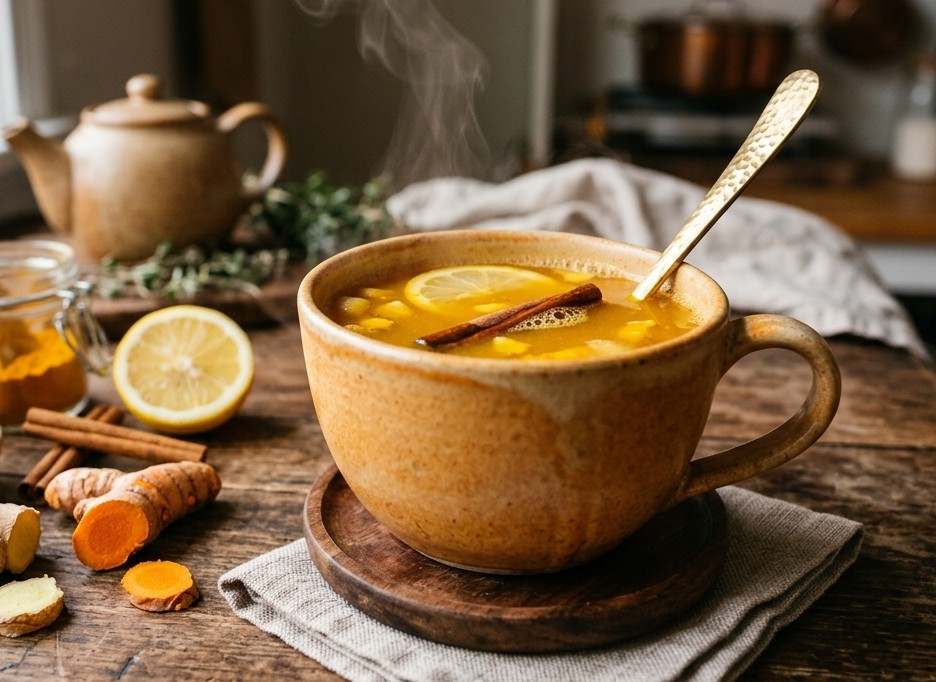
Ginger turmeric tea is a warm herbal beverage made by steeping fresh ginger and turmeric in hot water. It is naturally caffeine-free and is commonly enjoyed for its spicy, earthy flavor and comforting qualities. Ginger contains bioactive compounds such as gingerols, while turmeric contains curcuminoids, including curcumin.
Both ingredients have been studied for their potential effects on digestion, inflammation, nausea, pain, and other aspects of health. However, research on turmeric and ginger supplements does not automatically prove that a cup of homemade tea produces the same effects, because the amount of active compounds absorbed from tea can differ considerably from concentrated extracts or supplements.
Ginger turmeric tea can therefore be viewed as a flavorful addition to an overall healthy diet rather than a treatment for a disease.
What Is Ginger Turmeric Tea?
Ginger turmeric tea is an herbal infusion prepared primarily with ginger root and turmeric root or turmeric powder. Water extracts some of the water-soluble and other compounds from these ingredients, creating a golden-yellow beverage with a warm, slightly spicy taste.
Ginger belongs to the Zingiberaceae family, the same botanical family as turmeric. Ginger’s characteristic compounds include gingerols and related substances, while turmeric contains curcuminoids, with curcumin being one of the best-known compounds.
Traditionally, both spices have been used in several food and traditional medicine practices. Modern research has investigated ginger and turmeric for a range of health applications, but the strength of evidence varies depending on the condition, preparation, and dosage.
A simple cup can contain:
- Fresh ginger
- Fresh turmeric or turmeric powder
- Hot water
- Lemon juice, if desired
- A small amount of honey, if desired
- Black pepper, sometimes added to turmeric beverages
It is important to remember that ginger turmeric tea is not equivalent to a concentrated curcumin or ginger supplement. Research using standardized extracts may involve considerably different quantities and absorption characteristics.
Nutritional Facts of Ginger Turmeric Tea
The nutritional content varies depending on the amount of ginger, turmeric, lemon, honey, and other ingredients used. A basic unsweetened cup made primarily from water, ginger, and turmeric is very low in calories.
| Nutrient | Approximate Amount per 1 Cup |
|---|---|
| Calories | 5–15 kcal |
| Carbohydrates | 1–3 g |
| Protein | Less than 1 g |
| Fat | Less than 1 g |
| Fiber | Less than 1 g |
| Natural Sugars | Less than 1 g |
| Sodium | Very low |
| Caffeine | 0 mg |
| Vitamin C | Small amount, depending on additions |
| Potassium | Small amount |
| Calcium | Small amount |
| Iron | Small amount |
| Plant Compounds | Gingerols and curcuminoids |
Note: These are general estimates rather than laboratory-tested values. The actual nutrition profile depends on the recipe, steeping method, ingredient quantity, and whether sweeteners or lemon are added.
The major nutritional interest in ginger turmeric tea comes less from its calorie or vitamin content and more from its naturally occurring plant compounds.
20 Health Benefits of Ginger Turmeric Tea
1. May Support Digestive Comfort: Ginger has traditionally been used for digestive complaints, and research has investigated ginger for nausea and gastrointestinal symptoms, although the evidence differs according to the condition being studied.
2. May Help With Nausea: Ginger has been studied for several forms of nausea, and some research suggests it may be useful in certain situations, although results are not consistently positive for every cause of nausea.
3. Provides Anti-Inflammatory Compounds: Curcumin, a major compound in turmeric, has demonstrated anti-inflammatory activity in laboratory research, although evidence is not sufficient to consider turmeric a treatment for inflammatory diseases.
4. Supplies Antioxidant Plant Compounds: Ginger and turmeric contain naturally occurring compounds that have antioxidant activity, helping explain why both spices are being investigated for their biological effects.
5. May Support Joint Comfort: Research involving turmeric or curcumin has reported potentially beneficial effects on some measures of knee osteoarthritis, although higher-quality research is still needed.
6. May Support Joint Mobility: Some clinical studies of curcumin preparations have examined improvements in joint function and mobility, but these findings should not automatically be applied to ordinary turmeric tea.
7. May Help With Menstrual Discomfort: Ginger supplements have been studied for menstrual cramps, with research suggesting that ginger may reduce the severity of menstrual pain in some people.
8. Can Be a Caffeine-Free Beverage: Ginger turmeric tea contains no caffeine when prepared only with ginger, turmeric, water, and optional caffeine-free ingredients, making it suitable for people who want an alternative to caffeinated drinks.
9. May Support a Healthy Beverage Routine: Replacing sugar-heavy beverages with an unsweetened herbal tea can reduce overall added-sugar intake and contribute to healthier beverage choices.
10. May Be Comforting During Cold Weather: The warm temperature and spicy flavor of ginger turmeric tea can provide a soothing drinking experience, although this should not be confused with evidence that the beverage treats respiratory infections.
11. May Complement a Balanced Anti-Inflammatory Diet: Ginger and turmeric can add flavorful plant compounds to a diet that already emphasizes vegetables, fruits, whole grains, legumes, nuts, seeds, and other minimally processed foods.
12. May Support Overall Antioxidant Intake: The plant compounds naturally present in ginger and turmeric contribute to dietary exposure to bioactive substances with antioxidant properties.
13. May Be Useful After Meals: Some people prefer ginger tea after eating because of its traditional association with digestive comfort, although individual responses can vary.
14. May Offer an Alternative to Heavily Sweetened Drinks: When prepared without sugar or with only a small amount of honey, ginger turmeric tea can be a flavorful alternative to soft drinks and other sweetened beverages.
15. May Support Healthy Lifestyle Habits: Preparing and drinking a warm herbal tea can encourage mindful beverage choices and may fit comfortably into a balanced daily routine.
16. May Provide Small Amounts of Minerals: Ginger and turmeric contribute small amounts of minerals such as potassium, iron, and manganese, although a cup of tea should not be considered a major nutritional source of these nutrients.
17. May Support Exercise-Recovery Research Areas: Curcumin has been investigated for effects on exercise-related muscle soreness and inflammation, although much of this research involves concentrated preparations rather than homemade tea.
18. May Support Healthy Aging Through Plant Compounds: The antioxidant and anti-inflammatory properties of compounds found in turmeric and ginger are being investigated in relation to healthy aging, but human evidence for disease prevention remains limited.
19. May Help Add Variety to a Healthy Diet: Using herbs and spices such as ginger and turmeric can make nutritious eating more enjoyable without relying heavily on salt, sugar, or highly processed sauces.
20. May Provide a Simple Wellness Beverage: Ginger turmeric tea combines two widely used culinary spices in a convenient drink, making it an easy way to include flavorful plant foods in an overall balanced lifestyle.
10 Side Effects of Ginger Turmeric Tea
Ginger turmeric tea is generally well tolerated in food-level amounts by many healthy adults, but it can cause problems in some people.
1. Heartburn: Ginger may cause heartburn in some people, particularly when consumed in larger amounts or by people who are sensitive to spicy foods.
2. Stomach Upset: Concentrated amounts of ginger or turmeric may cause abdominal discomfort or digestive upset in sensitive individuals.
3. Diarrhea: Larger amounts of ginger or turmeric may loosen stools or cause diarrhea in some individuals.
4. Nausea: Although ginger is commonly studied for nausea, concentrated ginger or turmeric products can paradoxically cause nausea in some people.
5. Mouth Irritation: Ginger may cause mouth or throat irritation in some people, particularly when consumed in concentrated forms.
6. Acid Reflux Symptoms: People who are prone to reflux may notice worsening symptoms after drinking spicy ginger tea, particularly on an empty stomach.
7. Allergic Reaction: Although uncommon, an individual may have an allergy or sensitivity to ginger, turmeric, or another ingredient added to the tea.
8. Gallbladder Concerns: People with gallstone disease should discuss ginger use with a healthcare professional, particularly when considering larger supplemental amounts.
9. Possible Liver Problems With Certain Turmeric Products: Liver injury has been reported with some highly bioavailable curcumin formulations, particularly concentrated products, which is different from ordinary culinary turmeric tea.
10. Medication Interactions: Ginger and turmeric products may interact with medications, so people taking regular medicines should discuss herbal products with a healthcare professional or pharmacist.
How to Make Ginger Turmeric Tea?
Ingredients:
- 1 cup water
- 1-inch piece fresh ginger, thinly sliced
- ½–1 teaspoon turmeric powder or a small piece of fresh turmeric
- ½ teaspoon lemon juice, optional
- ½–1 teaspoon honey, optional
- A small pinch of black pepper, optional
Method:
- Add water to a saucepan and bring it to a gentle boil.
- Add sliced ginger and turmeric.
- Reduce the heat and simmer for approximately 5–10 minutes.
- Strain the tea into a cup.
- Add lemon juice if desired.
- Allow it to cool slightly before adding honey.
- Drink it warm.
Can You Add Black Pepper?
Black pepper is commonly added to turmeric drinks because piperine can increase curcumin bioavailability. However, greater absorption is not necessarily better for everyone, and concentrated curcumin products can have safety concerns.
For a simple everyday beverage, there is no need to turn the tea into a highly concentrated supplement-like drink.
Other Uses of Ginger Turmeric Tea
Ginger turmeric tea can be used in several practical ways beyond simply drinking it warm.
1. Morning Beverage
You can drink a mild version in the morning instead of tea or coffee.
2. After-Meal Drink
Some people enjoy it after meals because ginger is traditionally associated with digestive comfort.
3. Evening Herbal Drink
A caffeine-free version can be used as an evening beverage, provided it does not trigger reflux or stomach discomfort.
4. Iced Herbal Tea
Prepare the tea, allow it to cool, refrigerate it, and serve it over ice.
5. Lemon Ginger Turmeric Drink
Adding fresh lemon creates a brighter flavor and contributes vitamin C.
6. Honey Ginger Turmeric Tea
A small amount of honey can soften the strong, spicy flavor.
7. Cooking Ingredient
A small amount of cooled tea can sometimes be incorporated into soups, broths, or other recipes, although culinary use should not be considered medicinal treatment.
How Much Ginger Turmeric Tea Can You Drink a Day?
There is no universally established therapeutic daily amount for homemade ginger turmeric tea, because the concentration of ginger and turmeric varies significantly between recipes.
For most healthy adults, one cup a day is a reasonable starting point, particularly if you are new to the beverage. Some people may tolerate two cups, but more is not necessarily better.
If your tea is very concentrated, contains substantial amounts of turmeric or ginger, or includes additional herbal ingredients, daily use should be considered more carefully.
This is especially important because research on turmeric safety often involves specific preparations and doses that may differ substantially from food-based tea. Conventional oral turmeric appears likely safe in recommended amounts for up to two or three months, while highly bioavailable formulations have raised additional safety concerns.
Tips for Consuming Ginger Turmeric Tea
1. Start Mild
If you have never tried the combination, begin with a small amount of ginger and turmeric.
2. Avoid Excessive Concentration
A stronger tea does not automatically provide greater health benefits.
3. Use Fresh Ingredients
Fresh ginger and turmeric can provide a flavorful, aromatic tea without requiring concentrated supplements.
4. Be Careful With Sweeteners
Honey can improve the flavor, but adding large amounts increases the sugar and calorie content.
5. Drink It With Food If Necessary
People who experience heartburn or stomach irritation may find that drinking it with or after food is more comfortable.
6. Don’t Treat It Like Medicine
Ginger turmeric tea can complement a healthy diet, but it should not replace prescribed medication or medical treatment.
7. Choose Quality Ingredients
Use clean, properly stored ginger and turmeric and wash fresh roots before preparation.
8. Pay Attention to Your Body
If you develop persistent stomach pain, severe diarrhea, unusual symptoms, or signs of an allergic reaction, stop drinking the tea and seek appropriate medical advice.
Best Time to Drink Ginger Turmeric Tea
There is no scientifically established “best” time for everyone.
In the Morning
Morning consumption can be convenient for people who enjoy a warm, caffeine-free beverage.
After Breakfast
If ginger or turmeric causes stomach irritation when consumed on an empty stomach, having it after breakfast may be more comfortable.
After Lunch or Dinner
Some people prefer ginger tea after meals because of its traditional association with digestion.
In the Evening
Because plain ginger turmeric tea is naturally caffeine-free, it can be consumed in the evening. However, people with acid reflux should avoid drinking it close to bedtime if it worsens symptoms.
The best time is ultimately the time when you tolerate it well and can enjoy it as part of a balanced routine.
Who Should Drink Ginger Turmeric Tea?
Ginger turmeric tea may be suitable for healthy adults who:
- Enjoy caffeine-free herbal beverages.
- Want to add more herbs and spices to their diet.
- Prefer homemade drinks over highly sweetened beverages.
- Like the flavor of ginger and turmeric.
- Want a warm beverage that fits into a balanced lifestyle.
- Tolerate ginger and turmeric without digestive problems.
It should be viewed as a food or beverage rather than a treatment.
Who Should Not Drink Ginger Turmeric Tea?
Certain people should exercise additional caution.
1. People Taking Regular Medications
Herbal products can interact with medicines, and the potential interaction depends on the specific herb, dose, preparation, and medication.
2. People With Gallbladder Problems
People with gallstone disease should discuss ginger use with a healthcare professional before using larger amounts.
3. People With Frequent Acid Reflux
Ginger may cause heartburn in some individuals, so people with reflux should monitor their symptoms.
4. People With Known Ginger or Turmeric Allergy
Anyone who has previously experienced an allergic reaction should avoid the relevant ingredient.
5. Pregnant Women
Food-level amounts used in normal cooking are different from concentrated herbal supplements. Turmeric supplements during pregnancy may be unsafe, while less is known about higher-than-food amounts during breastfeeding. Pregnant or breastfeeding individuals should discuss regular or concentrated use with their healthcare professional.
6. People With Liver Concerns
Extra caution is appropriate with concentrated curcumin products because liver injury has been reported with some highly bioavailable formulations.
Precautions and Interactions
Ginger turmeric tea may be a simple beverage, but “natural” does not automatically mean risk-free.
1. Blood-Thinning Medicines
People taking anticoagulant or antiplatelet medicines should speak with their healthcare professional before regularly consuming concentrated amounts of ginger, turmeric, or herbal supplements. Evidence about specific interactions can vary, but medication-herb interactions are an established safety consideration.
2. Diabetes Medicines
Because herbs and supplements can potentially affect physiological processes and medication effects, people taking diabetes medicines should discuss regular concentrated herbal preparations with their healthcare provider.
3. Before Surgery
If you regularly consume concentrated herbal preparations or supplements, tell your healthcare team before surgery or other medical procedures.
4. Pregnancy and Breastfeeding
Do not assume that a concentrated turmeric or curcumin preparation is equivalent to the amount of turmeric used in normal food. NCCIH specifically advises caution regarding turmeric supplementation during pregnancy and notes that safety of amounts above those commonly found in food is not well established during breastfeeding.
5. Liver Health
Stop using concentrated turmeric or curcumin products and seek medical attention if symptoms potentially associated with liver injury, such as dark urine, jaundice, poor appetite, persistent nausea, or unusual fatigue, occur.
6. Don’t Replace Medical Treatment
Ginger turmeric tea should not be used to replace prescribed medicines or delay evaluation of persistent symptoms.
Ginger Turmeric Tea vs. Ginger Tea vs. Turmeric Tea
| Feature | Ginger Turmeric Tea | Ginger Tea | Turmeric Tea |
|---|---|---|---|
| Main ingredients | Ginger + turmeric | Ginger | Turmeric |
| Flavor | Spicy, earthy, warm | Sharp and spicy | Earthy and mildly bitter |
| Color | Golden yellow | Pale yellow | Bright yellow |
| Caffeine | None naturally | None naturally | None naturally |
| Ginger compounds | Yes | Yes | No |
| Curcuminoids | Yes | No | Yes |
| Common traditional use | Digestive and wellness beverage | Digestive beverage | Traditional spice-based wellness drink |
| Can be sweetened? | Yes | Yes | Yes |
| Can be served cold? | Yes | Yes | Yes |
Can Ginger Turmeric Tea Help With Weight Loss?
Ginger turmeric tea is sometimes promoted as a weight-loss drink, but it should not be considered a fat-burning treatment.
An unsweetened cup is low in calories, so replacing a high-calorie sugary beverage with it may help reduce overall calorie intake. However, drinking ginger turmeric tea by itself does not guarantee weight loss.
Sustainable weight management depends on the overall balance of diet, physical activity, sleep, and calorie intake.
Can You Drink Ginger Turmeric Tea Every Day?
Many healthy adults can incorporate a mild ginger turmeric tea into their diet, but daily use should be individualized.
A homemade tea containing modest culinary quantities is very different from taking concentrated ginger or curcumin supplements every day.
If you drink it daily, keep the recipe moderate, avoid excessive sweeteners, and pay attention to symptoms such as heartburn, stomach upset, or diarrhea.
People taking medications, pregnant or breastfeeding individuals, and those with medical conditions should consult a healthcare professional before making concentrated herbal preparations part of their routine.
FAQ’s
What is Ginger Turmeric Tea good for?
Ginger Turmeric Tea is commonly enjoyed for digestive comfort and as a caffeine-free wellness drink, while ginger and turmeric contain bioactive compounds that have been studied for nausea, inflammation, and joint discomfort.
What does Ginger Turmeric Tea taste like?
Ginger Turmeric Tea has a warm, spicy, earthy flavor with turmeric providing a slightly bitter taste and ginger adding a sharper, peppery note.
What does Ginger Turmeric Tea smell like?
It usually has a warm, spicy aroma from ginger with an earthy, mildly pungent turmeric scent.
Can I drink Ginger Turmeric Tea on an empty stomach?
You can, but it may cause heartburn or stomach irritation in some people, so drinking it after food may be more comfortable if you are sensitive.
Is Ginger Turmeric Tea good before bed?
It is naturally caffeine-free, but people with acid reflux may want to avoid drinking it close to bedtime if it triggers symptoms.
Can Ginger Turmeric Tea help with digestion?
Ginger has been traditionally used for digestive complaints and has been studied for gastrointestinal symptoms, although individual results can vary.
Does Ginger Turmeric Tea reduce inflammation?
Turmeric contains curcumin, which has anti-inflammatory activity, but there is not enough evidence to say that homemade tea treats inflammation-related diseases.
Can Ginger Turmeric Tea help with nausea?
Ginger has been studied for several types of nausea and may help some people, although its effectiveness depends on the cause of nausea.
Can I add lemon to Ginger Turmeric Tea?
Yes, lemon can add a refreshing citrus flavor and a small amount of vitamin C.
Can I add honey to Ginger Turmeric Tea?
Yes, honey can reduce the bitterness and spiciness, but it adds sugar and calories.
Can I add black pepper to Ginger Turmeric Tea?
Yes, black pepper is commonly added because piperine can increase curcumin absorption, although concentrated turmeric preparations are not appropriate for everyone.
Is Ginger Turmeric Tea safe during pregnancy?
Pregnant women should discuss regular or concentrated herbal preparations with a healthcare professional, particularly because turmeric supplements are not considered safe during pregnancy.
Can children drink Ginger Turmeric Tea?
Children should not automatically be given adult-strength herbal preparations; ask a pediatric healthcare professional about an appropriate amount and preparation.
Can Ginger Turmeric Tea be stored overnight?
Yes, allow freshly prepared tea to cool, refrigerate it in a covered container, and consume it within a few days for best quality.
Is Ginger Turmeric Tea caffeine-free?
Yes, homemade Ginger Turmeric Tea is naturally caffeine-free when prepared without black tea, green tea, or other caffeinated ingredients.
How should Ginger Turmeric Tea be stored?
Store Ginger Turmeric Tea in a clean, covered glass or food-safe container in the refrigerator and consume it within 2–3 days for the best quality.
Should I drink Ginger Turmeric Tea in the morning or at night?
You can drink it either in the morning or at night because it is naturally caffeine-free, but people with acid reflux may prefer to drink it earlier in the day rather than close to bedtime.
Is Ginger and Turmeric Tea good for the kidneys?
Ginger and turmeric tea is not proven to improve kidney function or treat kidney disease; people with kidney problems should check with a healthcare professional before drinking it regularly, especially in concentrated amounts.
Sources / References:
Disclaimer:
This article is for general educational purposes only and does not replace professional medical advice, diagnosis, or treatment. Consult a qualified healthcare professional before using herbal products regularly, especially during pregnancy, breastfeeding, while taking medication, or if you have a medical condition.
Also Read: