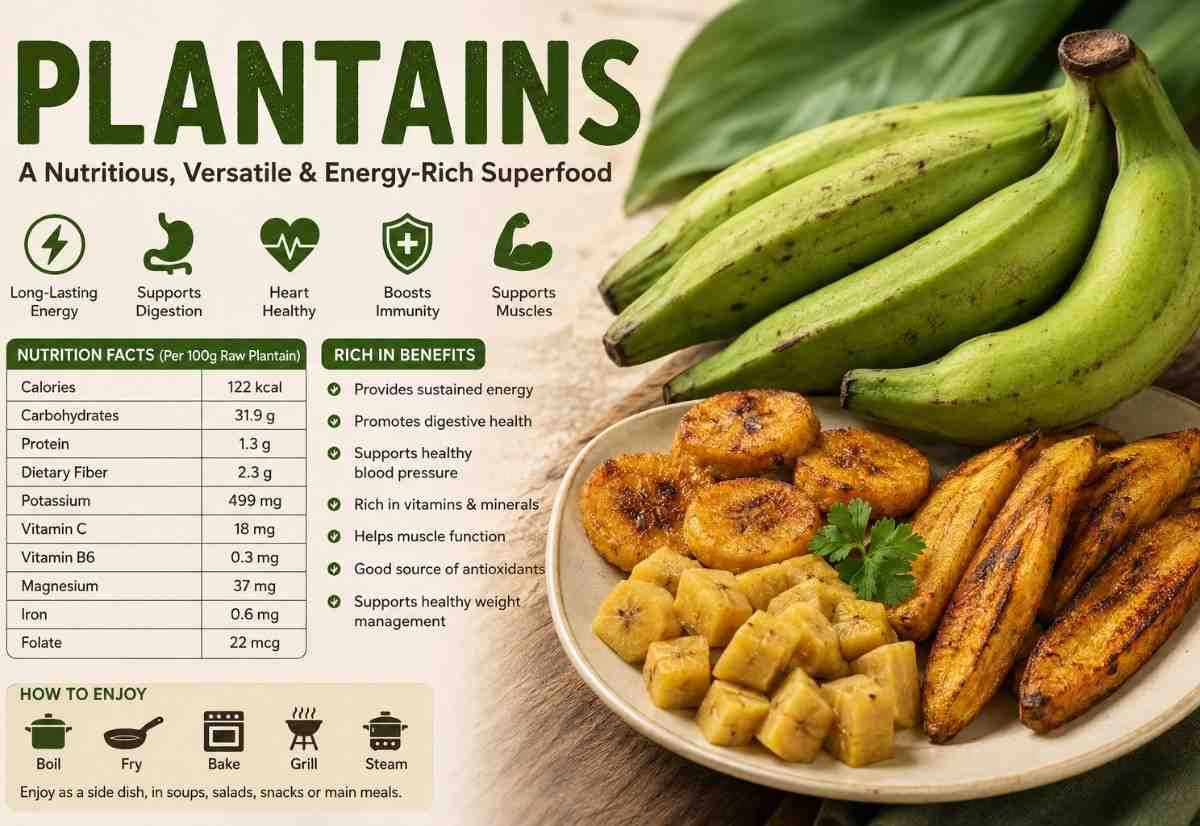
Plantains are one of the most versatile tropical fruits enjoyed across Africa, the Caribbean, Central America, South America, and parts of Asia. Although they resemble bananas, plantains are starchier, less sweet, and are usually cooked before eating. They are packed with complex carbohydrates, dietary fiber, vitamins, minerals, and beneficial plant compounds that support energy production, digestive health, heart health, and overall wellness.
This guide explores everything you need to know about plantains, including nutrition facts, scientifically supported health benefits, potential side effects, cooking methods, storage tips, precautions, and more.
What are Plantains?
Plantains (Musa paradisiaca) are members of the banana family but differ significantly from the sweet dessert bananas commonly found in grocery stores. They are larger, firmer, contain more starch, and become sweeter only as they ripen.
Unlike bananas that are usually eaten raw, plantains are generally cooked before consumption. Green plantains are firm and starchy, making them suitable for savory dishes, while yellow and black plantains become sweeter and are often used in desserts or caramelized recipes.
Plantains are considered a staple food in many tropical countries because they provide sustainable energy, important vitamins, minerals, antioxidants, and dietary fiber.
Nutrition Facts of Plantains
Approximate nutrition per 100 grams of raw plantain
| Nutrient | Amount |
|---|---|
| Calories | 122 kcal |
| Carbohydrates | 31.9 g |
| Protein | 1.3 g |
| Fat | 0.4 g |
| Dietary Fiber | 2.3 g |
| Natural Sugars | 15 g |
| Potassium | 499 mg |
| Magnesium | 37 mg |
| Vitamin C | 18 mg |
| Vitamin A | 56 IU |
| Vitamin B6 | 0.3 mg |
| Folate | 22 mcg |
| Iron | 0.6 mg |
| Phosphorus | 34 mg |
| Calcium | 3 mg |
| Sodium | 4 mg |
Values may vary depending on variety and ripeness.
20 Proven Health Benefits of Plantains
- Provides Long-Lasting Energy: Plantains contain complex carbohydrates that provide steady energy throughout the day.
- Supports Digestive Health: Their dietary fiber helps promote regular bowel movements and supports a healthy digestive system.
- Improves Gut Microbiome: Resistant starch found in green plantains feeds beneficial gut bacteria.
- Promotes Heart Health: Potassium helps maintain healthy blood pressure and supports normal heart function.
- Supports Healthy Blood Pressure: A high-potassium, low-sodium profile helps regulate blood pressure naturally.
- Boosts Immune Function: Vitamin C strengthens immune defenses and helps fight infections.
- Supports Healthy Vision: Vitamin A contributes to normal eyesight and eye health.
- Enhances Brain Function: Vitamin B6 supports neurotransmitter production and healthy cognitive function.
- Helps Prevent Muscle Cramps: Potassium and magnesium support healthy muscle contractions.
- Supports Healthy Weight Management: Fiber increases fullness, helping reduce unnecessary snacking.
- Promotes Healthy Digestion: Fiber helps prevent constipation and improves digestive comfort.
- Provides Natural Antioxidants: Plantains contain antioxidant compounds that help reduce oxidative stress.
- Supports Healthy Pregnancy: Folate contributes to healthy fetal growth during pregnancy.
- Improves Athletic Recovery: Carbohydrates replenish glycogen stores after exercise.
- Supports Healthy Skin: Vitamin C assists collagen production for healthier skin.
- Strengthens Bones: Magnesium and phosphorus contribute to bone maintenance.
- May Help Regulate Blood Sugar: Resistant starch in green plantains may improve insulin sensitivity when eaten in moderation.
- Supports Red Blood Cell Formation: Vitamin B6 and folate assist in healthy blood cell production.
- Promotes Kidney Health: Adequate potassium intake supports normal kidney function in healthy individuals.
- Provides Nutrient-Dense Calories: Plantains offer multiple essential nutrients in every serving.
10 Side Effects of Plantains
- High Carbohydrate Content: Large portions may contribute to excessive calorie intake.
- Blood Sugar Spikes: Very ripe plantains may raise blood sugar more quickly than green plantains.
- Digestive Discomfort: Eating excessive fiber may cause bloating or gas in some individuals.
- Weight Gain Risk: Frequently eating fried plantain may increase calorie consumption.
- Potassium Concerns: People with kidney disease may need to limit high-potassium foods.
- Possible Allergic Reactions: Rare banana or latex allergies may also involve plantain.
- Digestive Changes: Sudden increases in resistant starch may temporarily affect digestion.
- Added Fat Intake: Frying plantains significantly increases fat content.
- Added Sugar Consumption: Sweetened plantain recipes may contain excessive sugar.
- Medication Interactions: People taking potassium-affecting medications should consult their healthcare provider.
How to Eat Plantains
Plantains are extremely versatile and can be prepared in many delicious ways.
- Boil and mash them as a side dish.
- Bake them for a healthier alternative to frying.
- Grill sliced plantain.
- Roast whole plantain in the oven.
- Steam plantain for a soft texture.
- Add cooked plantain to soups and stews.
- Make baked plantain chips.
- Prepare mashed plantains with herbs.
- Add ripe plantain to desserts.
- Include plantain in breakfast bowls.
Tips for Consuming Plantains
- Choose green plantain for savory recipes.
- Use yellow or black plantain for sweeter dishes.
- Bake instead of frying whenever possible.
- Pair plantains with lean protein.
- Add vegetables for balanced nutrition.
- Avoid excessive added sugar.
- Watch portion sizes.
- Drink enough water when increasing fiber intake.
- Use healthy cooking oils.
- Include plantain as part of a varied diet.
How to Cook Plantains?
Plantains can be cooked using several healthy methods.
Boiling
Peel, slice, and boil for 15–20 minutes until tender.
Baking
Slice and bake at 400°F (200°C) for 20–30 minutes.
Roasting
Roast whole or sliced until caramelized.
Grilling
Brush lightly with olive oil and grill until tender.
Air Frying
Cook sliced plantain with minimal oil until crispy.
Steaming
Steam for about 20 minutes for a soft texture.
Pan Frying
Cook in a small amount of healthy oil until golden brown.
Mashing
Mash boiled plantain with herbs, garlic, or olive oil.
Other Uses of Plantains
- Plantain Flour: Green plantain can be dried and ground into gluten-free flour.
- Plantain Chips: Thin slices can be baked or fried into crunchy snacks.
- Breakfast Ingredient: Plantains make a nutritious breakfast side.
- Soup Thickener: Mashed plantain naturally thicken soups.
- Baby Food: Cooked mashed plantain are commonly used in infant foods.
- Desserts: Ripe plantain are popular in puddings and baked desserts.
- Smoothie Ingredient: Cooked ripe plantain add creaminess to smoothies.
- Baking Alternative: Plantain flour can replace wheat flour in certain recipes.
How Much Plantains Can You Eat in a Day?
A healthy serving depends on age, activity level, and overall dietary needs.
- Most healthy adults can enjoy ½ to 1 medium plantain (approximately 150–250 grams) daily as part of a balanced diet.
- Athletes and highly active individuals may consume slightly larger portions.
- People with diabetes should monitor portion sizes and choose green plantains more often because they generally have a lower glycemic impact than fully ripe ones.
- Fried plantain should be eaten occasionally due to their higher calorie and fat content.
Best Time to Eat Plantains
Plantains can be enjoyed at various times of the day depending on your nutritional goals.
- Breakfast for sustained morning energy.
- Lunch as a healthy carbohydrate source.
- Before exercise for fuel.
- After workouts to replenish energy stores.
- Dinner alongside lean protein and vegetables.
- As a healthy snack when baked or boiled.
Who Should Eat Plantains?
- Athletes: Their complex carbohydrates provide lasting exercise fuel.
- Children: Plantains offer energy and important vitamins for growth.
- Older Adults: Soft cooked plantain are easy to digest and nutrient-rich.
- Pregnant Women: Folate supports healthy fetal development.
- People with Digestive Health Goals: Resistant starch supports beneficial gut bacteria.
- Individuals with Active Lifestyles: Plantains help replenish energy after physical activity.
- People Seeking More Fiber: They contribute to daily fiber intake.
- Those Following Gluten-Free Diets: Plantain are naturally gluten-free.
Who Should Not Eat Plantains?
- People with Severe Kidney Disease: High potassium intake may require restriction.
- Individuals with Banana Allergy: Cross-reactivity may occur.
- People with Latex Allergy: Some may experience allergic reactions due to cross-reactive proteins.
- Those Following Low-Carbohydrate Diets: Plantain are relatively high in carbohydrates.
- People Managing Blood Sugar: Large servings of ripe plantains should be eaten mindfully.
- Individuals Sensitive to Fiber: Sudden increases may cause digestive discomfort.
- People Limiting Calories: Fried plantain contain substantially more calories than boiled or baked versions.
How to Store Plantains?
- Store at Room Temperature: Keep unripe plantain on the counter until they ripen.
- Avoid Refrigerating Green Plantains: Cold temperatures can slow proper ripening.
- Refrigerate Ripe Plantain: This helps extend freshness for a few extra days, though the peel may darken.
- Freeze Peeled Plantains: Slice and freeze for several months.
- Store Cooked Plantain Properly: Refrigerate leftovers in an airtight container and consume within 3–4 days.
- Keep Away from Excess Moisture: Dry storage helps reduce spoilage.
Precautions and Interactions
- Monitor Blood Sugar: People with diabetes should monitor carbohydrate intake and portion sizes.
- Watch Potassium Intake: Individuals with kidney disease should seek medical advice before increasing consumption.
- Avoid Excessive Frying: Frequent fried foods may contribute to higher saturated fat intake depending on the oil used.
- Introduce Fiber Gradually: Increase intake slowly to minimize digestive discomfort.
- Be Aware of Allergies: Stop eating plantains and seek medical care if allergy symptoms occur.
- Choose Healthy Cooking Methods: Baking, steaming, grilling, or boiling are healthier than deep frying.
- Consult Healthcare Providers: Individuals taking medications that affect potassium balance should discuss appropriate intake with their clinician.
Conclusion
Plantains are a nutrient-rich tropical staple that provides complex carbohydrates, dietary fiber, potassium, vitamin C, vitamin B6, and other essential nutrients. Their versatility allows them to be enjoyed in countless savory and sweet dishes while supporting digestive health, heart health, energy production, and overall wellness.
For the greatest health benefits, prepare plantain using healthier cooking methods such as baking, boiling, steaming, or grilling rather than deep frying. As with any carbohydrate-rich food, moderation and balanced meal planning are important, particularly for people managing blood sugar or kidney conditions.
FAQ’s
Are plantains healthier than bananas?
Both are nutritious, but plantain contain more complex carbohydrates and less sugar when unripe, while bananas are sweeter and richer in vitamin C.
Can you eat plantains raw?
Yes, fully ripe (yellow or black) plantain can be eaten raw, but green plantain are starchy and are best cooked.
What do plantains taste like?
Green plantain have a mild, potato-like flavor, while ripe plantain become sweeter with a taste similar to bananas mixed with caramel.
Are plantains good for weight loss?
Yes. Boiled or baked plantain are high in fiber, which promotes fullness and may help with weight management when eaten in moderation.
Are plantains good for people with diabetes?
Green plantain have more resistant starch and a lower glycemic impact than ripe ones. People with diabetes should monitor portions and consult their healthcare provider.
Are plantains gluten-free?
Yes. Plantain are naturally gluten-free and suitable for people with celiac disease or gluten intolerance.
Are plantains a fruit or a vegetable?
Botanically, plantain are fruits, but they are often cooked and served like vegetables.
Can I eat plantains every day?
Yes. Most healthy adults can enjoy plantain daily as part of a balanced diet, preferably boiled, baked, grilled, or steamed.
Are green or ripe plantains healthier?
Green plantain contain more resistant starch and may have a lower glycemic impact, while ripe plantain provide more natural sugars and antioxidants.
Are fried plantains healthy?
Fried plantain are higher in calories and fat than boiled or baked plantain, so they are best enjoyed occasionally.
Are plantains high in potassium?
Yes. Plantain are an excellent source of potassium, which supports heart health, muscle function, and healthy blood pressure.
Can babies eat plantains?
Yes. Cooked and mashed plantain can be introduced as part of a balanced diet once babies are ready for solid foods, following pediatric guidance.
Are plantains good for digestion?
Yes. Their fiber and resistant starch help support healthy digestion and beneficial gut bacteria.
Can plantains help lower blood pressure?
Their high potassium content may help support healthy blood pressure as part of a balanced, low-sodium diet.
Are plantains high in carbohydrates?
Yes. Plantain are rich in complex carbohydrates, making them an excellent energy source.
Can pregnant women eat plantains?
Yes. Plantain provide folate, vitamin B6, potassium, and fiber, making them a nutritious choice during pregnancy when consumed as part of a healthy diet.
How do you know when a plantain is ripe?
Green plantain are unripe and starchy. As they ripen, the peel turns yellow and then black, becoming softer and sweeter.
Is plantains safe for children?
Yes. Cooked plantain are generally safe and nutritious for children. They provide fiber, potassium, and vitamins that support healthy growth when served in age-appropriate portions.
What is plantains good for?
Plantain are good for providing energy, supporting digestion, promoting heart health, maintaining healthy blood pressure, and supplying important nutrients like potassium, vitamin C, and vitamin B6.
Are plantain and banana the same?
No. Plantains and bananas belong to the same plant family, but plantain are starchier, less sweet, and are usually cooked before eating, while bananas are typically eaten raw.
What is Indian plantain?
In India, the term “plantain” commonly refers to cooking bananas, such as the Nendran banana, which are used in curries, chips, steamed dishes, and desserts.
Can you eat plantain lily?
No. Plantain lily (Hosta) is a different ornamental plant and is not the same as edible plantain. Only young hosta shoots are edible in some regions, but they should not be confused with tropical plantain.
Which part of plantain is medicinal?
Traditionally, different parts of the plant—including the fruit, peel, leaves, flowers, and stem—have been used in folk medicine. The fruit is the most commonly consumed part for its nutritional benefits.
What is plantain good for medically?
Plantain may support digestive health, heart health, healthy blood pressure, immune function, and energy production due to their fiber, potassium, resistant starch, and vitamins. They are not a substitute for medical treatment.
What climate is best for plantain plants?
Plantain plants grow best in warm, humid tropical and subtropical climates with temperatures between 24–30°C (75–86°F) and well-drained, fertile soil.
Is plantain good for wrinkles?
Plantain contain vitamin C and antioxidants that support collagen production and healthy skin, but there is limited scientific evidence that eating plantain directly reduces wrinkles.
Can I rub plantain peel on my face?
Some people use plantain peel as a home remedy for moisturizing the skin, but scientific evidence supporting its skincare benefits is limited. Perform a patch test before applying it to your face.
Is plantain good for arthritis?
Plantain contain antioxidants and nutrients that support overall health, but there is no strong evidence that they can treat or cure arthritis. A balanced diet may help reduce overall inflammation.
Is plantain good for hair growth?
Plantain provide nutrients such as vitamin B6, vitamin C, and antioxidants that contribute to healthy hair, but they have not been proven to directly stimulate hair growth. A nutrient-rich diet supports overall hair health.
Sources / References:
- World Health Organization (WHO)
- Harvard T.H. Chan School of Public Health – The Nutrition Source
- U.S. Department of Agriculture – FoodData Central
- National Institutes of Health (NIH)
- Academy of Nutrition and Dietetics
About the Author:
Kirti Solanki is a Health Content Researcher who creates evidence-based, reader-friendly articles on nutrition, wellness, and healthy living. Her content is developed using trusted scientific literature and reputable health organizations to provide accurate, practical, and up-to-date health information.
Disclaimer:
This article is for educational purposes only and should not replace professional medical advice, diagnosis, or treatment. Always consult a qualified healthcare professional before making significant dietary or health-related changes.
Also Read: