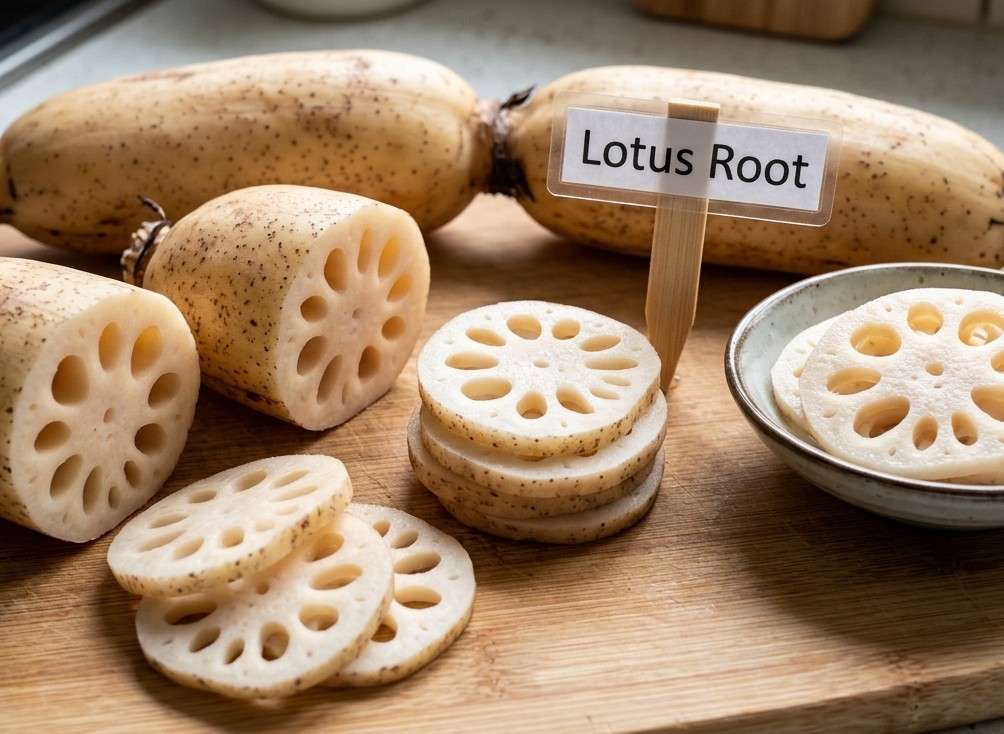
Lotus root, also known as Lotus stems, or Kamal kakdi, is a crunchy, mildly sweet vegetable that has been used in Asian cooking for centuries. Despite its name, it is not actually a conventional root—it is the edible underground rhizome of the lotus plant (Nelumbo nucifera).
When sliced, lotus root has a distinctive pattern of round holes, making it easy to recognize. It can be eaten boiled, steamed, stir-fried, roasted, added to soups, or incorporated into salads and other dishes.
Nutritionally, lotus root provides carbohydrates, dietary fiber, vitamin C, potassium, copper, manganese, and several B vitamins. Its combination of fiber and micronutrients makes it a useful addition to a balanced diet.
What Is Lotus Root?
Lotus root is the edible rhizome that grows beneath the water or mud of the lotus plant. Although commonly called a “root,” botanically it is a rhizome, meaning it is a horizontal underground stem that stores nutrients for the plant.
Fresh lotus root has a firm, crisp texture and a mild flavor that is sometimes described as slightly sweet and nutty. Its characteristic holes create a beautiful pattern when sliced.
Lotus root is especially popular in Chinese, Japanese, Korean, Indian, and other Asian cuisines. It can be prepared in both savory and mildly sweet dishes.
It contains relatively little fat while providing carbohydrates, fiber, vitamin C, potassium, copper, and other nutrients.
Nutrition Facts of Lotus Root
The following approximate values are based on 100 grams of raw lotus root. Nutrient amounts can vary depending on variety, preparation, and whether the lotus stem is raw or cooked.
| Nutrient | Amount per 100 g |
|---|---|
| Calories | 74 kcal |
| Carbohydrates | 17.2 g |
| Protein | 2.6 g |
| Total Fat | 0.1 g |
| Dietary Fiber | 4.9 g |
| Sugars | Low |
| Calcium | 45 mg |
| Iron | 1.2 mg |
| Magnesium | 26 mg |
| Phosphorus | 115 mg |
| Potassium | 639 mg |
| Sodium | 46 mg |
| Zinc | 0.45 mg |
| Copper | 0.30 mg |
| Vitamin C | 50.6 mg |
| Vitamin B6 | 0.30 mg |
| Folate | 14.95 mcg |
20 Proven Health Benefits of Lotus Root
1. Supports Digestive Health: The dietary fiber in lotus root can help add bulk to stool and support regular bowel movements.
2. Helps Support Regular Bowel Movements: Including fiber-rich vegetables such as lotus root in a balanced diet may help reduce the risk of constipation.
3. Provides Vitamin C: Lotus root supplies vitamin C, an essential nutrient involved in immune function, collagen production, and antioxidant protection.
4. Supports Immune Function: Adequate vitamin C intake contributes to normal immune system function.
5. Provides Antioxidant Nutrients: Vitamin C and various plant compounds in lotus may help the body manage oxidative stress.
6. Supports Heart-Friendly Eating: Its fiber, potassium, and low-fat nutritional profile can fit well into an overall heart-supportive eating pattern.
7. Provides Potassium: Lotus stem contains potassium, a mineral needed for normal muscle, nerve, and fluid balance.
8. Supports Normal Blood Pressure Regulation: Adequate dietary potassium is important for maintaining healthy blood pressure, although lotus root alone cannot treat hypertension.
9. Supports Energy Needs: Its carbohydrate content provides the body with an important source of dietary energy.
10. May Help Increase Satiety: The combination of carbohydrates and fiber can make lotus root a satisfying addition to meals.
11. Naturally Low in Fat: Lotus stem contains very little fat, making it suitable for meals where you want a low-fat vegetable or carbohydrate source.
12. Provides Copper: Lotus root contains copper, a mineral involved in energy metabolism, connective tissue formation, and normal iron metabolism.
13. Provides Manganese: Manganese contributes to normal metabolism, bone formation, and antioxidant enzyme function.
14. Supports Normal Nervous System Function: Nutrients such as vitamin B6 and minerals found in lotus root contribute to normal nervous system processes.
15. Supports Healthy Skin: Vitamin C contributes to collagen formation, which is important for normal skin structure.
16. Supports Iron Utilization: Vitamin C can improve the absorption of non-heme iron from plant foods when consumed as part of the same meal.
17. Adds Variety to a High-Fiber Diet: Lotus root provides another way to increase vegetable and fiber variety without relying on the same foods every day.
18. Provides Several Essential Micronutrients: Along with vitamin C and potassium, lotus root supplies smaller amounts of calcium, magnesium, phosphorus, iron, zinc, and B vitamins.
19. Can Fit Into Weight-Management Meals: Its fiber and relatively low-fat profile can make it a useful component of balanced meals when prepared without excessive oil or sugar.
20. Supports Overall Nutrient-Dense Eating: Adding lotus stem to a varied diet can contribute useful carbohydrates, fiber, vitamins, and minerals in one food.
10 Side Effects of Lotus Root
Lotus root is generally safe as a food when properly cleaned and cooked, but some people may experience problems depending on their portion size, preparation, or individual sensitivity.
1. Bloating: Eating a large portion of fiber-rich lotus stem may cause bloating, particularly if your usual diet is low in fiber.
2. Gas: A sudden increase in dietary fiber can lead to temporary gas or abdominal discomfort.
3. Stomach Discomfort: Some people with sensitive digestion may experience discomfort after eating a large amount of lotus root.
4. Allergic Reaction: Although uncommon, food allergies to lotus components can occur and may cause itching, hives, swelling, vomiting, or breathing difficulties.
5. Digestive Problems From Raw Lotus Root: Raw or inadequately prepared lotus stem may be harder for some people to tolerate.
6. Foodborne Infection Risk: Freshwater plants can potentially carry microorganisms or parasites when eaten raw or undercooked.
7. Increased Potassium Intake: Lotus root contains a meaningful amount of potassium, so people following potassium restrictions may need to control their portions.
8. Excess Calories From Fried Preparations: Deep-frying lotus stem can substantially increase its calorie and fat content compared with steamed or boiled preparations.
9. Excess Sodium From Processed Products: Pickled, canned, or heavily seasoned lotus root may contain considerably more sodium than fresh lotus stem.
10. Digestive Changes With Excessive Intake: Eating unusually large quantities may cause digestive discomfort because of its fiber and carbohydrate content.
How to Eat Lotus Root?
Lotus root can be eaten in several ways:
- Slice it thinly and add it to stir-fries.
- Boil or steam it and serve it as a vegetable side dish.
- Add cooked slices to soups and stews.
- Roast lotus stem with a small amount of oil and herbs.
- Add thinly sliced cooked lotus stem to salads.
- Use it in curries or vegetable preparations.
- Add it to noodle or rice dishes.
- Pickle it using a properly prepared recipe.
- Combine it with other vegetables such as carrots, mushrooms, bell peppers, or broccoli.
For most people, properly cleaned and cooked lotus root is the safer choice than eating it raw, particularly when the source or handling conditions are uncertain. The CDC specifically recommends cooking freshwater plants well to reduce the risk of certain parasitic infections.
Tips for Consuming Lotus Root
- Choose lotus roots that feel firm and heavy for their size.
- Avoid roots with extensive soft spots, mold, or unpleasant odors.
- Wash the outside thoroughly before peeling.
- Scrub the holes and channels carefully because soil can collect inside them.
- Slice lotus stem evenly so that it cooks consistently.
- If you are using fresh slices, placing them in water can help reduce discoloration.
- Cook lotus stem thoroughly if its source or handling is uncertain.
- Start with a moderate serving if you are not accustomed to high-fiber foods.
- Avoid covering healthy lotus stem with excessive salt, sugar, or oil.
- Pair it with protein and other vegetables for a more balanced meal.
How to Cook Lotus Root?
Boiled Lotus Root
- Wash and peel the lotus root.
- Slice it into thin or medium-sized rounds.
- Place the slices in boiling water.
- Cook until they become tender but retain some crunch.
- Drain and season lightly.
Stir-Fried Lotus Root
Slice cleaned lotus stem into thin rounds and stir-fry with vegetables, garlic, ginger, and a small amount of cooking oil. This method preserves its characteristic crunchy texture.
Roasted Lotus Root
Cut the lotus stem into thin slices, lightly coat with oil and seasonings, and roast until the edges become crisp.
Lotus Root Soup
Add sliced lotus stem to soups containing vegetables, legumes, mushrooms, chicken, or other ingredients. Simmer until the lotus stem reaches your preferred texture.
Other Uses of Lotus Root
1. Soups and Broths: Lotus stem is commonly sliced and simmered in vegetable, chicken, and other savory soups.
2. Stir-Fries: Its crunchy texture makes lotus stem an excellent addition to mixed vegetable stir-fries.
3. Curries: Sliced lotus stem can be incorporated into vegetable curries and other spiced preparations.
4. Salads: Thinly sliced cooked lotus stem can add texture and visual appeal to salads.
5. Pickles: Lotus stem can be prepared as a pickled vegetable when appropriate food-preservation methods are followed.
6. Roasted Snacks: Thin slices can be roasted until crisp as an alternative to some fried vegetable snacks.
7. Garnishing: Its attractive hole pattern makes cooked lotus stem useful as a decorative food garnish.
8. Traditional Food Preparations: Lotus rhizomes have a long history of culinary and traditional use across Asian cultures.
How Much Lotus Root Can You Eat in a Day?
There is no universally established daily dose of lotus stem.
For most healthy adults, around 80–150 grams of cooked lotus root as part of a balanced meal is a reasonable practical serving. Your appropriate amount may be lower or higher depending on your overall diet, calorie needs, digestive tolerance, and medical conditions.
If you have kidney disease or have been advised to restrict potassium, speak with your healthcare professional or dietitian about an appropriate serving because lotus stem contains potassium.
Best Time to Eat Lotus Root
There is no scientifically established “best” time to eat lotus root.
It can be included at breakfast, lunch, or dinner depending on your meal pattern. Eating it with lunch or dinner alongside protein and other vegetables is an easy way to incorporate it into a balanced meal.
If you experience digestive discomfort from fiber, starting with a smaller cooked portion may be more comfortable than eating a large serving at once.
Who Should Eat Lotus Root?
1. Healthy Adults: Most healthy adults can enjoy properly prepared lotus stem as part of a varied diet.
2. People Seeking More Fiber: Lotus root can help increase dietary fiber intake when incorporated into balanced meals.
3. People Looking for Vitamin C Foods: Its vitamin C content makes it a useful addition to a diet containing other fruits and vegetables.
4. People Following Low-Fat Eating Patterns: Fresh lotus stem is naturally very low in fat.
5. People Wanting More Vegetable Variety: Its unique texture provides an alternative to familiar vegetables.
6. Active Individuals: Its carbohydrate content can contribute to overall energy intake around active periods.
7. People Enjoying Asian Cuisine: Lotus stem works particularly well in soups, stir-fries, curries, and vegetable dishes.
8. People Increasing Fiber Gradually: Moderate portions can be incorporated into a higher-fiber eating pattern as tolerated.
Who Should Not Eat Lotus Root?
1. People With a Lotus Allergy: Anyone with a confirmed lotus allergy should avoid lotus stem unless a healthcare professional advises otherwise.
2. People With Previous Allergic Reactions: Anyone who develops hives, swelling, vomiting, wheezing, or other allergy symptoms after eating it should stop consuming it and seek medical advice.
3. People With Potassium Restrictions: Individuals with kidney-related potassium restrictions should ask their healthcare professional about suitable portions.
4. People With Sensitive Digestion: Those who experience significant bloating or digestive discomfort may need smaller portions or a different preparation.
5. People Concerned About Food Safety: Anyone unable to properly clean and cook freshwater-grown lotus stem should avoid eating it raw or undercooked.
6. People With Certain Medical Diets: Individuals following medically prescribed diets should check whether lotus stem fits their specific carbohydrate, potassium, or fiber restrictions.
How to Store Lotus Root?
1. Refrigerate Fresh Lotus Root: Keep fresh lotus stem refrigerated rather than leaving it at room temperature for prolonged periods.
2. Keep It Dry and Clean: Store unwashed whole lotus stem appropriately and clean it before preparation.
3. Protect Cut Pieces: Place sliced lotus stem in a clean airtight container and refrigerate promptly.
4. Use Water for Short-Term Cut Storage: Cut slices can be kept submerged in clean water for a short period to reduce browning, with the water changed regularly.
5. Store Cooked Lotus Root Safely: Refrigerate cooked lotus stem promptly in a covered container and use it within a reasonable food-safety timeframe.
6. Freeze for Longer Storage: Cooked or appropriately blanched lotus stem can be frozen for longer-term storage, although its texture may change.
7. Discard Spoiled Lotus Root: Throw away lotus stem that develops mold, a slimy texture, unusual discoloration, or an unpleasant smell.
Precautions and Interactions
1. Clean Thoroughly: Because lotus stem grows in aquatic environments and soil can collect in its channels, clean it carefully before cooking.
2. Cook Freshwater Lotus Root: Cooking is particularly important when the source or handling conditions are uncertain because raw or undercooked freshwater plants can carry parasites.
3. Increase Fiber Gradually: If you are not accustomed to fiber-rich foods, increase your lotus stem intake gradually to reduce gas and bloating.
4. Consider Potassium Intake: People with kidney disease or prescribed potassium restrictions should discuss portion sizes with a healthcare professional.
5. Watch for Allergies: Stop eating lotus stem and seek medical advice if you develop symptoms suggesting an allergic reaction.
6. Consider the Whole Meal: Fried or heavily salted lotus root can have a very different nutritional profile from plain steamed or boiled lotus stem.
7. Be Careful With Supplements and Extracts: Traditional lotus extracts and concentrated products are different from ordinary food portions and may have different safety considerations.
8. Check Individual Medical Advice: People taking medications or following a therapeutic diet should discuss frequent or high intake with their healthcare professional rather than assuming that a food is universally appropriate.
Lotus Root vs. Lotus Seed
Lotus root and lotus seed come from the same plant but are different edible parts.
Lotus root is the underground rhizome and is commonly used as a vegetable. Lotus seeds are the seeds of the lotus plant and are often used in desserts, snacks, soups, and traditional preparations.
Their nutritional profiles and culinary uses are therefore not interchangeable.
FAQ’s
What is lotus root good for?
Lotus stem provides fiber, vitamin C, potassium, copper, and other nutrients that can support digestion, immune function, and overall health.
Is lotus root good for weight loss?
Lotus stem can support a balanced weight-management diet because it provides fiber and is naturally low in fat, but it does not directly cause weight loss.
Can you eat lotus root every day?
Yes, most healthy adults can eat lotus stem regularly in moderate portions as part of a varied and balanced diet.
Is lotus root good for digestion?
Yes, lotus stem contains dietary fiber that can support normal digestion and regular bowel movements.
Is lotus root high in fiber?
Yes, lotus stem is a useful source of dietary fiber, particularly when eaten as a whole vegetable rather than in highly processed forms.
Is lotus root good for the kidneys?
Lotus stem can be part of a healthy diet, but people with kidney disease may need to monitor potassium intake and should ask their healthcare professional about appropriate portions.
Is lotus root high in potassium?
Yes, lotus stem contains a significant amount of potassium, although the exact amount varies depending on whether it is raw, boiled, canned, or otherwise prepared.
Is lotus root good for skin?
Lotus stem provides vitamin C, which is needed for normal collagen production and contributes to healthy skin.
Does lotus root contain vitamin C?
Yes, fresh lotus stem is a notable dietary source of vitamin C.
Is lotus root good for constipation?
The fiber in lotus stem can help support regular bowel movements and may be useful as part of a high-fiber diet.
Can pregnant women eat lotus root?
Pregnant women can generally eat thoroughly washed and properly cooked lotus stem as part of a balanced diet, while raw or undercooked freshwater plants should be avoided.
Can babies eat lotus root?
Babies can potentially eat appropriately cooked lotus stem when they are developmentally ready for complementary foods, but it should be cooked until soft and prepared in an age-appropriate texture to reduce choking risk.
Is lotus root safe for children?
Properly cooked lotus stem can be included in a child’s balanced diet, provided it is served in an age-appropriate texture and portion.
Can you eat lotus root raw?
Lotus stem may be eaten raw in some culinary preparations, but thoroughly cooking freshwater-grown lotus stem is a safer choice because raw or undercooked aquatic plants can carry harmful microorganisms or parasites.
What does lotus root taste like?
Lotus stem has a mild, slightly sweet and nutty flavor with a naturally crisp texture.
Is lotus root a root vegetable?
Despite its common name, lotus stem is botanically a rhizome, which is an underground stem of the lotus plant.
How long should lotus root be cooked?
Cooking time depends on the preparation and thickness, but sliced lotus stem generally takes around 5–15 minutes to become tender while retaining some crunch.
How do you keep lotus root from turning brown?
Place freshly cut lotus stem in clean water, optionally with a small amount of acidic ingredient such as lemon juice, until you are ready to cook it.
Can lotus root help with blood sugar control?
Lotus stem contains carbohydrates, so portion size matters for people monitoring blood glucose; its fiber content can make it a more nutrient-dense choice than many refined carbohydrate foods.
Is lotus root good for heart health?
Its fiber, potassium, vitamin C, and naturally low-fat profile can fit into an overall heart-supportive eating pattern.
Does lotus root have protein?
Yes, lotus stem contains some protein, but it is primarily a carbohydrate-containing vegetable rather than a high-protein food.
Is lotus root good for anemia?
Lotus stem provides some iron and vitamin C, and vitamin C can improve absorption of non-heme iron from plant foods, but lotus stem alone should not be considered a treatment for anemia.
Can lotus root cause gas?
Yes, eating a large amount of lotus stem may cause gas or bloating in some people because it contains dietary fiber.
Is lotus root better boiled or fried?
Boiled, steamed, or lightly stir-fried lotus stem is generally a healthier choice than deep-fried lotus stem because it avoids adding large amounts of oil.
Can lotus root be frozen?
Yes, appropriately prepared lotus stem can be frozen, although freezing may slightly change its texture after thawing.
What is lotus root called in India?
Lotus root is commonly called Kamal Kakdi or Kamal Kand in Hindi and Nadru in Kashmir.
Where can I buy lotus root?
You can find lotus stem at local vegetable markets, Asian grocery stores, and some online fresh-produce platforms.
Final Takeaway
Lotus root is a versatile, nutrient-rich aquatic vegetable that can add fiber, vitamin C, potassium, copper, and other nutrients to your diet. Its crunchy texture makes it especially useful in stir-fries, soups, curries, salads, and roasted dishes.
For the best balance of nutrition and food safety, choose fresh lotus stem, clean it thoroughly, and cook it properly. Moderate portions are generally appropriate for healthy adults, while people with kidney-related potassium restrictions, food allergies, or digestive sensitivities may need individualized guidance.
Sources / References:
Disclaimer:
This guide is for general educational purposes only and is not a substitute for professional medical advice, diagnosis, or treatment. People with kidney disease, food allergies, or other medical conditions should consult a qualified healthcare professional before making significant dietary changes.
Also Read: