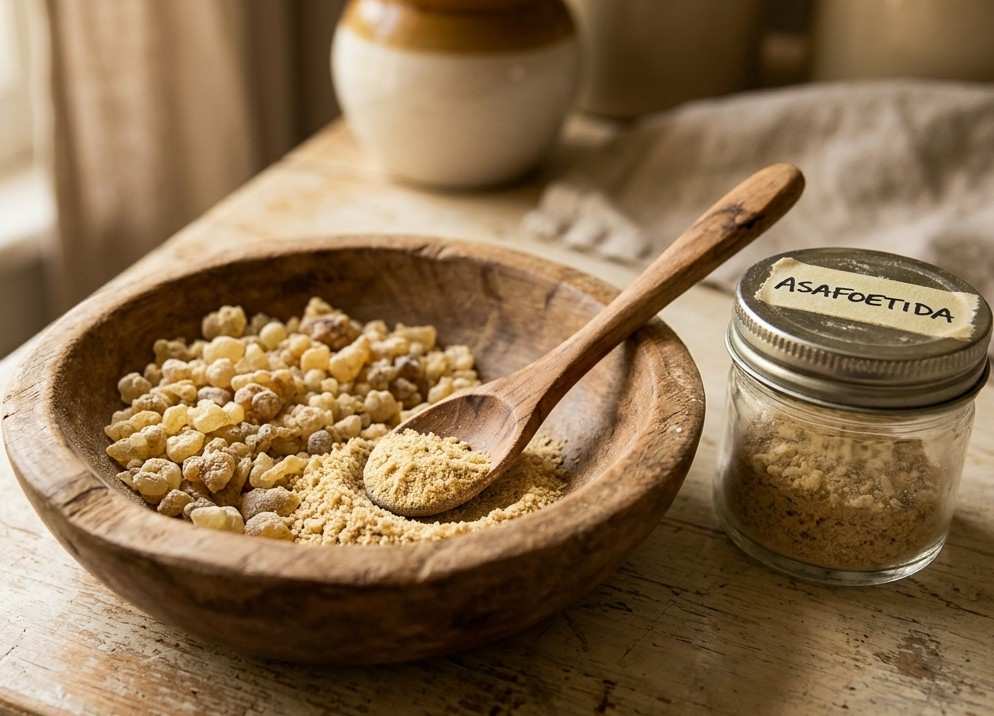
Asafoetida is a powerful spice that has been used for centuries in traditional cooking and natural wellness practices. Known for its strong aroma and unique flavor, this spice is commonly used in Indian, Middle Eastern, and Persian cuisines. Despite its pungent smell when raw, asafoetida develops a savory, onion-like flavor when cooked, making it a favorite ingredient in many vegetarian dishes.
Beyond its culinary value, asafoetida (also known as Hing, Ferula Asafoetida or Asafetida) has long been valued in traditional medicine systems for supporting digestion, respiratory health, and overall well-being. Modern research has also begun exploring the beneficial compounds found in this remarkable spice.
What is Asafoetida?
Asafoetida, often called “hing” in India, is a dried resin obtained from the roots of several species of the Ferula plant. These plants belong to the parsley family and are mainly grown in regions of Iran and Afghanistan.
The resin is harvested by cutting the plant’s roots and collecting the milky sap that hardens into a gum-like substance. This resin is then dried and processed into powder form for culinary and medicinal use.
Asafoetida is known for its sulfur-containing compounds, which give it its characteristic strong odor. However, when cooked, it adds a rich umami flavor that enhances many dishes.
Nutrition Facts of Asafoetida
The nutritional content may vary slightly depending on processing methods.
| Nutrient | Amount per 100 g |
|---|---|
| Calories | 297 kcal |
| Carbohydrates | 67.8 g |
| Protein | 4.0 g |
| Fat | 1.1 g |
| Dietary Fiber | 4.1 g |
| Calcium | 690 mg |
| Iron | 39 mg |
| Phosphorus | 50 mg |
| Potassium | 523 mg |
| Sodium | 0 mg |
| Niacin | 1.0 mg |
| Riboflavin | 0.2 mg |
| Vitamin C | 0 mg |
Since asafoetida is typically consumed in very small amounts, actual nutrient intake per serving is minimal.
20 Proven Health Benefits of Asafoetida
- Supports Digestion: Hing may help stimulate digestive enzymes and reduce digestive discomfort.
- Reduces Bloating: Hing has traditionally been used to relieve gas and abdominal bloating.
- May Ease Indigestion: Regular consumption may help improve overall digestive efficiency.
- Supports Gut Health: Natural compounds in asafoetida may promote a healthier digestive environment.
- Rich in Antioxidants: Asafoetida contains antioxidant compounds that help protect cells from oxidative damage.
- May Reduce Inflammation: Certain bioactive compounds may help decrease inflammatory responses in the body.
- Supports Respiratory Health: Hing has traditionally been used to help clear mucus from the respiratory tract.
- May Relieve Cough: Traditional remedies often use asafoetida to soothe persistent coughing.
- Supports Immune Function: Antioxidant and antimicrobial properties may contribute to a stronger immune system.
- May Help Regulate Blood Pressure: Some studies suggest asafoetida may support healthy circulation and blood pressure levels.
- Supports Heart Health: Its antioxidant content may help protect cardiovascular health.
- May Improve Blood Flow: Hing may support healthy blood circulation throughout the body.
- Possesses Antimicrobial Properties: Certain compounds may help inhibit the growth of harmful microorganisms.
- May Help Manage Headaches: Traditional medicine has used asafoetida for relief from occasional headaches.
- Supports Women’s Health: Asafoetida has been traditionally used to help manage menstrual discomfort.
- May Reduce Menstrual Cramps: Some evidence suggests it may help ease menstrual pain.
- Supports Nervous System Function: Certain nutrients and compounds may contribute to healthy nerve function.
- May Help Control Blood Sugar: Preliminary studies indicate potential benefits for blood glucose regulation.
- Supports Liver Health: Antioxidant properties may help protect liver cells from oxidative stress.
- May Promote Overall Wellness: Regular use as part of a balanced diet may contribute to general health and vitality.
10 Side Effects of Asafoetida
- Digestive Upset: Excessive intake may cause stomach discomfort or irritation.
- Gas Formation: Some individuals may experience increased gas after consumption.
- Nausea: Large amounts may trigger feelings of nausea.
- Diarrhea: Overconsumption may result in loose stools.
- Headache: Sensitive individuals may develop headaches after intake.
- Dizziness: High doses may occasionally lead to dizziness.
- Allergic Reactions: Some people may experience itching, swelling, or skin irritation.
- Blood Pressure Changes: Asafoetida may influence blood pressure levels in certain individuals.
- Bleeding Risk: Its blood-thinning properties may increase bleeding risk in susceptible individuals.
- Drug Interactions: Hing may interact with specific medications, especially blood thinners.
How to Eat Asafoetida?
Asafoetida is rarely eaten directly due to its intense flavor. Instead, it is commonly used as a seasoning.
Popular ways to consume asafoetida include:
- Adding a pinch to lentils and dals.
- Mixing into vegetable curries.
- Using in soups and stews.
- Adding to tempering (tadka).
- Mixing into pickles.
- Including in spice blends.
- Adding to rice dishes.
- Using in digestive herbal preparations.
A small amount goes a long way, and even a pinch is usually sufficient for an entire dish.
Tips for Consuming Asafoetida
- Always cook asafoetida before eating.
- Use only small quantities.
- Add it to hot oil or ghee for better flavor development.
- Combine with cumin, mustard seeds, and turmeric for enhanced taste.
- Start with minimal amounts if you are new to using it.
- Purchase high-quality products from trusted brands.
- Store properly to maintain freshness.
- Avoid excessive daily intake.
- Monitor for allergic reactions.
- Consult a healthcare professional if using medicinally.
Other Uses of Asafoetida
- Natural Flavor Enhancer: Asafoetida is widely used to add savory depth to dishes.
- Traditional Digestive Aid: It has been used in herbal remedies for digestive comfort.
- Food Preservation: Certain compounds may help slow microbial growth in foods.
- Aromatherapy Ingredient: Its resin has occasionally been used in traditional aromatic practices.
- Agricultural Applications: Some farmers use asafoetida-based preparations in pest management.
- Traditional Respiratory Remedies: It has been incorporated into folk remedies for respiratory support.
- Herbal Formulations: Asafoetida is commonly included in Ayurvedic preparations.
- Spice Blends: It serves as a key ingredient in many seasoning mixes.
- Pickling Agent: Hing is often added to pickles for flavor and preservation.
- Vegetarian Cooking Substitute: It provides onion-like and garlic-like flavors in vegetarian dishes.
How Much Asafoetida Can You Eat in a Day?
Because asafoetida is highly concentrated, only small amounts are needed.
For most adults:
- Culinary use: 50–250 mg per day.
- Up to 500 mg daily is generally considered sufficient for traditional use.
- Excessive intake is not recommended.
Individual tolerance may vary, so moderation is important.
Asafoetida Dosage
Typical dosage depends on the intended use:
| Purpose | Recommended Amount |
|---|---|
| Cooking | A pinch (50–100 mg) |
| Digestive support | 100–250 mg |
| Traditional herbal use | 250–500 mg |
| Maximum common intake | Around 500 mg daily |
Consult a healthcare professional before using larger amounts for therapeutic purposes.
Best Time to Eat Asafoetida
The best time depends on the purpose:
- During meals for digestive support.
- With lunch or dinner when used as a spice.
- Before heavy meals in traditional digestive preparations.
- In cooked dishes rather than on an empty stomach.
- Consistently as part of a balanced diet for long-term benefits.
Who Should Eat Asafoetida?
- People with Digestive Issues: Individuals experiencing occasional bloating or indigestion may benefit from moderate use.
- Vegetarians: Asafoetida can add rich flavor to vegetarian meals without onions or garlic.
- Adults Seeking Digestive Support: It may help promote healthy digestion when consumed appropriately.
- Individuals Interested in Traditional Remedies: Hing has a long history of use in traditional wellness systems.
- People Looking for Natural Flavoring: It provides a unique savory taste with minimal calories.
- Those Following Ayurvedic Practices: Hing is commonly incorporated into Ayurvedic diets and formulations.
- People Seeking Antioxidant-Rich Foods: Its bioactive compounds may contribute antioxidant benefits.
- Individuals with Mild Respiratory Discomfort: Traditional use suggests potential respiratory support.
Who Should Not Eat Asafoetida?
- Pregnant Women: Large amounts may not be suitable during pregnancy.
- Breastfeeding Mothers: Medical guidance is recommended before regular use.
- Infants and Young Children: Asafoetida should generally be avoided unless advised by a healthcare provider.
- People with Bleeding Disorders: Hing may increase bleeding tendencies.
- Individuals Taking Blood Thinners: Potential interactions may occur.
- People with Known Allergies: Those allergic to asafoetida should avoid it completely.
- Individuals with Low Blood Pressure: Hing may further lower blood pressure in some cases.
- People Preparing for Surgery: It is generally advisable to stop use before surgical procedures.
How to Store Asafoetida?
- Use Airtight Containers: Store asafoetida in tightly sealed containers to prevent odor leakage.
- Keep Away from Moisture: Moisture can reduce quality and cause clumping.
- Store in a Cool Place: A cool environment helps preserve freshness.
- Avoid Direct Sunlight: Sunlight may degrade active compounds over time.
- Keep Away from Strong-Smelling Foods: Its strong aroma can transfer to nearby foods.
- Use Original Packaging: Manufacturer packaging often provides optimal protection.
- Seal After Every Use: Proper sealing helps maintain potency.
- Check Expiration Dates: Use before the recommended date for best quality.
Precautions and Interactions
- Blood-Thinning Medications: Hing may enhance the effects of anticoagulant drugs.
- Blood Pressure Medications: It may influence blood pressure regulation and interact with medications.
- Pregnancy Precaution: Large medicinal doses should be avoided during pregnancy.
- Breastfeeding Caution: Safety data during breastfeeding is limited.
- Surgery Consideration: Stop consuming asafoetida at least two weeks before planned surgery.
- Allergy Risk: Individuals sensitive to asafoetida should avoid use.
- Digestive Sensitivity: Excessive intake may aggravate gastrointestinal symptoms.
- Children’s Safety: Use in children should only occur under professional guidance.
- Chronic Medical Conditions: Individuals with ongoing medical conditions should consult healthcare providers before regular use.
- Medication Monitoring: Anyone taking prescription medicines should discuss possible interactions with a healthcare professional.
Conclusion
Asafoetida is a unique spice that offers both culinary and potential health benefits. Known as hing in India, it has been used for centuries to improve flavor and support digestive wellness. Rich in beneficial plant compounds, asafoetida may help with digestion, respiratory health, circulation, and overall well-being when consumed in moderation.
While generally safe in small culinary amounts, excessive consumption may lead to side effects and potential interactions with certain medications.
FAQ’s
What is asafoetida used for?
Asafoetida is commonly used as a spice in cooking and is traditionally valued for supporting digestion and reducing bloating.
What is asafoetida called in India?
Asafoetida is commonly known as hing in India.
Can I eat asafoetida every day?
Yes, small culinary amounts of asafoetida can generally be consumed daily as part of a balanced diet.
Is asafoetida good for digestion?
Yes, Hing has traditionally been used to help relieve gas, bloating, and indigestion.
What does asafoetida taste like?
When cooked, asafoetida has a savory, onion-like, and garlic-like flavor with strong umami notes.
Is asafoetida good for weight loss?
Hing is not a weight-loss food, but it may support digestion and healthy eating habits when included in a balanced diet.
Can asafoetida replace onion and garlic?
Yes, Hing is often used as a substitute for onion and garlic in vegetarian and Jain cooking.
How much asafoetida should I use in cooking?
A small pinch is usually enough to flavor an entire dish.
Is asafoetida safe during pregnancy?
Pregnant women should avoid large medicinal doses and consult a healthcare professional before regular use.
Can asafoetida help with bloating?
Yes, it is traditionally used to reduce gas and abdominal bloating.
Is asafoetida gluten-free?
Pure Hing is gluten-free, but some commercial powders may contain wheat flour, so check the label carefully.
Can children consume asafoetida?
Small amounts used in cooking are generally considered safe, but medicinal use should be discussed with a healthcare professional.
Can asafoetida help with cough and cold?
Traditional remedies have used asafoetida to support respiratory health and help relieve cough symptoms.
Is asafoetida good for heart health?
Its antioxidant compounds may support cardiovascular health when consumed as part of a healthy diet.
Can people with high blood pressure eat asafoetida?
Many people can consume it in culinary amounts, but those taking blood pressure medications should consult their healthcare provider.
Does asafoetida expire?
Yes, asafoetida has a shelf life and should be used before its expiration date for the best flavor and quality.
What foods pair well with asafoetida?
Asafoetida pairs well with lentils, beans, vegetables, curries, soups, rice dishes, and pickles.
What is Asafoetida good for?
Hing is commonly used to support digestion, reduce bloating and gas, enhance food flavor, and provide antioxidant and anti-inflammatory benefits.
Is asafoetida safe for infants?
Hing should not be given directly to infants unless recommended by a pediatrician, as large amounts may not be safe for young children.
Is asafoetida bad for the kidneys?
When consumed in normal culinary amounts, asafoetida is generally not considered harmful to healthy kidneys. People with kidney conditions should consult a healthcare professional before using it regularly.
Is hing a blood thinner?
Hing may have mild blood-thinning properties, which is why people taking anticoagulant or blood-thinning medications should use it cautiously.
Does hing cause high BP?
No, hing is not known to cause high blood pressure. Some studies suggest it may even support healthy blood pressure levels when consumed in moderation.
Is hing good for fatty liver?
Limited research suggests that the antioxidant and anti-inflammatory compounds in hing may support liver health, but it should not be considered a treatment for fatty liver disease. A healthy diet and medical guidance remain essential.
Also Read: