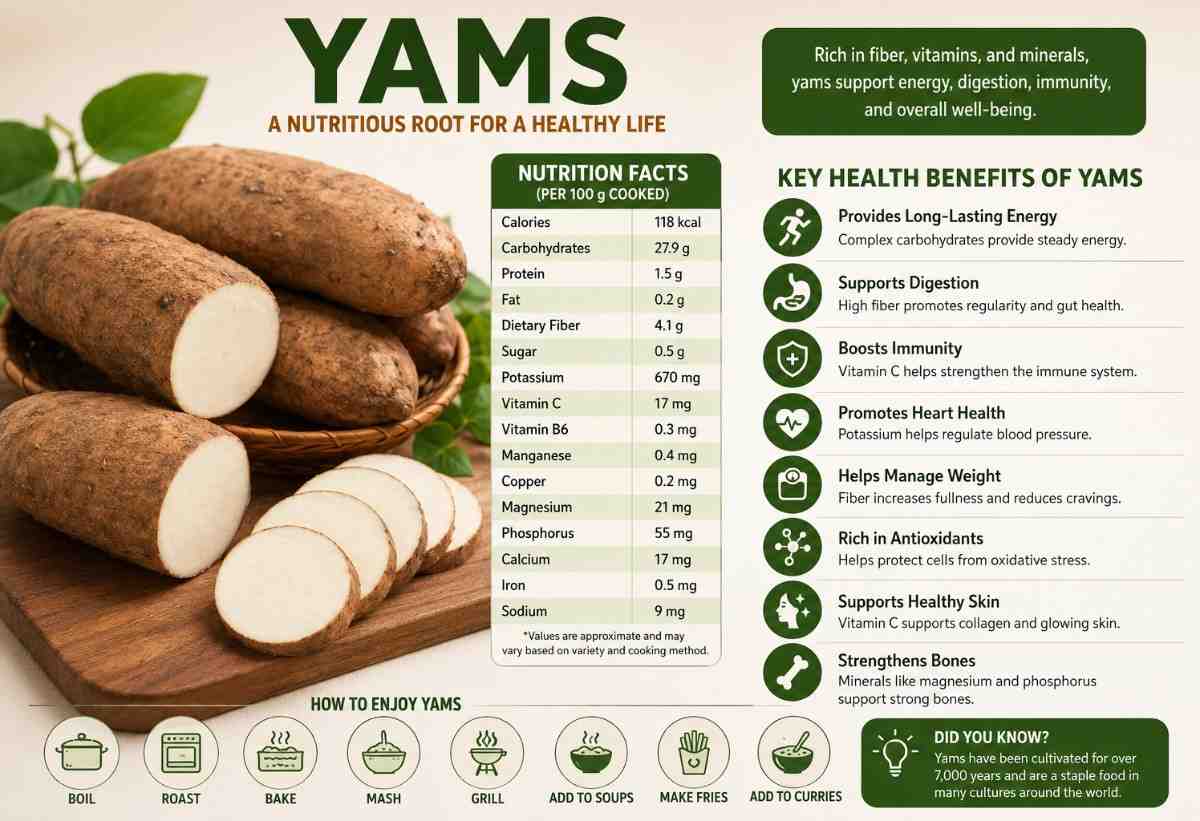
Yams are one of the oldest cultivated root vegetables in the world and have been a staple food across Africa, Asia, the Caribbean, and parts of South America for thousands of years. Rich in complex carbohydrates, dietary fiber, vitamins, minerals, and beneficial plant compounds, yams provide long-lasting energy while supporting overall health.
Many people confuse yams with sweet potatoes, but they are different vegetables. True yams belong to the Dioscorea genus and have rough, bark-like skin, starchy flesh, and a more neutral taste than sweet potatoes.
What are Yams?
Yams are edible tubers that grow on climbing vines belonging to the Dioscoreaceae family. More than 600 species of yams exist worldwide, although only a small number are commonly eaten.
Yams vary in size, shape, and color. Depending on the variety, their flesh may be white, yellow, purple, or pink. They are naturally gluten-free and are an excellent source of carbohydrates that provide steady energy throughout the day.
Besides being a valuable food crop, yams have also been traditionally used in herbal medicine because some species contain compounds like diosgenin, which has been studied for its potential health applications.
Nutrition Facts of Yams (Per 100 g Cooked)
| Nutrient | Amount |
|---|---|
| Calories | 118 kcal |
| Carbohydrates | 27.9 g |
| Protein | 1.5 g |
| Fat | 0.2 g |
| Dietary Fiber | 4.1 g |
| Sugar | 0.5 g |
| Potassium | 670 mg |
| Vitamin C | 17 mg |
| Vitamin B6 | 0.3 mg |
| Manganese | 0.4 mg |
| Copper | 0.2 mg |
| Magnesium | 21 mg |
| Phosphorus | 55 mg |
| Calcium | 17 mg |
| Iron | 0.5 mg |
| Sodium | 9 mg |
Values are approximate and may vary depending on the variety and cooking method.
20 Proven Health Benefits of Yams
- Provides Long-Lasting Energy: Yams contain complex carbohydrates that release energy gradually and help keep you active for longer.
- Supports Healthy Digestion: Their high fiber content promotes regular bowel movements and supports a healthy digestive system.
- Improves Gut Health: Dietary fiber acts as food for beneficial gut bacteria, helping maintain a balanced gut microbiome.
- Boosts Immune Function: Vitamin C strengthens the immune system and helps the body fight infections.
- Promotes Heart Health: Potassium helps regulate blood pressure and supports healthy cardiovascular function.
- Supports Healthy Blood Sugar Levels: Fiber slows carbohydrate absorption, helping reduce sudden spikes in blood sugar.
- Aids Weight Management: Fiber and resistant starch increase fullness, helping reduce unnecessary snacking.
- Rich in Antioxidants: Yams contain antioxidant compounds that help protect cells from oxidative stress.
- Supports Brain Function: Vitamin B6 contributes to neurotransmitter production and healthy cognitive function.
- Encourages Healthy Skin: Vitamin C supports collagen formation for healthy, youthful-looking skin.
- Promotes Strong Bones: Minerals such as magnesium and phosphorus contribute to bone strength.
- Helps Reduce Inflammation: Plant compounds in yams may help lower inflammation in the body.
- Supports Healthy Pregnancy: Folate and vitamin B6 contribute to healthy fetal development when included as part of a balanced diet.
- May Improve Cholesterol Levels: Dietary fiber may help lower LDL (“bad”) cholesterol as part of a healthy diet.
- Supports Eye Health: Certain yam varieties provide carotenoids that contribute to healthy vision.
- Helps Prevent Constipation: Regular consumption may improve bowel regularity due to their fiber content.
- Supports Muscle Function: Potassium and magnesium help muscles contract and relax properly.
- Provides Essential Minerals: Yams supply manganese, copper, and other minerals involved in metabolism.
- May Support Hormonal Balance: Some wild yam species contain diosgenin, a plant compound studied for hormone-related applications, though eating yams does not directly increase hormone levels.
- Promotes Overall Wellness: Their combination of vitamins, minerals, fiber, and antioxidants makes yams an excellent part of a nutritious diet.
10 Side Effects of Yams
- Digestive Discomfort: Eating excessive amounts may cause bloating or gas due to their high fiber content.
- Stomach Upset: Some people may experience mild stomach discomfort if they suddenly increase fiber intake.
- Allergic Reactions: Although uncommon, some individuals may develop itching, swelling, or allergic symptoms.
- Blood Sugar Concerns: Large portions may affect blood sugar levels despite their fiber content.
- Kidney Considerations: People with advanced kidney disease may need to monitor potassium intake.
- Medication Interactions: Certain herbal yam supplements may interact with medications.
- Oxalate Intake: Some yam varieties contain oxalates that may concern people prone to kidney stones.
- Raw Consumption Risks: Some species should never be eaten raw because they contain naturally occurring toxic compounds.
- Digestive Irritation: Undercooked yams may cause digestive discomfort in sensitive individuals.
- Weight Gain from Excess Calories: Frequently consuming large portions with butter, sugar, or cream can increase calorie intake.
Types of Yams
There are hundreds of yam species worldwide, but only a few are commonly cultivated and consumed. Here are some of the most popular types of yams:
1. White Yam (Dioscorea rotundata)
The most widely grown yam in West Africa, white yam has rough brown skin and white flesh with a mild, starchy flavor. It is commonly boiled, fried, roasted, or pounded into traditional dishes like pounded yam.
2. Yellow Yam (Dioscorea cayenensis)
Yellow yam has golden-yellow flesh due to its natural pigments. It has a slightly sweeter taste than white yam and is popular in Caribbean and African cuisines.
3. Purple Yam (Ube) (Dioscorea alata)
Known as ube, purple yam has vibrant purple flesh and a naturally sweet, nutty flavor. It is widely used in desserts, cakes, ice cream, breads, and beverages, especially in the Philippines.
4. Water Yam (Dioscorea alata)
Water yam has smooth skin and white to lavender-colored flesh. It has a moist texture and is commonly used in soups, curries, stews, and baked dishes.
5. Chinese Yam (Dioscorea polystachya)
Also called Japanese mountain yam or Nagaimo, Chinese yam has a long, slender shape and can be eaten cooked or grated raw. It is widely used in Chinese, Japanese, and Korean cuisine.
6. Lesser Yam (Dioscorea esculenta)
Lesser yam is smaller than most yam varieties but has a smooth texture and mildly sweet taste. It is commonly grown in Southeast Asia and the Pacific Islands.
7. Cush-Cush Yam (Dioscorea trifida)
Native to South America and the Caribbean, cush-cush yam has white, cream, or purple flesh with a slightly sweet flavor and is suitable for boiling, baking, and roasting.
8. Bitter Yam (Dioscorea dumetorum)
Bitter yam has a naturally bitter taste due to certain plant compounds. It must be properly processed and cooked before consumption and is traditionally grown in parts of West and Central Africa.
9. Air Potato Yam (Dioscorea bulbifera)
This species produces both underground tubers and aerial bulbils (potato-like structures on the vine). Some cultivated varieties are edible after cooking, while wild varieties may be toxic and should not be consumed.
10. Elephant Foot Yam (Amorphophallus paeoniifolius)
Although not a true yam botanically, elephant foot yam is commonly called a yam in many countries, including India. It has a large underground corm and is widely used in curries, stir-fries, and traditional recipes.
How to Eat Yams?
Yams are incredibly versatile and can be enjoyed in many ways:
- Boiled as a healthy side dish.
- Roasted with herbs and olive oil.
- Mashed instead of mashed potatoes.
- Added to soups and stews.
- Grilled for a smoky flavor.
- Baked whole.
- Air-fried into crispy wedges.
- Used in curries.
- Added to casseroles.
- Made into yam fries.
- Blended into creamy soups.
- Served with vegetables and lean proteins.
- Used in breakfast hash.
- Added to salads after roasting.
- Included in traditional African and Caribbean recipes.
Tips for Consuming Yams
- Wash thoroughly before cooking.
- Peel thick skin carefully.
- Cook thoroughly before eating.
- Pair with lean protein for balanced meals.
- Add healthy fats like olive oil or avocado.
- Include colorful vegetables for extra nutrients.
- Avoid excessive butter and sugar.
- Practice portion control.
- Choose fresh, firm yams.
- Drink enough water when increasing fiber intake.
How to Cook Yams?
Boiling
Peel and cut into chunks, then boil for 20–30 minutes until fork tender.
Roasting
Cube the yams, toss with olive oil and spices, then roast at 400°F (200°C) for about 30–40 minutes.
Baking
Bake whole yams for 45–60 minutes until soft.
Steaming
Steam peeled chunks for about 20–25 minutes to preserve nutrients.
Air Frying
Season slices lightly and air fry at 380°F (193°C) for 15–20 minutes.
Mashing
Boil until soft, then mash with a little milk, olive oil, herbs, and black pepper.
Other Uses of Yams
- Traditional Medicine: Certain yam species have been used in traditional herbal remedies.
- Flour Production: Dried yams are ground into flour for baking and cooking.
- Baby Food: Cooked yams are often pureed into nutritious baby food.
- Animal Feed: Some yam varieties are used as livestock feed.
- Natural Thickener: Yam flour can thicken soups and sauces.
- Snack Production: Yams are made into chips and crisps.
- Desserts: They are commonly used in pies, puddings, and cakes.
- Fermented Foods: Some cultures ferment yams for traditional dishes.
- Starch Production: Yam starch is used in food processing.
- Food Security Crop: Yams serve as an important staple crop in many developing regions.
How Much Yams Can You Eat in a Day?
A healthy serving is generally 100–200 grams of cooked yams (about 1–2 cups) per day for most healthy adults as part of a balanced diet.
Athletes or highly active individuals may consume larger portions depending on their calorie needs.
People with diabetes or kidney disease should consult their healthcare provider or a registered dietitian regarding appropriate serving sizes.
Best Time to Eat Yams
Yams can be enjoyed at any time of day.
- Breakfast for sustained morning energy.
- Lunch to maintain fullness throughout the afternoon.
- Dinner as a nutritious carbohydrate source.
- Before workouts for energy.
- After workouts to replenish glycogen stores.
Who Should Eat Yams?
- Active Individuals: Their complex carbohydrates provide lasting energy for exercise and daily activities.
- Athletes: Yams help replenish glycogen stores after physical activity.
- Children: They provide vitamins, minerals, and energy needed for growth.
- Older Adults: Their nutrients and fiber support healthy aging.
- People with Constipation: Fiber helps promote regular bowel movements.
- Individuals Seeking Weight Management: Fiber increases satiety and may reduce overeating.
- Vegetarians and Vegans: Yams contribute valuable nutrients to plant-based diets.
- Pregnant Women: They provide beneficial nutrients when consumed as part of a balanced pregnancy diet.
- People Looking for Gluten-Free Foods: Yams are naturally gluten-free.
- Anyone Seeking a Nutritious Carbohydrate Source: They offer more nutrients than many refined carbohydrate foods.
Who Should Not Eat Yams?
- People Allergic to Yams: They should completely avoid consuming them.
- Individuals with Advanced Kidney Disease: High potassium intake may require medical guidance.
- People Following Low-Carbohydrate Diets: Yams may not fit strict carbohydrate restrictions.
- Individuals with Certain Digestive Disorders: Large servings of fiber may worsen symptoms during flare-ups.
- People Prone to Kidney Stones: Those advised to limit oxalates should seek individualized guidance.
- Individuals with Poor Portion Control: Overeating may contribute to excessive calorie intake.
- People Using Certain Herbal Supplements: Wild yam supplements may not be appropriate alongside some medications.
- Anyone Eating Raw Wild Yams: Some species contain naturally occurring toxins and should always be cooked.
- People with Uncontrolled Diabetes: Portion size should be monitored carefully.
- Individuals Advised by Their Healthcare Provider to Limit Potassium: Medical advice should be followed.
How to Store Yams?
- Keep in a Cool Place: Store in a cool, dry, and dark location.
- Avoid Refrigeration: Whole yams generally keep better outside the refrigerator.
- Ensure Good Ventilation: Store in breathable baskets or paper bags.
- Keep Away from Moisture: Moisture increases spoilage.
- Separate Damaged Tubers: Remove bruised yam to prevent spreading decay.
- Do Not Wash Before Storage: Wash only before cooking.
- Store Cooked Yams Properly: Refrigerate cooked yam within two hours.
- Use Airtight Containers: Refrigerate leftovers in sealed containers.
- Freeze for Longer Storage: Cooked mashed or cubed yam freeze well.
- Check Regularly: Remove any spoiled yam promptly.
Precautions and Interactions
- Cook Thoroughly: Some yam species should never be eaten raw.
- Eat in Moderation: Large portions may increase calorie and carbohydrate intake.
- Increase Fiber Gradually: Sudden high intake may cause digestive discomfort.
- Monitor Blood Sugar: People with diabetes should track carbohydrate intake.
- Watch Potassium Intake: Kidney disease patients should consult healthcare providers.
- Check Supplement Labels: Wild yam supplements differ from edible yams.
- Consult During Pregnancy: Herbal wild yam products should only be used under medical advice.
- Be Aware of Allergies: Stop eating yam if allergic symptoms develop.
- Pair with Balanced Meals: Combine with protein and healthy fats for better nutrition.
- Seek Medical Advice for Chronic Conditions: Personalized guidance is best if you have underlying health conditions.
Conclusion
Yams are a wholesome, nutrient-rich root vegetable that can easily become part of a healthy eating pattern. Their impressive combination of complex carbohydrates, dietary fiber, potassium, vitamin C, vitamin B6, and antioxidants supports energy production, digestive health, heart health, immune function, and overall wellness.
Although yam offer numerous health benefits, moderation is important, especially for people managing diabetes or kidney disease. Cooking them properly, eating appropriate portions, and pairing them with other nutritious foods can help you enjoy their full nutritional value.
FAQ’s
Are yams and sweet potatoes the same?
No. Yams and sweet potatoes are different vegetables. True yams have rough, bark-like skin and starchy flesh, while sweet potatoes are smoother, sweeter, and belong to a different plant family.
Are yams healthy?
Yes. Yam are a nutritious source of complex carbohydrates, dietary fiber, potassium, vitamin C, vitamin B6, and antioxidants that support overall health.
Can yams help with weight loss?
Yam may support weight management because their fiber helps you feel full longer, which can reduce overeating when eaten as part of a balanced diet.
Are yams good for people with diabetes?
Yam can be included in a diabetes-friendly diet when eaten in moderation and paired with protein and healthy fats. Portion control is important.
Can you eat yams every day?
Yes. Most healthy adults can enjoy moderate portions of cooked yam daily as part of a varied, balanced diet.
Can yams be eaten raw?
No. Most yam should be cooked before eating because raw yam may contain naturally occurring compounds that can cause digestive discomfort or toxicity.
Are yams gluten-free?
Yes. Yam are naturally gluten-free, making them a good carbohydrate choice for people with celiac disease or gluten sensitivity.
Are yams good for digestion?
Yes. Their dietary fiber supports healthy digestion, promotes regular bowel movements, and nourishes beneficial gut bacteria.
Are yams good for heart health?
Yes. The potassium and fiber in yam help support healthy blood pressure and cholesterol levels as part of a heart-healthy diet.
Can pregnant women eat yams?
Yes. Cooked yam can be a healthy addition to a pregnancy diet because they provide fiber, vitamins, and minerals. Pregnant women should consult their healthcare provider for personalized advice.
What do yams taste like?
Yam have a mildly sweet, earthy flavor with a dry, starchy texture that becomes soft and creamy when cooked.
Is yams safe for children?
Yes. Properly cooked yam are safe and nutritious for most children. They provide carbohydrates, fiber, vitamins, and minerals that support healthy growth and development.
What is yams good for?
Yam are good for supporting digestion, heart health, immunity, energy production, and overall wellness due to their fiber, complex carbohydrates, potassium, vitamin C, and antioxidants.
What is yam called in India?
In India, yam is commonly called Suran, Elephant Foot Yam, or Jimikand in Hindi. Other regional names include Kanda Gadda (Telugu), Karunai Kizhangu (Tamil), and Chena (Malayalam). Note that elephant foot yam is not a true yam botanically but is commonly referred to as a yam in India.
Does yam increase BP?
No. Yam do not generally increase blood pressure. In fact, they are rich in potassium, which helps support healthy blood pressure levels when consumed as part of a balanced diet.
Do yams grow in India?
Yes. Several varieties of yam are cultivated in India, particularly in states such as Kerala, Tamil Nadu, Odisha, Andhra Pradesh, Karnataka, and parts of northeastern India.
Is yam good for gastric problems?
Yes. Cooked yams may support digestive health because they are rich in fiber. However, eating large amounts or undercooked yam may cause gas or bloating in some people.
Do I peel yams before cooking?
Yes. Most yam have thick, rough skin that is usually peeled before boiling, roasting, baking, or frying. Wash them thoroughly before peeling.
Why does my stomach hurt after eating yams?
Stomach discomfort after eating yam may result from their high fiber content, eating them undercooked, consuming large portions, or having a food sensitivity. If symptoms are severe or persistent, consult a healthcare professional.
Sources / References:
- U.S. Department of Agriculture (USDA) FoodData Central
- World Health Organization (WHO)
- Harvard T.H. Chan School of Public Health
- National Institutes of Health (NIH) Office of Dietary Supplements
- Academy of Nutrition and Dietetics
Disclaimer:
This article is for educational purposes only and should not be considered medical advice. Always consult a qualified healthcare professional before making significant dietary or health-related changes, especially if you have an underlying medical condition or take prescription medications.
Also Read: