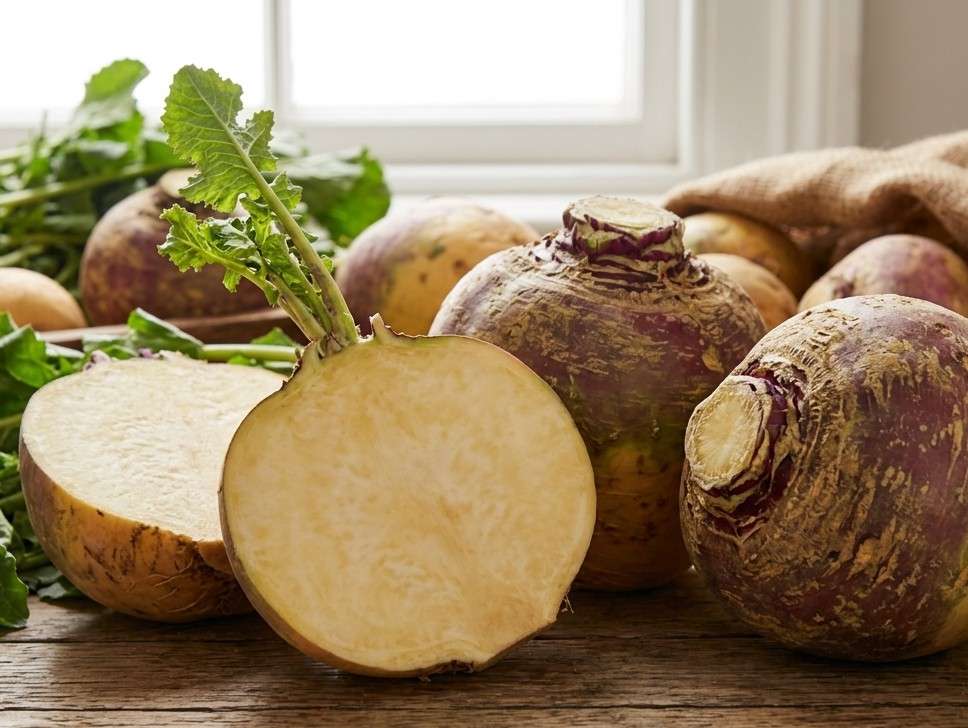
Rutabaga is an underrated root vegetable packed with vitamins, minerals, fiber, and antioxidants that can support overall health. Although it is commonly enjoyed in Northern Europe and North America, many people are still unfamiliar with its nutritional value and culinary versatility. Its mildly sweet, earthy flavor makes it an excellent addition to soups, stews, mashed vegetable dishes, roasted meals, and salads.
This guide explores everything you need to know about rutabaga (also known as swede, Swedish turnip, or yellow turnip), including its nutrition, health benefits, possible side effects, cooking methods, storage tips, and precautions.
What is Rutabaga?
Rutabaga (Brassica napus var. napobrassica) is a root vegetable belonging to the Brassicaceae family, the same family as cabbage, broccoli, cauliflower, kale, and turnips. It is believed to be a natural cross between a cabbage and a turnip.
The vegetable has yellowish flesh with purple and tan skin. Compared to turnips, rutabagas are larger, sweeter, denser, and slightly less bitter.
Rutabaga is rich in vitamin C, dietary fiber, potassium, manganese, antioxidants, and several plant compounds that may help support immunity, digestion, heart health, and overall wellness.
Nutrition Facts of Rutabaga (Per 100 g)
| Nutrient | Amount |
|---|---|
| Calories | 37 kcal |
| Water | 89 g |
| Carbohydrates | 8.6 g |
| Protein | 1.1 g |
| Fat | 0.2 g |
| Dietary Fiber | 2.3 g |
| Natural Sugars | 4.5 g |
| Vitamin C | 25 mg |
| Potassium | 305 mg |
| Calcium | 43 mg |
| Magnesium | 20 mg |
| Phosphorus | 53 mg |
| Iron | 0.4 mg |
| Manganese | 0.13 mg |
| Folate | 21 mcg |
| Vitamin B6 | 0.1 mg |
Values are approximate and may vary depending on growing conditions and preparation.
20 Proven Health Benefits of Rutabaga
- Supports Immune Health: Rutabaga is rich in vitamin C, which helps strengthen the immune system and supports the body’s natural defense against infections.
- Improves Digestive Health: Its dietary fiber promotes healthy digestion and helps prevent constipation.
- Promotes Heart Health: Potassium and fiber may help support healthy blood pressure and cardiovascular function.
- Rich in Antioxidants: Antioxidants help protect cells from oxidative stress caused by free radicals.
- Supports Healthy Weight Management: Low calories and high fiber help increase fullness while reducing overall calorie intake.
- Aids Blood Sugar Control: Fiber slows carbohydrate absorption, helping maintain steadier blood sugar levels.
- Strengthens Bones: Calcium, magnesium, and phosphorus contribute to healthy bones and teeth.
- Supports Healthy Skin: Vitamin C helps the body produce collagen for healthy skin.
- Promotes Wound Healing: Vitamin C plays an important role in tissue repair and wound healing.
- Supports Healthy Vision: Plant antioxidants may help protect eye tissues from oxidative damage.
- May Reduce Inflammation: Natural phytochemicals found in rutabaga may help lower inflammation in the body.
- Supports Healthy Gut Bacteria: Fiber acts as food for beneficial gut microbes.
- May Lower Cholesterol: Soluble fiber may help reduce LDL (“bad”) cholesterol levels.
- Supports Healthy Metabolism: B vitamins assist in converting food into usable energy.
- Provides Long-Lasting Energy: Complex carbohydrates provide a steady release of energy.
- Supports Healthy Blood Vessels: Vitamin C helps maintain healthy blood vessel walls.
- May Reduce Certain Cancer Risks: Like other cruciferous vegetables, rutabaga contains glucosinolates that are being studied for their potential protective effects.
- Supports Brain Function: Potassium and antioxidants contribute to normal nerve and brain function.
- Helps Maintain Hydration: Its high water content contributes to daily fluid intake.
- Encourages Overall Wellness: The combination of vitamins, minerals, fiber, and antioxidants makes rutabaga a nutritious addition to a balanced diet.
10 Side Effects of Rutabaga
- Gas and Bloating: Eating large amounts may cause digestive discomfort due to its fiber content.
- Digestive Upset: Suddenly increasing fiber intake can lead to stomach cramps or loose stools.
- May Affect Thyroid Function: Excessive consumption of raw cruciferous vegetables may interfere with iodine utilization in susceptible individuals.
- Allergic Reactions: Rare allergic reactions may occur in sensitive people.
- Medication Interactions: High vitamin K intake from cruciferous vegetables may require consistent consumption for people taking blood-thinning medications.
- May Cause Bloating in IBS: Individuals with irritable bowel syndrome may experience increased symptoms.
- Excess Fiber Intake: Too much fiber may reduce the absorption of certain minerals if consumed excessively.
- Digestive Discomfort in Children: Large servings may cause temporary gas in young children.
- Possible Kidney Concerns: Individuals with advanced kidney disease may need to monitor potassium intake.
- Overeating May Cause Fullness: Large portions can cause excessive satiety and digestive discomfort.
How to Eat Rutabaga?
Rutabaga is highly versatile and can be enjoyed in many ways.
- Roast it with olive oil and herbs.
- Mash it as an alternative to mashed potatoes.
- Add cubes to soups and stews.
- Steam and season with butter and black pepper.
- Stir-fry with other vegetables.
- Add shredded raw rutabaga to salads.
- Bake into vegetable casseroles.
- Prepare rutabaga fries in the oven.
- Mix with carrots for a colorful side dish.
- Blend into creamy vegetable soups.
Tips for Consuming Rutabaga
- Choose firm, heavy rutabagas without soft spots.
- Peel the thick outer skin before cooking.
- Cook until tender for the best texture.
- Pair with healthy fats to improve nutrient absorption.
- Introduce gradually if you’re increasing fiber intake.
- Season with herbs, garlic, rosemary, or thyme.
- Combine with other colorful vegetables.
- Avoid overcooking to preserve nutrients.
- Wash thoroughly before peeling.
- Include it as part of a balanced diet.
How to Cook Rutabaga?
There are several delicious ways to cook rutabaga.
Roasting
Peel, cube, season with olive oil, herbs, salt, and pepper, then roast at 400°F (200°C) for about 35–45 minutes.
Boiling
Boil peeled cubes for 20–30 minutes until fork-tender before mashing or serving.
Steaming
Steam cubes for approximately 20 minutes to retain more nutrients.
Air Frying
Cook seasoned cubes in an air fryer until crispy outside and tender inside.
Mashing
Boil until soft, then mash with butter, garlic, and herbs.
Soup
Blend cooked rutabaga with onions, carrots, broth, and spices for a creamy soup.
Other Uses of Rutabaga
- Animal Feed: Swede is sometimes grown as nutritious livestock feed.
- Winter Storage Crop: It stores well and provides vegetables during colder months.
- Natural Thickener: Cooked rutabaga can naturally thicken soups and stews.
- Low-Calorie Potato Alternative: It replaces potatoes in many recipes while reducing calories.
- Vegetable Purees: It adds sweetness to homemade vegetable purees.
- Baby Food: Properly cooked and mashed rutabaga may be introduced as part of age-appropriate complementary feeding after consulting a pediatrician.
- Meal Prep Ingredient: Cooked rutabaga stores well for weekly meal preparation.
- Holiday Side Dish: It is commonly served during festive meals in several countries.
- Healthy Casseroles: Swede works well in baked vegetable casseroles.
- Mixed Vegetable Dishes: It pairs well with carrots, parsnips, potatoes, and onions.
How Much Rutabaga Can You Eat in a Day?
Most healthy adults can comfortably consume about ½ to 1 cup (75–150 grams) of cooked rutabaga per day as part of a balanced diet.
Individuals with digestive disorders, kidney disease, or thyroid concerns should consult a healthcare professional regarding appropriate serving sizes.
Best Time to Eat Rutabaga
There is no specific best time to eat rutabaga.
It can be enjoyed:
- At lunch
- During dinner
- As a healthy roasted side dish
- In soups during colder months
- After workouts alongside lean protein
- As part of balanced meals throughout the week
Who Should Eat Rutabaga?
- People Seeking Weight Management: Its low calorie and high fiber content supports fullness.
- Individuals Wanting Better Digestion: Fiber promotes regular bowel movements.
- People Looking to Increase Vitamin C Intake: It provides a good source of immune-supporting vitamin C.
- Heart-Conscious Individuals: Potassium and fiber support cardiovascular health.
- People Following Plant-Based Diets: It contributes valuable nutrients to vegetarian and vegan diets.
- Older Adults: It provides vitamins and minerals that support healthy aging.
- Athletes: Complex carbohydrates provide steady energy.
- Families: Swede can be a nutritious vegetable for most age groups.
- People Eating More Vegetables: It adds variety to a balanced diet.
- Those Seeking Seasonal Produce: Rutabaga is an excellent winter vegetable.
Who Should Not Eat Rutabaga?
- People with Rutabaga Allergy: Avoid consumption if allergic to cruciferous vegetables.
- Individuals with Severe Kidney Disease: Potassium intake may need monitoring.
- People with Certain Thyroid Disorders: Excessive raw consumption may not be advisable without medical guidance.
- Individuals Experiencing Severe IBS Symptoms: Large servings may worsen digestive discomfort.
- People Taking Blood Thinners: Maintain consistent intake of vitamin K-containing vegetables and follow medical advice.
- Those with Persistent Digestive Disorders: Consult a healthcare provider before increasing fiber intake.
- People Recovering from Certain Gastrointestinal Surgeries: Follow individualized dietary recommendations.
- Individuals Sensitive to High-Fiber Foods: Introduce rutabaga gradually.
- People on Restricted Diets: Follow guidance from a registered dietitian or physician.
- Anyone Experiencing Adverse Reactions: Stop eating it and seek medical advice if symptoms occur.
How to Store Rutabaga?
- Store in a Cool Place: Keep whole rutabagas in a cool, dark location.
- Refrigerate for Longer Freshness: Refrigeration extends shelf life for several weeks.
- Avoid Excess Moisture: Moisture encourages spoilage.
- Use Ventilated Bags: Perforated bags help reduce moisture buildup.
- Do Not Wash Before Storage: Wash only before use.
- Keep Away from Ethylene-Producing Fruits: Apples and bananas may speed deterioration.
- Freeze After Cooking: Cooked rutabaga freezes well.
- Store Cut Pieces Properly: Wrap tightly and refrigerate.
- Discard if Mold Appears: Do not consume spoiled vegetables.
- Label Frozen Portions: Mark storage dates for better quality management.
Precautions and Interactions
- Increase Intake Gradually: Add fiber slowly to reduce digestive discomfort.
- Cook if Sensitive: Cooking may reduce digestive irritation compared with eating it raw.
- Consult Your Doctor for Thyroid Conditions: Discuss intake if you have thyroid disease.
- Monitor Potassium Intake: People with kidney disease should seek medical advice.
- Be Consistent with Vitamin K Intake: Those taking blood-thinning medication should avoid sudden dietary changes.
- Drink Plenty of Water: Adequate hydration helps fiber work effectively.
- Eat as Part of a Balanced Diet: Swede should complement a variety of vegetables.
- Watch Portion Sizes: Excessive intake may cause bloating.
- Use Fresh Produce: Fresh rutabaga provides the best flavor and nutritional quality.
- Seek Medical Advice if Needed: Consult a healthcare professional if you have underlying health conditions or dietary restrictions.
Conclusion
Rutabaga is a nutrient-rich root vegetable that deserves a place in a healthy diet. It provides vitamin C, fiber, potassium, antioxidants, and beneficial plant compounds that may support immunity, digestion, heart health, and overall wellness. Whether roasted, mashed, boiled, or added to soups and stews, Swede offers a delicious and versatile way to increase vegetable intake. While it is safe for most people, moderation and proper preparation are important, especially for individuals with specific medical conditions.
FAQ’s
Is rutabaga healthier than potatoes?
Swede is generally lower in calories and carbohydrates than potatoes while providing more vitamin C. Both vegetables are nutritious, and the healthier choice depends on your dietary needs.
What does rutabaga taste like?
Swede has a mildly sweet, earthy flavor with a slight peppery note. When cooked, it becomes softer and sweeter than a turnip.
Can you eat rutabaga raw?
Yes. Swede can be eaten raw after peeling. It can be grated into salads, slaws, or enjoyed as crunchy vegetable sticks.
Is rutabaga the same as a turnip?
No. Although they are closely related, Swede is larger, sweeter, denser, and has yellow flesh, while turnips are usually smaller with white flesh.
Is rutabaga good for weight loss?
Yes. Swede is low in calories and rich in dietary fiber, which helps keep you full longer and may support healthy weight management.
Is rutabaga good for people with diabetes?
Swede can be included in a diabetes-friendly diet because it contains fiber and has a lower carbohydrate content than many starchy vegetables. People with diabetes should still monitor portion sizes and consult their healthcare provider for personalized advice.
Is rutabaga good for digestion?
Yes. Swede contains dietary fiber that supports healthy digestion, promotes regular bowel movements, and helps nourish beneficial gut bacteria.
Can rutabaga be eaten every day?
Yes. Swede can be eaten daily in moderate amounts as part of a varied and balanced diet.
Is rutabaga a low-carb vegetable?
Yes. Swede contains fewer carbohydrates than potatoes, making it a popular option for people following lower-carbohydrate eating plans.
Does rutabaga contain vitamin C?
Yes. Swede is an excellent source of vitamin C, which supports immune function, collagen production, and antioxidant protection.
Can rutabaga be frozen?
Yes. It is best to blanch or cook swede before freezing. Store it in airtight freezer-safe containers for several months.
Is rutabaga safe for pregnant women?
Yes. Cooked Swede is generally safe during pregnancy when eaten in moderation as part of a balanced diet.
Is rutabaga safe for children?
Yes. Cooked Swede is safe for most children and can be served in age-appropriate portions.
What is rutabaga good for?
Swede supports immunity, digestion, heart health, and healthy weight management while providing fiber, vitamin C, and antioxidants.
What is rutabaga called in India?
Rutabaga has no common Indian name and is usually sold as rutabaga or Swedish turnip (Swede).
Is rutabaga a beetroot?
No. Swede is a cruciferous root vegetable, while beetroot belongs to a different plant family.
Which is healthier, rutabaga or turnip?
Both are nutritious, but rutabaga generally provides more vitamin C and fiber, while turnips are lower in calories.
Sources / References:
- U.S. Department of Agriculture (USDA) FoodData Central
- Harvard T.H. Chan School of Public Health – The Nutrition Source
- Academy of Nutrition and Dietetics
- British Dietetic Association
Disclaimer:
This article is intended for educational and informational purposes only and should not replace professional medical advice, diagnosis, or treatment. Always consult a qualified healthcare provider before making significant dietary or health-related changes.
Also Read: