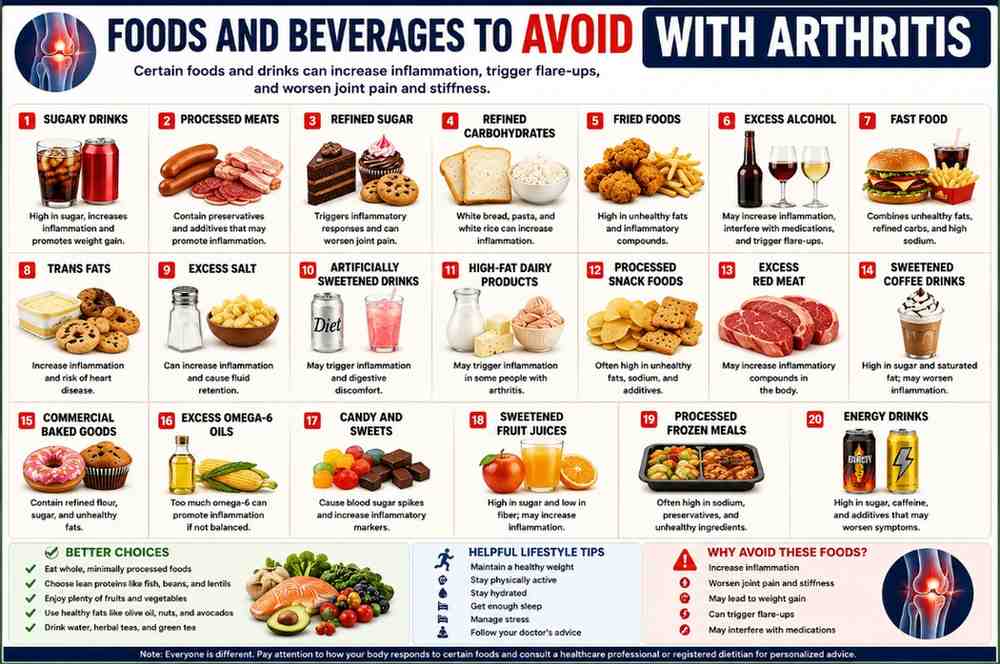
Arthritis affects millions of people worldwide and is one of the leading causes of joint pain, stiffness, and reduced mobility. While medications, exercise, and physical therapy play important roles in managing arthritis, diet can also have a significant impact on inflammation levels and symptom severity.
Many people focus on foods that help arthritis, such as fatty fish, fruits, vegetables, and nuts. However, it is equally important to know which foods and beverages may worsen inflammation and trigger painful flare-ups.
Certain dietary choices can increase inflammatory markers in the body, contribute to weight gain, and potentially aggravate arthritis symptoms. Understanding these foods can help you make better choices for long-term joint health.
In this guide, we’ll explore the foods and beverages that people with arthritis may want to limit or avoid, explain why they can be problematic, and discuss healthier alternatives.
What Is Arthritis?
Arthritis is a broad term that refers to inflammation of one or more joints. There are more than 100 types of arthritis, but the most common include:
- Osteoarthritis (OA)
- Rheumatoid Arthritis (RA)
- Psoriatic Arthritis
- Gout
- Ankylosing Spondylitis
Symptoms often include:
- Joint pain
- Swelling
- Stiffness
- Reduced range of motion
- Fatigue
While genetics and age play a role, dietary habits can influence inflammation levels and symptom severity.
How Diet Affects Arthritis
Food can either increase or decrease inflammation in the body.
Inflammatory foods may:
- Trigger immune responses
- Increase oxidative stress
- Promote weight gain
- Worsen joint pain
- Increase swelling
On the other hand, anti-inflammatory foods can help support joint function and reduce discomfort.
20 Foods and Beverages to Avoid with Arthritis
1. Sugary Soft Drinks
Soft drinks are loaded with added sugars, particularly high-fructose corn syrup.
Excess sugar may:
- Increase inflammatory markers
- Promote obesity
- Worsen joint pain
Examples include:
- Cola drinks
- Flavored sodas
- Energy drinks
- Sweetened carbonated beverages
Better Alternative
Sparkling water with lemon or unsweetened herbal tea.
2. Processed Meats
Processed meats often contain preservatives, nitrates, and advanced glycation end products (AGEs), which may promote inflammation.
Examples include:
- Sausages
- Bacon
- Hot dogs
- Salami
- Pepperoni
Better Alternative
Fresh chicken, turkey, fish, or plant-based proteins.
3. Refined Sugar
High sugar intake can trigger inflammatory responses throughout the body.
Sources include:
- Candy
- Cakes
- Cookies
- Pastries
- Sweetened cereals
Better Alternative
Fresh fruits or naturally sweet snacks.
4. White Bread and Refined Carbohydrates
Refined grains have a high glycemic index and may contribute to inflammation.
Examples include:
- White bread
- White pasta
- White rice
- Crackers
Better Alternative
Whole grains such as quinoa, brown rice, and oats.
5. Fried Foods
Deep-fried foods contain unhealthy fats and inflammatory compounds.
Examples include:
- French fries
- Fried chicken
- Fried snacks
- Fast-food items
Better Alternative
Baked, grilled, or air-fried foods.
6. Excessive Alcohol
Alcohol may worsen inflammation and interfere with certain arthritis medications.
Potential concerns include:
- Increased inflammation
- Liver stress
- Dehydration
- Gout flare-ups
Better Alternative
Water, herbal teas, or alcohol-free beverages.
7. Fast Food
Fast foods often combine multiple inflammatory ingredients:
- Refined carbohydrates
- Trans fats
- Excess sodium
- Added sugars
Examples include:
- Burgers
- Fried chicken meals
- Pizza
- Fried snacks
Better Alternative
Home-cooked meals using fresh ingredients.
8. Foods High in Trans Fats
Trans fats are strongly associated with inflammation and cardiovascular disease.
Sources include:
- Packaged baked goods
- Shortening
- Some margarines
- Commercial snacks
Better Alternative
Olive oil and avocado-based products.
9. Excess Salt
High sodium intake may increase inflammation and contribute to fluid retention.
Common sources:
- Instant noodles
- Packaged soups
- Frozen meals
- Salty snacks
Better Alternative
Season foods with herbs and spices.
10. Artificially Sweetened Drinks
Some people report increased inflammation or digestive discomfort from certain artificial sweeteners.
Examples:
- Diet sodas
- Sugar-free flavored drinks
Better Alternative
Naturally flavored water.
11. High-Fat Dairy Products
Certain individuals with arthritis may be sensitive to dairy proteins.
Examples include:
- Whole milk
- Cream
- Ice cream
- Full-fat cheese
Better Alternative
Unsweetened almond milk or oat milk.
12. Processed Snack Foods
Packaged snacks often contain:
- Refined flour
- Excess sodium
- Added sugars
- Unhealthy fats
Examples:
- Chips
- Crackers
- Cheese puffs
Better Alternative
Nuts, seeds, or roasted chickpeas.
13. Excess Red Meat
Frequent consumption of red meat may increase inflammatory compounds in the body.
Examples:
- Beef
- Lamb
- Pork
Better Alternative
Fish, lentils, beans, or tofu.
14. Sweetened Coffee Drinks
Fancy coffee beverages often contain large amounts of sugar and saturated fat.
Examples:
- Flavored lattes
- Frappes
- Sweetened iced coffees
Better Alternative
Black coffee or lightly sweetened coffee.
15. Commercial Baked Goods
Many packaged baked products contain:
- Refined flour
- Added sugar
- Unhealthy fats
Examples:
- Donuts
- Muffins
- Cakes
- Pastries
Better Alternative
Homemade whole-grain baked goods.
16. Excess Omega-6 Oils
While omega-6 fats are essential, excessive intake may contribute to inflammation when not balanced with omega-3 fats.
Common sources:
Better Alternative
17. Candy and Sweets
Frequent consumption of sweets can lead to blood sugar spikes and inflammatory responses.
Examples:
- Hard candies
- Chocolate bars
- Gummies
Better Alternative
Fresh berries or fruit salads.
18. Sweetened Fruit Juices
Many fruit juices contain as much sugar as soft drinks.
Examples:
- Fruit cocktails
- Sweetened juice blends
- Packaged juices
Better Alternative
Whole fruits or diluted fresh juice.
19. Highly Processed Frozen Meals
Frozen convenience foods may contain:
- Excess sodium
- Preservatives
- Refined ingredients
Better Alternative
Homemade meal-prep options.
20. Energy Drinks
Energy drinks often contain:
- Large amounts of sugar
- Excess caffeine
- Artificial additives
These ingredients may worsen inflammation and contribute to poor sleep, which can affect arthritis symptoms.
Better Alternative
Green tea or plain water.
Foods That May Trigger Arthritis Flare-Ups in Some People
Individual responses vary, but some people report worsening symptoms after consuming:
- Dairy products
- Gluten-containing foods
- Nightshade vegetables (tomatoes, peppers, potatoes, eggplants)
- Artificial additives
- Monosodium glutamate (MSG)
Keeping a food diary can help identify personal triggers.
Foods That Support Joint Health
Instead of focusing only on restrictions, include more anti-inflammatory foods such as:
- Salmon
- Sardines
- Mackerel
- Olive oil
- Walnuts
- Almonds
- Berries
- Cherries
- Leafy greens
- Broccoli
- Turmeric
- Ginger
- Whole grains
These foods may help support overall joint health and reduce inflammation.
Sample Arthritis-Friendly Meal Plan
| Meal | Foods |
|---|---|
| Breakfast | Oatmeal with berries and walnuts |
| Mid-Morning Snack | Apple slices with almond butter |
| Lunch | Grilled salmon, quinoa, and mixed vegetables |
| Afternoon Snack | Unsweetened yogurt with chia seeds |
| Dinner | Lentil soup, brown rice, and steamed broccoli |
| Evening Drink | Herbal tea |
Lifestyle Tips for Managing Arthritis
1. Maintain a Healthy Weight
Reducing excess body weight decreases stress on joints.
2. Stay Physically Active
Regular movement helps maintain flexibility and strength.
3. Prioritize Sleep
Poor sleep can worsen inflammation and pain perception.
4. Manage Stress
Stress may trigger inflammatory responses.
5. Stay Hydrated
Proper hydration supports overall health and joint function.
FAQs
Can certain foods make arthritis worse?
Yes, some foods may trigger inflammation or worsen symptoms in certain individuals. Common triggers include foods high in added sugar, trans fats, and sodium.
Is sugar bad for arthritis?
Excess sugar consumption may increase inflammation in the body and could contribute to more frequent arthritis flare-ups and joint discomfort.
Are bananas good for arthritis?
Yes, bananas provide potassium, vitamin B6, and antioxidants, making them a nutritious choice for most people with arthritis.
Is coffee bad for arthritis?
Moderate coffee consumption is generally safe for most people with arthritis. However, sugary coffee drinks with cream and syrups may not be beneficial.
What is the best breakfast for arthritis?
The best breakfast for arthritis is a bowl of oatmeal topped with berries, walnuts, and chia seeds, as it provides fiber, antioxidants, and anti-inflammatory omega-3 fats that support joint health.
Can dairy products worsen arthritis?
Some people report increased symptoms after consuming dairy products, while others experience no issues. Individual tolerance varies.
What is the best drink for arthritis?
Water is the best beverage for overall health. Unsweetened green tea and herbal teas may also support a healthy anti-inflammatory diet.
Are eggs bad for arthritis?
Eggs are generally safe and nutritious for most people. However, some individuals may find that eggs trigger symptoms and may choose to limit them.
Can losing weight help arthritis symptoms?
Yes, maintaining a healthy weight can reduce stress on weight-bearing joints and may improve pain, mobility, and overall joint function.
Is rice bad for arthritis?
Whole-grain options such as brown rice are generally preferred over refined white rice because they contain more fiber and nutrients.
Are fried foods bad for arthritis?
Fried foods may contain unhealthy fats and inflammatory compounds that could worsen arthritis symptoms when consumed frequently.
What fruits are good for arthritis?
Berries, cherries, oranges, grapes, and apples are rich in antioxidants and may help support joint health.
Can arthritis be managed through diet alone?
Diet can help manage symptoms, but it should not replace medical treatment. A combination of healthy eating, exercise, medication, and professional care is often recommended.
Is alcohol harmful for arthritis?
Excessive alcohol intake may increase inflammation, interfere with certain medications, and worsen gout-related arthritis symptoms.
What snacks are good for people with arthritis?
Healthy options include nuts, seeds, fresh fruit, yogurt, roasted chickpeas, and vegetable sticks with hummus.
Do processed foods increase arthritis inflammation?
Many processed foods contain added sugars, unhealthy fats, and excess sodium, which may contribute to inflammation in some individuals.
Are tomatoes bad for arthritis?
Most people with arthritis can safely eat tomatoes. However, some individuals believe nightshade vegetables may worsen their symptoms, though evidence is limited.
Is gluten bad for arthritis?
Gluten is not harmful for everyone, but some people with gluten sensitivity or celiac disease may notice symptom improvement when avoiding it.
What foods help reduce arthritis inflammation?
Fatty fish, olive oil, leafy greens, berries, nuts, seeds, turmeric, ginger, and whole grains are commonly included in anti-inflammatory diets.
How can I identify foods that trigger my arthritis symptoms?
Keeping a food and symptom diary can help identify potential dietary triggers and patterns related to arthritis flare-ups.
Final Thoughts
Managing arthritis involves more than simply taking medication. Daily dietary choices can significantly influence inflammation levels, joint health, and overall quality of life. While occasional indulgences are unlikely to cause major problems, regularly consuming sugary beverages, processed foods, refined carbohydrates, and unhealthy fats may contribute to inflammation and worsen symptoms over time.
Sources / References:
- Arthritis Foundation
- National Institute of Arthritis and Musculoskeletal and Skin Diseases (NIAMS)
- Harvard T.H. Chan School of Public Health
- Centers for Disease Control and Prevention (CDC)
- National Institutes of Health (NIH)
- Academy of Nutrition and Dietetics
- World Health Organization (WHO)
Also Read:
- What Foods Cause Inflammation? 20 Common Foods to Avoid
- Top 20 Anti-Inflammatory Foods to Eat Every Day
- Lunch Food Combinations That Cause Bloating & How to Avoid Them
About the Author:
Written by: Kirti Solanki (Health Content Researcher)
This guide was written by a health and nutrition content specialist dedicated to creating evidence-based, easy-to-understand wellness resources. All content is researched using reputable medical organizations, peer-reviewed studies, and public health resources to ensure accuracy and reliability.
Disclaimer:
This guide is intended for educational and informational purposes only and should not be considered medical advice, diagnosis, or treatment. Always consult a qualified healthcare professional, registered dietitian, or physician before making significant dietary changes, especially if you have arthritis, chronic health conditions, or are taking prescription medications. Individual responses to foods can vary, and professional guidance is recommended for personalized care.